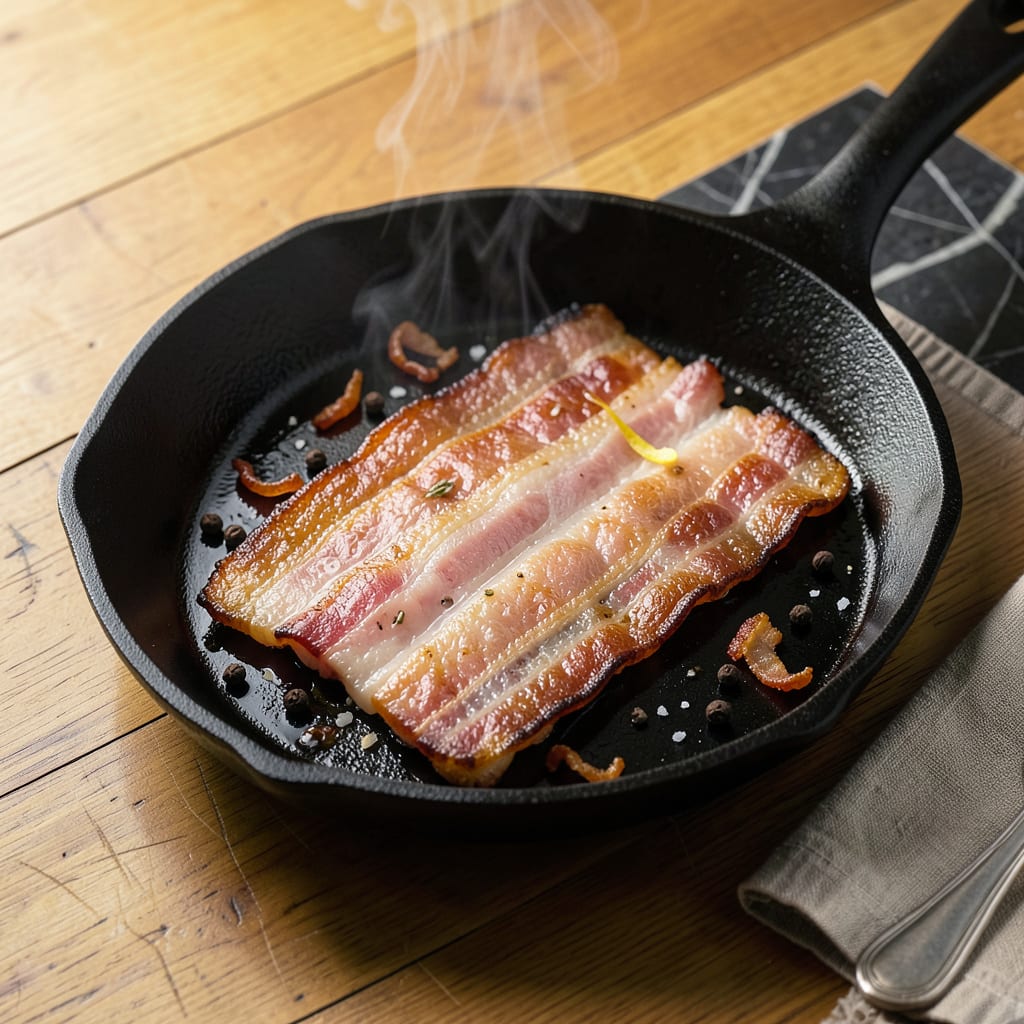
A chunk of bacon refers to thick-cut, cube-shaped or irregularly sized pieces of pork belly or shoulder, offering richer flavor and meatier texture than traditional slices. It’s ideal for slow cooking, braising, or adding depth to stews and soups.
I love working with these hearty bacon pieces because they transform dishes in ways thin slices can’t. The extra fat and meat create a luxurious mouthfeel and deep porky essence that infuses into every bite. Think of them as flavor bombs for your collard greens or white bean cassoulet—they render slowly, building layers of smoky richness. ✨
What sets them apart is their versatility in cooking methods. Unlike strips that crisp quickly, these chunks hold their shape during long simmers, making them perfect for dishes where you want both the bacon and its rendered fat to shine. I always keep a stash in my freezer for those moments when a recipe needs that extra punch of meaty depth. 🔥
💡 In This Article
- How Chunk of Bacon Differs from Regular Bacon Slices
- Top 5 Recipes Using Chunk of Bacon for Maximum Flavor
How Chunk of Bacon Differs from Regular Bacon Slices
Let’s talk about what makes these meaty cubes so special. Unlike traditional bacon slices that are cut 1/16 to 1/8-inch thick, bacon chunks are typically 1/2 to 1-inch cubes or irregular pieces. This substantial size comes from cutting pork belly or shoulder into larger portions before curing.
The increased surface area creates more caramelization during cooking, while the interior stays juicy and tender. 🔥
The fat-to-meat ratio tells the real story. Regular bacon slices have about 50-60% fat content, while bacon chunks often contain 60-70% fat because they include more of the pork belly’s fatty layers. This higher fat content means they render slowly, creating a silky mouthfeel and deep pork flavor that thin slices can’t match.
The curing process also differs—chunks are often dry-cured for 7-14 days versus the 3-5 day wet cure common for sliced bacon.
What you’ll notice when cooking is how these chunks hold their shape. While thin slices crisp up in 5-8 minutes, bacon chunks need 20-30 minutes of slow cooking to properly render. This makes them perfect for dishes where you want both the meat and fat to contribute flavor over time.
I love using them in collard greens or baked beans because they maintain their texture while infusing the dish with smoky richness. ✨
Regional butchery practices create interesting variations. In the South, you’ll often find pork shoulder chunks cured with brown sugar and black pepper, while Midwest butchers might use pork belly with a maple cure.
The shoulder chunks have a slightly firmer texture and more pronounced pork flavor, while belly chunks offer that classic bacon taste with extra unctuousness. This versatility is why I always keep both types in my kitchen arsenal. 💫
Here’s what most home cooks don’t realize: the curing method affects how the chunks behave during cooking. Dry-cured bacon chunks develop a more concentrated flavor and firmer texture, while wet-cured versions stay more pliable.
This difference becomes crucial when you’re deciding between chunks for your cassoulet (where you want them to hold shape) versus your breakfast hash (where you might prefer them to break down slightly).
The science behind the flavor comes down to fat rendering and protein breakdown. As the chunks cook slowly, the fat renders at about 160°F, while the collagen in the meat breaks down around 180°F. This creates that perfect balance of crispy exterior and tender interior that makes bacon chunks so satisfying in every bite.
The larger size also means more Maillard reaction occurs, developing complex flavors that thin slices simply can’t achieve. 🌟

Trained in classic French technique but raised on slow-cooked ribs and spicy rubs, she blends culinary skill with smoke and soul.
- Recipe for Boneless Pork Chops in Cast Iron Skillet: Sear and Baste to Juicy Perfection - October 3, 2026
- Recipe for Boneless Cross Rib Roast: Slow-Roasted Beef with Herb Crust - October 3, 2026
- Hamburgers in Sauce Recipe Crock Pot: Slow-Cooked Savory Delight - October 3, 2026