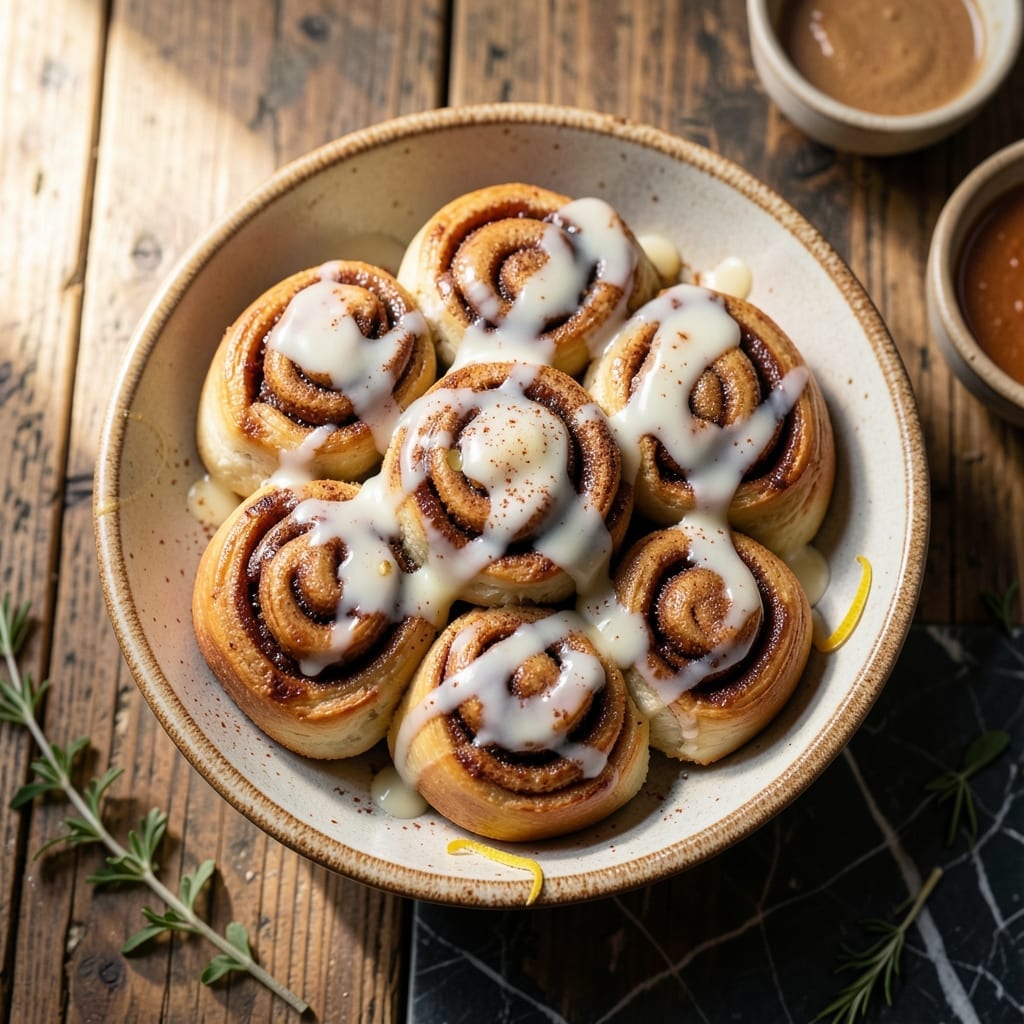
These no-yeast cinnamon rolls deliver soft, pillowy texture without the wait. I developed this method for days when cravings strike but time doesn’t permit rising.
The secret lies in baking powder for lift and a simple milk-vinegar mix to replace buttermilk. The result is warm, spiced perfection with tender layers and gooey filling.
Ingredients for Cinnamon Roll Recipe No Yeast No Buttermilk
Pantry staples plus a few fresh items create these no-wait cinnamon rolls with pillowy texture.
| Ingredient | Amount | Notes |
|---|---|---|
| All-Purpose Flour 🌾 | 3 cups | Plus extra for dusting |
| Baking Powder 🧂 | 2 ½ tsp | Aluminum-free preferred |
| Granulated Sugar 🍚 | ⅓ cup | Divided for dough and filling |
| Salt 🧂 | ½ tsp | Fine sea salt recommended |
| Whole Milk 🥛 | ¾ cup | Warmed slightly |
| White Vinegar 💧 | 1 tbsp | For buttermilk substitution |
| Unsalted Butter 🧈 | ½ cup | Melted and cooled |
| Ground Cinnamon 🌿 | 2 tbsp | Freshly ground for best flavor |
| Brown Sugar 🍯 | ½ cup | Light or dark variety |
| Vanilla Extract 🌿 | 1 tsp | Pure extract preferred |
| Cream Cheese 🧀 | 4 oz | Softened for frosting |
| Powdered Sugar 🍚 | 1 cup | Sifted for smooth frosting |
[recipe_ingredient_scaler]
The baking powder is your leavening hero here—ensure it’s fresh (test by dropping a spoonful in hot water; it should bubble vigorously). King Arthur Flour or similar high-quality all-purpose flour yields the most tender crumb. For the milk-vinegar mix, whole milk provides richness, but 2% works in a pinch. Organic apple cider vinegar offers a milder tang than white vinegar if you prefer subtler flavor.
No buttermilk? The milk-vinegar mix replicates the acidity perfectly. Swap whole milk for oat milk or soy milk to keep it vegetarian while accommodating dairy sensitivities. Brown sugar can be replaced with coconut sugar at a 1:1 ratio for a deeper, caramel-like note. If you’re out of cream cheese, mascarpone creates an even richer frosting (use the same amount).
Store baked rolls in an airtight container at room temperature for up to 3 days, or freeze unfrosted rolls for 2 months. Reheat frozen rolls wrapped in foil at 350°F for 15-20 minutes. The frosting can be made a day ahead—store it covered in the fridge and bring to room temperature before spreading.
Why You’ll Love This Recipe
- No Yeast Needed: I skip the waiting game—baking powder does the lifting, so these rolls rise right in the oven.
- Warm Spiced Sweetness: That cinnamon-sugar swirl with a hint of whole milk richness? Pure cozy in every bite.
- Weekend or Wednesday: I’ve served these for lazy Sunday brunches and rushed Tuesday breakfasts—equally loved.
- Budget-Friendly Batch: A handful of pantry staples makes a dozen rolls, and they taste like a bakery splurge.
Step-by-Step Instructions for Cinnamon Rolls Without Yeast or Buttermilk
This method ensures tender, fluffy rolls with a rich cinnamon filling and creamy frosting.
Step 1: Prepare the Dough Base
In a large mixing bowl, whisk together the 3 cups All-Purpose Flour, 2.5 tsp Baking Powder, 0.33 cup Granulated Sugar, and 0.5 tsp Salt. I always use a fine-mesh sieve for the baking powder to prevent clumps in the finished dough, which ensures even rising.
Create a well in the center and add the 0.75 cup Whole Milk combined with the 1 tbsp White Vinegar. The vinegar will curdle the milk slightly, mimicking buttermilk’s tang and tenderness. Stir just until the dough comes together—overmixing develops gluten and makes the rolls tough.
Step 2: Incorporate the Fat and Knead Briefly
Add the 0.5 cup Unsalted Butter, melted and cooled to room temperature, to the dough. Use a wooden spoon to fold it in until no liquid remains. The butter should be fully incorporated but still leave the dough slightly shaggy.
Turn the dough onto a lightly floured surface and knead gently for 30-45 seconds until smooth. This brief kneading distributes the butter evenly and activates the baking powder, creating a tender crumb. If the dough sticks, dust with a bit more flour, but use a light hand—too much flour makes the rolls dense.
Shape the dough into a rectangle and let it rest for 5 minutes. This short rest relaxes the gluten, making it easier to roll out.
Step 3: Roll, Fill, and Shape the Rolls
Roll the dough into a 12×16-inch rectangle about ¼-inch thick. For the filling, spread the softened 0.5 cup Unsalted Butter evenly over the surface, leaving a ½-inch border on one long side. This border ensures a clean seal when rolling.
Sprinkle the 0.5 cup Brown Sugar and 2 tbsp Ground Cinnamon evenly over the buttered dough. I use freshly ground cinnamon for a more vibrant, aromatic flavor. Starting from the long side opposite the border, tightly roll the dough into a log, pinching the seam to seal.
Using a sharp knife or dental floss, cut the log into 12 equal pieces. Place the rolls cut-side up in a greased 9×13-inch baking dish, leaving a bit of space between each for expansion. Cover with a clean towel and let rise at room temperature for 20 minutes while you preheat the oven to 375°F.
Step 4: Bake to Golden Perfection
Bake the rolls for 20-25 minutes until the tops are golden brown and the edges are slightly firm to the touch. Avoid overbaking, as the residual heat will continue cooking them slightly after removal from the oven.
If the tops brown too quickly, tent the dish loosely with aluminum foil. The rolls are done when an internal temperature reaches 190°F and a toothpick inserted into the center comes out clean.
Step 5: Frost While Warm
While the rolls bake, prepare the frosting by beating the 4 oz Cream Cheese until smooth. Gradually add the 1 cup Powdered Sugar and 1 tsp Vanilla Extract, mixing until creamy. If the frosting is too thick, add a teaspoon of milk to reach a spreadable consistency.
Spread the frosting over the warm rolls immediately after removing them from the oven. The heat from the rolls will slightly melt the frosting, allowing it to seep into the crevices. Let the rolls cool for 10 minutes before serving to allow the frosting to set.
Pro Tips For Making Cinnamon Roll Recipe No Yeast No Buttermilk
- Chill the Dough: After mixing, refrigerate the dough for 20-30 minutes—it makes rolling and shaping way easier, especially with baking powder-based doughs that can be sticky.
- Warm the Milk: Use whole milk warmed to about 110°F (not hot) to activate the baking powder evenly and prevent a dense texture. I learned this the hard way after my first batch came out gummy.
- Skip Overmixing: Mix just until the dough comes together—overworking it develops gluten, and these rolls will turn tough instead of tender.
- Roll Tightly: When shaping, keep the cinnamon-sugar filling snug inside by rolling the dough tightly, or the rolls will unravel while baking. Sounds obvious, but it’s the difference between pretty swirls and a messy blob.
Regional Styles of These Flavors
Southern Comfort Style
In the South, we love our cinnamon rolls extra gooey. I add ¼ cup chopped pecans to the filling for crunch and drizzle warm caramel sauce over the frosting. The pecans toast beautifully during baking, adding a nutty depth. 💛
Midwest Classic
Midwestern bakers often use oat milk instead of whole milk for a lighter texture. I’ve found that adding 1 tbsp cornstarch to the dough creates a softer, more pillowy roll. The cornstarch mimics the tenderness of buttermilk-based doughs.
Texas Bold
Everything’s bigger in Texas, including the spice. I add ½ tsp cayenne pepper to the cinnamon filling for a subtle kick. The heat balances the sweetness without overpowering it. A sprinkle of sea salt flakes on the frosting enhances all the flavors.
Pacific Northwest
Out west, we embrace local flavors. I swap the brown sugar for maple sugar and add 1 tsp grated orange zest to the filling. The citrus brightens the richness, and the maple adds a woodsy note. These rolls pair perfectly with a cup of strong coffee.
New England Tradition
New England bakers often use sour cream in their dough for extra moisture. I mix 2 tbsp sour cream into the milk-vinegar blend for a tangier, richer roll. The result is a denser, more decadent treat that’s perfect for chilly mornings. ❄️
Amish Simplicity
The Amish keep things simple but delicious. I omit the vanilla in the frosting and use powdered sugar mixed with just enough milk to create a thin glaze. The rolls are still sweet and satisfying, with a focus on the cinnamon flavor shining through.
Frequently Asked Questions
Can I use a different acid instead of vinegar?
Yes! Lemon juice works perfectly as a 1:1 substitute for vinegar. The acid reacts with milk to create the same tangy effect. Avoid using apple cider vinegar as it may add unwanted flavor.
Why do my rolls turn out dense?
Overmixing the dough develops too much gluten. Stir just until combined and knead briefly. Also ensure your baking powder is fresh for proper lift.
Can I make these the night before?
Prepare the rolls through shaping, then refrigerate overnight. In the morning, let sit at room temperature for 30 minutes before baking as directed.
How do I get swirls that stay distinct?
Roll the dough tightly and use dental floss to cut clean slices. Chilling the log for 15 minutes before slicing helps maintain the swirl shape.
Nutrition Facts

Trained in classic French technique but raised on slow-cooked ribs and spicy rubs, she blends culinary skill with smoke and soul.
- Recipe for Boneless Pork Chops in Cast Iron Skillet: Sear and Baste to Juicy Perfection - October 3, 2026
- Recipe for Boneless Cross Rib Roast: Slow-Roasted Beef with Herb Crust - October 3, 2026
- Hamburgers in Sauce Recipe Crock Pot: Slow-Cooked Savory Delight - October 3, 2026