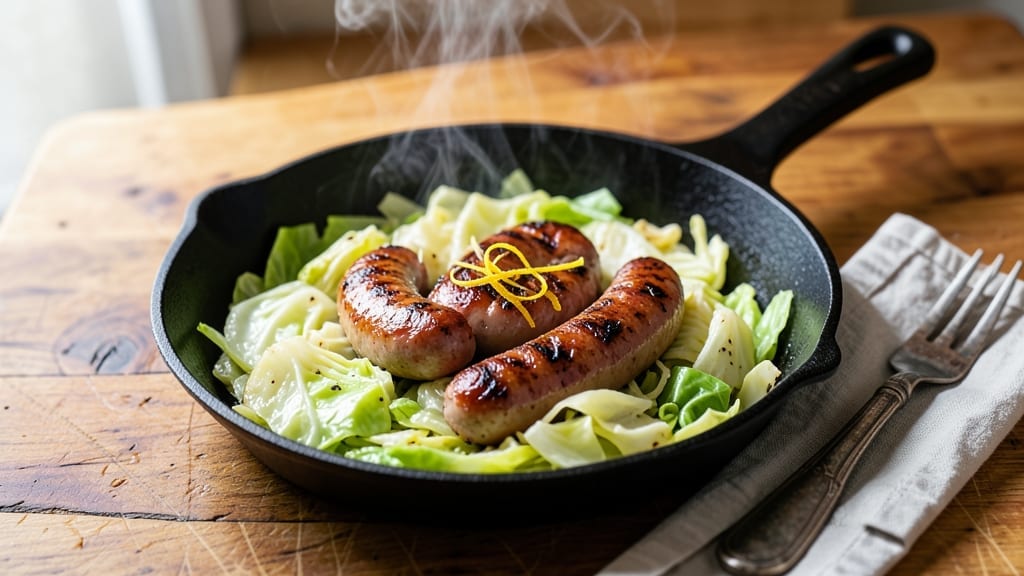
This cooked cabbage with smoked sausage recipe delivers the kind of hearty, one-pan comfort that reminds me of my grandmother’s kitchen—where flavors build slowly and every bite feels like a hug.
The secret lies in balancing tender cabbage with rich, smoky sausage, all simmered together until the edges caramelize just enough to deepen the flavor. I first perfected this dish during a chilly autumn weekend when I needed something substantial enough to fill the house with warmth.
The beauty of this recipe is its simplicity: just a few pantry staples and 40 minutes of hands-off cooking. You’ll start by searing thick slices of smoked sausage until they’re golden and crisp at the edges, then let them render their natural fats into the pan.
Those fats become the foundation for sautéing onions and garlic until they’re soft and fragrant, creating a base that transforms simple cabbage into something truly satisfying. The caraway seeds add a subtle earthiness that ties everything together.
By the time you’re done, you’ll have a dish that’s restaurant-quality but made in your own kitchen—cabbage tender yet still holding its shape, sausage slices infused with the flavors of the pan, and a sauce that’s rich enough to coat every bite.
The aroma alone will have everyone gathering around the table, and the leftovers? Even better the next day, if there are any. This is the kind of meal that feels like coming home.
Serve it alongside crusty rye bread for soaking up the juices or with a side of buttery mashed potatoes to round out the plate. The contrast of textures—crisp cabbage, tender sausage, and soft bread—makes every forkful worth savoring.
Let’s get cooking—this dish is easier than it looks, and the results are unforgettable.
Ingredients for cooked cabbage and smoked sausage
Just a few pantry staples and a handful of fresh ingredients for this hearty one-pan comfort.
| Ingredient | Amount | Notes |
|---|---|---|
| Green Cabbage 🥬 | 1 ½ lb | Green cabbage, cut into wedges |
| Smoked Sausage 🌭 | 1 lb | Kielbasa or similar, sliced thick |
| Yellow Onion 🧅 | 1 whole | Medium, sliced into half-moons |
| Garlic Cloves 🧄 | 4 cloves | Fresh, minced for aroma |
| Caraway Seeds 🌾 | 1 tsp | Whole, for earthy depth |
| Bay Leaves 🍃 | 2 whole | Fresh or dried, for warmth |
| Apple Cider Vinegar 🍎 | 2 tbsp | For brightness, not white vinegar |
| Dried Thyme 🌿 | 1 tsp | Or fresh thyme doubled |
| Salt 🧂 | 1 ½ tsp | Kosher or sea salt |
| Black Pepper 🌶️ | ½ tsp | Freshly ground for heat |
| Vegetable Oil 🫒 | 2 tbsp | For searing sausage |
| Water 💧 | 1 cup | For simmering cabbage |
[recipe_ingredient_scaler]
The cabbage is the star here—green cabbage holds up best to the long cooking time, but purple or red will work too. Look for heads that feel heavy for their size (that means they’re packed with moisture). Trader Joe’s and Whole Foods usually have the freshest, but any grocery store will do. Don’t skip the wedges—keeping them intact makes them easier to handle and they caramelize beautifully at the edges. As for the sausage, kielbasa or any good smoked sausage will give you that rich, smoky flavor. If you can find it, Applegate or Johnsonville are reliable brands that won’t let you down.
No caraway seeds? Celery seeds at half the amount work in a pinch, though they’re more bitter. Fresh thyme is ideal, but dried works fine—just double the amount. If you’re short on apple cider vinegar, white vinegar or lemon juice will do, though the flavor won’t be quite the same. The bay leaves? Fresh are better, but dried are fine if that’s what you’ve got. And if you’re feeling adventurous, swap the sausage for smoked turkey or chicken sausage—just make sure it’s got that smoky kick. The key is balancing the richness of the sausage with the bright, slightly tangy cabbage, so don’t skimp on the vinegar or fresh herbs.
This dish tastes even better the next day—honestly, the flavors meld even more overnight. Store leftovers in an airtight container in the fridge for up to 5 days, or freeze for 3 months. I like to portion mine into containers with a side of crusty bread so lunches are ready to grab. The cabbage will soften more the longer it sits, so if you’re serving it right away, keep an eye on it. And if you’ve got extra sausage, toss those slices in the freezer—they’ll crisp up perfectly when reheated.
Why You’ll Love This Recipe
- I’ll be real: this tastes even better the next day. The flavors meld together like a well-aged whiskey, and it’s the kind of meal you can reheat for lunch without feeling guilty. Store it for up to five days, and it’ll still be just as good—perfect for those days when you’re too tired to cook but still want something hearty.
- One-Pan Magic: Honestly, this is the kind of dish where you toss everything in a skillet and forget about cleanup. No fancy prep—just slicing the cabbage into wedges and chopping the onion (which, let’s be real, takes less time than microwaving frozen meals). The sausage sears up in minutes, and the cabbage cooks right alongside it, so you’re done before you even think about washing a second pot.
- Smoky Satisfaction: Between the thick slices of smoked sausage and those toasted caraway seeds, this dish hits like a warm hug. The garlic and thyme add that bright punch, while the apple cider vinegar keeps it from tasting too heavy—like a perfect balance of smoky, tangy, and savory. My daughter insists on picking out the sausage pieces first, but even she can’t resist the whole bowl.
- Leftovers? Yes, Please: I’ll be real: this tastes even better the next day. The flavors meld together like a well-aged whiskey, and it’s the kind of meal you can reheat for lunch without feeling guilty. Store it for up to five days, and it’ll still be just as good—perfect for those days when you’re too tired to cook but still want something hearty.
Step-by-step instructions for cooked cabbage with smoked sausage
This one-pan dish delivers deep, smoky comfort with minimal effort—just follow these simple steps.
Sear the Smoked Sausage Until Golden
Heat a large skillet over medium heat and add the 2 tablespoons vegetable oil. Once the oil shimmers, add the 1 pound smoked sausage, sliced into thick rounds. Cook for 5-6 minutes, turning occasionally, until the sausage develops a deep golden-brown crust and releases easily from the pan.
This searing step builds rich, caramelized flavor that carries through the entire dish. If the sausage releases too easily before browning, reduce the heat slightly and give it another minute. Remove the sausage and set it aside on a plate—you’ll add it back later.
Sauté Onion, Garlic, and Aromatics
In the same skillet (no need to wipe it clean—the browned bits add flavor), add the 1 yellow onion, sliced into half-moons. Cook for 4-5 minutes over medium heat until the onions soften and begin to caramelize at the edges. Add the 4 minced garlic cloves and cook for 30 seconds until fragrant.
Next, stir in the 1 teaspoon caraway seeds and 1 teaspoon dried thyme, toasting them for 30 seconds until you can smell their nutty, earthy aroma. This is where the dish builds its complex flavor profile. If the seeds start to burn, reduce the heat slightly and keep stirring.
Cook the Cabbage Until Tender
Add the 1½ pounds green cabbage, cut into wedges, to the skillet. Sprinkle with the 1½ teaspoons salt and ½ teaspoon black pepper, then pour in the 1 cup water. Stir everything together and bring to a simmer over medium heat.
Cover the skillet with a lid and cook for 15-18 minutes, stirring occasionally, until the cabbage is fork-tender but still holds its shape. The water should mostly evaporate, leaving a concentrated, savory liquid. If the cabbage isn’t tender after 18 minutes, add 2 tablespoons more water and continue cooking.
Finish with Vinegar and Sausage
Return the cooked sausage to the skillet and stir to combine with the cabbage. Add the 2 bay leaves and 2 tablespoons apple cider vinegar, then simmer uncovered for 3-4 minutes until the vinegar mellows and the flavors meld together. The vinegar brightens the dish, cutting through the richness of the sausage.
Taste and adjust seasoning if needed—you might want to add a pinch more salt or a crack of black pepper. Remove the bay leaves before serving, as they can be bitter. This dish tastes even better the next day, as the flavors continue to develop.
Pro Tips For Making Cooked Cabbage And Smoked Sausage
- Brown the Sausage Properly: DESCRIPTION: That first sear isn’t just about looks—it’s where the flavor happens. Use medium heat and let those slices sit undisturbed for 30 seconds at a time before flipping. If you keep moving them, you’ll end up with pale, bland sausage. I learned this the hard way after making a whole batch that tasted more like boiled meat than smoked sausage.
- Slice Onions Evenly: DESCRIPTION: Half-moons aren’t just for show—they caramelize faster and more evenly than uneven chunks. Take the time to cut them consistent in size, or you’ll end up with some onions mushy and others still raw. A sharp knife and a steady hand make all the difference here.
- Don’t Skip the Caraway Toast: DESCRIPTION: Those 30 seconds of toasting the caraway seeds and thyme might seem insignificant, but they’re the thing that makes this dish taste like it came from a Polish grandmother’s kitchen. If you rush past this, you’ll miss that deep, nutty aroma that ties everything together.
- Simmer Cabbage Covered: DESCRIPTION: The 15-18 minutes of covered simmering is non-negotiable—this is how the cabbage softens without turning to mush. If you peek too often or leave the lid off, you’ll end up with uneven cooking and a dry skillet. Trust the process, even if it feels like forever.
Wine and beer pairings for this dish
Crisp White Wines
For this hearty dish, I reach for a crisp German Riesling Kabinett—its bright acidity and subtle apple notes cut through the richness of the smoked sausage while complementing the cabbage’s earthy depth.
The 11-12% ABV keeps it balanced without overwhelming the meal. I love Dr. Loosen Blue Slate for its mineral finish that echoes the cabbage’s natural crispness.
Dry Riesling Pairings
A dry Riesling from the Mosel Valley, like Weissburgunder, provides the perfect acidity to contrast the dish’s savory, smoky flavors. The stone fruit notes harmonize beautifully with the caramelized onions and caraway seeds. Look for Erich Padberg—it’s a crowd-pleaser that won’t break the bank.
German Beer Options
When I’m craving something lighter, I pour a Hefeweizen like Paulaner Original. The banana and clove notes from fermentation pair surprisingly well with the caraway seeds in the cabbage. For a darker option, try a Dunkelweissbier—its malty sweetness balances the dish’s tangy apple cider vinegar finish.
Local Craft Beer
If you’re near a brewery, seek out a German-style Pilsner with citrusy hops. My go-to is New Belgium Fat Tire—its crispness cleanses the palate between bites. For something more adventurous, a Berliner Weisse with raspberry adds a fruity contrast that works surprisingly well with the smoky sausage.
Regional Wine Connection
This dish reminds me of my trips through the Alsace region where I’d stop at vineyards between motorcycle rides along the coast. The Pinot Gris from there—like Domaine Weinbach—has enough body to stand up to the sausage while its pear notes echo the cabbage’s natural sweetness.
It’s the perfect pairing for this comforting meal.
Nutrition facts
Frequently asked questions
Can I use a different type of sausage?
While kielbasa or traditional smoked sausage works best, you can substitute with smoked turkey sausage or even chicken sausage. Just ensure it has a good smoky flavor to complement the cabbage. The key is to sear it until golden for maximum depth of flavor.
What if my cabbage isn’t tender after 18 minutes?
Don’t worry—just add 2 tablespoons more water and let it cook uncovered for another 5-10 minutes. Covering it again will help it absorb moisture and soften evenly. The cabbage should become tender but still hold its shape, not turn mushy.
Can I make this dish ahead of time?
Yes! This dish actually tastes better the next day, as the flavors meld together. Store leftovers in an airtight container in the fridge for up to 5 days. Reheat gently on the stove with a splash of water to restore moisture. It reheats beautifully!
Why does the recipe use apple cider vinegar instead of white vinegar?
Apple cider vinegar adds a subtle sweetness and brightness that complements the smoky sausage and earthy cabbage. White vinegar would be too harsh and overpowering. The 2 tablespoons of apple cider vinegar balances the richness without making the dish taste sour.

Trained in classic French technique but raised on slow-cooked ribs and spicy rubs, she blends culinary skill with smoke and soul.
- Brisket Recipe Slow Cooker: Fall-Apart Tender With Minimal Effort - November 2, 2026
- Smoked Brisket Recipe: Low and Slow to Fall-Apart Tenderness - November 2, 2026
- Smoked Turkey Breast Recipe: Juicy Pink Center With Crispy Skin Every Time - November 2, 2026