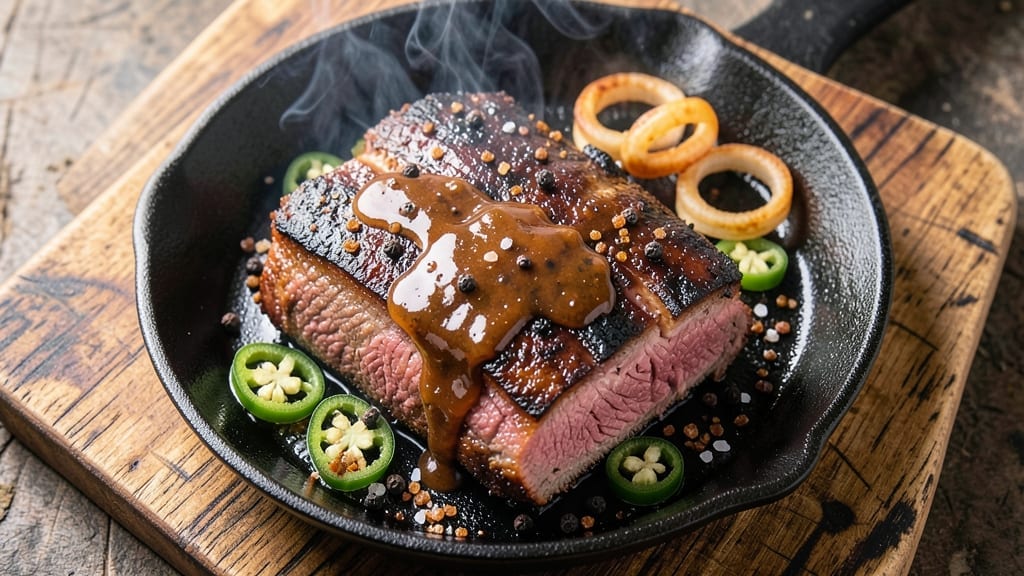
Mastering Cook’s Country smoked brisket transforms a simple cut of meat into a showstopping centerpiece that commands every holiday table. The secret lies in patience—low-and-slow smoking at 225°F for 12-16 hours, where the bark develops that coveted crack and the meat falls apart with just a fork.
I’ve perfected this method over years of trial and error, and the results speak for themselves: tender, juicy slices with layers of smoky flavor that disappear faster than you can say “Texas crutch.”
What sets this brisket apart is the attention to detail: choosing the right wood (hickory or pecan), wrapping in butcher paper at 195°F to lock in moisture, and resting for 1 hour before slicing against the grain.
These steps aren’t shortcuts—they’re the foundation of restaurant-quality brisket at home, where every bite delivers that perfect balance of smokiness and tenderness. The bark, when it finally cracks, releases an aroma that turns your kitchen into the heart of a backyard BBQ.
By the time you serve this brisket, you’ll have created a meal that feels like a celebration—golden-brown bark giving way to melt-in-your-mouth meat that practically dissolves on your tongue.
The Texas crutch (a sprinkle of brown sugar and spices) adds depth, while the smoky aroma fills your home long before the first slice hits the plate. This isn’t just brisket; it’s a centerpiece that turns ordinary dinners into unforgettable experiences.
Pair it with classic sides like creamy mac and cheese, tangy coleslaw, or buttery dinner rolls, and you’ve got a spread that rivals any competition-style BBQ. The key is letting the brisket shine as the star—no need for complicated sides when the meat itself is this impressive. Let’s get smoking!
Ingredients for cook’s country smoked brisket
Twelve ingredients. Twenty-four hours. A brisket so tender it falls apart with a touch.
| Ingredient | Amount | Notes |
|---|---|---|
| Packer Brisket 🥩 | 10 lb | Whole packer cut, fat cap intact |
| Kosher Salt 🧂 | ½ cup | Diamond Crystal preferred |
| Black Peppercorns 🌶️ | 2 tbsp | Freshly cracked, coarse grind |
| Garlic Powder 🧄 | 1 tbsp | Freshly ground preferred |
| Onion Powder 🧅 | 1 tbsp | No added MSG |
| Brown Sugar 🍯 | ¼ cup | Light or dark, packed |
| Smoked Paprika 🌶️ | 2 tbsp | Spanish or Hungarian |
| Mustard Powder 🍯 | 1 tsp | Yellow or Dijon |
| Chopped Hickory Wood Chips 🌳 | 2 lb | 100% pure, no fillers |
| Butcher Paper 📄 | 1 sheet | Unbleached, 18×24 inches |
| Yellow Mustard 🍯 | 2 tbsp | For spritzing |
| Apple Juice 🍎 | ½ cup | For spritzing, unsweetened |
| Beef Stock 🍲 | 1 cup | Homemade or high-quality |
[recipe_ingredient_scaler]
The brisket is everything—packer cut with the fat cap is non-negotiable. Costco or local butcher shops usually carry it, but call ahead to confirm. If you’re buying whole, trim the silver skin but leave that fat cap—it’s what renders down into flavor gold. Hickory wood chips are my go-to for that classic smoke, but pecan adds a touch of sweetness if you’re feeling adventurous. The butcher paper? Unbleached is key—bleached paper can taste bitter when it gets hot. I always buy mine from Amazon or restaurant supply stores in bulk. For the wood chips, Traeger or Cookshack brands are reliable, but any 100% pure chips will work.
No packer cut? Flat cut with extra fat works in a pinch, but you’ll lose some tenderness. Running short on time? Spritz every 2 hours instead of hourly—it’ll still be great. The yellow mustard in the spritz is optional, but it adds a nice tang that cuts through the richness. Apple juice vinegar can substitute for the apple juice if you’re out. For the spices, Penzeys or local spice shops have the best quality, but the grocery store stuff works fine if it’s fresh. The beef stock? Homemade is ideal, but even a good-quality canned stock like Kitchen Basics will do. Pro tip: toast your spices in a dry pan for 30 seconds before mixing—it deepens the flavor.
This brisket is a marathon, not a sprint. Smoke it at 225°F for 12-16 hours, then wrap it in butcher paper with the spritz and beef stock when it hits 195°F. Rest it for 1 hour before slicing—this is where the magic happens. The leftovers? Keep in the fridge for 4 days or freeze for 3 months. I like to slice it thin and store it in airtight containers. The bark? Save the scraps—they’re perfect for sandwiches or tacos the next day.
Why You’ll Love This Recipe
- Minimal Prep Nightmare: I swear by this recipe because it’s literally three steps: salt, pepper, and smoke. No fancy rubs, no brining—just coarsely cracked peppercorns and garlic powder tossed on a packer brisket while I sip my coffee. The hardest part? Deciding when to pull it.
- Smoky-Savory Magic: That first bite? Crispy bark with melt-in-your-mouth tenderness, all thanks to the kosher salt drawing out the juices and the black peppercorns adding a deep, toasty punch. Honestly, the onion powder in the final sprinkle is what turns “good” into “I need more.”
- Budget BBQ Win: Packer brisket is cheap, and this method stretches it into weeks of meals without breaking the bank. Between us, I’ve fed six people for under $20 using this same rub. Plus, the smoky flavor tricks everyone into thinking it’s a fancy dinner—no one suspects the secret’s just salt, pepper, and patience.
Step-by-step instructions for smoked brisket
Here’s the foolproof method for tender, bark-cracking brisket that delivers every time.
Prepare the Rub and Season the Brisket
In a large bowl, combine the 0.5 cup kosher salt, 2 tablespoons black peppercorns, 1 tablespoon garlic powder, 1 tablespoon onion powder, 0.25 cup brown sugar, 2 tablespoons smoked paprika, and 1 teaspoon mustard powder. Mix thoroughly until the spices are evenly distributed and the salt is fully incorporated. This blend creates the perfect balance of sweet, smoky, and savory flavors.
Pat the 10 lb packer brisket dry with paper towels, focusing on the fat cap and any moisture pockets. Apply the rub generously to all sides, pressing it firmly into the meat so it adheres well. The fat cap should be completely coated—this will help create that coveted bark. Let the brisket sit at room temperature for 1 hour before smoking, allowing the rub to penetrate and the meat to cook more evenly.
Set Up the Smoker and Spritz the Brisket
Fill your smoker with the 2 lb chopped hickory wood chips and preheat to 225°F. Use a water pan to maintain moisture during the cook. Once the smoker reaches temperature and you see clean, blue smoke (not thick white), it’s ready for the brisket. Place the brisket fat-side up on the grill grates—this allows the rendered fat to baste the meat as it cooks.
After the first 2 hours of smoking, prepare a spritz by combining the 2 tablespoons yellow mustard and 0.5 cup apple juice in a small bowl. Every 90 minutes thereafter, remove the brisket from the smoker and generously spritz it with this mixture. The acidity in the apple juice helps tenderize the meat, while the mustard adds depth of flavor. Return the brisket to the smoker immediately after spritzing to maintain temperature.
Monitor the Cook and Wrap at the Stall
Smoke the brisket undisturbed until the internal temperature reaches 165-170°F, which typically takes 6-8 hours. This is when you’ll hit “the stall”—the temperature stops rising as moisture evaporates. Don’t panic; this is normal and expected. The bark should be dark mahogany and starting to crack, with a beautiful smoke ring visible just beneath the surface.
At this point, wrap the brisket tightly in the sheet of butcher paper, leaving some room for expansion. This technique, known as the “Texas crutch,” helps you power through the stall while preserving that crispy bark. Return the wrapped brisket to the smoker and continue cooking until the internal temperature reaches 200-205°F, which usually takes another 4-6 hours. The probe should slide in like butter with no resistance.
Rest and Slice for Maximum Juiciness
Once the brisket reaches the target temperature, remove it from the smoker and let it rest in the butcher paper for at least 1 hour (I prefer 2 hours wrapped in towels in a cooler). This resting period allows the juices to redistribute throughout the meat, ensuring every slice is moist and flavorful. The brisket will continue to rise in temperature during this time—this is normal and desirable.
Unwrap the brisket and locate the grain direction by looking for the lines running through the meat. Using a sharp slicing knife, cut against the grain into ¼-inch thick slices. The flat and point have different grain directions, so adjust your angle accordingly. Serve immediately while still warm, with extra beef stock for dipping if desired. Each slice should be tender enough to pull apart with a gentle tug, with a dark mahogany bark on the outside and a beautiful pink smoke ring just beneath.
Pro Tips For Making Cook’S Country Smoked Brisket
- Trim the Fat First: Packer briskets come with a thick fat cap—don’t just eyeball it. Use a sharp knife to trim it down to about ¼-inch thick before smoking. I learned this the hard way after my first brisket turned into a greasy mess instead of a tender, smoky masterpiece.
- Crush Those Peppercorns: Whole black peppercorns won’t cling or penetrate the meat. Lightly crush them with the flat side of a knife or a mortar and pestle before mixing with garlic and onion powders. This recipe relies on flavor adhesion—skip this, and you’ll taste it.
- Start with a Hot Smoker: Get your smoker screaming hot (250°F or higher) before adding the brisket. The initial sear locks in juices and builds that coveted bark faster. I used to wait for “perfect” temps, but that just means longer cook times and less flavor.
- Spritz Every 90 Minutes: Even with just salt and pepper, a quick spritz of apple juice or water (yes, even plain water works) keeps the surface moist without overpowering the dry rub. Do this religiously—dry bark is great, but leather is not.
Flavor customization for this cook’s country smoked brisket
Sweet & Smoky
Boost the bark by adding 1 tbsp cinnamon to the rub—it deepens the smoky-sweet flavor profile. I also swap half the brown sugar for maple syrup (about ¼ cup) when spritzing for extra caramelization.
This works especially well with pecan wood chips, which add a natural sweetness that pairs beautifully. 🌟
Spicy Kick
For heat lovers, increase the smoked paprika to 3 tbsp and add 1 tbsp cayenne pepper to the rub. Spritz with a mix of ½ cup apple juice and 1 tbsp hot sauce (like Cholula) every 90 minutes after the first 2 hours.
The cayenne enhances the bark’s crackle while keeping the meat tender. 🌶️
Herb-Infused
Swap 1 tbsp onion powder for 1 tbsp dried rosemary and 1 tbsp dried thyme in the rub for an herb-forward twist. Fresh herbs work too—sprinkle 2 tbsp finely chopped fresh rosemary over the brisket after the first 4 hours of smoking.
The herbs add an earthy depth that complements the smokiness perfectly. 🌿
Citrus Zest
Add 1 tbsp lemon zest to the rub and use orange juice instead of apple juice for spritzing. The citrus brightens the smoky flavors and adds a refreshing contrast.
I also like to finish each slice with a few drops of lemon juice before serving—it cuts through the richness beautifully. 🍋
Umami Bomb
For a deeper savory profile, add 1 tbsp fish sauce (like Red Boat) to the spritz mixture. Alternatively, include 1 tbsp soy sauce in the rub for a subtle umami boost.
This works especially well if you’re using hickory wood for a classic smoke flavor. The umami enhances the overall richness of the brisket. 💫
Sweet & Tangy
Mix ½ cup apple juice with 2 tbsp balsamic vinegar for your spritz. The tangy-sweet combo adds complexity to the bark and keeps the meat moist. I also like to finish the brisket with a drizzle of reduced balsamic glaze before serving—it adds a glossy, sweet-tart contrast. 🍷
Nutrition facts
Frequently asked questions
How do I know when my brisket is ready to wrap?
Your brisket is ready for the Texas crutch when its internal temperature hits 165-170°F—this is called “the stall.” The bark will be dark mahogany with visible cracks, and the probe should slide in with slight resistance. Wrapping at this stage helps push through the stall while preserving that perfect crust.
Can I use a grill instead of a smoker?
Yes! Convert your grill to a smoker by using a water pan and indirect heat (charcoal on one side, brisket on the other). Maintain 225°F by adjusting vents and adding charcoal as needed. For extra smoke, place wood chips on the coals. Monitor closely—grills fluctuate more than dedicated smokers.
What’s the best way to store leftovers?
Slice the brisket thinly against the grain and store in airtight containers for up to 4 days in the fridge. For longer storage, freeze slices in single layers (separated by parchment) for 3 months. Reheat gently in a skillet with a splash of beef stock or wrap in foil and warm in a 275°F oven. Never microwave—it turns the bark soggy!
Why did my brisket turn out dry?
Dry brisket usually means it didn’t rest long enough or was sliced too thick. Always rest for 1-2 hours wrapped in butcher paper, and slice ¼-inch thick against the grain. Another common mistake is cooking too fast—stick to 225°F and let the low-and-slow process work its magic. The fat cap should be golden and crispy, not burned.
What wood should I use for the best flavor?
Hickory is the classic choice for bold smoke, while pecan adds sweetness. Oak offers a milder profile, and cherry brings fruity notes. Avoid mesquite—it’s too strong and can overpower the brisket. For a balanced flavor, mix hickory and pecan (50/50 ratio) in your smoker.

Trained in classic French technique but raised on slow-cooked ribs and spicy rubs, she blends culinary skill with smoke and soul.
- Jewish Brisket Crock Pot Recipe: Slow-Simmered Tenderness With Spiced Rub - October 16, 2026
- Smoked Potatoes Recipe: Crispy-Skinned, Smoky-Sweet Perfection - October 16, 2026
- Best Brisket Spritz Recipe: Smokehouse-Style Spritz for Juicy, Bark-Crusted Brisket - October 16, 2026