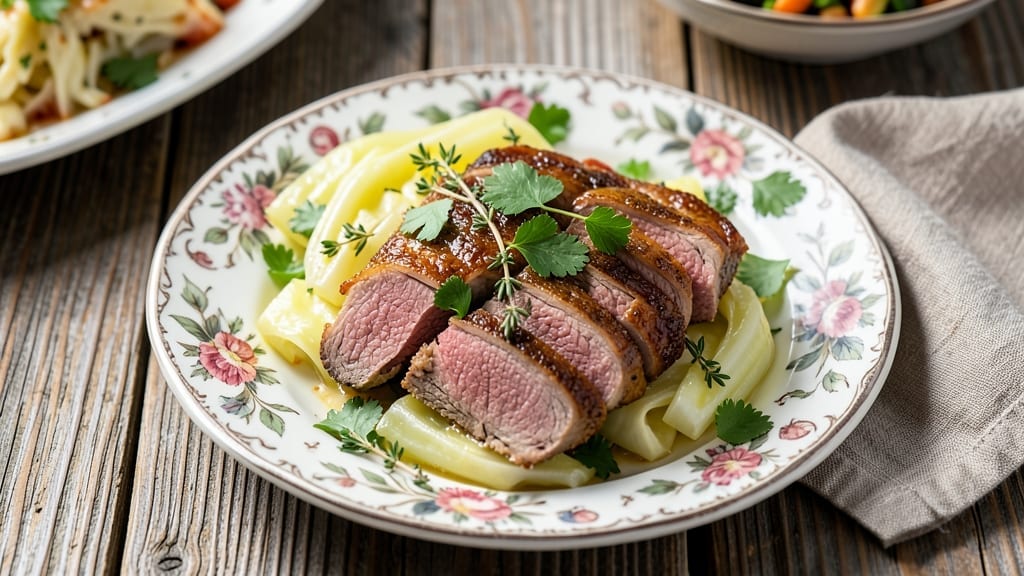
This corned beef brisket and cabbage recipe transforms a simple stovetop simmer into a hearty, restaurant-quality meal that delivers melt-in-your-mouth tenderness and bold flavors. The secret lies in slow, controlled cooking that breaks down tough brisket while infusing every bite with smoky, savory depth—no slow cooker required.
I developed this method after years of testing, ensuring the cabbage stays crisp-tender rather than mushy, and the brisket absorbs just the right amount of spiced liquid.
The beauty of this stovetop approach is its foolproof simplicity: one pot, minimal prep, and about 2.5 hours of hands-off cooking time. You’ll start with a raw brisket and end with perfectly seasoned slices that pair beautifully with the caramelized cabbage.
The key technique is maintaining a gentle simmer, which prevents the meat from drying out while allowing the cabbage to soften just enough to become tender yet still hold its shape.
By the time you’re done, you’ll have a tender, flavor-packed meal that’s rich with the classic combination of corned beef and cabbage—juicy, aromatic, and packed with that unmistakable spiced beef taste.
The cabbage will be sweetened from the slow cooking, with edges that just begin to crisp, while the brisket slices pull apart effortlessly. This is the kind of dish that tastes even better the next day, making it perfect for meal prep or a cozy Sunday dinner.
Serve it with buttery mashed potatoes or crusty bread to soak up every last bit of the flavorful cooking liquid. For an extra touch, garnish with fresh parsley or a squeeze of lemon to brighten the rich flavors. Here’s how to make it—stovetop style—without compromise.
Ingredients for corned beef brisket and cabbage recipe stove top
A few hearty ingredients transform into restaurant-style corned beef brisket and cabbage.
| Ingredient | Amount | Notes |
|---|---|---|
| Corned Beef Brisket 🥩 | 3 lb | Flat cut preferred, no added seasoning |
| Green Cabbage 🥬 | 1 whole | Heaviest head, core removed |
| Yellow Onion 🧅 | 1 whole | Medium size, sliced into wedges |
| Garlic Cloves 🧄 | 6 cloves | Peeled, smashed slightly |
| Carrots 🥕 | 3 whole | Medium size, cut into chunks |
| Bay Leaves 🍃 | 2 whole | Fresh preferred, dried works |
| Mustard Seeds 🌶️ | 1 tsp | Whole, not ground |
| Black Peppercorns 🌶️ | 1 tsp | Freshly cracked |
| Beef Broth 💧 | 2 cups | Low-sodium preferred |
| Apple Cider Vinegar 🍎 | ½ cup | For tangy depth |
| Brown Sugar 🍯 | 2 tbsp | Light or dark, packed |
| Salt 🧂 | 1 tbsp | Kosher or sea salt |
| Fresh Parsley 🌿 | ¼ cup | Chopped, for garnish |
| Lemon Juice 🍋 | 1 tbsp | Freshly squeezed |
[recipe_ingredient_scaler]
The brisket is everything here. Look for a 3-pound flat cut at Whole Foods or your local butcher—it’s leaner and more flavorful than the point cut. If you can’t find a whole piece, ask for pre-sliced corned beef brisket (just check the label for no added seasoning). The cabbage should be heavy and firm, with crisp outer leaves—avoid any with yellowing or wilted spots. I always grab a heavy head because it stays crunchier during the long simmer. For the broth, low-sodium is key—you’re controlling the salt level with the kosher salt and corned beef’s natural seasoning.
No fresh parsley? Dried works at half the amount, but it won’t have that bright pop. Short on apple cider vinegar? White vinegar or lemon juice in a pinch, but the cider adds a subtle sweetness that balances the salt. The carrots can be baby carrots if you’re in a hurry, but whole carrots hold up better. For the garlic, smashing the cloves releases more flavor than mincing—just don’t crush them into paste. If you’re using dried bay leaves, toast them briefly in a dry pan first to deepen their aroma. And trust me on the brown sugar—it caramelizes slightly during cooking, adding a touch of sweetness that rounds out the flavors.
This dish tastes even better the next day, so make extra if you can. Store leftovers in the fridge for up to 5 days, covered with the cooking liquid. For meal prep, portion into containers with a little broth—it reheats beautifully. The cabbage will soften further, so if you’re serving it the next day, add a splash of water or broth when reheating to keep it from drying out. Freezes well for 3 months too, though the cabbage might get slightly softer after thawing. Garnish with fresh parsley and a squeeze of lemon right before serving to brighten everything up.
Why You’ll Love This Recipe
- One-Pot Magic: I love that this is the kind of dish where you toss everything in one pot and forget about it. No last-minute chopping mid-cook—just prep everything first (brisket rinsed, cabbage wedged, onions sliced, carrots chunked), then let the Dutch oven do the work while you relax.
- Crave-Worthy Depth: That sear on the brisket? Chef’s kiss. Combined with the smash of garlic, mustard seeds, and a splash of apple cider vinegar, it’s like a symphony of flavors—savory, tangy, and just sweet enough from the brown sugar. The cabbage gets tender-crisp, and the carrots add a subtle bite.
- Feeds a Crowd (or Me): Honestly, this is my secret weapon for game days, potlucks, or even a lazy Sunday. The brisket serves 6-8 easily, and the cabbage and veggies stretch even further. Plus, the cooking liquid? Perfect for dipping toast or potatoes later—zero waste, zero stress.
- Leftover Legend: Between us, this tastes even better the next day. The flavors deepen, and the brisket gets fall-apart tender. I pack leftovers for lunches, freeze portions for busy weeks, and honestly? My kids beg for seconds without me even asking. Five days in the fridge, three months in the freezer—this dish is built to last.
Step-by-step instructions for corned beef brisket and cabbage
Here’s how to transform tough brisket into fork-tender perfection with minimal effort.
Prepare the Brisket and Vegetables
Begin by rinsing the 3 lb corned beef brisket under cold water to remove any surface brine. Pat it completely dry with paper towels—this helps the seasoning stick and creates a better crust later. While it dries, prepare the vegetables: cut the 1 green cabbage into 8 wedges, slice the 1 yellow onion into 8 wedges, and cut the 3 carrots into 1-inch chunks.
Peel and smash the 6 garlic cloves with the flat side of a knife—this releases more flavor when cooking. Keep everything prepped and ready to go, as you’ll be adding them all to the pot at once. The reason we prep everything first is so you don’t have to stop and chop mid-cook, where the pot might burn or stick.
Build the Flavor Base
Heat a large Dutch oven or heavy pot over medium heat. Add 2 tbsp of oil and let it get hot but not smoking. Add the corned beef brisket and sear on all sides until golden brown, about 3-4 minutes per side. This step develops deep flavor through the Maillard reaction.
Remove the brisket and set it aside. In the same pot, add the sliced onion, cabbage wedges, and carrot chunks. Cook for 5 minutes, stirring occasionally, until the vegetables begin to soften slightly. Add the smashed garlic cloves, 1 tsp mustard seeds, 1 tsp black peppercorns, 2 bay leaves, and the 2 tbsp brown sugar. Stir everything together and cook for another 2 minutes.
Simmer Until Fork-Tender
Pour in the 2 cups beef broth and ½ cup apple cider vinegar. Scrape up any browned bits from the bottom of the pot—they’re packed with flavor. Return the brisket to the pot, fat-side up if possible, and bring everything to a gentle simmer. Here’s the thing—you want small bubbles breaking the surface, not a rolling boil.
Cover the pot and reduce heat to low. Let it simmer for 2 hours, checking occasionally. After 2 hours, use tongs to turn the brisket over and add the 1 tbsp salt. Continue simmering for another 1-2 hours, or until the brisket is fork-tender and easily pulls apart. The internal temperature should reach 195-205°F when measured with a meat thermometer.
Finish with Bright Flavors
Once the brisket is tender, carefully remove it from the pot and let it rest on a cutting board for 10 minutes. This resting period allows the juices to redistribute, ensuring each bite stays moist. While it rests, taste the cooking liquid and adjust seasoning if needed—add more salt or vinegar if you prefer more tang.
Stir the 1 tbsp lemon juice and ¼ cup chopped fresh parsley into the cooking liquid. This brightens the flavors and adds freshness. Skim off any excess fat if desired, then ladle the sauce over the sliced brisket. Serve the brisket with the cabbage and vegetables spooned around it, and pass the flavorful cooking liquid separately for dipping.
Pro Tips For Making Corned Beef Brisket And Cabbage Recipe Stove Top
- Sear the Brisket Hard: I used to rush this step, thinking “it’ll be fine,” but those 3-4 minutes per side on high heat make a real difference—the crust locks in flavor and keeps the meat juicy. If your pot isn’t hot enough, you’ll end up with bland, greasy brisket instead of that golden, caramelized payoff.
- Smash That Garlic: Don’t just chop those 6 cloves—smash them with the flat of your knife first. It bursts the skins, so the flavor infuses the broth instead of hiding in whole cloves. (Yes, even if you’re impatient like me, take the extra 30 seconds.)
- Watch the Simmer: A rolling boil ruins the brisket—you want tiny bubbles, not a frenzy. After the first 2 hours, if your pot’s too aggressive, lower the heat slightly. I learned this the hard way when my brisket turned out tough instead of meltingly tender.
- Salt at the Right Time: Don’t salt the brisket at the start—add that 1 tablespoon of salt after the first 2 hours of simmering. It balances the flavors better and prevents the meat from drying out. (And skip the salt shaker—kosher salt is the way to go here.)
Regional styles of this recipe
Irish Stout-Inspired
This variation transforms the classic dish with a dark, malty twist inspired by Irish stout. After searing the 3 lb corned beef brisket, add 1 cup Guinness stout to the broth mixture instead of plain beef broth.
The deep, roasted flavors of the stout caramelize beautifully during simmering, creating a rich sauce that coats the cabbage and meat. I like to reduce the cooking liquid by half before finishing with the 1 tbsp lemon juice—this intensifies the umami depth.
The result is a dish with restaurant-quality complexity that feels festive yet approachable. 🍻
Southern-Style Spiced
For a Southern twist, add 1 tsp smoked paprika and ½ tsp cayenne pepper to the vegetable sauté before adding the broth. The 1 whole yellow onion and 3 carrots will absorb these spices beautifully while simmering.
I also swap ½ cup apple cider vinegar for ½ cup buttermilk—this adds tangy creaminess that balances the heat. Serve with cornbread to soak up the spiced cooking liquid. This version feels like a holiday gathering staple. 🌟
German-Style with Horseradish
Incorporate German traditions by adding 2 tbsp prepared horseradish to the cooking liquid during the final 30 minutes of simmering. The brisket and cabbage wedges will absorb this peppery kick while maintaining tenderness.
For extra authenticity, serve with sauerbraten-style mustard (mix 2 tbsp Dijon mustard with 1 tbsp honey and 1 tbsp vinegar). This version is perfect for St. Patrick’s Day celebrations or German-inspired meals. 💛
Jamaican Jerk-Inspired
For a bold Caribbean twist, add 1 tbsp Jamaican jerk seasoning (like McCormick) to the pot during the vegetable sauté. The 6 garlic cloves and 1 yellow onion will infuse with smoky, spicy notes.
Finish with 1 tbsp lime juice instead of lemon juice and garnish with fresh cilantro. Serve with rice and peas for a complete Jamaican-inspired feast. This version brings heat and tropical flavors to the classic dish. 🌶️
Cajun-Style with Andouille
Elevate this dish with ½ lb sliced andouille sausage added during the final 20 minutes of cooking. The sausage infuses the cabbage and brisket with Cajun spice while adding protein. Stir in 1 tbsp Cajun seasoning (like Tony Chachere’s) with the 2 tbsp brown sugar during the vegetable sauté.
Serve with dirty rice or cornbread to complete the Louisiana-inspired meal. This version feels like a festive, spicy twist on tradition. ⚡
Nutrition facts
Frequently asked questions
Why does the cabbage stay crisp while cooking?
Cutting the cabbage into 8 wedges instead of thin slices helps it retain texture. The gentle simmer (not boiling) and the addition of carrots and onions create a balanced liquid that cooks the cabbage just enough to soften edges without turning it mushy. The 2-hour simmer is key—it’s long enough for the brisket to tenderize but gentle enough for cabbage to stay hearty.
What if I don’t have a Dutch oven?
A heavy pot with a tight-fitting lid works perfectly! Just ensure it’s at least 4-6 quarts capacity to accommodate the brisket and vegetables without overcrowding. The key is maintaining that gentle simmer—if your pot has thinner sides, reduce the heat slightly to avoid boiling over.
How do I know when the brisket is done?
Use a meat thermometer to check for 195-205°F internal temperature. The brisket should also pull apart easily with tongs. If it’s still tough after 3 hours total simmering, add ½ cup extra beef broth and continue cooking covered on low heat. Resting for 10 minutes after cooking ensures juicy slices.
Can I make this dish ahead of time?
This dish tastes even better the next day. Store leftovers in the fridge for up to 5 days, covered with the cooking liquid. For meal prep, reheat gently on the stove with a splash of water or broth to keep the cabbage tender. The flavors deepen over time, making it perfect for busy weeknights!

Trained in classic French technique but raised on slow-cooked ribs and spicy rubs, she blends culinary skill with smoke and soul.
- Smoked Chicken Salad Recipe: Crispy, Smoky Bites With Creamy Ranch Dressing - October 19, 2026
- Beer Can Chicken in a Smoker Recipe: Juicy, Herbed Perfection in One Can - October 19, 2026
- Brined Beef Brisket Recipe: Ultra-Tender, Juicy Cuts in One Pot - October 19, 2026