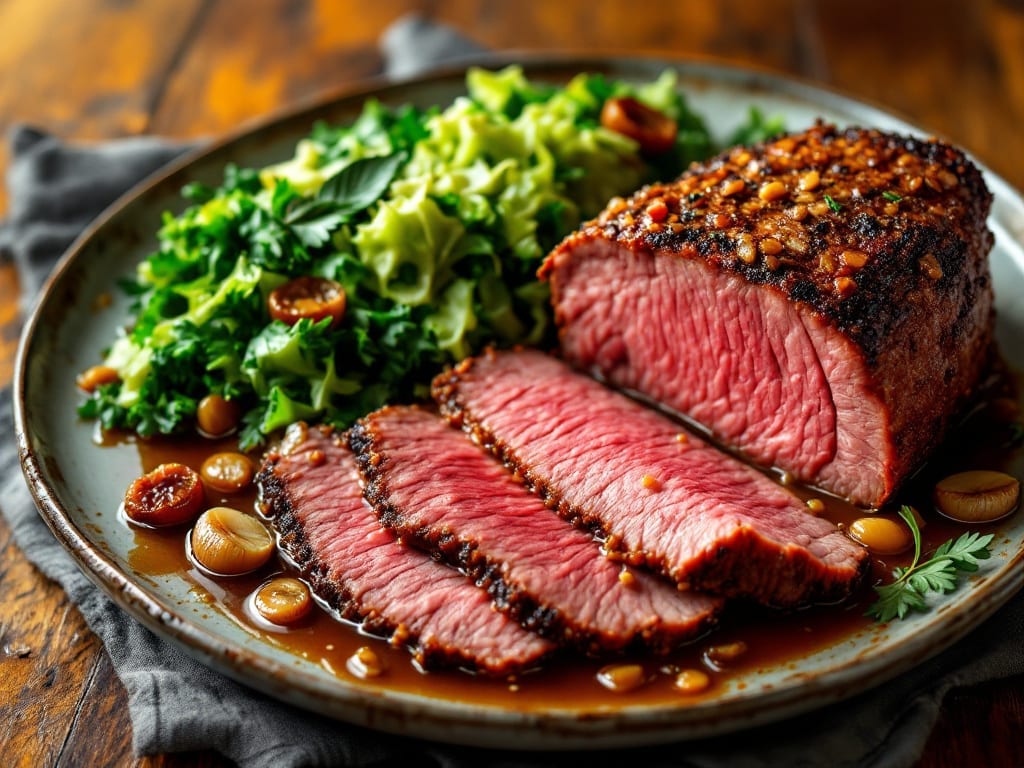
This corned beef brisket and sauerkraut recipe delivers the perfect marriage of tender, slow-braised meat and tangy fermented cabbage—a dish steeped in tradition and packed with bold flavors.
The key lies in the slow cooking process, where the brisket transforms from tough to melt-in-your-mouth perfection while the sauerkraut adds a sharp, crunchy contrast that cuts through the richness.
I developed this method after years of experimenting with different cooking times and spice blends, ensuring every bite is restaurant-quality without requiring a professional kitchen.
The beauty of this recipe is its versatility—whether you’re serving it at a holiday gathering or a casual Sunday dinner, the combination of corned beef and sauerkraut brings comfort and satisfaction.
The brisket is simmered just long enough to develop deep, savory notes while staying juicy, and the sauerkraut is warmed without losing its signature tang. This dish is a celebration of Irish-American tradition, where hearty flavors and simple ingredients create something truly special.
By the time you serve this dish, your kitchen will smell like a classic deli, and your guests will be reaching for seconds. The brisket slices easily, revealing layers of flavor in every bite, while the sauerkraut adds texture and acidity that balance the meal perfectly.
This recipe is designed to impress, whether you’re feeding a crowd or treating yourself to a comforting meal at home.
Pair it with boiled potatoes and a dollop of mustard for the full experience, or serve it alongside crusty bread to soak up every last bit of the rich, flavorful juices. Let’s get started on creating this timeless classic that brings warmth and tradition to your table.
Ingredients for corned beef brisket and sauerkraut
Nothing beats the classic combo of slow-cooked beef and tangy sauerkraut—just a few ingredients for big flavor.
| Ingredient | Amount | Notes |
|---|---|---|
| Corned Beef Brisket 🥩 | 4 lb | Pre-cubed or whole, with spices |
| Sauerkraut 🥬 | 2 cups | Unopened jar preferred |
| Yellow Onions 🧅 | 2 whole | Medium size, sliced |
| Garlic Cloves 🧄 | 6 cloves | Peeled and smashed |
| Carrots 🥕 | 3 whole | Medium size, chopped |
| Bay Leaves 🌿 | 2 whole | Dried, standard size |
| Black Peppercorns 🌶️ | 1 tsp | Whole, lightly crushed |
| Salt 🧂 | 1 tbsp | Kosher or sea salt |
| Beef Broth 💧 | 4 cups | Low-sodium preferred |
| Apple Cider Vinegar 🍎 | ½ cup | For tangy depth |
| Brown Sugar 🍯 | ¼ cup | Light or dark |
| Mustard Seeds 🌶️ | 1 tsp | Whole, yellow preferred |
| Crusty Bread 🍞 | 1 loaf | For serving, optional |
| Yellow Mustard 🟡 | ½ cup | For serving, optional |
| Potatoes 🥔 | 2 lbs | Russet or Yukon gold |
[recipe_ingredient_scaler]
The brisket is the star here, so look for a well-marbled cut—most butchers or grocery stores carry it pre-cubed, which saves time. If buying whole, trim excess fat but leave some for flavor. Costco or local butchers often have the best prices, and you can ask them to cube it for you. For the sauerkraut, Bubbies or Rehr’s are my go-tos—they’re fermented just right, not too sour. If you can’t find those, any unopened jar from the refrigerated section works (just skip the canned stuff—it’s mushy). The potatoes? Russets hold up best when boiled for this dish, but Yukon Golds add creaminess if you prefer.
No beef broth? Water plus 1 tbsp soy sauce gets you close. Mustard seeds too expensive? Skip them—the dish still shines. Sauerkraut too sour? Rinse it under cold water to mellow the tang. The brisket can be swapped for corned beef from a can (like Stormy Weather), but homemade or store-bought corned brisket is worth the effort. For the mustard, French’s yellow is classic, but any good-quality whole-grain mustard works. The carrots and onions can be swapped for celery if you’re making a full Irish stew vibe.
This reheats beautifully—just add a splash of broth or water. Keeps for 5-6 days in the fridge, freezes for 3 months (though it’s best fresh). I always make extra brisket for sandwiches the next day. The sauerkraut can be reheated separately if you prefer it crisp. Store the bread in a paper bag at room temp to keep it crispy, and the mustard in the fridge once opened.
Why You’ll Love This Recipe
- One-Pot Magic: I swear by this recipe when I’m too tired to wash a million dishes. The brisket and sauerkraut simmer together in the same pot—no extra pans, no fuss—just deep, smoky flavors that practically cook themselves.
- Crispy-Tender Perfection: That first bite? Chef’s kiss. The brisket gets tender enough to melt in your mouth while the edges crisp up just enough to hold their shape—like a cross between a slow-cooked dream and a weeknight win.
- Leftovers That Don’t Suck: Between us, most leftovers are sad. Not this. The brisket stays juicy for days, and the sauerkraut actually improves the next day, soaking up all the rich juices. I pack it in lunches without guilt—honestly, my coworkers ask for seconds.
- Budget-Friendly Crowd-Pleaser: You’re getting a whole brisket for less than takeout, and it feeds a family (or a hungry roommate). The onions, garlic, and carrots stretch the flavors, so you’re not just eating meat—you’re eating a full, satisfying meal that won’t break the bank.
Step-by-step instructions for slow-cooked corned beef brisket
Here’s how to transform tough brisket into tender, saucy perfection with that signature tangy crunch.
Prepare the Brisket and Vegetables
Begin by rinsing the 4 lb corned beef brisket under cold water to remove any excess curing salts. Pat it completely dry with paper towels—this helps the meat develop a better crust during cooking. If your brisket is whole, you can leave it intact, but if it’s pre-cubed, simply arrange the pieces in a single layer in your slow cooker.
Peel and chop the 3 whole carrots into 1-inch pieces. Thinly slice the 2 whole yellow onions into half-moons. Peel and smash the 6 garlic cloves with the flat side of your knife—this releases more flavor as they cook. Add all these vegetables to the slow cooker along with the 2 cups sauerkraut, 2 whole bay leaves, 1 tsp lightly crushed black peppercorns, and the 1 tbsp salt.
Combine Liquids and Seasonings
In a medium bowl, whisk together the 4 cups beef broth, 0.5 cup apple cider vinegar, 0.25 cup brown sugar, and 1 tsp mustard seeds until the sugar dissolves completely. This liquid mixture is what will transform your brisket from tough to tender through slow braising.
Pour this seasoned liquid over the brisket and vegetables in the slow cooker. The liquid should cover about two-thirds of the meat—if it doesn’t, add a bit more water. The vinegar adds tangy depth while the sugar caramelizes slightly during cooking, creating a glossy sauce.
Slow Cook Until Fork-Tender
Place the lid on your slow cooker and cook on low heat for 8 to 10 hours. This long, gentle cooking process breaks down the tough muscle fibers in the brisket, creating melt-in-your-mouth texture. You’ll know it’s ready when a fork slides through the thickest piece with minimal resistance and the meat pulls apart easily.
About 1 hour before serving, peel and cube the 2 lbs potatoes into 1-inch pieces. Add them to the slow cooker and continue cooking until they’re fork-tender and heated through. The potatoes will absorb some of the delicious braising liquid, becoming creamy and flavorful.
Final Touches and Serving
Once the brisket is perfectly tender, carefully remove it from the slow cooker and transfer to a serving platter. Spoon the vegetables and potatoes onto the platter as well, arranging them around the brisket. The braising liquid should be thick and rich—if it’s too thin, you can simmer it uncovered on the stovetop for 5-10 minutes to reduce it slightly.
Slice the brisket against the grain for maximum tenderness. Serve with warm slices of the 1 loaf crusty bread and offer the 0.5 cup yellow mustard on the side for those who enjoy an extra tangy kick. The combination of tender brisket, crunchy sauerkraut, and creamy potatoes makes this a hearty, comforting meal perfect for any gathering.
Pro Tips For Making Corned Beef Brisket And Sauerkraut
- Brown the Brisket First: That pinkish corned beef? It’s delicious, but browning it first—even just 2-3 minutes per side in a hot pan—adds depth. The Maillard reaction kicks in, giving your dish a richer, meatier flavor that cuts through the tang of the sauerkraut. Skip this, and you’re missing out on the full experience.
- Rinse the Sauerkraut: Drain the sauerkraut, then rinse it under cold water to cut the acidity. Trust me, you don’t want that sharp tang overpowering your brisket—especially if you’re using a mild, sweet brisket. Pat it dry afterward so it absorbs flavors instead of steaming in its own juice.
- Don’t Overcrowd the Pot: If you’re braising, add the brisket first, then the veggies, then the sauerkraut. Piling everything in at once steams the meat instead of browning it, and you’ll end up with soggy onions instead of caramelized ones. Give it space—your future self will notice the difference.
- Slice Against the Grain: The brisket’s grain runs long—slicing perpendicular to it makes each bite tender. If you’re impatient and slice with it, you’ll end up with chewy, stringy results. Take the extra 30 seconds to line up those cuts right. It’s worth it.
Regional styles of this recipe
Irish-American Tradition
The roots of corned beef brisket and sauerkraut stretch deep into Irish-American history, born from necessity during the potato famine. Irish immigrants brought their love of brisket (a cheaper cut than beef roasts) to America, where it became a staple in delis.
The sauerkraut pairing emerged in German-American communities, creating a perfect balance of textures and flavors. I grew up on this dish during St. Patrick’s Day celebrations, where it was always served with mustard and crusty bread. 🍀
Jewish Deli Style
In Jewish delis across the US, corned beef brisket is often served with sauerkraut as a nod to Eastern European traditions. The key difference? Delis typically use a sweeter, more caramelized glaze on the brisket. I’ve seen them add a touch of honey or molasses to the braising liquid.
The sauerkraut is usually warmed separately to maintain its crunch. For an authentic deli experience, serve the brisket on rye bread with a side of coleslaw.
German-Inspired Variations
In German cuisine, this dish often incorporates more root vegetables like parsnips and turnips alongside the potatoes. The sauerkraut takes center stage, sometimes even served in a skillet with caramelized onions.
I once made a version with 2 tbsp caraway seeds added to the sauerkraut while warming it—this added a distinct earthy flavor that complemented the brisket beautifully. The dish is often served with a dark rye bread to soak up the juices.
Slow-Cooker Adaptations
For those short on time, the slow cooker method is a game-changer. I’ve found that adding 1 tbsp Dijon mustard to the braising liquid enhances the depth of flavor. The slow cooker keeps the brisket moist while allowing the sauerkraut to absorb the rich juices.
For a modern twist, some cooks add ½ cup Guinness stout instead of broth—this adds a malty richness that pairs perfectly with the tangy sauerkraut. 🔥
Southern U.S. Twist
In Southern states, this dish often gets a smoky element. I’ve seen versions where the brisket is finished on a grill or smoked for 30 minutes before serving. The sauerkraut is sometimes mixed with a touch of hot sauce or Cajun seasoning for a spicy kick.
Cornbread becomes the preferred side dish instead of potatoes, creating a perfect balance of textures and flavors that reflect Southern comfort food traditions.
Modern Fusion Ideas
For those looking to experiment, try adding 1 tbsp smoked paprika to the braising liquid for a smoky depth. I’ve also seen successful versions with kimchi replacing the sauerkraut—this adds a spicy, fermented kick that still complements the brisket.
Another creative twist is to serve the dish with avocado slices and pickled jalapeños for a fresh, modern take on this classic combination. 💡
Nutrition facts
Frequently asked questions
Can I use canned corned beef instead of a whole brisket?
Yes, but the flavor and texture won’t be the same. Canned corned beef (like Stormy Weather) works in a pinch, but it lacks the deep, slow-braised richness of homemade or store-bought brisket. If using canned, simmer it with extra apple cider vinegar (¼ cup) and brown sugar (2 tbsp) for 30 minutes to build flavor. For best results, stick with a whole brisket or pre-cubed corned beef from the deli section.
How do I keep the sauerkraut crunchy?
Warm it gently—never boil! Add sauerkraut to the slow cooker 1 hour before serving and keep it submerged in the braising liquid. For extra crunch, drain it before serving or quickly sauté it in a pan with 1 tbsp butter for 2-3 minutes until heated through. Avoid overcooking, or it’ll turn mushy.
Can I make this in a Dutch oven instead of a slow cooker?
Brown the brisket in the Dutch oven first over medium-high heat for 3-4 minutes per side to develop a crust. Then add all ingredients, cover, and simmer on the stovetop at 325°F for 3-4 hours, or transfer to a 275°F oven for 4-5 hours. The Dutch oven method gives you more control over the cooking process and often yields a deeper flavor.
What’s the best way to reheat leftovers?
Reheat brisket and potatoes in the slow cooker on low for 2-3 hours with ½ cup beef broth to keep them moist. For sauerkraut, warm it separately in a skillet with 1 tbsp butter over medium-low heat for 3-4 minutes. Never microwave—it makes the brisket tough and sauerkraut soggy. Leftovers stay fresh for 5-6 days in the fridge.
Why does my brisket turn out dry?
Overcooking is the most common mistake. Brisket is done when it reaches 203°F internally and pulls apart easily—don’t wait for it to shred completely. Also, check your liquid level; if it evaporates too quickly, add ½ cup broth during cooking. Always rest the meat for 15 minutes before slicing to retain juices.

Trained in classic French technique but raised on slow-cooked ribs and spicy rubs, she blends culinary skill with smoke and soul.
- Best Smoked Oxtail Recipe: Deep-Rich Flavor After Low-and-Slow Cooking - October 14, 2026
- Pit Boss Smoked Prime Rib Roast Recipe: Bark-to-Bone Crispness in 4 Hours - October 14, 2026
- Smoked Tuna Steak Recipe: Seared Crust Meets Silky Centers - October 14, 2026