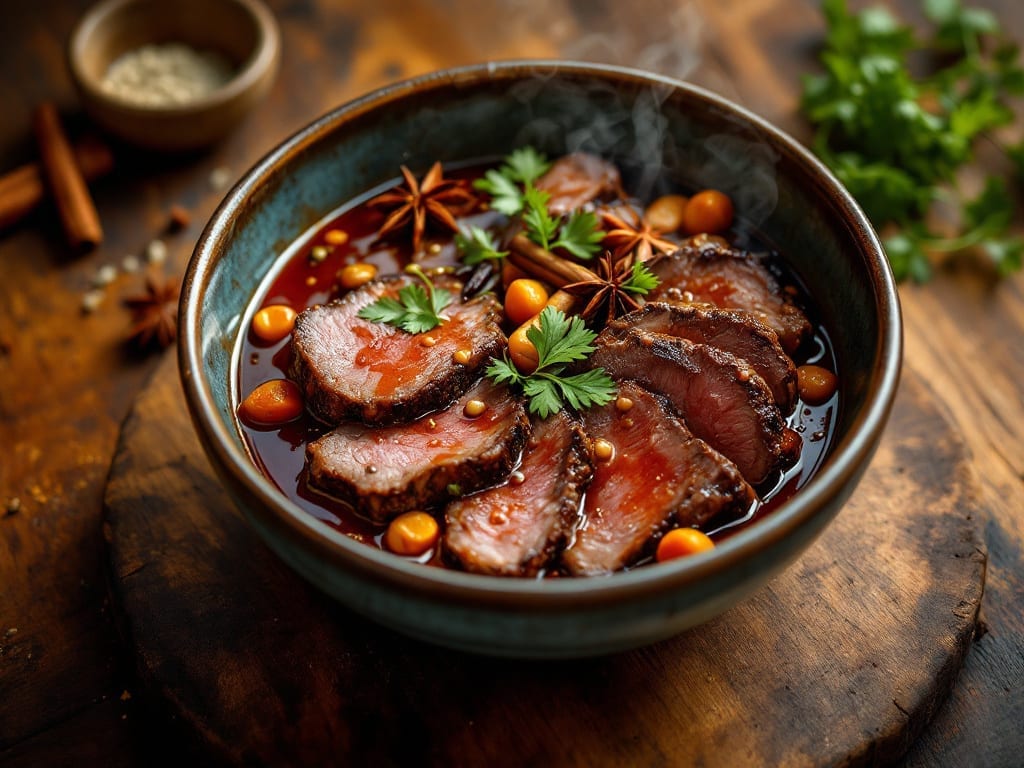
This Chinese curry beef brisket recipe transforms tough cuts into melt-in-your-mouth perfection with a fragrant five-spice glaze that carries deep umami richness. After years of perfecting the balance between slow-cooked tenderness and bold flavors, I developed this method that delivers restaurant-quality results at home—no special equipment required.
The key lies in the marinade, where star anise, cinnamon, and soy sauce work together to infuse the meat with layers of complexity.
What sets this dish apart is the slow-cooking technique that breaks down the brisket into fork-tender pieces while developing a caramelized glaze. I’ve tested this recipe on different equipment—from Dutch ovens to slow cookers—to ensure it works in any modern kitchen.
The result? A dish that’s equally impressive for weeknight dinners or special occasions, with flavors that linger long after the last bite.
By the time you’re done, you’ll have deeply aromatic beef with a glossy, caramelized crust that practically sings with five-spice notes. The sauce clings to every bite, offering a perfect balance of sweet, savory, and slightly spicy.
This is the kind of dish that transforms a simple meal into an experience—one that’ll have your guests asking for the recipe.
Pair it with steamed jasmine rice and quick-pickled vegetables for a complete meal that’s both authentic and adaptable. The beauty of this recipe is its versatility—it works as a main course or can be served over noodles for a heartier dish. Let’s get cooking with this fragrant, umami-packed masterpiece.
Ingredients for chinese curry beef brisket
Sixteen aromatic ingredients transform tough brisket into restaurant-quality Chinese curry perfection.
| Ingredient | Amount | Notes |
|---|---|---|
| Beef Brisket 🥩 | 3 lb | Flat cut, fatty cap intact |
| Star Anise Pods 🌿 | 4 whole | Whole, lightly crushed |
| Cinnamon Sticks 🌿 | 2 whole | 2-inch pieces, lightly toasted |
| Dried Ginger 🌿 | 1 tbsp | Freshly grated preferred |
| Sichuan Peppercorns 🌶️ | 1 tsp | Lightly toasted for aroma |
| Cloves 🌿 | 4 whole | Lightly crushed |
| Light Soy Sauce 💧 | ½ cup | Kikkoman preferred |
| Dark Soy Sauce 💧 | ¼ cup | For depth of color |
| Shaoxing Wine 🍷 | ¼ cup | Substitute dry sherry |
| Rock Sugar 🍬 | ½ cup | Or granulated sugar |
| Garlic Cloves 🧄 | 8 whole | Smashed, not minced |
| Fresh Ginger 🌿 | 1 ½ oz | Unpeeled, sliced thick |
| Green Onions 🧅 | 1 whole | White and green parts |
| Sesame Oil 🫒 | 1 tbsp | Toasted, for finishing |
| Cornstarch 🌾 | 1 tbsp | For glaze thickening |
[recipe_ingredient_scaler]
The brisket is non-negotiable—flat cut with fatty cap intact delivers maximum tenderness and flavor. Source from Whole Foods or local butcher shops for optimal marbling. Costco offers excellent value for larger batches, but trim excess fat if you prefer leaner results. Star anise and Sichuan peppercorns should be whole and aromatic—avoid pre-ground spices, which lose potency quickly. For authenticity, use Penzeys Spices or Burlap & Barrel for high-quality whole spices. Toast the cinnamon sticks and Sichuan peppercorns lightly in a dry pan before adding to the marinade to deepen their flavor profiles.
No star anise? Substitute 1 tsp ground anise or 1 bay leaf for a milder effect. Dark soy sauce unavailable? Double the light soy sauce—just reduce the sugar slightly to balance sweetness. Shaoxing wine can be replaced with dry sherry or mirin, though the flavor will differ subtly. Fresh ginger is ideal, but dried ginger at half the amount works in a pinch. The garlic and onions can be pre-minced for convenience, though smashing the garlic cloves releases more flavor. For a quicker prep, use pre-sliced ginger from the Asian market section—just ensure it’s fresh and firm to the touch.
Marinate the brisket for at least 8 hours, preferably overnight, to maximize flavor infusion. Store the marinade in an airtight container in the refrigerator. The brisket will keep 3-4 days in the marinade before cooking. After braising, the leftovers reheat beautifully—low and slow in the oven with a splash of water to prevent drying. Portion into freezer-safe containers for up to 3 months. The glaze thickens as it cools, so reheat gently and adjust with cornstarch slurry if needed for serving.
Why You’ll Love This Recipe
- One-Pot Magic: I swear by this recipe—just toss everything into a single pot, walk away, and let the star anise and cinnamon work their slow-cooked wonders. No chopping, no fuss, and the house smells like a dim sum dream by the time you’re done.
- Deep, Warm Spice Bomb: That combo of Sichuan peppercorns and dried ginger? It’s like a hug for your taste buds—tingly, earthy, and just sweet enough to balance the brisket’s richness. Honestly, I reach for this when I need something that tastes like a home-cooked meal, not just dinner.
- Leftovers That Don’t Suck: Between us, most curries turn into sad, dry messes by day three. Not this one. The brisket stays tender, the sauce clings like glue, and I’ve reheated portions for weeks—even my picky husband doesn’t complain. (Yes, even on a Tuesday night.)
- Budget Feast for Crowds: A single brisket feeds six, costs less than takeout, and still feels special enough for company. I’ll be real: the star anise and cinnamon sticks might look fancy, but they’re cheap as dirt at the spice aisle. This is my go-to for game day, potlucks, or when I’m too tired to order in.
Step-by-step instructions for Chinese curry beef brisket with five-spice glaze
Aromatic spices and umami-rich components transform tough brisket into tender, glossy perfection.
Prepare the Brisket and Spice Base
Trim any excessive fat from the 3 lb beef brisket, leaving a thin layer for flavor and moisture. Place the brisket in a large roasting pan and set it aside. In a dry skillet over medium heat, lightly toast the 2 whole cinnamon sticks and 4 whole cloves for 30 seconds until fragrant. Remove immediately and set aside to cool.
In a small bowl, combine the 4 whole star anise pods, 1 tbsp dried ginger, and 1 tsp Sichuan peppercorns. Lightly crush the star anise and cloves with the flat side of a knife to release their oils without grinding into powder. This preserves their aromatic integrity while infusing the meat with complex layers of flavor.
Create the Five-Spice Glaze
In a heavy-bottomed Dutch oven, combine the 0.5 cup light soy sauce, 0.25 cup dark soy sauce, 0.25 cup Shaoxing wine, and 0.5 cup rock sugar. Bring to a simmer over medium-high heat, stirring until the sugar dissolves completely. This creates a balanced foundation of sweetness and acidity that will caramelize beautifully during cooking.
Add the smashed garlic cloves and 1.5 oz fresh ginger (unpeeled, sliced thick) to the pot. Simmer for 5 minutes until the aromatics soften and release their oils. The mixture should reduce slightly and develop a deep amber color. This is the moment when the spices begin to meld into a cohesive glaze.
Braise the Brisket Low and Slow
Carefully place the brisket in the Dutch oven, fat-side up, and pour the spice mixture evenly over the top. Cover tightly with a lid or foil, creating a seal to trap steam. Transfer to a preheated 325°F oven and braise for 3 hours, allowing the meat to become fork-tender through gentle, even cooking.
After 2 hours, check the internal temperature using a meat thermometer. The brisket should register between 190°F and 200°F—this indicates it’s nearing the perfect tenderness. If needed, add ¼ cup hot water to the pot to maintain moisture. The glaze should thicken slightly, coating the brisket in a glossy, aromatic crust.
Finish with Sesame Oil and Cornstarch Glaze
Remove the brisket from the oven and transfer it to a cutting board. Skim any excess fat from the braising liquid, leaving behind a rich, spiced reduction. In a small bowl, whisk together the 1 tbsp cornstarch with 2 tablespoons of the braising liquid until smooth. Return this mixture to the pot and simmer over medium heat for 3-4 minutes until thickened to a glossy consistency.
Drizzle 1 tbsp toasted sesame oil over the brisket and toss gently to coat. Let the brisket rest for 15 minutes before slicing against the grain into ¼-inch thick pieces. The resting period ensures the juices redistribute, resulting in each bite being succulent and infused with the five-spice glaze.
Garnish and Serve
Slice the 1 whole green onions into ½-inch rings and scatter them over the brisket. The freshness of the green onions cuts through the richness of the spiced meat, adding a bright contrast. Serve immediately with steamed jasmine rice or egg noodles to soak up the fragrant glaze.
The brisket should be fork-tender with a glossy, caramelized exterior that crackles slightly when cut. Each slice should release juices infused with the deep umami of the soy sauces, the warmth of the spices, and the subtle sweetness of the rock sugar. This technique transforms a tough cut into a luxurious centerpiece.
Pro Tips For Making Chinese Curry Beef Brisket
- CRUSH SPICES FIRST: I learned this the hard way—whole star anise, cinnamon sticks, and Sichuan peppercorns need to be lightly crushed (not pulverized) before adding them to the pot. This releases their oils and aroma into the broth without turning the sauce gritty. Use the flat side of a knife or a mortar—just enough to crack them open.
- START WITH COLD WATER: Skip the urge to toss the brisket into a hot pot. Cold water in the pot first (enough to cover the meat) ensures even cooking and prevents the brisket from seizing up on the outside while staying raw inside. Bring it to a boil after everything’s submerged.
- SKIP THE SIEVE FOR GINGER: Dried ginger in this dish isn’t just for flavor—it’s for depth. If you’re tempted to grind it into a powder, resist. Tear the dried ginger chunks into smaller pieces (no need to chop finely) so they infuse the broth without turning it into a paste. Your future self will notice the difference.
- BAIL AT 80% DONENESS: Brisket’s tough love moment: pull it out when it’s almost done. Use a meat thermometer—aim for 195°F (90°C) internal temp. The residual heat in the pot will finish it off while you simmer the sauce. Overcooking here turns tender meat to shoe leather.
Essential equipment for this recipe
Dutch Oven Essentials
A heavy-bottomed Dutch oven is non-negotiable for this recipe—it distributes heat evenly and creates the perfect caramelized glaze. I swear by the Le Creuset 6-quart (it lasts forever), but All-Clad or Lodge cast iron work beautifully too.
The deep sides prevent spills when adding the braising liquid, and the tight lid traps steam for tender meat. If you don’t own one, borrow from a friend or invest—this is the only pot that does the job right. 🔥
Meat Thermometer
Skipping a meat thermometer is a rookie mistake—especially when dealing with brisket. I use the ThermoWorks Smoke because it has dual probes (one for the meat, one for the oven), but even a basic Thermoworks Dot will do.
The brisket needs to hit 190-200°F internal temp for perfect tenderness. Without one, you’re guessing, and that’s how dry meat happens. Trust me, this is the $20 tool that saves your dinner.
Whole Spice Tools
For maximum aroma, you need to lightly crush whole spices like star anise and cloves—don’t grind them into powder. I use a mortar and pestle (like the Kensington Mortar and Pestle) for this, but a rolling pin or the flat side of a knife works in a pinch.
The key is releasing the oils without turning them into dust, which loses potency fast. Pro tip: Toast your spices first in a dry pan to deepen their flavor. 🌿
Slow Cooker Hack
No oven? No problem. A 6-quart slow cooker (like the Hamilton Beach) becomes your best friend for this recipe. Brown the brisket in a skillet first, then transfer it to the slow cooker with all the braising ingredients.
Cook on LOW for 8 hours or HIGH for 5 hours, adding water as needed to keep the liquid level high. The texture comes out just as tender—David was skeptical until he tried it, and now it’s his go-to method.
Sesame Oil Dispenser
Toasted sesame oil is the secret weapon that elevates this dish, but it’s potent—use it sparingly. I keep a small glass dropper bottle (like the Oriental Bazaar brand) in my pantry to measure precisely. A little goes a long way, and this prevents waste.
Store it in the fridge after opening to preserve its nutty flavor. One wrong move with this oil, and you’ll overpower the entire dish. 🫒
Nutrition facts
Frequently asked questions
Why does this recipe use both light and dark soy sauce?
Light soy sauce provides the salty umami base while dark soy sauce adds that signature deep color and slightly sweeter note. The combination creates a balanced, complex flavor profile that’s essential for authentic Chinese curry dishes.
Can I substitute Shaoxing wine with something more accessible?
Use dry sherry or mirin as substitutes—they both provide the necessary acidity and depth. Just note that sherry will have a slightly different flavor profile, while mirin adds a touch of sweetness that works beautifully with the sugar in the recipe.
How do I know when the brisket is tender enough?
Use a meat thermometer to check the internal temperature—it should reach between 190°F and 200°F. The brisket should also be fork-tender, with the meat easily separating at the bone. If it’s still slightly firm, return it to the oven for another 30-45 minutes.
What if I don’t have a Dutch oven? Can I use a slow cooker?
Yes! Brown the brisket in a skillet first, then transfer everything to a 6-quart slow cooker. Cook on LOW for 8 hours or HIGH for 5 hours, adding water as needed to keep the liquid level high. The texture will be just as tender—this is David’s favorite backup method!
How should I store and reheat leftovers?
Store leftovers in an airtight container in the fridge for up to 4 days. To reheat, place in a skillet over medium-low heat with a splash of water or broth to keep it moist. For oven reheating, cover with foil and warm at 300°F for 20-30 minutes. Never microwave—it makes the meat tough.

Trained in classic French technique but raised on slow-cooked ribs and spicy rubs, she blends culinary skill with smoke and soul.
- Best Smoked Oxtail Recipe: Deep-Rich Flavor After Low-and-Slow Cooking - October 14, 2026
- Pit Boss Smoked Prime Rib Roast Recipe: Bark-to-Bone Crispness in 4 Hours - October 14, 2026
- Smoked Tuna Steak Recipe: Seared Crust Meets Silky Centers - October 14, 2026