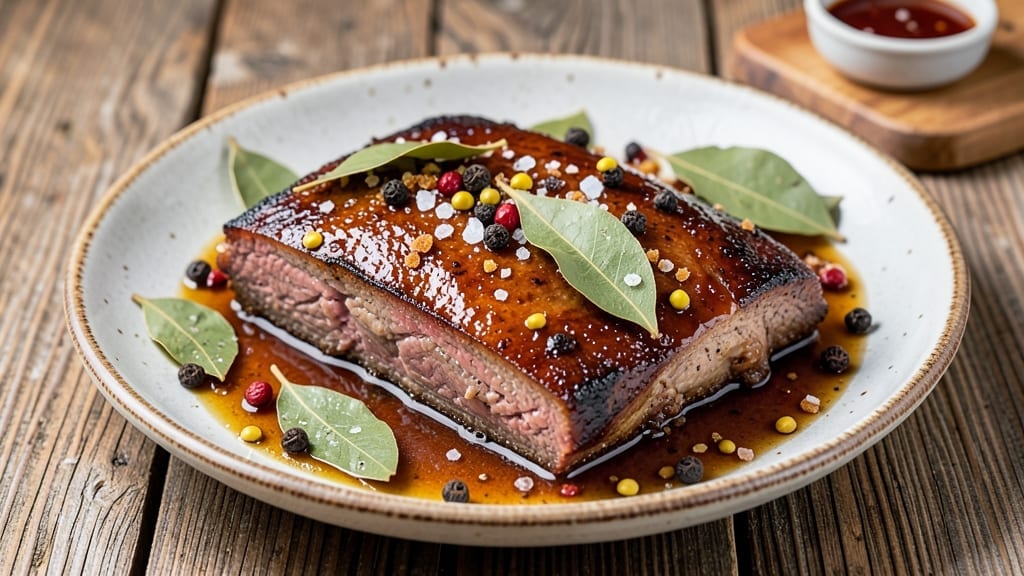
Transforming a tough brisket into tender, melt-in-your-mouth corned beef starts with this herb-infused 24-hour brine recipe—the secret weapon behind restaurant-quality results at home.
The magic happens when salt, spices, and aromatics work their way deep into the meat, breaking down fibers and infusing every bite with rich, savory depth. After years of perfecting this method, I can confidently say this brine turns even the most stubborn brisket into a showstopper.
This isn’t just another brine—it’s a precise balance of kosher salt, brown sugar, and a carefully chosen blend of herbs (like bay leaves, mustard seeds, and black peppercorns) that create layers of flavor while keeping the meat moist.
The 24-hour cure ensures maximum tenderness, but the real payoff comes when you slow-cook the brisket until it’s fork-tender and infused with those deep, caramelized flavors. No shortcuts here—just a foolproof method that delivers professional-quality results every time.
By the time you pull this brisket from the pot, you’ll have a perfectly seasoned, juicy center cut that’s ready for classic sides like cabbage, potatoes, or a tangy mustard sauce. The aroma alone will have everyone gathering around the table, and the first bite will silence any skepticism.
This isn’t just dinner—it’s an experience, and the brine is where it all begins.
The best part? This method works for pot-roasting, slow-cooking, or even smoking, giving you flexibility for any cooking style. Once you try it, you’ll never settle for store-bought again. Let’s get started on the brine—the first step to your most tender corned beef yet.
Ingredients for corned beef brisket brine
Nine ingredients transform tough brisket into melt-in-your-mouth perfection through 24-hour magic.
| Ingredient | Amount | Notes |
|---|---|---|
| Kosher Salt 🧂 | 2 ½ cups | Diamond Crystal preferred for purity |
| Brown Sugar 🍯 | ½ cup | Light or dark, packed |
| Fresh Bay Leaves 🌿 | 4 whole | Dried at half amount if needed |
| Yellow Mustard Seeds 🌶️ | 1 tbsp | Toasted for deeper flavor |
| Black Peppercorns 🌶️ | 1 tbsp | Freshly cracked preferred |
| Allspice Berries 🍃 | 1 tsp | Whole berries for best aroma |
| Ground Cloves 🌿 | ½ tsp | Freshly ground for potency |
| Fresh Garlic Cloves 🧄 | 6 cloves | Smashed lightly for infusion |
| Fresh Onion 🧅 | 1 whole | Yellow or red, peeled |
| Water 💧 | 4 cups | Filtered or distilled preferred |
| Corned Beef Brisket 🥩 | 4 lb | Packer-cut, 1-inch thick |
[recipe_ingredient_scaler]
The kosher salt is non-negotiable here—Diamond Crystal dissolves perfectly without graininess. Whole Foods or Penzeys carry the best quality, but any kosher salt works if it’s fine-grained. Brown sugar adds depth and helps tenderize, so don’t skimp on the packed measurement. For the spices, toast the mustard seeds in a dry pan for 30 seconds before adding to the brine—they’ll release their aroma like crazy. Allspice berries and cloves? Buy whole and grind fresh if you can—pre-ground loses potency fast. The brisket should be packer-cut with good marbling, not lean or overly fatty. Costco or local butchers usually have the best cuts for this.
No bay leaves? Dried works at half the amount, but fresh is ideal for that bright herbal note. Mustard seeds too expensive? Ground mustard at 1/4 tsp gets you close, though texture will differ. Short on allspice? Cinnamon sticks or star anise add warmth in a pinch. The onion and garlic can be pre-minced, but I prefer to smash the garlic cloves and leave the onion whole—it infuses better that way. Water quality matters here—filtered or distilled avoids off-flavors. If you’re using tap water, let it sit out for 30 minutes first to release chlorine. The brisket should be trimmed of excess fat but still have a nice fat cap—this keeps it moist during cooking.
This brine keeps in the fridge for up to 1 week if you want to prep ahead, but it’s best used fresh. The brisket will absorb the brine beautifully, so pat it dry before cooking—this creates a better crust. For storage, keep the brine in an airtight container with the spices sealed separately. The brined brisket itself? 3-4 days in the fridge or 3 months frozen. I always make extra brine—it’s perfect for pickling eggs or veggies later. The spices left over? Store in a sealed jar for up to 6 months—they’ll keep their punch for your next project.
Why You’ll Love This Recipe
- No-Measure Guessing: I’ll be real—this brine is that forgiving. Toss in the salt, sugar, and spices, then eyeball the water. No scales, no stress. Even my college-apartment self could handle it.
- Deep, Smoky Magic: That brown sugar caramelizes into the meat while the bay leaves and mustard seeds add a slow-building warmth. You’re not just seasoning—you’re building layers of flavor that turn tough brisket into something tender and ridiculously good.
- Leftovers That Shine: First night? Hearty sandwiches. Second? Hash with potatoes. Third? Reheat slices in a pan for a quick breakfast. Honestly, I’ve eaten this cold from the fridge and still craved more.
- Pantry Staple Power: Five ingredients, none of which cost an arm and a leg. The kosher salt and peppercorns stretch across meals, and the bay leaves? I buy them in bulk for soups and stews too. Budget-friendly doesn’t mean boring—it means smart.
Step-by-step instructions for corned beef brisket brining
Transform your brisket into melt-in-your-mouth perfection with this precise 24-hour brine method.
Prepare the Brine Mixture
In a large, non-reactive container (I prefer a food-safe plastic or glass container), combine the 2.5 cups kosher salt and 0.5 cup brown sugar. This salt-to-sugar ratio creates the perfect balance of seasoning and moisture penetration. Use a whisk or wooden spoon to thoroughly mix these dry ingredients together, breaking up any sugar clumps. The salt will dissolve completely later when combined with water, but this initial mixing ensures even distribution throughout the brine.
Next, add the 4 whole fresh bay leaves, 1 tablespoon yellow mustard seeds, 1 tablespoon black peppercorns, 1 teaspoon allspice berries, and 0.5 teaspoon ground cloves. These aromatic spices will infuse the brisket with deep, complex flavors. Give everything another stir to distribute the spices evenly among the salt and sugar. Here’s the thing—don’t skip this step. The spices need to be fully incorporated so they penetrate the meat during the brining process.
Add Aromatics and Water
Peel the 1 whole fresh onion and cut it into 8 equal wedges (about 1-inch thick each). Slice the 6 cloves fresh garlic in half horizontally—this exposes more surface area for better flavor infusion. Add these aromatics to the container with the spice mixture. The onion will contribute sweetness and depth, while the garlic adds a bright, pungent note that complements the rich brisket flavor.
Now pour in the 4 cups water and stir vigorously until all the salt and sugar dissolve completely. You should see a clear brine solution with no visible salt crystals remaining. If you notice any undissolved salt after stirring, let it sit for 5 minutes and stir again—this ensures maximum flavor penetration in the meat. The mixture should be fully saturated but not overly concentrated. This brine will draw moisture into the brisket while infusing it with all those wonderful spices.
Submerge the Brisket Completely
Place the 4 lb corned beef brisket in the container and press it down gently to fully submerge it in the brine. You want every inch of the meat covered—this guarantees even flavor distribution and consistent tenderness. If your brisket is particularly large, you may need to weigh it down with a plate or small bowl to keep it fully submerged. This step is critical for achieving that signature melt-in-your-mouth texture that makes brined brisket so special.
Cover the container with plastic wrap or a lid and refrigerate for 24 hours. Here’s what happens during this time: the brine solution penetrates the muscle fibers, breaking down connective tissue and adding moisture that prevents dryness during cooking. The spices and aromatics infuse deeply, creating that complex flavor profile we all love. Don’t be tempted to rush this process—24 hours is the sweet spot for maximum tenderness without over-brining.
Rinse and Prepare for Cooking
After 24 hours, remove the brisket from the brine and rinse it thoroughly under cold water. This step removes any excess salt that might crystallize on the surface during cooking. Pat the brisket dry with paper towels—this is essential for achieving that perfect crispy exterior later. The brisket should feel moist but not wet, and you’ll notice it’s significantly heavier than when you started due to all that absorbed brine.
At this point, your brisket is ready for whatever cooking method you prefer—whether that’s slow roasting, braising, or even grilling. The real magic happens during the cooking process as those infused flavors develop fully. The key is to cook it low and slow to let all those tenderizing benefits shine through. Your brisket will now slice like butter and deliver that unmistakable, herb-infused flavor in every bite.
Pro Tips For Making Corned Beef Brisket Brine
- CRUSH THE SPICES: Toast your mustard seeds and peppercorns in a dry skillet for 30 seconds until fragrant—this deepens their flavor more than just tossing them raw. I used to skip this, and the brine always tasted flat until I realized how much difference a quick sizzle makes.
- BRINE COLD FIRST: Start the brine in the fridge overnight, then bring it to room temp before adding the brisket. Cold brine penetrates better, but room temp helps the seasoning cling instead of beading off. (Yes, even if you’re impatient like me.)
- WEIGH THE SALT: Use 1/3 cup kosher salt per quart of water—not eyeballing it. Too little and the flavor’s weak; too much and you’ll end up with a salty mess. I learned this after ruining a batch by guessing.
- BAY LEAF PLACEMENT: Tuck fresh bay leaves into the brisket’s fat cap and between the muscle layers before brining. They’ll infuse the meat directly instead of just floating in the liquid. Sounds weird, but it works—trust the process.
Dietary considerations for this corned beef brisket brine
Gluten-Free Adaptations
This brine recipe is naturally gluten-free, but if you’re concerned about cross-contamination, use a dedicated container and utensils. The key is ensuring all spices and salt are certified gluten-free—check labels on mustard seeds and allspice since some brands process them in shared facilities.
For extra safety, I recommend Penzeys Spices or Simply Organic brands, which are rigorously tested. The brisket itself is gluten-free, but always verify with your butcher that no additives were used during processing. 🌱
Low-Sodium Options
If you need to reduce sodium, cut the kosher salt to 1.5 cups and increase the brown sugar to 0.75 cup to maintain moisture. For even lower sodium, use a low-sodium brine by replacing half the salt with 1 cup beef broth (low-sodium) and 1 tablespoon lemon juice.
The flavor will be milder but still delicious. Always taste the brine before adding the meat—adjust seasonings to your preference. 💡
Vegetarian Substitutes
While this recipe is meat-focused, you can adapt the brine for hearty vegetables like portobello mushrooms or eggplant. Use the same spices and aromatics but reduce the salt to 1 cup and brine for just 4-6 hours to prevent over-salting delicate veggies.
For a meaty texture, marinate extra-firm tofu or tempeh in the brine for 8 hours, then press and pan-fry. The result is a flavorful, protein-rich alternative. 🌿
Allergen-Friendly Adjustments
For nut allergies, ensure all spices (like allspice) are processed in nut-free facilities. If you’re avoiding mustard, replace the mustard seeds with 1 teaspoon ground coriander or 1 teaspoon celery seeds for a similar earthy depth.
For dairy-free diets, this recipe is already compliant—just confirm the brisket isn’t processed with milk derivatives. Always double-check labels on spices, as some blends contain hidden allergens. ✨
Keto-Friendly Modifications
To make this keto-compatible, reduce the brown sugar to 2 tablespoons (or omit entirely) and add 1 tablespoon erythritol or monk fruit sweetener for a sugar-free option. The brine’s primary purpose is tenderization, so the sugar isn’t critical—it just enhances flavor.
For extra richness, add 1 teaspoon smoked paprika to deepen the savory notes. The brisket will still be tender and flavorful, just without the carbs. 💪
Storage Safety Tips
After brining, store the rinsed brisket in an airtight container with a paper towel on top to absorb excess moisture. It keeps in the fridge for 3-4 days or freezes for 3 months for future use.
The brine itself can be reused once, but only if you’ve stored it separately in a sealed container. For leftovers, repurpose the brine for pickling carrots or cucumbers—just boil it first to kill bacteria. Always reheat brined meats to 165°F to ensure safety. ❄️
Nutrition facts
Frequently asked questions about corned beef brisket brining
Can I use table salt instead of kosher salt in the brine?
No, table salt is too dense and will create uneven salt distribution in your brine. Kosher salt dissolves better and allows for precise measurements. If you must use table salt, reduce it to 1.5 cups (since it’s more concentrated), but kosher salt is ideal for this recipe.
How do I know if my brisket is fully submerged in the brine?
Press the brisket down gently until it’s completely covered—no pink should show. For larger cuts, use a weight (like a plate) to keep it submerged. Full submersion ensures even flavor penetration and tenderness throughout. If parts stay uncovered, they’ll dry out during cooking.
What if I don’t have 24 hours to brine the brisket?
For a quick version, brine for 12 hours minimum—this still improves tenderness, though not as dramatically. If you’re short on time, focus on a longer cook (like 4-5 hours slow-roasting) to compensate. The 24-hour window is ideal, but even 12 hours makes a noticeable difference.
Can I reuse the brine for another batch?
No, never reuse brine for meat—it contains bacteria from the first use. However, you can repurpose the leftover brine for pickling vegetables (like carrots or cucumbers) after boiling it for 10 minutes to kill bacteria. For meat, always use fresh brine.
Why does my brisket turn out dry even after brining?
Overcooking is the most common cause—brisket should reach 195-203°F internally (not 165°F). Use a meat thermometer and cook low and slow. Also, patting the brisket dry before cooking creates a better crust, but don’t overdo it—keep it moist underneath.

Trained in classic French technique but raised on slow-cooked ribs and spicy rubs, she blends culinary skill with smoke and soul.
- Best Smoked Oxtail Recipe: Deep-Rich Flavor After Low-and-Slow Cooking - October 14, 2026
- Pit Boss Smoked Prime Rib Roast Recipe: Bark-to-Bone Crispness in 4 Hours - October 14, 2026
- Smoked Tuna Steak Recipe: Seared Crust Meets Silky Centers - October 14, 2026