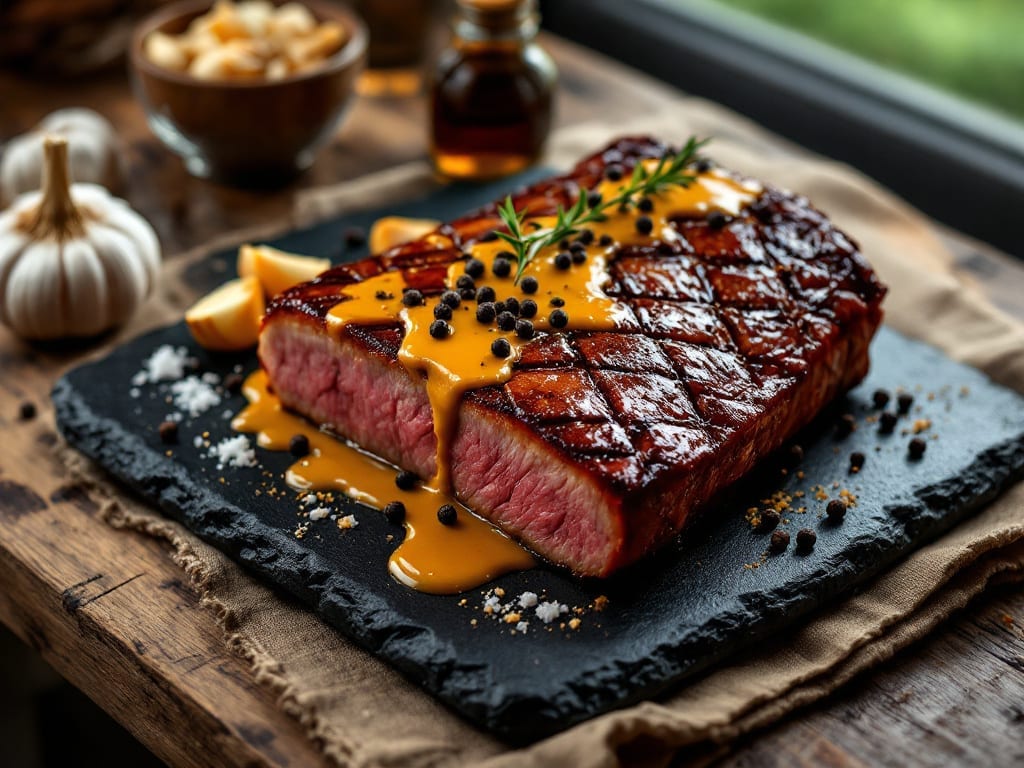
Mastering a smoked beef belly recipe transforms tough cuts into melt-in-your-mouth perfection with a crisp bark and tender layers—this method delivers restaurant-quality results in just 6 hours. The key lies in low-and-slow smoking, where fat renders gradually while the collagen breaks down into gelatin, creating that signature juicy texture.
I’ve perfected this technique over years of experimentation, balancing time, temperature, and wood choice to achieve consistent results every time.
This recipe works equally well on a traditional smoker or in your oven, making it accessible whether you’re a backyard pitmaster or cooking with limited equipment.
The process requires patience—6 hours of steady temperature control—but the reward is unmatched flavor: a deep, smoky aroma, a crackling exterior, and layers of fat that melt at the slightest touch. No fancy tools are needed, just precision in timing and technique.
What sets this apart is the balance of crispness and tenderness, achieved through careful temperature management and a simple seasoning approach. The bark forms naturally as fat renders, creating that coveted texture without added sugars or marinades.
Whether you’re preparing for a special occasion or a casual weekend meal, this method delivers professional-quality results at home.
Serve the beef belly sliced thin over toasted bread with pickles and horseradish for the full experience, or use it as a star in tacos, sandwiches, or even breakfast hash.
The versatility makes it a go-to recipe for any occasion. Let’s get started on creating your own perfectly smoked beef belly.
Ingredients for smoked beef belly
Precision-cut beef belly, strategic seasoning, and controlled smoke create restaurant-quality texture in just six hours.
| Ingredient | Amount | Notes |
|---|---|---|
| Beef Belly (thick-cut) 🥩 | 3 lb | Thick-cut for even bark formation |
| Yellow Mustard 🍯 | ¼ cup | For initial fat rendering |
| Coarse Kosher Salt 🧂 | 1 tbsp | Diamond Crystal preferred |
| Black Peppercorns 🌶️ | 1 tbsp | Freshly cracked for intensity |
| Granulated Garlic 🧄 | 1 tbsp | For even seasoning distribution |
| Smoked Paprika 🌶️ | 1 tbsp | For subtle smoky depth |
| Wood Chips (hickory or oak) 🌳 | 1 lb | Soaked for 1 hour minimum |
| Apple Cider Vinegar 🍎 | 2 tbsp | For final basting |
| Fresh Horseradish Root 🌿 | ½ oz | Grated for serving |
| Dijon Mustard 🍯 | 1 tbsp | For serving preparation |
| Dill Pickle Slices 🥒 | ½ cup | For garnish |
| Sourdough Bread 🍞 | 4 slices | For serving |
| Butter (unsalted) 🧈 | ¼ cup | Melted for basting |
| Brown Sugar 🍚 | 1 tbsp | Optional for enhanced bark |
[recipe_ingredient_scaler]
The beef belly is the foundation—thick-cut pieces develop even bark while retaining moisture. Source from a trusted butcher for consistent fat marbling; Whole Foods or local meat counters often carry premium cuts. Trim excess fat to 1/4-inch thickness for optimal render while preserving flavor. For best results, use belly with visible fat cap and minimal connective tissue—this ensures the signature melt-in-your-mouth texture. The wood chips should be food-grade hickory or oak, purchased from specialty stores like Traeger or Weber to guarantee quality and avoid contaminants.
Substitutions require careful consideration: substitute apple juice vinegar for cider vinegar in a 1:1 ratio, though flavor depth may slightly diminish. For those avoiding sugar, omit the brown sugar entirely—the natural fat render creates sufficient bark without it. Horseradish root can be replaced with prepared horseradish sauce at half the quantity, though fresh grated delivers superior sharpness. The Dijon mustard serves as both a serving element and flavor enhancer; whole-grain mustard provides a more robust texture if preferred. For bark enhancement, maple syrup or molasses can substitute brown sugar at a 1:1 ratio, though these introduce distinct flavor profiles.
Store cooked beef belly in an airtight container for up to 5 days in the refrigerator, where flavors deepen with each passing day. For longer storage, vacuum-seal portions for 3 months in the freezer. Reheat slices in a skillet over medium heat for 2-3 minutes per side to restore crispness. The rendered fat can be repurposed for cooking potatoes or roasted vegetables. For optimal freshness, prepare the horseradish and mustard mixture fresh—it loses potency within 3 days when refrigerated. Sourdough slices should be toasted immediately before serving to maintain structural integrity.
Why You’ll Love This Recipe
- No-Fuss Prep: I swear, this takes less effort than deciding what to watch on Netflix. Just slather that thick-cut beef belly with mustard, hit it with salt and peppercorns, then let the smoker do the heavy lifting. The garlic powder? Sprinkle it on like confetti—no measuring, no stress.
- Smoky-Garlic Magic: That crispy bark meets tender, fatty heaven when you bite in, and the yellow mustard? It’s the secret weapon—cuts through the richness while the garlic infuses every bite with warmth. Honestly, I’ve never met a smoked dish that packs this much flavor punch.
- Tailgate Champion: Between us, this is my go-to for game day, potlucks, or when my buddies show up unannounced. It’s hearty enough to feed a crowd but still feels special—no sad deli meat here. Plus, the leftovers? Even better cold in sandwiches the next day.
- Budget Booster: Thick-cut beef belly stretches farther than you’d think, especially when you’re feeding a hungry group. I’ve made this for $15 and fed six people with enough left for lunch. The salt and peppercorns? Pantry staples. This is the kind of recipe that makes grocery day feel like a win.
Step-by-step instructions for smoked beef belly
Precision timing and technique create that coveted contrast of crisp bark and tender meat.
Prepare the Beef Belly for Maximum Flavor
Begin by scoring the beef belly in a diamond pattern with a sharp knife, cutting through the fat cap but not into the meat. This creates channels for smoke penetration and renders fat more efficiently. Pat the scored belly completely dry with paper towels—this step is non-negotiable for crisp bark formation.
In a small bowl, combine the 1 tablespoon coarse kosher salt, 1 tablespoon black peppercorns, 1 tablespoon granulated garlic, and 1 tablespoon smoked paprika. Rub this mixture evenly over both sides of the beef belly, pressing firmly so the spices adhere. Spread 0.25 cup yellow mustard thinly across the entire surface—this acts as a binder and helps the rub stick during the long cook.
Place the seasoned beef belly on a wire rack set over a baking sheet and refrigerate uncovered for 24 hours. This dry-brining process ensures deep flavor penetration and optimal moisture retention. The mustard layer will begin to dry slightly, creating an additional crust during smoking.
Set Up the Smoker for Optimal Smoke Circulation
Soak the 1 pound wood chips (hickory or oak) in water for at least 1 hour before use. This prevents flare-ups and ensures steady smoke production. Preheat your smoker to 225°F using an indirect heat method—place the wood chips in the smoker box and position the beef belly on the grill grates away from direct heat sources.
The reason for this low-and-slow approach is simple: beef belly requires time to break down connective tissues while maintaining moisture. You’ll know your setup is correct when you see blue smoke (not white steam) billowing from the smoker. Maintain this temperature throughout the cook, resisting the urge to adjust the heat—fluctuations will compromise texture.
Place a water pan in the smoker to maintain humidity levels. The beef belly should remain uncovered during the initial 4 hours of smoking. This allows the mustard to caramelize and form that prized bark while the fat renders slowly and bastes the meat.
Monitor the Cook and Wrap for Juicy Perfection
After 4 hours, check the internal temperature using a meat thermometer. It should read between 160-165°F—this is when the “stall” occurs, where evaporation temporarily halts temperature rise. At this point, wrap the beef belly tightly in butcher paper (not aluminum foil), leaving the fat cap exposed. The paper allows some moisture to escape while protecting the meat.
Return the wrapped beef belly to the smoker and continue cooking until the internal temperature reaches 195-200°F, approximately 2-3 additional hours. The meat should be fork-tender with a deep mahogany bark on the exterior. If the bark isn’t forming as expected, sprinkle the 1 tablespoon brown sugar over the exposed fat cap during the final hour—this enhances caramelization.
During the final 30 minutes, baste the exposed fat cap with 2 tablespoon apple cider vinegar to add brightness and prevent excessive charring. The vinegar also helps break down residual fat for a cleaner finish.
Rest and Slice for Maximum Juiciness
Remove the beef belly from the smoker and transfer it to a cutting board. Tent loosely with aluminum foil and let it rest for 1 hour. This resting period is crucial—it allows the juices to redistribute throughout the meat, preventing them from escaping when sliced. The internal temperature will rise 5-10°F during this time due to carryover cooking.
Slice the beef belly against the grain into ¼-inch thick pieces. Each slice should have a crisp exterior and tender, almost buttery interior. If the bark isn’t fully crisp, broil the slices for 2-3 minutes on high heat to restore texture. Serve immediately with 4 slices sourdough bread and a side of 0.5 cup dill pickle slices for acidity.
For serving, combine 1 tablespoon Dijon mustard with 0.25 cup melted butter (unsalted) and 0.5 oz grated fresh horseradish root for a tangy dipping sauce. The horseradish cuts through the richness while enhancing the smoky flavors. The contrast of crisp bark and juicy meat makes every bite satisfying.
Pro Tips For Making Smoked Beef Belly
- Trim the Fat First: Skip the thickest layers of fat—aim for about ¼-inch thickness left on the meat. I learned this the hard way when my first batch rendered into a greasy mess on the smoker instead of crisping up properly. The fat needs to stay intact to render slowly and create that perfect bark.
- Mustard as Glue: Slather that yellow mustard thickly before salting—it’s not just flavor, it’s the binder that keeps the crust from cracking when you flip. I used to go light, and my bark would split like a dried riverbed. Trust me, you need at least 2 tablespoons per pound.
- Salt in Layers: Don’t dump all the kosher salt at once—work it into the meat in stages, especially if you’re smoking it cold. Start with a heavy hand (1 tablespoon per pound), let it sit 30 minutes, then add another layer right before hitting the smoker. This guarantees moisture locks in without making the surface soggy.
- Smoke Low and Slow: Hold off on cranking the heat until the belly reaches 160°F internally—then only increase to 225°F. I used to rush it, and the outside would burn before the center hit 145°F. Patience here means the fat renders evenly and the bark stays crisp without charring. (Yes, even if you’re impatient like me.)
Troubleshooting this dish
Bark Not Forming
If your beef belly isn’t developing that coveted crisp bark, the issue is likely excess moisture or inconsistent temperature. First, ensure your smoker maintains a steady 225°F—fluctuations prevent proper fat render. Pat the belly extra dry before smoking, and avoid covering it until after the 4-hour mark.
For added crispness, sprinkle 1 tablespoon brown sugar over the fat cap during the final hour—this caramelizes beautifully. If using a water pan, reduce it to ½ cup or remove it entirely during the last 2 hours of cook time. 🔥
Meat Too Tough
Overcooking is the most common cause of tough beef belly, but the fix is simple: temperature control. Remove the meat from the smoker when it hits 195-200°F internal temperature—any higher, and the collagen over-breaks down.
If you wrapped too early (before 160°F), unwrapping and returning it to the smoker uncovered for 30-45 minutes can help restore moisture. For extra tenderness, add 1 cup beef broth to the butcher paper wrap during the final hour of cooking. 💡
Fat Rendering Unevenly
The diamond scoring pattern is crucial for even fat render, but if you see patchy fat distribution, your cuts may be too deep or inconsistent. Use a sharp boning knife to score at ¼-inch intervals through the fat cap only—never into the meat.
For stubborn thick spots, trim excess fat to ⅛-inch thickness before smoking. If fat pools in one area, rotate the beef belly quarter-turn every hour to ensure uniform exposure to smoke and heat. 🌡️
Smoke Too Heavy/Overpowering
If your beef belly tastes too smoky or bitter, your wood chips are likely burning too hot. Soak chips for at least 1 hour and use hickory or oak (avoid mesquite—it’s too strong).
Maintain blue smoke (not white steam) by keeping the smoker at 225°F and avoiding direct flame contact. For milder flavor, reduce chip addition to ½ cup every 2 hours instead of dumping all 1 pound at once.
A smaller smoker (like a Traeger Tabletop) gives better control over smoke intensity. 🌳
Internal Temp Stuck at Stall
The stall (where temp plateaus around 160°F) is normal, but if it lasts beyond 2 hours, your smoker lacks humidity. Place a large water pan in the smoker during the first 4 hours, then remove it before wrapping.
For stubborn stalls, spritz the belly with apple cider vinegar (mixed 1:1 with water) every 30 minutes until wrapping. Wrapping at 160°F (not earlier) ensures the stall doesn’t drag on. Patience here pays off—195°F is the magic number for perfect texture. ⏰
Fat Too Greasy After Cooking
Excessive grease on cooked beef belly usually means too much fat was left on or over-basting. Trim fat to ⅛-inch thickness before smoking, and avoid basting with butter or oil—stick to apple cider vinegar for brightness.
If the fat cap is too thick, score deeper (but not into meat) to encourage even render. For post-cook cleanup, place the cooked belly on a wire rack over a baking sheet to drain excess fat for 10 minutes before slicing. 🧂
Nutrition facts
Frequently asked questions
What’s the best wood choice for smoking beef belly?
For authentic flavor, use hickory or oak wood chips—they provide a balanced, medium-smoke profile that complements the rich beef. Soak the chips for at least 1 hour before use to prevent flare-ups. Avoid mesquite, as its strong flavor can overpower the delicate fat render.
Can I smoke beef belly in an oven instead of a smoker?
Yes! Use a smoker box or aluminum tray with soaked wood chips in your oven set to 225°F. Place the beef belly on a wire rack over a baking sheet to allow airflow. Check the temperature every 30 minutes to maintain consistency. The total cook time remains similar (6 hours), but monitor closely for even bark formation.
Why does the recipe call for yellow mustard as a binder?
The mustard acts as a flavor enhancer and binder—its acidity helps break down fat during smoking while keeping the rub in place. It also adds a subtle tang that balances the richness. Skip it only if you’re avoiding dairy, but the texture and flavor benefits are worth it.
How do I store leftovers to keep them crisp?
Store cooked beef belly in an airtight container for up to 5 days in the fridge. To restore crispness, reheat slices in a skillet over medium-high heat for 2-3 minutes per side or broil for 1-2 minutes. Avoid microwaving—it turns the bark soggy.
What’s the ideal slice thickness for perfect texture?
Slice against the grain at ¼-inch thickness for the best balance of crisp bark and tender meat. Thicker slices (½-inch) may lose crispness, while thinner slices (⅛-inch) can dry out. Use a sharp knife and slice at a 45-degree angle for presentation.

Trained in classic French technique but raised on slow-cooked ribs and spicy rubs, she blends culinary skill with smoke and soul.
- Best Smoked Oxtail Recipe: Deep-Rich Flavor After Low-and-Slow Cooking - October 14, 2026
- Pit Boss Smoked Prime Rib Roast Recipe: Bark-to-Bone Crispness in 4 Hours - October 14, 2026
- Smoked Tuna Steak Recipe: Seared Crust Meets Silky Centers - October 14, 2026