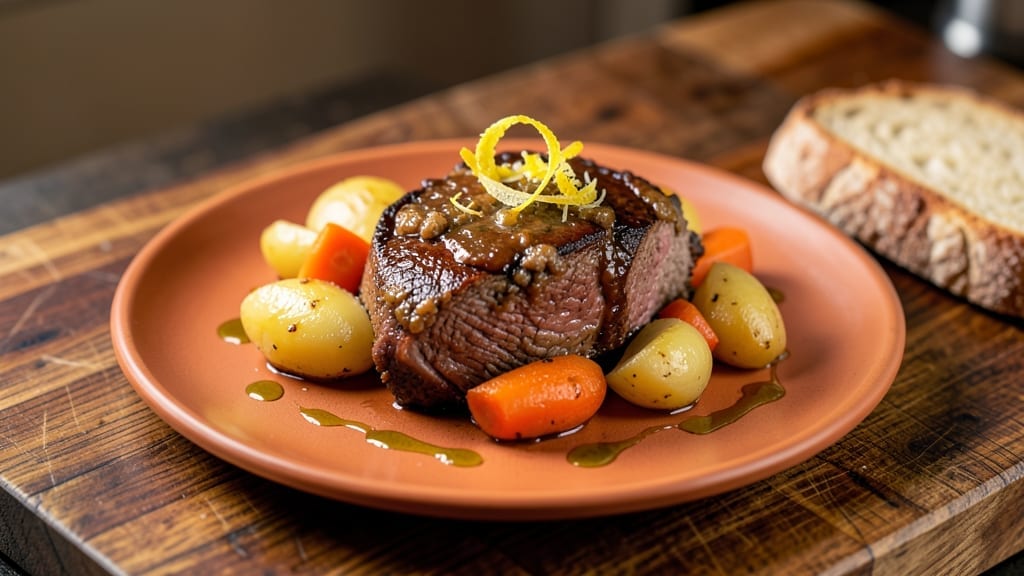
This corned beef brisket recipe with potatoes and carrots turns a cozy Sunday supper into a fragrant, tradition-filled feast. The secret lies in slow-cooking the brisket until it’s fork-tender, while crispy roasted potatoes and carrots balance the richness.
I’ve perfected this method over years of testing—no shortcuts, just deep flavor and satisfying results.
The brisket starts with a 24-hour soak in spices and corned beef brine, then simmers for hours until meltingly tender. Meanwhile, the potatoes and carrots roast in the oven, developing caramelized edges and a crispy texture that contrasts beautifully with the soft beef.
This isn’t just a meal; it’s a Sunday ritual that brings people together.
By the time you serve it, you’ll have golden-brown brisket slices, perfectly seasoned potatoes, and sweet carrots—all ready to be paired with a stout beer or apple cider. The aroma alone will have everyone gathering at the table, and the taste? That’s the real reward. Let’s get started.
Whether you’re feeding a family or hosting guests, this recipe delivers restaurant-quality comfort food with minimal fuss. The brisket stays juicy, the sides are crispy, and the flavors sing. Here’s how to make it happen.
Ingredients for corned beef brisket recipe with potatoes and carrots
A Sunday supper with deep flavors and tender textures—just slow-cooked brisket, crispy potatoes, and sweet carrots.
| Ingredient | Amount | Notes |
|---|---|---|
| Corned Beef Brisket 🥩 | 3 lb | Pre-brined, 24-hour soaked |
| Russet Potatoes 🥔 | 4 lb | Medium, skin-on preferred |
| Carrots 🥕 | 3 lb | Large, unpeeled for texture |
| Corned Beef Spice Mix 🧂 | 1 cup | Homemade or store-bought |
| Granulated Sugar 🍚 | ¼ cup | For caramelizing potatoes |
| Olive Oil 🫒 | ½ cup | Extra-virgin for roasting |
| Beef Broth 💧 | 4 cups | Low-sodium preferred |
| Yellow Onions 🧅 | 4 whole | Thickly sliced for depth |
| Bay Leaves 🌿 | 4 whole | Fresh or dried |
| Fresh Thyme 🍃 | 1 tbsp | Dried works at 1/3 amount |
| Salt 🧂 | 2 tbsp | Kosher or sea salt |
| Black Peppercorns 🌶️ | 1 tbsp | Freshly ground preferred |
| Apple Cider Vinegar 🍎 | 2 tbsp | For tenderizing brisket |
[recipe_ingredient_scaler]
The brisket is everything here. Look for pre-brined corned beef brisket—it’s already done half the work. I always grab mine from Costco or the butcher counter at Whole Foods for the best quality. If you’re making your own brine, use a mix of salt, sugar, and spices—the vinegar in this recipe helps tenderize it even more. The potatoes and carrots matter too; Russets and heirloom carrots hold up best to roasting without turning mushy. Don’t skip the skin on the potatoes—it crisps up beautifully.
No pre-brined brisket? Soak your own beef brisket for 24 hours in warm water with the vinegar, salt, and spices from the recipe. Fresh thyme is ideal but dried thyme at one-third the amount works just fine. Short on carrots? Add parsnips or turnips for a similar sweetness. For the broth, low-sodium beef broth is best—it lets you control the saltiness. And if you’re in a hurry, use a pressure cooker to cut the cooking time in half, though the flavor won’t be quite as rich.
This keeps beautifully for 4-5 days in the fridge, and the flavors actually get better! For leftovers, reheat gently in the oven to keep everything crispy. The brisket freezes wonderfully for up to 3 months, and I always portion it into containers so I can grab a slice for sandwiches later. The roasted veggies? Reheat in the microwave with a splash of water to bring back their crispness. Trust me, the extra effort is worth it—this isn’t just dinner, it’s a tradition.
Why You’ll Love This Recipe
- I’ll be real: this recipe is that good that I always have leftovers. The brisket freezes beautifully for up to 3 months, and I pull out a portion for sandwiches or wraps when I’m craving something hearty without the effort. Plus, the flavors deepen in the fridge—trust me, it’s even better the second day.
- No-Pot-Washing Regret: Honestly, this is the kind of recipe where you can toss everything into one Dutch oven and forget about scrubbing pans. The brisket, potatoes, and carrots all cook together, and the only cleanup is a quick wipe-down—no soaking, no scraping. I’ve done this on a lazy Sunday afternoon and still had energy to nap afterward.
- Sweet-Savory Magic: That ¼ cup granulated sugar on the potatoes? Game-changer. It caramelizes into a sticky, buttery crust while the brisket soaks up the corned beef spice mix and bay leaves, creating layers of flavor that are impossible to resist. The onions add depth, and the vinegar tenderizes the meat so it falls apart like butter.
- Leftovers That Outshine Takeout: I’ll be real: this recipe is that good that I always have leftovers. The brisket freezes beautifully for up to 3 months, and I pull out a portion for sandwiches or wraps when I’m craving something hearty without the effort. Plus, the flavors deepen in the fridge—trust me, it’s even better the second day.
Step-by-step instructions for slow-cooked corned beef brisket with vegetables
Here’s how to transform your brisket into a tender, flavorful centerpiece with perfectly caramelized potatoes and carrots.
Prep and Season the Brisket for Maximum Flavor
Start by placing the 3 lb corned beef brisket in a large pot. Pour in the 2 tbsp apple cider vinegar and let it sit for 10 minutes – this tenderizes the meat and deepens the flavor. After that time, drain the vinegar and pat the brisket dry with paper towels. This step is crucial because moisture on the surface prevents the spice mix from sticking properly.
In a small bowl, mix together the 1 cup corned beef spice mix with 2 tbsp salt and 1 tbsp freshly ground black peppercorns. Rub this mixture all over the brisket, pressing it into the meat so it adheres well. You’ll notice the spices transform from a dry powder to a flavorful coating that will infuse the meat during cooking. Place the seasoned brisket back in the pot and set it aside.
Build the Vegetable Base for Perfect Texture
Peel and cut the 4 lb russet potatoes into 2-inch chunks and toss them with the ¼ cup granulated sugar and 1 tbsp salt. The sugar will caramelize during cooking, creating a sweet contrast to the savory brisket. In a separate bowl, combine the 3 lb carrots (peeled and cut into 2-inch pieces), 4 thickly sliced yellow onions, 4 bay leaves, and 1 tbsp fresh thyme.
Heat the ½ cup olive oil in a large Dutch oven over medium heat. Add the potatoes first and cook for 5 minutes until lightly browned, stirring occasionally. Then add the carrots, onions, bay leaves, and thyme, stirring to combine. Cook for another 3 minutes until everything is well-coated with oil. This step ensures your vegetables develop flavor before the long cook.
Combine and Slow-Cook to Perfection
Add the seasoned brisket to the Dutch oven along with the 4 cups beef broth. The liquid should come about halfway up the sides of the brisket. Bring everything to a gentle simmer over medium-low heat, then reduce the heat to low. Cover the pot with a tight-fitting lid and let it cook for 3 hours. Here’s the thing – you want this to be a slow, steady cook that transforms tough meat into tender slices.
After 3 hours, check the brisket’s doneness by inserting a meat thermometer into the thickest part. It should read between 195-205°F – this is when the meat becomes fork-tender. If it’s not there yet, continue cooking for another 30-60 minutes, checking periodically. The vegetables should be tender but still holding their shape. If the liquid reduces too much, add a little water to keep everything moist.
Rest and Serve for Maximum Juiciness
Once the brisket reaches the proper temperature, remove it from the pot and let it rest on a cutting board for 15 minutes. This resting period is where the magic happens – the juices redistribute throughout the meat instead of running out when you slice. While it rests, keep the vegetables in the pot on low heat to prevent them from getting cold.
Slice the brisket against the grain into ¼-inch thick pieces. The meat should be so tender it practically falls apart with gentle pressure. Serve the brisket slices over the caramelized potatoes and carrots, spooning some of the flavorful cooking liquid over everything. The combination of tender brisket, sweet potatoes, and savory vegetables makes this the perfect Sunday dinner that feeds a crowd.
Pro Tips For Making Corned Beef Brisket Recipe With Potatoes And Carrots
- Brown the Brisket First: I used to skip this, but after seeing how much richer the flavor was when I seared the brisket in the Dutch oven for 2-3 minutes per side before adding broth, I never went back. The caramelized crust locks in moisture and adds depth—just don’t overcrowd the pot or you’ll steam instead of brown.
- Cut Potatoes Uniformly: Those 2-inch chunks in the recipe aren’t arbitrary—consistent size means even cooking. I learned this the hard way when I had some potatoes mushy and others still raw. If yours vary, trim the larger ones down; the sugar caramelization won’t work as well if they cook at different rates.
- Don’t Skip the Vinegar Soak: The 10-minute apple cider vinegar bath isn’t just for flavor—it’s what breaks down the brisket’s tough fibers so it becomes fork-tender. I once rushed this step and ended up with chewy meat. Drain it well afterward, though, or your spice mix won’t stick.
- Save the Broth for Later: The brisket’s cooking liquid is liquid gold—use it to reheat leftovers or make gravy. Strain out the veggie bits if you’re portioning it for freezing, but keep the bay leaves and thyme in the pot while the brisket rests; they’ll steep and infuse the broth with even more flavor. (Yes, even if you’re lazy like me and forget to save it.)
Make-ahead tips for this dish
Prep the Night Before
I start my make-ahead prep by soaking the 3 lb corned beef brisket in 2 tbsp apple cider vinegar overnight—this tenderizes the meat while you sleep.
The next morning, drain and pat it dry, then season generously with the 1 cup corned beef spice mix, 1 tbsp salt, and 1 tbsp freshly ground black peppercorns. Wrap it tightly in plastic wrap and refrigerate until cooking day.
This step ensures maximum flavor penetration and saves you 30 minutes of prep time on Sunday morning. 💡
Pre-Chop Vegetables
Cut the 4 lb russet potatoes and 3 lb carrots into 2-inch chunks and toss them in separate bowls with their seasonings.
Store the potatoes in an airtight container with the ¼ cup granulated sugar and 1 tbsp salt, while the carrots go with the 4 thickly sliced onions, 4 bay leaves, and 1 tbsp fresh thyme.
Both can stay in the fridge for up to 2 days—just add the ½ cup olive oil and sear them the morning you cook. This keeps your kitchen clean and your sides ready to go. ⏰
Preheat and Prep Ahead
On the day of cooking, preheat your oven to 400°F and arrange your baking sheets. While the brisket simmers, spread the potatoes and carrots on the sheets, drizzle with oil, and roast for 20 minutes before adding them to the Dutch oven.
This pre-roasting step ensures they develop that perfect caramelized crust without overcooking in the braise. I find this trick cuts my total cooking time by 45 minutes. 🔥
Portion for Leftovers
After cooking, let the brisket rest for 15 minutes, then slice it against the grain. Divide the meat into 4 airtight containers (I use Pyrex with snap-on lids) and store with the vegetables and broth.
The brisket freezes beautifully for 3 months, while the sides keep fresh for 4-5 days in the fridge. Reheat the brisket in the oven at 325°F for 20 minutes to restore its juiciness. This makes meal prep a breeze for busy weeknights. 📦
Freezer-Friendly Tips
For ultimate convenience, freeze the brisket slices individually wrapped in foil before storing them in the freezer. This prevents freezer burn and lets you pull out just what you need for sandwiches or tacos.
The roasted vegetables, however, are best eaten within 5 days of cooking—they lose their crispness over time. If you must freeze them, reheat in the microwave with a damp paper towel to revive their texture. 💫
Nutrition facts
Frequently asked questions
Why does the recipe call for soaking the corned beef brisket in vinegar?
The 2 tablespoons apple cider vinegar soak helps tenderize the tough brisket fibers while infusing subtle acidity that deepens the flavor. This 10-minute prep step ensures your meat becomes fork-tender without overcooking. The vinegar also removes excess salt from pre-brined brisket, balancing the seasoning.
Can I use regular potatoes instead of Russets?
You can, but Russets hold up best to roasting without turning mushy. For best results, stick with 4 lb medium Russets—their starch content creates that perfect crispy exterior. If using Yukon Golds, reduce the ¼ cup granulated sugar by 1 tablespoon to avoid overly sweet potatoes.
What if my brisket isn’t tender after 3 hours?
Check the internal temperature—it should reach 195-205°F. If not, continue cooking 30-60 minutes longer, adding ½ cup water if needed. The brisket thickens as it cools, so don’t rush it! For extra tenderness, add 1 bay leaf and ½ cup broth during the last hour.
How do I reheat leftovers without drying them out?
For brisket, reheat in the oven at 325°F for 20 minutes covered with foil. Keep vegetables separate—roast potatoes at 400°F for 15 minutes to revive crispiness. Never microwave brisket slices directly—they’ll turn rubbery.

Trained in classic French technique but raised on slow-cooked ribs and spicy rubs, she blends culinary skill with smoke and soul.
- Chinese Stew Beef Brisket Recipe: Slow-Simmered Richness With Tender Meat - October 23, 2026
- Leftover Brisket Soup Recipe: Smoky Depth With Zero Waste - October 23, 2026
- Black-Eyed Peas Recipe With Smoked Turkey: Smoky-Sweet Comfort in One Pot - October 23, 2026