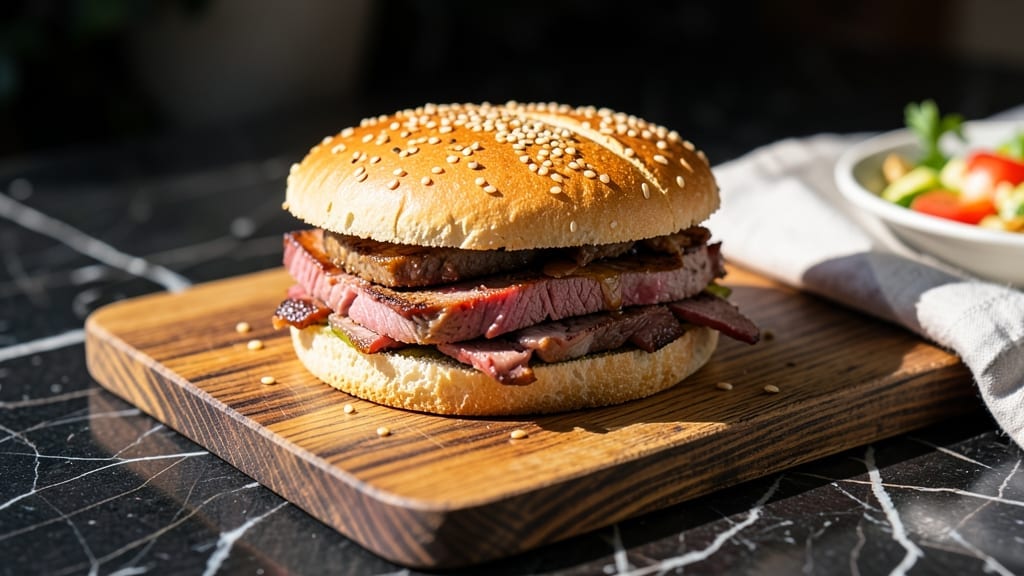
Slow-simmered corned beef brisket sandwiches deliver melt-in-your-mouth tenderness that turns every bite into a celebration of traditional technique. The secret lies in hours of gentle cooking that transforms tough brisket into fork-tender perfection, then layers it onto toasted bread with all the classic fixings.
I first mastered this method during a particularly chilly autumn when my family demanded hearty meals that felt like home.
What sets this recipe apart is the balance of time and temperature—low and slow for maximum tenderness, with just enough spice to complement the rich, savory beef. You’ll start with a brisket that’s been cured and spiced to perfection, then braised until it practically falls apart.
The result is beef so tender it nearly dissolves on your tongue, all while maintaining that deep, satisfying flavor that makes it worth the wait.
By the time you assemble the sandwiches, you’ll have golden-brown toasted bread holding layers of that tender beef, crisp pickles for acidity, and a smear of tangy mustard to tie it all together. Every bite delivers a perfect harmony of textures and flavors—crisp, creamy, and rich all at once.
This is comfort food at its finest, the kind of meal that brings people together around the table.
Serve with classic sides like potato salad or coleslaw to complete the experience. The leftovers reheat beautifully, making this an ideal recipe for meal prep or feeding a crowd. Let’s get started on creating your perfect corned beef brisket sandwiches.
Ingredients for corned beef brisket sandwich
Pantry staples and a few specialty items. Everything you need for melt-in-your-mouth brisket sandwiches.
| Ingredient | Amount | Notes |
|---|---|---|
| Corned Beef Brisket 🥩 | 4 lb | Pre-cured, thick-cut preferred |
| Yellow Onions 🧅 | 2 whole | Cut into 1-inch chunks |
| Carrots 🥕 | 3 whole | Cut into 2-inch pieces |
| Garlic Cloves 🧄 | 6 cloves | Smashed for deeper flavor |
| Bay Leaves 🌿 | 2 whole | Fresh preferred |
| Beef Broth 💧 | 2 cups | Low-sodium preferred |
| Whole Grain Mustard 🌶️ | ¼ cup | For sandwich spread |
| Dijon Mustard 🌶️ | 2 tbsp | For tangy kick |
| Dill Pickle Slices 🥒 | 1 cup | Crisp, thinly sliced |
| Sourdough Bread Loaf 🍞 | 1 whole | Crusty, for toasting |
| Salt 🧂 | 1 ½ tsp | Kosher or sea salt |
| Black Peppercorns 🌶️ | 1 tsp | Freshly cracked |
| Apple Cider Vinegar 🍎 | ½ cup | For brisket marinade |
| Brown Sugar 🍚 | ¼ cup | Light or dark |
[recipe_ingredient_scaler]
The brisket is the star—look for pre-cured, thick-cut at your butcher or grocery store’s meat department. Costco or Whole Foods often carry excellent pre-cured options, but if you’re buying whole, ask for a well-marbled piece. The onions and carrots can be any variety, but yellow onions and napa carrots add extra sweetness. Fresh bay leaves make all the difference—dried works in a pinch, but fresh is worth the extra minute to find. For the broth, low-sodium lets you control the saltiness better, and homemade beef broth adds depth if you’re feeling fancy.
No pre-cured brisket? Start with a 4-pound beef brisket and cure it yourself using apple cider vinegar, brown sugar, and salt for 3-5 days in the fridge. Short on mustard? Mix mayo with a splash of vinegar for a quick substitute. The pickles can be any kind you like—kosher dills or bread-and-butter both work, but avoid the sweet ones. For the bread, sourdough is ideal, but rye or crusty French bread will do. If you can’t find whole grain mustard, Dijon plus a pinch of honey mimics the texture. The key is balancing the tangy mustard with the rich beef—don’t skimp on either.
Brisket keeps beautifully in the fridge for 4-5 days once cooked, and freezes for up to 3 months if you want to make a big batch. I like to portion the cooked beef into single-serving containers with a few pickle slices and a dollop of mustard—just reheat and assemble. The mustard mix stays fresh for 1 week in the fridge, so make extra for other sandwiches. Store the bread in a paper bag to keep it crisp, and toast it fresh before assembling—that’s what makes the difference
Why You’ll Love This Recipe
- One-Pot Perfection: That Dutch oven does all the work—just toss in the brisket, onions, carrots, and garlic, then let it simmer while you do dishes. The apple cider vinegar and brown sugar caramelize into a sticky, flavorful crust without any extra fuss.
- Caramelized Magic: Honestly, the way the brown sugar and vinegar turn that brisket’s surface into a glossy, slightly sweet crust? It’s the difference between “meh” and “chef’s kiss.” That’s the kind of flavor that makes you forget it’s just a sandwich.
- Staple for Any Occasion: Whether it’s a lazy Sunday brunch or a last-minute St. Patrick’s Day dinner, this sandwich scales effortlessly. My kids even ask for seconds—proof it’s good enough for picky eaters (and adults who pretend to be picky).
- Budget-Friendly Feast: Four pounds of brisket might sound pricey, but between the leftovers (which freeze like a dream) and the fact that you’re using pantry staples like mustard and pickles, it’s a steal. Plus, the brisket stretches to feed a crowd without breaking the bank.
Step-by-step instructions for corned beef brisket sandwiches
Here’s how to transform tough brisket into melt-in-your-mouth sandwiches with rich, savory flavors.
Prepare the Brisket and Aromatics
In a large Dutch oven, combine the 4 lb corned beef brisket, 2 yellow onions cut into 1-inch chunks, 3 carrots cut into 2-inch pieces, 6 smashed garlic cloves, 2 bay leaves, ½ cup apple cider vinegar, and ¼ cup brown sugar. The vinegar and sugar will create a beautiful caramelized crust while tenderizing the meat.
Add 2 cups beef broth and bring to a boil over high heat. Once boiling, reduce heat to low, cover, and simmer for 2 hours. This slow cooking breaks down connective tissue, guaranteeing tender results. Stir occasionally to prevent sticking and ensure even cooking.
Build the Flavor Base and Season
After 2 hours, add 1½ teaspoons salt and 1 teaspoon freshly cracked black peppercorns to the pot. The salt enhances all flavors while the pepper adds a subtle heat that balances the sweetness from the brown sugar. Stir well to distribute evenly throughout the liquid.
Continue simmering uncovered for another 2 to 3 hours until the brisket is fork-tender and easily pulls apart. You’ll know it’s ready when the meat separates cleanly at the bone and the cooking liquid has reduced to a rich, thick sauce. This step is where all the magic happens—don’t rush it.
Create the Mustard Sauce and Assemble
In a small bowl, whisk together ¼ cup whole grain mustard and 2 tablespoons Dijon mustard with 2 tablespoons of the reduced cooking liquid from the brisket. This creates a tangy, creamy sauce that ties all the flavors together. Spread this mixture generously on each slice of the sourdough bread loaf.
Slice the brisket thinly against the grain and layer it on the mustard-spread bread. Top each sandwich with 1 cup dill pickle slices for that classic tangy crunch. The pickles cut through the richness of the brisket and add a refreshing contrast in every bite.
Toast and Serve
Toast the assembled sandwiches in a skillet over medium heat until the bread is golden brown and crispy on both sides. This final step adds texture and brings all the flavors together. Serve immediately while the bread is warm and the brisket is juicy.
The result is a sandwich with perfectly tender brisket, a tangy mustard sauce, crispy pickles, and toasted bread—each element working together to create a satisfying, flavorful bite. This method delivers restaurant-quality sandwiches right in your kitchen.
Pro Tips For Making Corned Beef Brisket Sandwich
- Smash That Garlic: I used to just chop those 6 cloves, and the flavor never hit right. Smashing them with the flat side of your knife releases more oils and aroma—no fancy tools needed, just a little extra effort for deeper flavor.
- Skim the Scum Early: After boiling the brisket, you’ll see foam rise—don’t ignore it. Skim it off in the first 10 minutes, or your sauce will turn cloudy. Trust me, your future sandwiches will thank you.
- Don’t Skip the Vinegar Boil: That ½ cup apple cider vinegar isn’t just for flavor—it’s what kickstarts the caramelization and tenderizes the brisket. If you skip it or use less, you’ll end up with tougher meat and a bland sauce.
- Save the Cooking Liquid: That reduced sauce after simmering? Don’t pour it down the drain. Use 2 tablespoons of it in the mustard mix—it’s what turns a good sandwich into a great one. Thin it with water if it’s too thick.
Troubleshooting perfect results
Undercooked Brisket
If your brisket isn’t tender enough after 4-5 hours of simmering, don’t panic—just give it more time. The brisket should pull apart easily with a fork. If it’s still tough, increase the heat to medium-low for the next 1-2 hours, stirring occasionally.
I once left mine on too long and it became mushy, but 4-5 hours total is the sweet spot for perfect tenderness. 🔥
Overly Salty Brisket
If your brisket tastes too salty, you’ve added too much salt during seasoning. The 1½ teaspoons mentioned is a guideline—taste the broth before adding the full amount. For a salty fix, add ½ cup cold water and simmer for 10 minutes to dilute the flavor.
I’ve learned to taste as I go, especially when using pre-cured brisket which already contains salt.
Dry Brisket Texture
Dry brisket often means the cooking liquid evaporated too quickly. Ensure you’ve got enough liquid—2 cups beef broth should reduce to about 1 cup by the end. If it’s dry, add ¼ cup water or broth and simmer uncovered for 15-20 minutes to rehydrate.
I always keep an eye on the pot and adjust the heat if it looks too dry. The key is maintaining a low simmer throughout.
Pickles Too Soft
If your dill pickles turn mushy, they’ve spent too long in the hot liquid. Remove them 15 minutes before the brisket is done to prevent overcooking. I like to keep them crisp for that perfect crunch.
If they’re already soft, try adding them back in 5 minutes before serving for a quick re-crisp. Fresh pickles always elevate the sandwich!
Bread Burns Too Fast
Toasted bread burning means your heat is too high. Use medium heat in a dry skillet and flip the sandwiches every 1-2 minutes. I prefer a cast-iron skillet for even heat distribution.
If the bread browns too quickly, reduce the heat slightly and let it cook slower. The goal is golden-brown, not burnt!
Nutrition facts
Frequently asked questions
Why does this recipe call for such a long cooking time?
The slow simmering—4-5 hours total—is what transforms tough brisket into melt-in-your-mouth perfection. This low-and-slow method breaks down tough connective tissue, creating tender, juicy beef that practically falls apart. The patience pays off with restaurant-quality results every time.
Can I use regular bread instead of sourdough?
While sourdough adds depth and holds up beautifully to toasting, you can use any crusty bread like rye or French baguette. Just make sure it’s fresh—stale bread won’t toast properly. The key is crispy bread to balance the tender beef.
How do I know when the brisket is done?
Your brisket is perfect when it pulls apart easily with a fork and separates cleanly at the bone. The cooking liquid should also reduce to a thick, rich sauce. If it’s still tough after 4-5 hours, increase heat slightly for another 1-2 hours—just watch it closely!
What if I don’t have whole grain mustard?
No problem! Mix 2 tablespoons Dijon mustard with 1 teaspoon honey or 1 tablespoon mayo for a quick substitute. The tanginess is what matters—just adjust to taste. This works perfectly for spreading on your sandwich bread.
Can I make this ahead of time?
Yes! Cooked brisket keeps beautifully in the fridge for 4-5 days and freezes for up to 3 months. Assemble sandwiches just before serving—no need to reheat the bread. I like to portion the beef with pickles and mustard for easy assembly later.

Trained in classic French technique but raised on slow-cooked ribs and spicy rubs, she blends culinary skill with smoke and soul.
- Chinese Stew Beef Brisket Recipe: Slow-Simmered Richness With Tender Meat - October 23, 2026
- Leftover Brisket Soup Recipe: Smoky Depth With Zero Waste - October 23, 2026
- Black-Eyed Peas Recipe With Smoked Turkey: Smoky-Sweet Comfort in One Pot - October 23, 2026