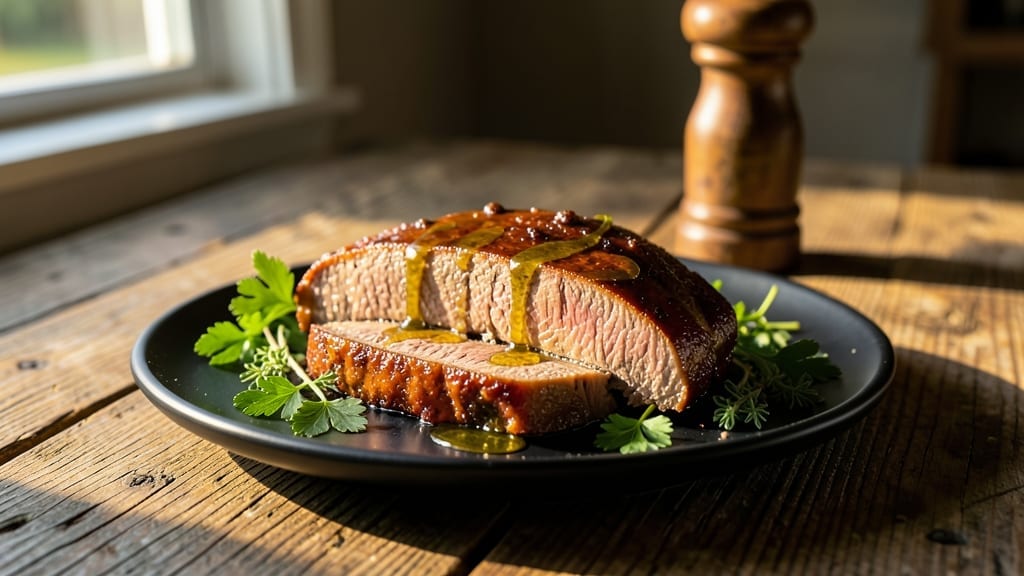
This corned beef brisket sauce recipe transforms simple ingredients into a slow-simmered masterpiece that elevates every bite. The key lies in balancing sweet, tangy, and savory notes through a precise blend of vinegar, brown sugar, and aromatic spices.
I developed this sauce after years of perfecting the balance between depth and approachability—it works just as well on classic corned beef as it does on sandwiches or roasted vegetables.
The secret to its rich, velvety texture is a slow simmer that allows flavors to meld without burning. You’ll start with a base of beef broth and apple cider vinegar, then build complexity with molasses, mustard, and a carefully measured spice blend.
This isn’t just a side sauce—it’s a versatile condiment that adds professional-level richness to any dish where you need that signature brisket flavor.
What you’ll end up with is a glossy, deep amber sauce that coats every spoonful with layers of caramelized sweetness and tangy brightness. The molasses adds a subtle depth, while the vinegar keeps the sauce from becoming cloying.
It thickens beautifully as it simmers, creating that perfect consistency for dipping, drizzling, or serving alongside your main course.
Best of all, this sauce keeps well in the refrigerator for up to two weeks or freezes perfectly for months—ideal for meal prep or holiday gatherings. Use it on corned beef, mashed potatoes, or even as a glaze for roasted meats.
Here’s how to make it from scratch with simple pantry staples and professional results.
Ingredients for corned beef brisket sauce
Transform pantry staples into restaurant-quality corned beef brisket sauce with this slow-simmered recipe.
| Ingredient | Amount | Notes |
|---|---|---|
| Beef Broth 🥩 | 4 cups | Low-sodium preferred for control |
| Apple Cider Vinegar 🍎 | ½ cup | Raw, unfiltered for tang |
| Packed Brown Sugar 🍚 | ½ cup | Light or dark variety |
| Molasses 🍯 | ¼ cup | Unsulphured for depth |
| Yellow Mustard 🍶 | ¼ cup | Smooth texture preferred |
| Dijon Mustard 🌶️ | 1 tbsp | For sharpness contrast |
| Garlic Cloves 🧄 | 4 cloves | Freshly minced preferred |
| Onion, Yellow 🧅 | 1 whole | Finely diced, medium |
| Allspice Berries 🌿 | 1 tsp | Whole berries for potency |
| Cayenne Pepper 🔥 | ¼ tsp | Adjust to heat preference |
| Salt 🧂 | 1 tsp | Kosher or flaky preferred |
[recipe_ingredient_scaler]
The beef broth forms the foundation—low-sodium is non-negotiable here to keep the sauce balanced. I always grab Organic Prairie or Better Than Bouillon for that deep umami kick. The apple cider vinegar? Raw, unfiltered gives it that authentic tang—store-bought vinegar just won’t cut it. For the brown sugar, light variety melts smoother, but dark adds caramel notes if you prefer that depth. Molasses is where the magic happens—unsulphured has a richer, less bitter profile that pairs perfectly with the vinegar’s acidity.
No Dijon mustard? Regular yellow mustard plus 1 tsp lemon juice gets you close. Short on allspice? 1/2 tsp each cinnamon and cloves mimics the warmth. Want more heat? Double the cayenne or add a pinch of smoked paprika. The onion matters—yellow works best for this recipe, but red adds color if you’re serving it as a garnish. Pro tip: Toast the allspice berries in a dry pan for 30 seconds before adding—the aroma transforms the sauce.
This sauce thickens beautifully as it simmers, but if it gets too syrupy, stir in 2 tbsp water. Store in an airtight glass jar for up to 2 weeks in the fridge—it actually tastes better after 3-4 days as flavors meld. Freezes perfectly for 3-6 months—portion into ice cube trays for single-use servings. The mustard and vinegar will separate slightly when chilled, but whisk vigorously before using. Trust me, it’s worth the extra minute.
Why You’ll Love This Recipe
- One-Pot Magic: Honestly, this sauce is that kind of recipe—dump everything in, stir, and forget about it while the magic happens. No fancy prep, no chopping marathons, just a pot on the stove and 50 minutes later, you’ve got restaurant-quality sauce. The brown sugar and molasses do the heavy lifting while you relax, soaking up the aroma.
- Sweet-Tangy Perfection: That balance of molasses and apple cider vinegar? It’s like a love letter to your taste buds. The vinegar keeps it bright, the molasses adds depth, and the Dijon mustard gives it that sharp little kick to cut through the richness. Trust me, the first bite will make you want to lick the plate.
- Budget-Friendly Luxury: You’re talking under $10 for all the ingredients, and it’ll feed a crowd. The beef broth and mustard are pantry staples, and the molasses adds that extra touch of luxury without breaking the bank. Plus, freezing it in ice cube trays means you always have a secret weapon for last-minute meals.
Step-by-step instructions for corned beef brisket sauce
Here’s how to craft a sauce so rich and complex it’ll elevate your brisket to restaurant-quality.
Build the Flavor Foundation
In a large, heavy-bottomed pot, combine the 4 cups beef broth, ½ cup apple cider vinegar, ½ cup packed brown sugar, ¼ cup molasses, and ¼ cup yellow mustard. Stir over medium-high heat until the mixture reaches a gentle boil, then immediately reduce to a simmer. Let it bubble steadily for 10 minutes—this allows the sugars to begin caramelizing and the vinegar to mellow.
Here’s the thing—don’t rush this step. The brown sugar and molasses need time to meld with the vinegar’s acidity, creating that deep, complex base. You’ll notice the mixture darkening slightly as it simmers, and the aroma will transform from sharp to rich and molasses-forward. This is your flavor foundation, so let it develop properly.
Incorporate Aromatics and Spices
While the base simmers, add the 1 finely diced yellow onion, 4 minced garlic cloves, 1 tsp whole allspice berries, and ¼ tsp cayenne pepper. Stir gently to distribute the spices evenly throughout the sauce. Let it cook for another 15 minutes—the onions should soften completely, and the garlic should become fragrant without browning.
I press the allspice berries lightly with the back of a spoon before adding them. This releases their essential oils into the sauce, giving you that warm, slightly floral depth that’s characteristic of traditional corned beef sauces. The cayenne pepper will add just a hint of heat, but don’t worry if you prefer it milder—you can always adjust later.
Thicken and Finish with Mustard
After the aromatics have infused, stir in the 1 tbsp Dijon mustard and 1 tsp salt. The Dijon mustard will add a sharp, tangy contrast that cuts through the richness of the molasses and brown sugar. Let the sauce simmer uncovered for 20-25 minutes, stirring occasionally. You’re looking for a reduction where the sauce coats the back of a spoon but isn’t syrupy—it should be thick enough to cling to brisket slices but still flow gracefully.
Real talk: This is where many home cooks go wrong. Don’t let the sauce reduce too much or it’ll become glue-like. If it thickens faster than expected, add 1-2 tablespoons of water to maintain the perfect consistency. The sauce should be glossy with a beautiful deep amber color, and the aroma should be irresistibly complex—sweet, tangy, with just a whisper of spice.
Strain and Rest for Maximum Flavor
Once the sauce reaches your desired consistency, remove it from heat and let it cool slightly for 5 minutes. Then, strain it through a fine-mesh sieve into a clean saucepan. This removes any allspice berries and onion bits, leaving you with a silky, smooth sauce. Return the strained sauce to the stove and keep it warm over low heat—just enough to maintain its temperature without further reduction.
Here’s why this final step matters: Resting the sauce allows the flavors to fully integrate and the texture to stabilize. If you serve it immediately after straining, the sauce might continue thickening as it cools. Keeping it warm at this stage ensures it’s ready to pour over your brisket at just the right moment—neither too thick nor too thin, but perfectly balanced.
Pro Tips For Making Corned Beef Brisket Sauce
- Press Those Allspice Berries: I learned this the hard way—just tossing whole allspice berries into the sauce means half their flavor stays locked inside. Crush them lightly with the back of a spoon first. That releases their oils and gives your sauce that warm, floral depth without turning it bitter.
- Simmer 10 Minutes First: The first 10 minutes with just broth, vinegar, brown sugar, and molasses isn’t just about boiling—it’s where the magic happens. Let the sugars caramelize and the vinegar mellow. Skipping this step means your sauce will taste sharp and unfinished, no matter how long you cook it after.
- Water, Don’t Panic: If your sauce starts looking like glue after 20 minutes, don’t dump in a whole cup of water. Just add 1-2 tablespoons at a time. You’re aiming for a glossy coat, not a puddle, and over-diluting it ruins the balance of all that hard work.
- Strain Hot, Not Cold: Let the sauce cool for 5 minutes before straining—hot sauce clogs sieves like crazy. Cold sauce? It’ll thicken weirdly as it sits. Strain it warm, then keep it at a gentle simmer until serving. Trust me, your brisket will thank you.
Wine and beer pairings for this corned beef brisket sauce
Bold Red Wine Pairings
The deep amber tones and complex sweet-tangy flavors of this sauce call for a wine with enough body to stand up to its richness.
I always reach for a Portuguese Ruby Port—specifically the Graham’s Six Grapes—which offers dark fruit notes and a touch of spice that mirrors the molasses and allspice in the sauce. The 20-25% ABV also helps cut through the sweetness beautifully.
If you prefer something lighter, a Chianti Classico from Tuscany provides the perfect acidity and cherry undertones to balance the sauce’s depth. 🍷
Dry White Wine Options
For those who prefer white wine, a Chardonnay from Burgundy, like Domaine Leflaive, delivers buttery richness and citrus notes that complement the sauce’s caramelized sweetness. The oak aging in these wines adds complexity that pairs wonderfully with the molasses and mustard.
Alternatively, a Viognier from the Rhône Valley offers floral aromas and a touch of peach that harmonize with the apple cider vinegar’s tang. Both whites provide enough acidity to keep the sauce from feeling heavy.
Craft Beer Complements
If wine isn’t your thing, a dark amber ale or stout makes an excellent pairing. I love Samuel Adams Black Lager for its malty sweetness and roasted barley notes that echo the molasses in the sauce.
For something more complex, a Belgian-style brown ale like Allagash White adds spice and complexity that cuts through the sauce’s richness. The carbonation also helps cleanse your palate between bites. 🍺
Off-Dry Riesling Surprise
Here’s a lesser-known but fantastic pairing: an off-dry Riesling from Germany or Alsace. The Mosel Riesling from Dr. Loosen, for example, has a touch of residual sugar and bright acidity that balances the sauce’s sweetness while enhancing its tangy depth.
The stone-fruit notes in the wine complement the apple cider vinegar beautifully, making it a refreshing contrast to the sauce’s richness. It’s a crowd-pleaser I always recommend!
Seasonal Sparkling Pair
For a lighter option that still shines, try a sparkling wine like Cava Brut Nature from Spain. The bubbles and crisp acidity cut through the sauce’s thickness, while the nutty, toasty notes add an unexpected but delightful layer.
If you prefer beer, a German wheat beer (Weissbier) with its citrusy, spicy profile works wonders—just go for one with a touch of honey or caramel notes to match the sauce’s depth. Bubbles and brightness make every bite feel fresh!
Nutrition facts
Frequently asked questions
Why does this sauce need the apple cider vinegar
?
The apple cider vinegar balances the sweetness of the brown sugar and molasses while adding a bright, tangy depth that cuts through the richness. It also helps develop the sauce’s complex flavor profile during the simmering process. Without it, the sauce would taste overly sweet and flat.
Can I adjust the spice level if I don’t like cayenne?
Skip the ¼ tsp cayenne pepper entirely for a milder version. If you want more warmth without heat, add ½ tsp smoked paprika or ¼ tsp ground cinnamon instead. The allspice berries already provide subtle spice, so you’ll still get depth without burning your palate.
What if my sauce gets too thick while simmering?
No problem! Simply stir in 1-2 tablespoons of water to thin it out. The goal is a sauce that coats the back of a spoon but still flows gracefully—think of it like pancake syrup consistency. If it thickens too quickly, reduce the simmer time slightly next time.
Can I make this sauce ahead of time?
Yes! The sauce actually tastes better after 3-4 days in the fridge as the flavors meld. Store it in an airtight glass jar for up to 2 weeks, or freeze portions in ice cube trays for up to 6 months. Just whisk before using—any separated mustard or vinegar will re-emulsify quickly.
What dishes pair best with this sauce beyond corned beef?
This versatile sauce works beautifully on roasted potatoes, grilled chicken, or even as a glaze for ham. Drizzle it over mashed potatoes for a sweet-savory twist, or use it as a dipping sauce for cornbread. The tangy-sweet flavor also enhances sandwiches like Reuben or pastrami. Get creative—it’s delicious almost anywhere!

Trained in classic French technique but raised on slow-cooked ribs and spicy rubs, she blends culinary skill with smoke and soul.
- Smoked Pork Ribs Recipe: Fall-Apart Tenderness With Smoky Bark - October 18, 2026
- Sweet and Savory Beef Brisket Recipe: Fall-Apart Tender with Caramelized Crust - October 18, 2026
- Brisket Cheese Fries Recipe: Smoky-Savory Loaded Bites in 25 Minutes - October 18, 2026