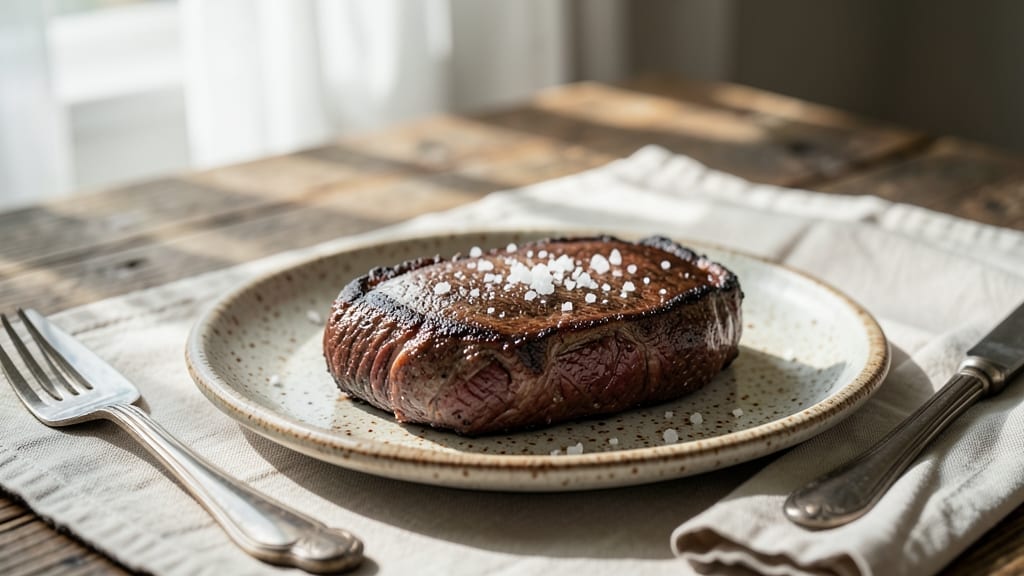
This cowboy steak smoker recipe transforms tough cuts into melt-in-your-mouth perfection with a charred crust and deep smoky flavor—this is the recipe I return to every time I crave that authentic pitmaster experience. 🔥 The secret lies in a simple dry rub. and low-and-slow smoking that lets the meat tenderize while developing that signature bark.
I first perfected this technique during a late-summer cookout when my family insisted we try something different from the usual grilled burgers.
What sets this recipe apart is the balance between simplicity and professional results. You’ll need just a handful of pantry staples for the rub—coarse salt, black pepper, garlic powder, and smoked paprika—and a quality cut like ribeye or New York strip.
The smoking process itself is where the magic happens, with hickory wood lending that classic cowboy flavor while maintaining a steady 250°F temperature for 4-5 hours until the internal temp hits 145°F for medium-rare.
By the time you slice into that steak, you’ll be rewarded with a perfectly tender interior and a crust so flavorful it practically falls apart. The smoky aroma alone will have everyone gathering around, but the first bite delivers that perfect harmony of charred edges and juicy centers.
This is the kind of meal that turns a simple dinner into an event—no fancy plating required, just great steak and good company.
The beauty of this recipe is its versatility. Serve it alongside classic sides like baked beans, cornbread, or grilled vegetables for a complete cowboy-style feast, or keep it simple with just a fresh salad.
The steak’s bold flavors stand up to anything, making this a go-to for both casual weeknights and special occasions. Let’s get smoking!
Ingredients for cowboy steak smoker
Pantry staples and smoker magic. Just a few ingredients transform simple steak into cowboy-style perfection.
| Ingredient | Amount | Notes |
|---|---|---|
| Ribeye Steak 🥩 | 2 lb | Bone-in, 1-1.5 inch thickness |
| Coarse Kosher Salt 🧂 | 2 tbsp | Diamond Crystal preferred |
| Freshly Ground Black Pepper 🌶️ | 1 tbsp | Freshly cracked for best flavor |
| Garlic Powder 🧄 | 1 tbsp | Not garlic salt |
| Smoked Paprika 🌶️ | 1 tbsp | For authentic cowboy flavor |
| Hickory Wood Chips 🌳 | 1 cup | Unsoaked, for smoker |
| Extra-Virgin Olive Oil 🫒 | 1 tbsp | For searing steak |
| Yellow Onion 🧅 | 1 whole | Sliced for serving |
| Fresh Rosemary 🌿 | ¼ cup | Chopped, for garnish |
| Butter 🧈 | 2 tbsp | Unsalted, for basting |
| Fresh Parsley 🌿 | 0.15 cup | Chopped, for garnish |
[recipe_ingredient_scaler]
The steak cut is everything here. Ribeye is my go-to—bone-in for extra flavor, and 1-1.5 inch thickness ensures perfect doneness. Costco or your local butcher usually have ideal cuts. Look for good marbling—those little white flecks mean juicier meat. If you’re using New York strip, trim any excess fat to avoid flare-ups on the smoker. I always buy mine a day ahead and let it sit uncovered in the fridge to dry-brine slightly, which helps the rub stick better.
No smoked paprika? Regular paprika plus a pinch of liquid smoke works in a pinch, though nothing beats the real thing. The hickory wood chips are non-negotiable for that authentic cowboy flavor—Trader Joe’s sells them pre-soaked, which saves time. Fresh rosemary and parsley can be swapped for dried at one-third the amount, but fresh is worth the extra minute. The olive oil should be extra-virgin—it makes a difference when searing. For the butter, unsalted is crucial so you control the seasoning. If you’re short on time, a 1-inch thick steak will cook faster than thicker cuts.
Steaks smoke best at room temperature, so take them out of the fridge 1 hour before cooking. The rub keeps for 2 weeks in an airtight container, so make extra for future smokes. Leftover steaks reheat beautifully—350°F oven for 10-12 minutes wrapped in foil. For the wood chips, store them in a cool, dry place for up to 6 months. I always portion the rub into small jars for quick access during cookouts.
Why You’ll Love This Recipe
- No-Fuss Smoking: Honestly, this isn’t one of those recipes that requires a Pinterest-worthy setup. Just slap that ribeye on the smoker, toss it with salt, pepper, garlic powder, and smoked paprika, and let the hickory wood chips do the heavy lifting. The real magic happens while you’re sipping coffee or watching a movie—no babysitting required.
- Smoky, Buttery Perfection: Between the hickory smoke and that final sear with butter, this steak hits all the right notes. The smoky bark? Crispy. The inside? Juicy and pink. And that crispy edge with the creamy center? Chef’s kiss. It’s the kind of dish where every bite feels like a little victory.
- Feeds a Crowd (Without the Guilt): Two pounds of ribeye isn’t just for one person—it’s for game nights, BBQs, or when your friends show up unannounced. Plus, it’s one of those meals where people will ask for seconds, not because they’re polite, but because they need seconds. And honestly? That’s the best kind of compliment.
- Budget-Friendly Luxury: Let’s be real—steak isn’t cheap, but this recipe makes every dollar count. The smoked paprika and garlic powder add flavor without breaking the bank, and the rest of the ingredients are pantry staples. You’re not just eating meat; you’re eating experience. And for under $20, that’s a steal.
Step-by-step instructions for cowboy steak smoker recipe
Here’s how to transform a simple ribeye into smoky, charred perfection with bold flavor.
🔥 Step 1: Prepare the Smoker and Season the Steak
Fill your smoker with the 1 cup hickory wood chips and soak them in water for 30 minutes if using a water smoker. For a hot smoker, skip soaking. Light the chips and let the smoker preheat to 225°F. This low-and-slow approach builds deep smoke flavor without drying out the meat.
While the smoker heats, pat the 2 lb ribeye steak dry with paper towels. In a small bowl, mix 2 tbsp coarse kosher salt, 1 tbsp freshly ground black pepper, 1 tbsp garlic powder, and 1 tbsp smoked paprika. Rub this generously over the steak, pressing the spices into the meat. Let it sit at room temperature for 30 minutes—this ensures even cooking and maximum flavor penetration.
🔥 Step 2: Smoke the Steak Low and Slow
Place the seasoned ribeye on the smoker grate, fat-side up. Smoke for 4-5 hours until the internal temperature reaches 125°F. The bark should be dark and crispy, with a thick smoke ring forming just beneath the surface. Resist the urge to open the smoker—each peek drops the temperature and extends cook time.
Here’s the thing—smoke flavor develops gradually. You’ll know it’s ready when the steak releases easily from the grate and the edges pull away from the fat cap. If the bark isn’t dark enough by 125°F, add another 30 minutes to the cook time. This patience pays off with restaurant-quality results.
🍳 Step 3: Sear and Baste for Crispy Crust
Remove the steak from the smoker and let it rest for 10 minutes. Heat a cast-iron skillet over high heat until smoking hot. Add 1 tbsp extra-virgin olive oil and swirl to coat the pan. Sear the steak for 2 minutes per side, pressing down gently with a spatula to ensure even contact.
Reduce heat to medium and add the 2 tbsp butter. Tilt the pan and spoon the melted butter over the steak for 1 minute, basting until the crust turns deep golden brown. This step adds a rich, caramelized finish that ties all the smoky flavors together. The butter also helps create a glossy sheen on the steak’s surface.
🥘 Step 4: Rest and Slice for Maximum Juiciness
Transfer the seared steak to a cutting board and tent loosely with foil. Let it rest for 15 minutes—this allows the juices to redistribute throughout the meat. Cutting too soon will leave you with dry, stringy slices. While it rests, slice the 1 yellow onion into ¼-inch rings and chop the ¼ cup fresh rosemary and ⅛ cup fresh parsley for garnish.
Slice the ribeye against the grain into ½-inch thick portions. The meat should be tender with a perfect pink center and a dark, charred crust. Serve immediately with the sliced onions and a sprinkle of the chopped herbs. The rosemary and parsley add a fresh contrast to the bold smoky flavors, balancing the dish beautifully.
Pro Tips For Making Cowboy Steak Smoker
- Salt the Night Before: I learned this the hard way—rubbing the steak dry and salting it 30 minutes before smoking works, but letting it sit uncovered in the fridge overnight (like the storage tip says) makes the rub cling like glue. The salt actually starts drawing out moisture, so when you sear it later, that crust locks in flavor instead of sliding off.
- Smoke Fat-Side Up: The recipe says to place the steak fat-side up, and it’s not just a suggestion—it’s the thing that matters most. The fat renders slowly during smoking, basting the meat from within and building that dark, crispy bark. Flip it only if you’re desperate for drama, but trust the process.
- Don’t Rush the Rest: That 15-minute rest after searing isn’t optional, even if you’re starving. I know, I know—but cutting into the steak too soon means juices pooling on your plate instead of in the meat. Tent it loosely with foil so it doesn’t sweat, and use the time to slice the onion and chop herbs. Your future self will thank you.
- Butter at the End: Adding the 2 tablespoons of butter during the final basting step isn’t just for flavor—it’s what turns that sear from good to showstopping. The butter melts fast, so tilt the pan and spoon it aggressively over the steak for those last 60 seconds. If you add it earlier, it’ll burn before the crust forms.
Regional styles of this dish
Texas Trail Drive Style
In the heart of Texas, cowboy steak takes on a rustic, no-frills approach where the focus is on bold wood smoke and minimal fuss. Pitmasters here often use mesquite wood chips instead of hickory for a sweeter, nuttier profile that pairs perfectly with the ribeye’s richness.
I remember my first cookout with a Texas pitmaster who swore by this—he’d let the steak smoke until the bark was so thick you could hear it crackle when you lifted it off the grate.
The key is patience: 5-6 hours at 225°F until the internal temp hits 120°F for that perfect medium-rare finish.
Appalachian Mountain Smokehouse
Up in the Appalachian mountains, they take cowboy steak to another level by incorporating local wild herbs into the rub. I once foraged with a friend who showed me how to blend wild thyme and mountain pepper with the classic spices—it adds an earthy complexity that’s unlike anything store-bought.
The smoking process is similar, but they often use oak wood for a milder, cleaner smoke that lets the steak’s natural flavors shine. The result is a steak with layers of rustic charm that feels like a hug from the mountains. 🌲
Southwest Charcoal Grill
Down in the Southwest, cowboy steak gets a fiery twist with the addition of chipotle powder to the rub, giving it that signature smoky-spicy kick. I tried this technique during a tailgate party where the crowd went wild—it’s like having a little heat with every bite.
The smoking process stays true to the classic method, but they often use peach wood for a subtle sweetness that balances the chipotle’s heat. This version is perfect for those who love their steak with a little extra zing.
Alpine Lodge Smoked Perfection
In the alpine regions, cowboy steak becomes a hearty centerpiece for winter gatherings. Here, they often smoke the steak over applewood for a fruity, aromatic smoke that pairs beautifully with the ribeye’s buttery texture.
I recall a cozy lodge dinner where the steak was served with a side of smoked applesauce—it was like a symphony of flavors. The cooking time is slightly longer, around 6 hours, to ensure the steak is slow-cooked to perfection in the cooler mountain air.
Modern Pitmaster Fusion
Today’s pitmasters like me blend tradition with innovation, often using reverse sear techniques after smoking. I’ll smoke the steak low and slow for 4 hours until it reaches 110°F, then finish it on a hot cast-iron skillet for that perfect sear.
This method gives you the best of both worlds: deep smoky flavor and a caramelized crust. It’s a technique I’ve perfected over years of experimenting, and it never fails to impress guests. The result is a steak that’s juicy, tender, and packed with smoky goodness. 🔥
Nutrition facts
Frequently asked questions
Why does the recipe call for smoking at 225°F
instead of higher heat?
Smoking at 225°F creates that deep, complex smoky flavor without drying out the 2 lb ribeye. Higher heat would cook the steak too quickly, leaving you with a tough exterior while the inside remains undercooked. This low-and-slow method also helps develop a perfect smoke ring and tender texture.
Can I skip the searing step after smoking?
While you can skip it, searing is key for that crispy crust and caramelized finish. The 1 tbsp olive oil and 2 tbsp butter basting step adds richness and locks in juices. Skip it only if you’re in a hurry—but your steak won’t taste the same! The sear also helps control any excess smoke flavor if you’re sensitive to it.
What if my smoker runs out of wood chips halfway through?
No problem! Add fresh hickory wood chips to maintain smoke consistency. Just avoid overloading the smoker—stick to the 1 cup amount for even smoke distribution. If your smoker has a pellet feed, you can also switch to pellets for a steady smoke supply. The key is keeping the temperature stable at 225°F.
How do I know when the steak is done without cutting into it?
Use a meat thermometer! The steak should reach 125°F internally for medium-rare. Look for a thick smoke ring near the surface and a dark, crispy bark that pulls away from the fat cap. The steak should also release easily from the grate. If unsure, wait another 30 minutes to ensure perfect tenderness.
Can I use a different wood type for smoking?
While hickory is classic, oak offers a milder smoke or mesquite adds a sweeter, nuttier profile. Avoid fruitwoods like cherry or apple—they can overpower the steak’s natural flavor. Just adjust your rub slightly if using stronger woods like pecan. The key is balancing the wood’s character with the smoked paprika in your seasoning.

Trained in classic French technique but raised on slow-cooked ribs and spicy rubs, she blends culinary skill with smoke and soul.
- Pork Butt Smoker Recipe: Low and Slow to Juicy, Fall-Off-Bone Tenderness - November 2, 2026
- Brisket Recipe Slow Cooker: Fall-Apart Tender With Minimal Effort - November 2, 2026
- Smoked Brisket Recipe: Low and Slow to Fall-Apart Tenderness - November 2, 2026