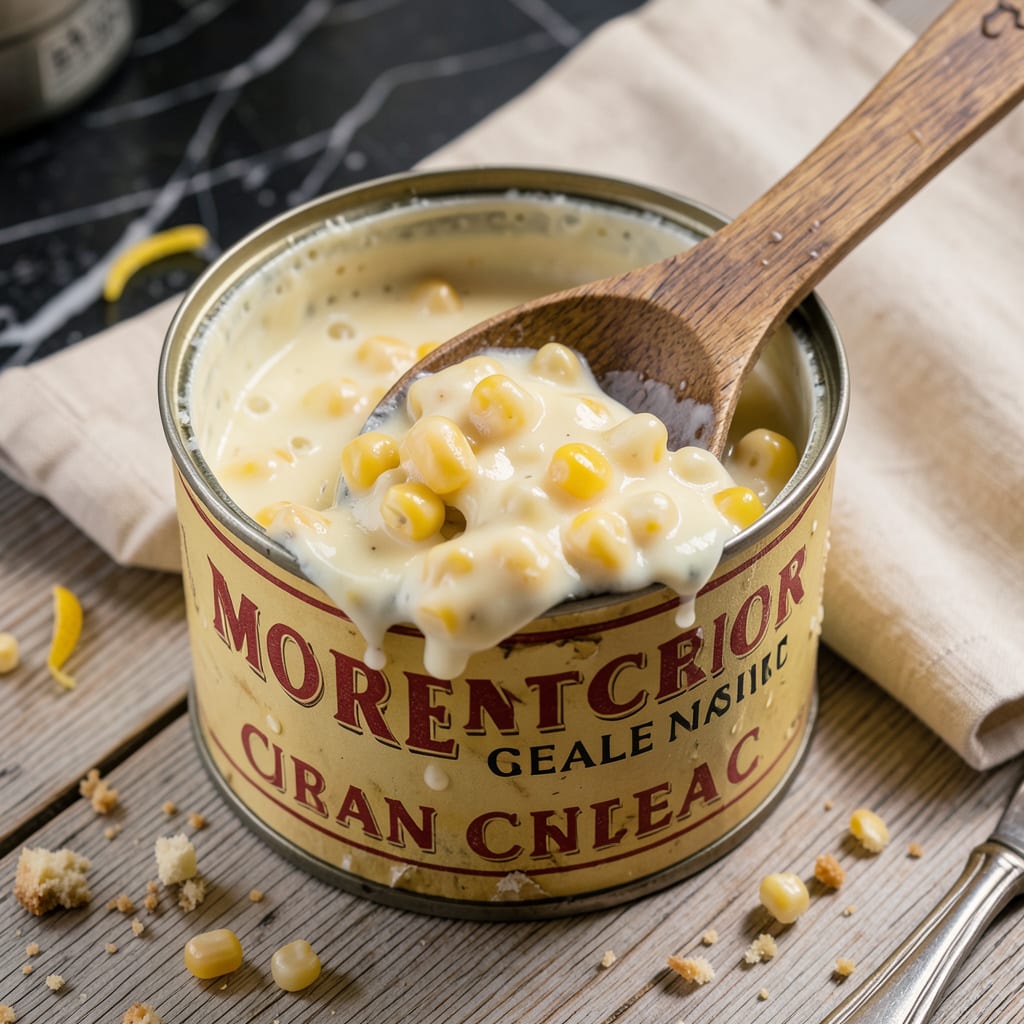
Canned cream corn is pre-cooked, sweet corn kernels in a thick, creamy sauce made from corn puree and milk or water. It’s a convenient pantry staple that adds rich texture and sweetness to soups, casseroles, and side dishes in minutes.
I love keeping this on hand because it delivers that homemade comfort-food feel without the prep work. The secret lies in how manufacturers blend fresh corn with a velvety puree—creating a consistency that’s thicker than regular canned corn but smoother than creamed corn you’d make from scratch. It’s my go-to for last-minute meal upgrades, especially when I need to add body to chowders or a creamy element to skillet dishes. 🔥
What surprises most people is how versatile it becomes with just a few tweaks. A sprinkle of smoked paprika or sharp cheddar transforms it from simple side to standout dish. I’ve even used it as a binder in cornbread for extra moisture and sweetness. The pre-cooked convenience means you’re always 10 minutes away from a hearty addition to your plate. ✨
💡 In This Article
- How Canned Cream Corn Is Made and Processed
- Top 5 Quick Meals Using Canned Cream Corn
How Canned Cream Corn Is Made and Processed
The journey from field to can starts with sweet corn harvested at peak ripeness—typically within 24-48 hours of picking to preserve natural sugars. Manufacturers first blanch the kernels in 180-200°F water for 2-4 minutes to halt enzyme activity that would degrade flavor.
This step also softens the corn for pureeing, where about 40% of the kernels get blended into a smooth base that gives cream corn its signature velvety texture. 🌽
After pureeing, the mixture combines with whole kernels, milk or water, and stabilizers like modified cornstarch (about 1-2% by weight) to prevent separation during shelf life. The creaminess comes from this precise ratio—typically 60% corn solids to 40% liquid—which creates a consistency thicker than regular canned corn but pourable unlike homemade versions.
Commercial brands often add 0.5-1% salt and a touch of sugar to enhance the corn’s natural sweetness.
Canning happens at ultra-high temperatures (250°F+) for 3-5 minutes to ensure sterility and a 2-5 year shelf life. This process differs from frozen cream corn, which skips the pureeing step and uses flash-freezing instead.
The result is a product that reheats evenly in 5-7 minutes on the stovetop, with the starches already fully gelatinized for instant creaminess. ✨
What sets canned cream corn apart is its controlled moisture content—about 78-82%—which prevents the sauce from breaking or curdling when heated. Some premium brands use real cream (10-12% fat) instead of milk for richer flavor, while budget options may incorporate vegetable oils.
The canning liquid often contains citric acid as a preservative, which subtly brightens the corn’s flavor profile.
Compared to fresh cream corn, the canned version has slightly softer kernels due to the blanching and pressure-cooking process. However, this makes it ideal for incorporating into dishes where you want the corn to melt into the sauce—like chowders or casseroles—rather than maintain distinct texture.
The uniform particle size (0.2-0.4 inches) ensures consistent mouthfeel in every bite. 🔥
For home cooks, this processing means you can skip the labor-intensive steps of scraping corn cobs and reducing cream sauces. The pre-gelatinized starches in canned versions also make them more forgiving when reheated, unlike homemade versions that can separate if not stirred constantly.
This explains why it’s become a staple in professional kitchens for quick family-style service.

Trained in classic French technique but raised on slow-cooked ribs and spicy rubs, she blends culinary skill with smoke and soul.
- Recipe for Boneless Pork Chops in Cast Iron Skillet: Sear and Baste to Juicy Perfection - October 3, 2026
- Recipe for Boneless Cross Rib Roast: Slow-Roasted Beef with Herb Crust - October 3, 2026
- Hamburgers in Sauce Recipe Crock Pot: Slow-Cooked Savory Delight - October 3, 2026