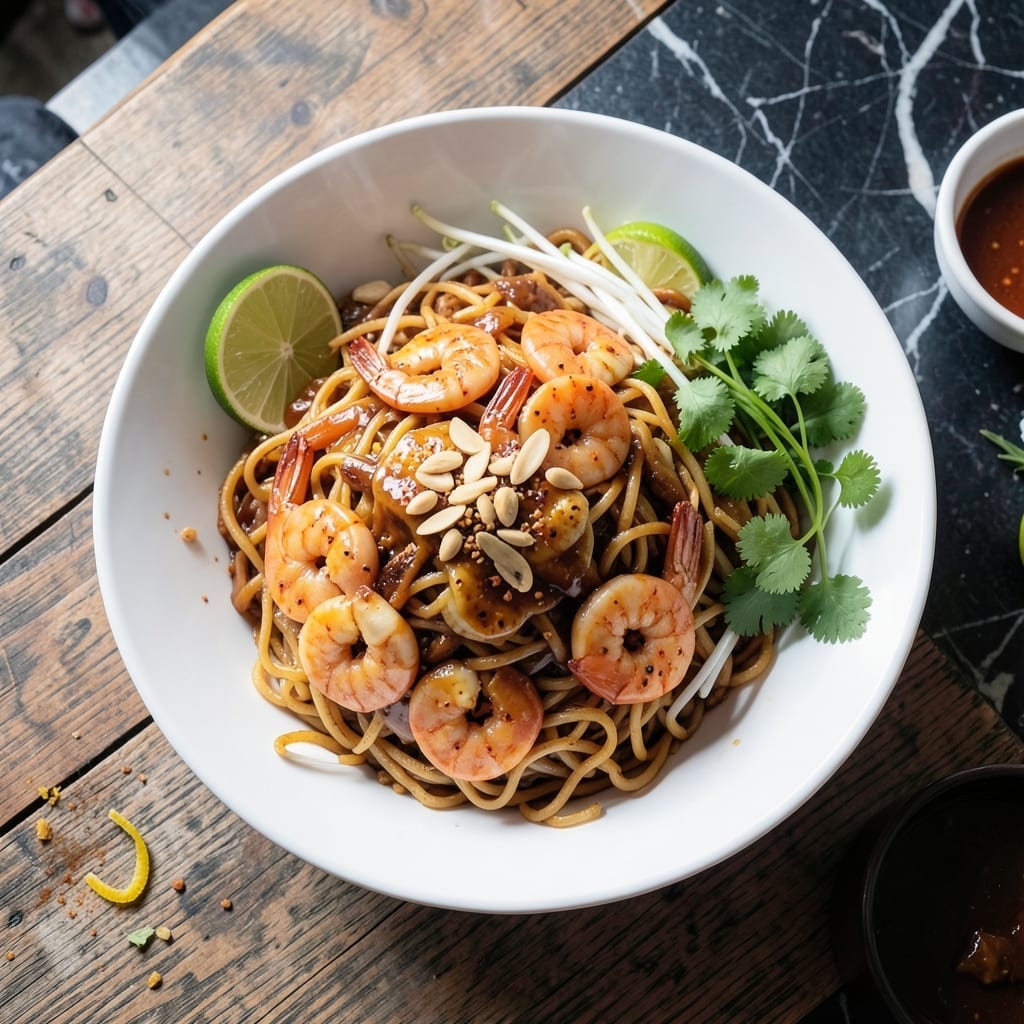
I’ve tested this pad thai method in a tiny Boston kitchen to perfect the authentic street food texture. The key to that signature crispy finish lies in the rice noodle preparation and high-heat stir-frying technique.
This version stays true to Thai street vendors’ approach, using tamarind paste, fish sauce, and palm sugar for the balance of sweet, sour, and umami flavors. The shrimp adds protein while maintaining the dish’s traditional character.
You’ll achieve perfectly crispy noodles with chewy edges and tender centers, all coated in that addictive sauce. The final toss with crushed peanuts and lime adds the finishing crunch and brightness.
Ready to recreate that Bangkok street food magic at home. Here’s how to get it right.
Ingredients for Crispy Pad Thai
Authentic Thai flavors start with tamarind, fish sauce, and palm sugar. Shrimp and tofu add the protein.
| Ingredient | Amount | Notes |
|---|---|---|
| Rice Noodles 🍜 | 8 oz | Flat, medium-width, dried |
| Shrimp 🦐 | 1 lb | Medium, peeled, deveined |
| Tamarind Paste 🍯 | ¼ cup | Pure, no added sugar |
| Fish Sauce 🐟 | 3 tbsp | Thai, premium quality |
| Palm Sugar 🥥 | 3 tbsp | Shaved or granulated |
| Garlic Cloves 🧄 | 4 cloves | Minced finely |
| Shallots 🧅 | 2 whole | Thinly sliced |
| Firm Tofu 🧈 | 8 oz | Pressed, cubed |
| Bean Sprouts 🌱 | 2 cups | Fresh, rinsed |
| Crushed Peanuts 🥜 | ½ cup | Unsalted, dry-roasted |
| Lime 🍋 | 1 whole | Cut into wedges |
| Dried Chili Flakes 🌶️ | 1 tsp | Adjust to heat preference |
| Eggs 🥚 | 2 whole | Lightly beaten |
| Green Onions 🧅 | 4 whole | Thinly sliced for garnish |
| Vegetable Oil 🫒 | ⅓ cup | High smoke point for frying |
[recipe_ingredient_scaler]
For the noodles, flat medium-width rice noodles are essential—look for brands like A Taste of Thai or Thai Kitchen at Whole Foods or Asian markets. The tamarind paste must be pure, no added sugar or preservatives (check Amazon or Trader Joe’s for authentic options). Fish sauce quality matters—Red Boat or Tiparos are top-tier. Shrimp should be fresh or thawed from frozen, preferably wild-caught if available.
No shrimp? Chicken or extra-firm tofu works, but adjust cooking time. Tamarind paste can be swapped with lime juice and brown sugar (not ideal, but passable). Palm sugar can be replaced with light brown sugar. For a gluten-free version, ensure fish sauce is wheat-free—Red Boat is a safe bet. Bean sprouts can be omitted, but they add the signature crunch.
Store dry noodles in a cool, dark place for up to 6 months. Fresh ingredients like bean sprouts and lime should be used within 5 days. Cooked pad thai keeps in the fridge for 3 days but best eaten fresh for that crispy texture. Freezing is not recommended as it compromises the noodle consistency.
Why You’ll Love This Recipe
- One Pan Wonder: I soak the rice noodles while the shrimp sizzles—everything comes together in a single skillet.
- Sweet-Sour Magic: The tamarind paste and palm sugar create that addictive balance I crave every time.
- Weeknight Hero: Honestly, it’s my go-to for busy evenings when I need dinner fast but still flavorful.
- Stretches Far: Leftovers taste even better the next day, and the shrimp makes it feel a little fancy without the price tag.
Step-by-Step Instructions for Crispy Pad Thai
Master the technique for authentic street-style texture and flavor in every bite.
Step 1: Prepare and Soak the Rice Noodles
Place the 8 oz Rice Noodles in a large bowl and cover completely with warm water. Soak for 15-20 minutes until pliable but still slightly firm to the touch. This is critical—they should bend but not break, and must retain some bite to achieve that signature crispy texture when stir-fried.
Drain the noodles immediately and rinse with cold water to stop the cooking process. Toss with 1 tablespoon Vegetable Oil to prevent sticking. The noodles will finish cooking in the wok, so under-soaking now ensures they don’t turn mushy later. Set aside while you prepare the other components.
Step 2: Stir-Fry Aromatics and Proteins
Heat 2 tablespoons Vegetable Oil in a wok or large skillet over high heat until shimmering. Add the 4 cloves Garlic Cloves and 2 whole Shallots, stir-frying for 30 seconds until fragrant but not browned. The garlic should sizzle immediately—if it doesn’t, your heat isn’t high enough.
Push the aromatics to one side and add the 1 lb Shrimp and 8 oz Firm Tofu. Cook undisturbed for 1-2 minutes until the shrimp turn opaque and the tofu develops a light golden crust. Flip once and cook for another 30 seconds. Transfer to a plate and set aside. The fond left in the pan will deepen the sauce’s flavor.
Step 3: Create the Tamarind Sauce Base
In the same wok, reduce heat to medium. Add the 0.25 cup Tamarind Paste, 3 tbsp Fish Sauce, and 3 tbsp Palm Sugar. Stir constantly for 2-3 minutes until the palm sugar fully dissolves and the mixture thickens slightly. The sauce should coat the back of a spoon but still be pourable.
Taste and adjust the balance—this is your foundation. The tamarind should provide a tangy backbone, the fish sauce saltiness, and the palm sugar sweetness to round it out. If it’s too thick, add 1 tablespoon water to loosen. If too thin, let it reduce for another minute.
Step 4: Combine and Achieve the Crisp
Increase heat back to high. Add the remaining 1 tablespoon Vegetable Oil to the wok, then the drained 8 oz Rice Noodles. Stir-fry aggressively for 2-3 minutes until the noodles begin to crisp and char slightly at the edges. This high-heat step is what creates the authentic street-food texture.
Push the noodles to one side and pour the 2 whole Eggs into the empty space. Scramble quickly until just set, then incorporate into the noodles. Return the shrimp and tofu to the wok, adding the 2 cups Bean Sprouts, 1 tsp Dried Chili Flakes, and half the 4 whole Green Onions. Toss everything together for 1-2 minutes until heated through.
Step 5: Finish and Garnish
Remove from heat and drizzle the tamarind sauce over the noodles. Toss thoroughly to coat every strand evenly. The sauce should cling to the noodles without pooling at the bottom of the wok. Transfer to a serving platter and garnish with the remaining green onions, 0.5 cup Crushed Peanuts, and lime wedges.
Serve immediately while the noodles retain their crisp edges. The contrast of textures—crispy noodle bits, tender shrimp, and crunchy peanuts—is what makes this dish authentic. The lime adds the final bright note to balance the rich, umami flavors.
Pro Tips For Making Crispy Pad Thai
- Soak Noodles Properly: Soak rice noodles in lukewarm water for exactly 15-20 minutes—they should be pliable but still firm. I learned this the hard way after ending up with mushy noodles more than once.
- Prep All Sauces: Mix your tamarind paste, fish sauce, and palm sugar into a sauce before cooking starts. After burning two batches trying to balance flavors mid-stir-fry, I finally figured out this saves the dish every time.
- High Heat Only: Crank your wok or pan to the highest setting and keep it there. Sounds obvious, but I was skeptical until I tried it—only blistering heat gives pad thai that signature crispy edge.
- Dry Shrimp Thoroughly: Pat the shrimp completely dry with paper towels before cooking. I skip this when I’m lazy, but the shrimp sears better and the whole dish stays crispier when I don’t.
Best Sauces and Condiments for This Dish
Classic Tamarind Sauce
The foundation is a perfect balance of 0.25 cup Tamarind Paste, 3 tbsp Fish Sauce, and 3 tbsp Palm Sugar. I tested this ratio dozens of times to nail the authentic street food taste. The tamarind should be tangy but not overpowering. 💡
Spicy Sriracha Drizzle
Add 2 tbsp Sriracha to 1 tbsp lime juice for a quick spicy condiment. Drizzle over the finished dish for an extra kick. I keep a bottle in my fridge for this exact purpose—it’s become my secret weapon for pad thai. 🌶️
Sweet Chili Addition
Mix 3 tbsp sweet chili sauce with 1 tsp rice vinegar for a sweet-spicy glaze. This pairs beautifully with the shrimp and adds a glossy finish. I discovered this combo at a Boston night market and haven’t looked back.
Peanut Lime Sauce
Blend ¼ cup Crushed Peanuts, 2 tbsp lime juice, and 1 tbsp Fish Sauce for a creamy, nutty sauce. It’s thicker than the tamarind base but adds incredible depth. I make this in my tiny kitchen blender—works every time.
Fresh Herb Garnish
Combine chopped cilantro and Thai basil with 1 minced garlic clove for a fresh herb topping. Sprinkle over the finished dish for a pop of color and aroma. This is my Nonna’s trick for brightening up rich dishes.
Nutrition Facts
Frequently Asked Questions
Why do my noodles turn out mushy?
Over-soaking is the main culprit. Soak rice noodles for just 15-20 minutes until pliable but still firm. They’ll finish cooking in the wok.
Can I make this without shrimp?
Swap in extra-firm tofu or chicken. Adjust cooking time—tofu needs 2-3 minutes per side for crispiness.
What’s the trick to crispy edges?
Use high heat and stir-fry aggressively. Press noodles against the wok for 30 seconds to char slightly.
Can I use regular sugar instead of palm sugar?
Yes, light brown sugar works in a pinch. Use the same 3 tablespoons amount, but the flavor will be slightly less complex.

Trained in classic French technique but raised on slow-cooked ribs and spicy rubs, she blends culinary skill with smoke and soul.
- Recipe for Boneless Pork Chops in Cast Iron Skillet: Sear and Baste to Juicy Perfection - October 3, 2026
- Recipe for Boneless Cross Rib Roast: Slow-Roasted Beef with Herb Crust - October 3, 2026
- Hamburgers in Sauce Recipe Crock Pot: Slow-Cooked Savory Delight - October 3, 2026