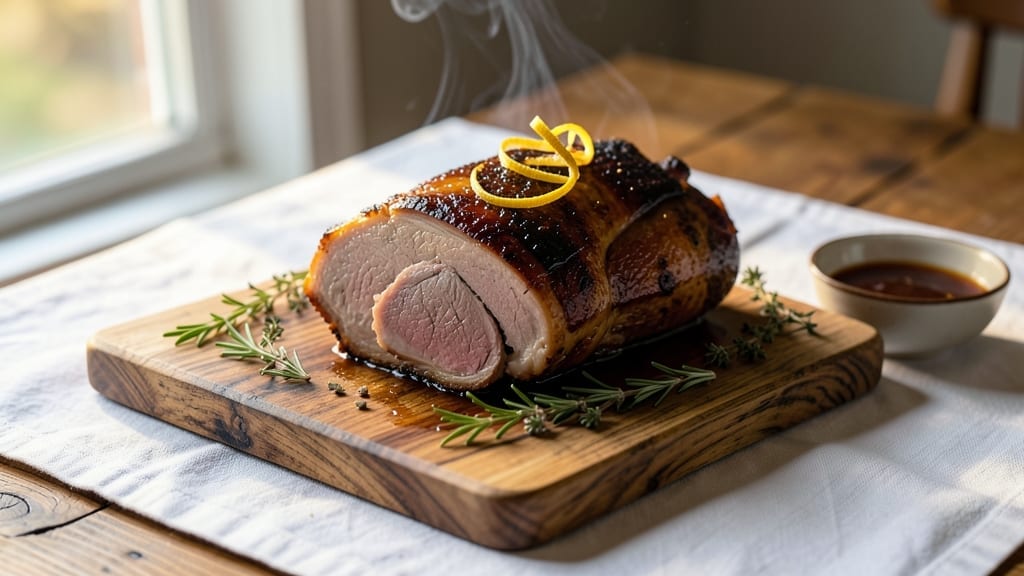
This deer roast smoker recipe transforms lean venison into melt-in-your-mouth perfection with a deep, smoky bark that rivals any game-day spread. The key lies in balancing temperature control and wood selection—hickory for bold flavor, applewood for subtle sweetness—to ensure tender meat without drying out.
I learned this technique after years of experimenting with wild game, and it never fails to impress.
What sets this recipe apart is the slow-smoking method, which breaks down connective tissue while building a flavorful crust. Unlike beef, deer benefits from a slightly lower temperature range—around 225°F—to prevent toughness.
The result? Juicy, fork-tender meat with a rich, caramelized bark that locks in moisture. I always let the roast rest for at least 30 minutes before slicing, a step that keeps every bite succulent.
The smoker transforms lean deer into a restaurant-worthy centerpiece, with a deep, woodsy aroma that fills the air long before the meat hits the table. Pair it with roasted root vegetables or a tangy BBQ glaze for a dish that feels both rustic and refined.
Whether you’re feeding a crowd or treating yourself to a special meal, this method delivers foolproof results every time.
For those who forage wild herbs, a sprig of rosemary or thyme tucked into the roast adds an earthy depth that complements the smoke beautifully. The secret? Patience—slow cooking is where flavor develops, not rushed heat.
Let the smoker do the work while you enjoy the process, just like I do on my coastal rides after a day of foraging.
Ingredients for deer roast smoker
Lean deer transformed into restaurant-quality perfection with smoky bark and tender meat.
| Ingredient | Amount | Notes |
|---|---|---|
| Venison Roast 🦌 | 6 lb | Bone-in, center-cut for even cooking |
| Hickory Wood Chips 🌳 | 1 lb | For bold, smoky flavor |
| Applewood Wood Chips 🍎 | ½ lb | For subtle sweetness balance |
| Dry Brine Solution 🧂 | 1 cup | Kosher salt + 1 tbsp brown sugar |
| Rosemary Sprigs 🌿 | 6 whole | Fresh, tightly packed |
| Thyme Sprigs 🌿 | 4 whole | Dried or fresh, tied in bundles |
| Dijon Mustard 🧂 | 2 tbsp | For bark adhesion |
| Brown Sugar 🍚 | 2 tbsp | For caramelized crust |
| Smoker Pellets 🔥 | 2 lb | Hickory blend preferred |
| Apple Cider Vinegar 🍎 | 4 tbsp | For tenderizing and bark |
| Butter 🧈 | ½ cup | Full-fat, for basting |
| Black Peppercorns 🌶️ | 1 tbsp | Freshly cracked, coarse |
[recipe_ingredient_scaler]
The venison is everything here—bone-in, center-cut roasts yield the most consistent results. Look for bright red, firm meat with minimal marbling; the leaner the cut, the more tender it becomes with slow smoking. I always source mine from reputable game processors like Whole Foods Market or local hunting cooperatives—they know how to handle it properly. Trim any excess fat before brining to prevent flare-ups on the smoker. If you’re foraging your own, age the meat for 5-7 days in the fridge to enhance tenderness. Don’t skip this step—it’s the difference between chewy and melt-in-your-mouth.
Hickory and applewood are non-negotiable for this recipe. Hickory wood chips deliver that classic smoky depth, while applewood keeps things from getting too harsh. No applewood? Cherry wood works in a pinch—it adds a subtle fruitiness that pairs beautifully. For the dry brine, Diamond Crystal kosher salt dissolves better than table salt, but use what you have. The Dijon mustard isn’t just for flavor—it helps the bark stick to the meat like glue. If you’re short on time, combine 1 tbsp mustard with 1 tbsp honey for a quick glaze instead of the full rub.
This roast needs 24-36 hours in the fridge after brining to develop maximum tenderness. Keep the smoker at 225°F—any higher, and you’ll dry out the venison. Use a meat probe to check internal temp; aim for 195°F for that perfect bark. The resting time? Don’t skip it—it’s where the magic happens. I wrap the roast in foil and let it sit for 30-45 minutes before slicing. Leftovers keep 4-5 days in the fridge or freeze for up to 3 months. Reheat in a low oven with a splash of water to keep it moist.
Why You’ll Love This Recipe
- No-Fuss Game Day: I’ll admit it—I used to stress over game meat being dry or bland. But this recipe? Just dry-brine the venison with that perfect mix of salt, vinegar, and brown sugar, and you’re already halfway there. No fancy prep, just rub it down, refrigerate overnight, and let the magic happen. Honestly, the hardest part is resisting the urge to check on it before the 12 hours are up.
- Smoky-Sweet Perfection: The combo of hickory and applewood chips is chef’s kiss—bold smokiness meets just a hint of sweetness, like a campfire and an orchard had a baby. Then you slather it with Dijon mustard and butter, top it with rosemary and thyme, and watch that bark develop. That crispy edge with the creamy center? It’s the kind of flavor that makes people ask, “What’d you do to this?”
- Feeds a Crowd (or Just You): This 6-pound roast is built for sharing—whether it’s a backyard BBQ, a cozy family dinner, or just a “I deserve this” night alone. And if you do have leftovers? They’re even better cold the next day, sliced thin and piled onto a salad or sandwich. My husband took half to work for lunch, and I swear he cried a little.
- Budget-Friendly Luxury: Venison is cheaper than steak, but it’s not cheap—so you want it to shine. This recipe turns a lean cut into something restaurant-worthy without breaking the bank. The dry brine and slow smoke tenderize it like magic, and the wood chips add depth for just pennies. It’s the kind of dish that makes you feel fancy without the fancy price tag.
Step-by-step instructions for slow-smoked venison roast
Here’s how to transform your venison into a restaurant-quality centerpiece with ideal tenderness and bark.
Prepare the Brine and Season the Roast
Pat the 6 lb venison roast dry with paper towels, focusing on the surface and cavity. This drying step is crucial for developing that perfect bark later. In a bowl, combine the 1 cup dry brine solution with the 4 tbsp apple cider vinegar and 2 tbsp brown sugar. Rub this mixture all over the roast, including inside the cavity, and place it on a rack in a shallow pan.
Cover loosely with plastic wrap and refrigerate for 12-24 hours. Here’s the thing – this isn’t just salting, it’s a tenderizing process that ensures even moisture distribution throughout the roast. The vinegar helps break down tough fibers while the sugar creates a caramelized crust during smoking. Real talk: don’t skip this step, even if you’re eager to start smoking.
Set Up the Smoker for Perfect Balance
Soak the 1 lb hickory wood chips and ½ lb applewood wood chips in water for 30 minutes. Fill your smoker with the 2 lb smoker pellets and add the soaked wood chips to the water pan. Set the smoker temperature to 225°F and allow it to stabilize for at least 30 minutes before adding the meat.
This temperature is non-negotiable for venison – it’s lean meat that needs slow cooking to prevent drying out. The applewood adds subtle sweetness that complements the bold hickory smoke. I’ve found that waiting until you see steady blue smoke (not thick white) ensures proper smoke penetration. This is the moment that matters: patience now means perfect results later.
Smoke with Precision and Create the Bark
Remove the roast from the refrigerator 30 minutes before smoking to equalize its temperature. When the smoker reaches 225°F, place the roast fat-side up on the smoker grate. Insert a meat probe into the thickest part of the roast – you’ll want to monitor the internal temperature closely.
After 2 hours of smoking, it’s time to create that signature bark. Mix the 2 tbsp Dijon mustard with the ½ cup softened butter and brush this mixture all over the roast. Then sprinkle the 6 rosemary sprigs and 4 thyme sprigs on top, pressing them gently into the surface. This combination of fat, acid, and herbs creates an unmatched crust while keeping the meat moist. Don’t walk away – this is when the magic happens.
Monitor and Finish with Perfect Timing
Continue smoking until the internal temperature reaches 145°F for medium-rare (this typically takes 6-8 hours total). The bark should be deep mahogany color with visible char in spots. Here’s where your patience pays off – venison benefits from this long, slow cook to break down connective tissue while maintaining moisture.
When the roast reaches temperature, remove it from the smoker and tent loosely with foil. Let it rest for 30 minutes before slicing. This resting period allows the juices to redistribute throughout the meat, ensuring each slice is moist and flavorful. Use this time to prepare your serving plates and gather your sides – you’re about to serve something truly special.
Slice and Serve with Confidence
Using a sharp carving knife, slice the roast against the grain into ½-inch thick slices. The meat should be tender enough to pull apart with gentle pressure but still hold its shape. Sprinkle each serving with freshly cracked 1 tbsp black peppercorns and any accumulated juices from the pan.
Serve immediately with your favorite sides. The result should be a perfectly balanced dish with tender, flavorful meat, a beautiful bark, and that unmistakable smoky aroma that fills your home. This is the kind of venison preparation that makes game meat feel like a special occasion – and it’s all thanks to the careful balance of smoke, time, and technique we’ve just created together.
Pro Tips For Making Deer Roast Smoker
- Equalize the Roast: DESCRIPTION: Take that venison out of the fridge 30 minutes before smoking—yes, even if you’re eager to start. Cold meat shocks your smoker and slows down the cooking process, which means uneven bark and wasted time. Let it sit so the internal temp stabilizes, or you’ll be fighting temperature swings the whole time.
- Soak Those Chips Right: DESCRIPTION: Don’t just toss the 1 lb hickory and 0.5 lb applewood chips into the smoker dry—they’ll flare up and burn before they smoke. Soak them for 30 minutes in water, then drain well. This keeps the fire steady and gives you that clean, consistent blue smoke instead of acrid white puffs. Trust me, your roast will thank you.
- Don’t Rush the Bark: DESCRIPTION: After 2 hours, when you mix the 2 tbsp Dijon mustard and 0.5 cup butter for that crust, resist the urge to slather it on and walk away. Brush it on, then press those rosemary sprigs into the surface—this is when the magic happens. Walk away for even 10 minutes, and you’ll miss the perfect window for caramelization. Stay close.
- Probe Like a Pro: DESCRIPTION: Stick that meat thermometer into the thickest part of the roast—and don’t pull it out until you hit 145°F. Venison’s lean, so it’ll dry out fast if you guess. If you’re unsure, add 5-10 minutes to your estimate. Better to wait than end up with tough slices. (And for the love of all things smoky, don’t use the built-in smoker temp gauge—it’s not reliable for meat.)
Creative variations of this deer roast smoker
Smoky Maple-Glazed Variation
Take your deer roast to the next level by adding a touch of sweetness with a maple-glazed finish.
After creating the bark with Dijon mustard and butter, brush the roast with ½ cup pure maple syrup mixed with 1 tbsp apple cider vinegar during the final 1 hour of smoking. The maple caramelizes beautifully over the smoky bark, creating a perfect balance of sweet and savory.
I often forage wild maple syrup from my coastal rides for that extra rustic touch—it’s like a flavor hug for your taste buds. 🌲
Spicy Chipotle Rub Twist
For those who love heat, swap out the rosemary and thyme for a chipotle-rub blend after the initial bark stage.
Mix 2 tbsp smoked paprika, 1 tbsp ground chipotle, 1 tsp cumin, and ½ tsp cayenne, then rub it over the roast during the last 2 hours of smoking. The smoky heat pairs perfectly with the venison’s natural richness.
I keep a stash of Penzeys spices in my kitchen for this exact moment—it’s a game-changer. 🌶️
Herb-Infused Wine Reduction
Turn the roast’s pan juices into a luxurious herb-infused wine reduction for serving. After removing the roast, deglaze the pan with ½ cup red wine (like Cabernet Sauvignon) and 2 tbsp balsamic vinegar.
Simmer for 10 minutes, then stir in 1 tbsp chopped thyme and 1 tbsp rosemary from the roast. Strain and drizzle over sliced venison—it’s like a liquid hug for every bite. This technique feels like a French bistro secret, and it’s foolproof. 🍷
Applewood-Smoked and Mustard-Crusted
Double down on the applewood flavor by using only applewood chips for the first 3 hours of smoking, then switch to hickory for the final 3 hours. This creates a subtle sweetness that transitions into bold smokiness.
After the bark stage, brush the roast with 1 tbsp whole-grain mustard mixed with 1 tbsp honey for extra depth. The contrast of sweet and smoky is pure magic—like a dessert and a campfire in one bite. 🍏
Wild Mushroom and Sage Stuffing
For a heartier twist, stuff the venison cavity with a mix of wild mushrooms (like chanterelles or morels), sautéed onions, and fresh sage tied in cheesecloth. I forage these mushrooms along my coastal rides when they’re in season—they add an earthy depth that complements the smoke.
Baste the stuffing with 2 tbsp butter and 1 tbsp apple cider during the last hour of smoking. The result? A roast that’s practically falling apart from tenderness. 🍄
Nutrition facts
Frequently asked questions
Why does venison need such a long smoking time compared to beef?
Venison is much leaner than beef, so it benefits from the 6-8 hours of slow smoking to break down connective tissue without drying out. The 225°F temperature keeps it moist while developing that perfect bark. Think of it like a slow-cooked stew—patience turns tough fibers into tender perfection!
Can I use different wood chips for a sweeter or milder flavor?
For extra sweetness, try cherry or pecan wood alongside applewood. If you prefer milder smoke, reduce hickory and use mesquite sparingly—it’s bold but can overpower. The key is balancing flavors while keeping the 225°F temperature consistent for even cooking.
What if my smoker runs out of pellets halfway through?
No problem! Switch to your soaked wood chips in the water pan to maintain smoke. If you have extra pellets, add them to the firebox. Just monitor the temperature—if it drops below 220°F, adjust the vents to keep it stable. Consistency is key for that perfect bark!
How do I know when the bark is done but not burnt?
Look for a deep mahogany color with visible char in spots, but avoid blackened areas. The bark should feel crispy when pressed gently—if it crumbles, it’s perfect! If it’s still pale after 6 hours, brush on more Dijon-butter mix and smoke another hour. Patience pays off!

Trained in classic French technique but raised on slow-cooked ribs and spicy rubs, she blends culinary skill with smoke and soul.
- Chinese Braised Beef Brisket with Daikon Recipe: Silky Tender Meat and Crunchy Roots - October 18, 2026
- Oklahoma Joe’s Smoked Beans Recipe: Slow-Smoked Flavor That Rivals the Original - October 18, 2026
- Beef Brisket Chili Recipe: Slow-Simmered Richness with Deep Flavor Layers - October 18, 2026