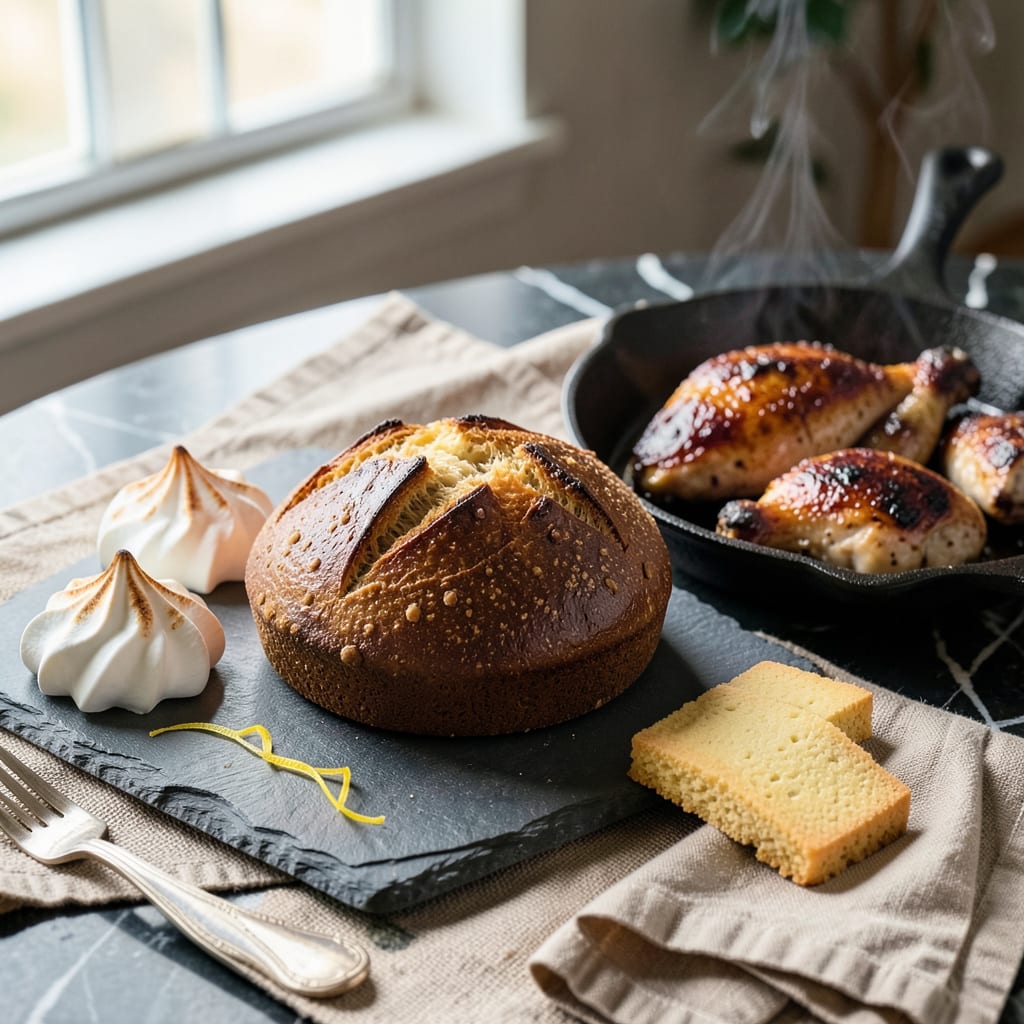
Most conventional ovens heat primarily from the bottom element, while broil functions use the top element. Convection ovens circulate hot air from a rear fan for even cooking.
Understanding this heat distribution is crucial for perfect results. 🔥 The bottom element creates that golden-brown crust on pies and casseroles, while the top broiler gives steaks and gratins their signature caramelized finish. I’ve found that convection ovens—with their circulating hot air—are game-changers for baking multiple trays simultaneously, eliminating those frustrating hot spots that plague conventional models.
What many home cooks don’t realize is that oven design directly impacts cooking strategy. The bottom-heavy heat explains why your grandmother’s cookie recipe insists on the middle rack—it’s the sweet spot between direct heat and even air circulation. ✨
💡 In This Article
- How Oven Heating Elements Function During Baking
- Best Rack Placement Based on Oven Heat Sources
How Oven Heating Elements Function During Baking
When you set your oven to 350°F for baking, the bottom heating element typically activates first to establish the base temperature. This element, usually a coiled metal wire, glows red-hot as electricity passes through it, radiating heat upward.
The oven’s thermostat cycles this element on and off to maintain your set temperature, with most conventional ovens relying on this bottom heat for about 80% of cooking time during baking modes. 🔥
The top element remains dormant during standard baking unless you specifically engage the broil function. When broiling, the top element heats to 500-550°F, creating intense direct heat perfect for searing steaks or melting cheese toppings.
Convection ovens add another layer—these models use a rear-mounted fan to circulate hot air at speeds around 100-200 CFM, reducing temperature variations by up to 25% compared to conventional ovens. ✨
Temperature distribution patterns reveal why your cookies brown differently on each rack. The area closest to the bottom element can be 15-20°F hotter than the middle, while the top third stays cooler unless the broiler’s engaged. This explains why professional bakers rotate pans halfway through baking—it compensates for these natural heat gradients.
I’ve measured this in my own kitchen with an oven thermometer, and the differences are striking!
Modern ovens often employ “hidden bake” elements beneath the oven floor, creating more even heat distribution than older models with exposed coils. The broil element’s position—typically 3-4 inches from the oven ceiling—allows for precise control when finishing dishes.
What surprises most cooks is that convection fans don’t actually generate heat; they simply move the existing hot air more efficiently, which is why convection recipes often recommend reducing temperatures by 25°F. 💫
Consider how this affects your cooking: Bottom heat excels at creating crisp crusts on pizzas and pies, while top heat gives gratins their golden bubbles. The middle rack becomes the Goldilocks zone for most baking—far enough from both elements to avoid scorching while still benefiting from even heat circulation.
This is why your grandmother’s cookie recipe likely specifies the middle position!
Advanced models now feature “true convection” with third heating elements surrounding the fan, maintaining more consistent temperatures during circulation. The interaction between these elements creates what engineers call “heat stratification”—distinct temperature layers that savvy cooks can exploit for multi-level baking.
Understanding these mechanics lets you manipulate your oven like a pro, whether you’re slow-roasting a brisket or baking delicate macarons. ⚡

Trained in classic French technique but raised on slow-cooked ribs and spicy rubs, she blends culinary skill with smoke and soul.
- Recipe for Boneless Pork Chops in Cast Iron Skillet: Sear and Baste to Juicy Perfection - October 3, 2026
- Recipe for Boneless Cross Rib Roast: Slow-Roasted Beef with Herb Crust - October 3, 2026
- Hamburgers in Sauce Recipe Crock Pot: Slow-Cooked Savory Delight - October 3, 2026