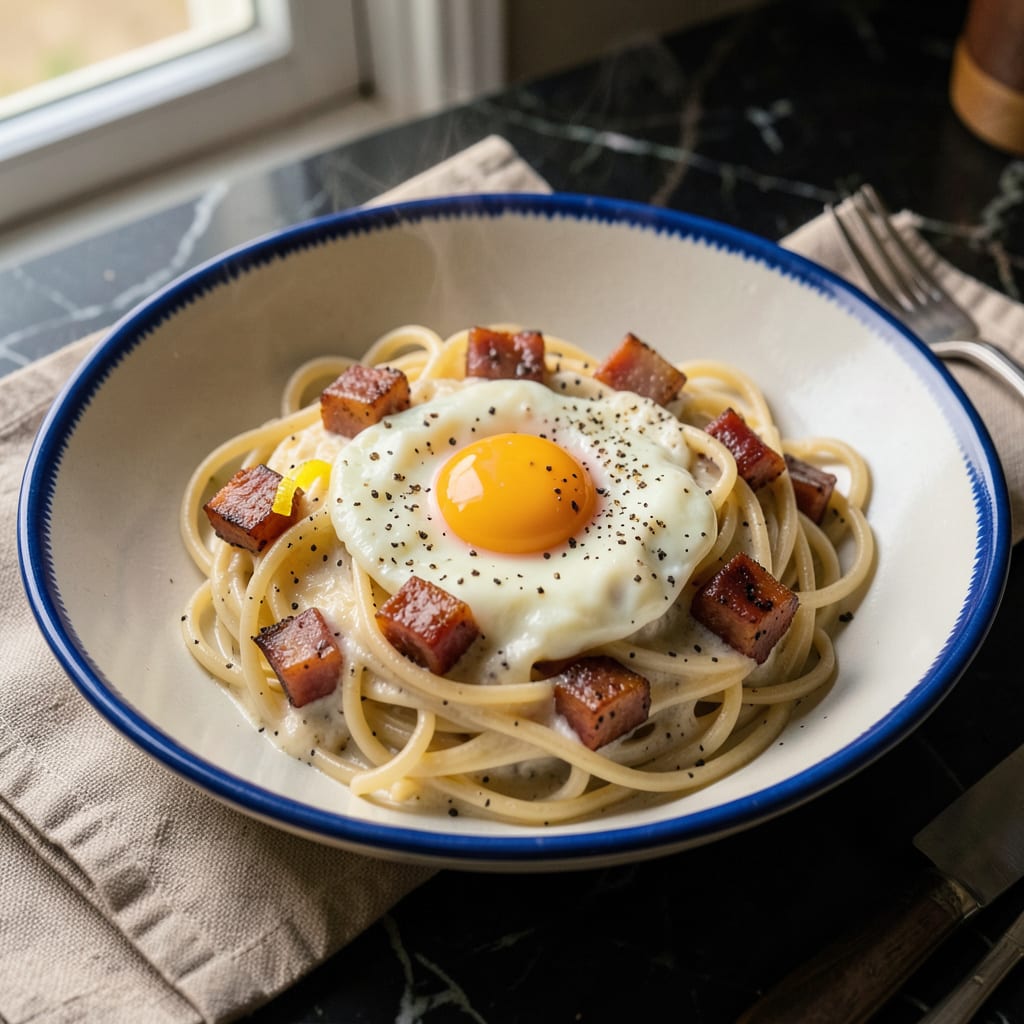
Authentic carbonara contains dairy in the form of Pecorino Romano or Parmigiano-Reggiano cheese and sometimes whole eggs, which are key to its creamy texture. No heavy cream is used in traditional recipes.
This classic Roman dish relies on the magic of aged Italian cheeses to create its signature velvety sauce. The combination of finely grated Pecorino Romano and Parmigiano-Reggiano melts into the hot pasta water, forming an emulsion that coats each strand perfectly. What many don’t realize is that the eggs—often considered dairy-adjacent—play a crucial role too, adding richness without the heaviness of cream. I’ve found that this traditional approach yields a lighter yet more complex flavor than modern cream-based versions. ✨
💡 In This Article
- Traditional Carbonara Ingredients and Their Dairy Sources
- Dairy-Free Carbonara Alternatives and Substitutions
Traditional Carbonara Ingredients and Their Dairy Sources
The secret to authentic carbonara lies in its carefully selected dairy components. The foundation is built on aged Italian cheeses—specifically Pecorino Romano (made from sheep’s milk) and Parmigiano-Reggiano (cow’s milk).
These aren’t just sprinkled on top; they’re finely grated (about 1/2 cup per 4 servings) and emulsified with starchy pasta water to create that signature silky sauce. The aging process (minimum 8-12 months) concentrates the flavors while reducing moisture content, which is crucial for achieving the right consistency.
What most people overlook is the role of eggs—typically 2 large yolks plus 1 whole egg per 4 servings. While not technically dairy, they function similarly in this context. The yolks contain lecithin, a natural emulsifier that binds the cheese and water into a stable sauce.
When tempered properly (by slowly mixing hot pasta into the eggs), they create a custard-like texture without scrambling. This technique dates back to post-WWII Rome when ingredients were scarce, forcing cooks to maximize flavor from minimal components.
The magic happens at the molecular level during the tossing phase. As the hot pasta (ideally al dente spaghetti) hits the cheese-egg mixture, the heat causes the proteins in both dairy components to unfold and then re-bond, creating a smooth, cohesive sauce.
The starch from the pasta water acts as a thickener, while the fat from the cheese and eggs provides richness. Traditional recipes call for guanciale (cured pork cheek) rendered fat to add another layer of flavor that complements the dairy elements perfectly.
Modern adaptations often miss the mark by adding heavy cream, which actually dilutes the intense cheesy flavor. The original version relies on the precise balance between the sharp, salty Pecorino and the nutty Parmigiano. I’ve found that using a 2:1 ratio of Pecorino to Parmigiano gives the most authentic taste.
The dairy components in traditional carbonara aren’t just ingredients—they’re the entire architecture of the dish, working together through specific chemical reactions to create that unmistakable creamy texture without heaviness.
Temperature control is everything when working with these dairy elements. The sauce should never exceed 145°F—just warm enough to melt the cheese and gently cook the eggs without curdling.
This is why professional chefs often remove the pasta from heat before combining it with the egg-cheese mixture, then use the residual heat to finish the cooking process. The result is a dish where every strand of pasta is perfectly coated in a velvety sauce that clings beautifully. ✨
What’s fascinating is how these simple dairy components transform through technique. The same ingredients that seem ordinary on their own—eggs, cheese, pasta water—become extraordinary when combined with proper method. This is why carbonara made with fresh, high-quality dairy products tastes dramatically different from versions using pre-shredded cheese or pasteurized eggs.
The aging of the cheese, the freshness of the eggs, and even the mineral content of the water all play roles in the final flavor profile.
For those who’ve only experienced cream-based versions, the traditional approach might seem surprisingly light yet intensely flavorful. The dairy here isn’t about adding fat for its own sake—it’s about creating a perfect emulsion where each component plays a specific role.
The Pecorino provides saltiness and sharpness, the Parmigiano adds depth and umami, while the eggs contribute both richness and binding power. It’s a masterclass in how simple ingredients can create complex flavors through thoughtful technique. 💫

Trained in classic French technique but raised on slow-cooked ribs and spicy rubs, she blends culinary skill with smoke and soul.
- Recipe for Boneless Pork Chops in Cast Iron Skillet: Sear and Baste to Juicy Perfection - October 3, 2026
- Recipe for Boneless Cross Rib Roast: Slow-Roasted Beef with Herb Crust - October 3, 2026
- Hamburgers in Sauce Recipe Crock Pot: Slow-Cooked Savory Delight - October 3, 2026