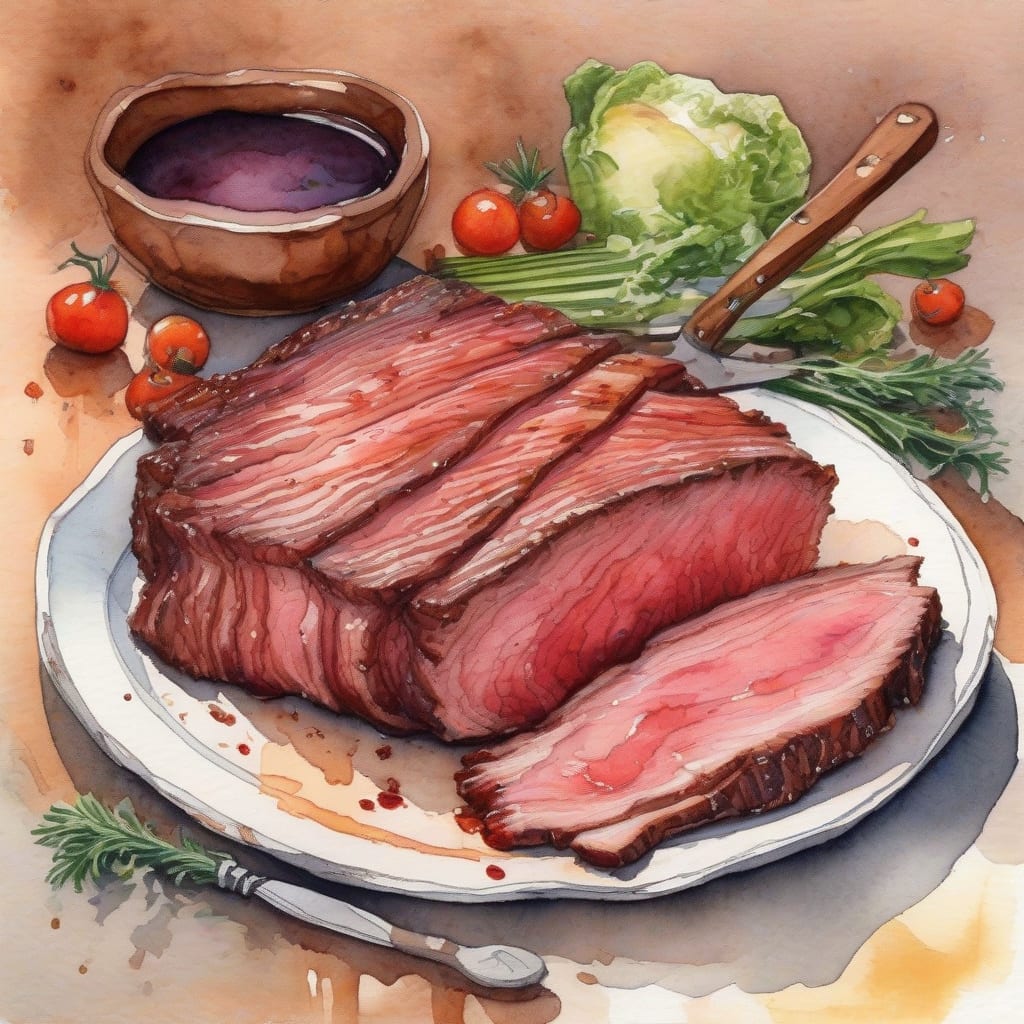
You should always cut brisket against the grain to ensure tender, easy-to-chew slices that showcase the meat’s natural texture and flavor.
Cutting against the grain makes a significant difference in brisket’s tenderness because it shortens the muscle fibers, making them easier to chew. To identify the grain direction, look for the parallel lines or fibers on the meat’s surface – once you see them, position your knife perpendicular to these lines. This technique, combined with proper resting time, results in slices that are both visually appealing and melt-in-your-mouth tender, perfect for various serving styles.
Understanding Brisket Grain Direction
Cutting brisket against the grain is crucial because of how the muscle fibers are structured. Brisket comes from the lower chest area of the cow, where the muscles work hard to support the animal’s movement, resulting in tougher, more fibrous meat. When you cut with the grain, you’re essentially slicing along these long muscle fibers, leaving them intact and making the meat chewy and difficult to bite through. By cutting against the grain, you’re shortening these fibers, making the brisket significantly more tender.
The grain direction in brisket isn’t always immediately obvious, as it can vary between the different muscle groups that make up the cut. A brisket typically contains two main muscles: the flat cut and the point cut. The flat cut usually has a consistent grain direction, while the point cut can have a more complex pattern. To identify the grain, look closely at the meat’s surface for parallel lines or striations – these indicate the direction of the muscle fibers. Sometimes you’ll need to examine both the flat surface and the edges to determine the grain’s orientation fully.
Here’s what’s actually happening when you cut against the grain: you’re reducing the length of the muscle fibers in each slice, which makes them easier to break down while chewing. This technique doesn’t change the inherent tenderness of the brisket itself, but it creates the illusion of greater tenderness by minimizing the amount of chewing required. For barbecue enthusiasts, this can make the difference between a good brisket and a great one, as it enhances both the texture and the overall flavor experience.
When you’re ready to slice, using a sharp knife is essential – a dull blade can tear the meat, especially if it’s been properly rested. I recommend slicing at a consistent thickness, typically about 1/4 inch, to maintain uniformity across your servings. This thickness strikes a balance between being substantial enough to showcase the brisket’s texture while still being easy to bite through. For presentation, consider slicing on a diagonal to increase the visible surface area of each piece, making it more appealing on the plate.

Trained in classic French technique but raised on slow-cooked ribs and spicy rubs, she blends culinary skill with smoke and soul.
- Recipe for Boneless Pork Chops in Cast Iron Skillet: Sear and Baste to Juicy Perfection - October 3, 2026
- Recipe for Boneless Cross Rib Roast: Slow-Roasted Beef with Herb Crust - October 3, 2026
- Hamburgers in Sauce Recipe Crock Pot: Slow-Cooked Savory Delight - October 3, 2026