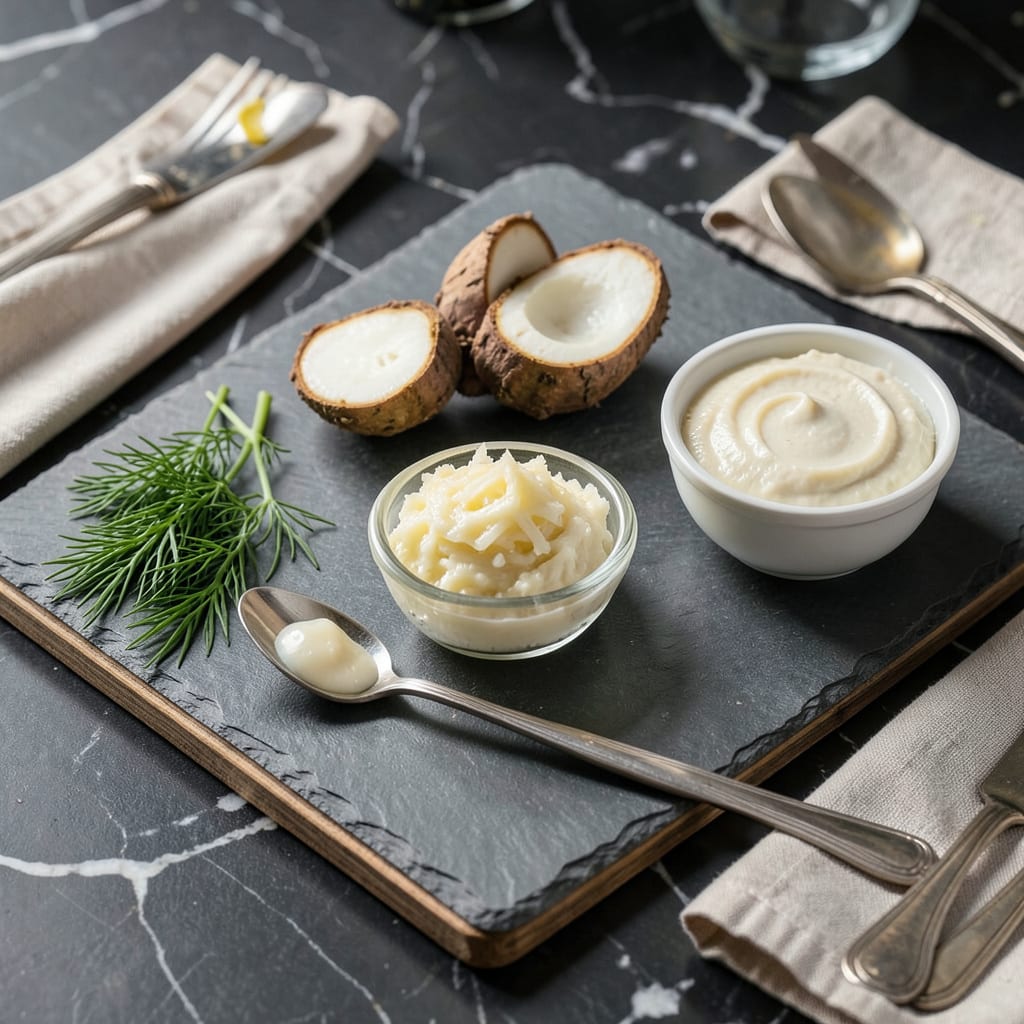
Fresh horseradish root should be refrigerated to maintain potency for 3-4 weeks, while prepared horseradish sauce must always be refrigerated after opening and lasts about 3-6 months. Unopened jars can stay in a cool pantry for up to 1 year.
I’ve learned through experience that horseradish’s signature kick comes from volatile compounds that degrade quickly at room temperature. 🔥 The root’s pungency fades about 25% faster when left unrefrigerated, while prepared sauces develop off-flavors within days if not chilled. What many don’t realize is that unopened commercial jars contain preservatives that extend shelf stability, but once exposed to air, the clock starts ticking on both flavor and safety.
For fresh roots, I wrap them in damp paper towels before refrigerating to prevent moisture loss. Prepared sauces do best in glass containers with tight seals, as plastic can absorb those precious aromatic compounds over time. The pantry exception for unopened jars only applies if your storage area stays below 70°F – anything warmer accelerates quality decline.
💡 In This Article
- Why Refrigeration Preserves Horseradish Freshness and Flavor
- Proper Storage Techniques for Fresh and Prepared Horseradish
Why Refrigeration Preserves Horseradish Freshness and Flavor
The fiery kick in horseradish comes from allyl isothiocyanate, a volatile compound released when root cells rupture. At room temperature, this compound evaporates rapidly—studies show horseradish loses 30-40% of its pungency within just 24 hours when unrefrigerated. Cold temperatures slow this evaporation process dramatically, preserving that signature nasal-clearing heat we love. 🔥
Fresh horseradish root contains enzymes that remain active even after harvesting. These enzymes continue breaking down compounds like sinigrin into pungent derivatives—but only if the root stays hydrated and cool. Refrigeration at 35-40°F reduces enzyme activity by about 70%, effectively putting the root in suspended animation.
Prepared sauces face double trouble: both enzyme degradation AND microbial growth risks once opened.
The difference between fresh root and prepared sauce comes down to exposure. Fresh roots have their protective skin intact, while prepared sauces (even with vinegar) have been ground and exposed to oxygen. This exposure triggers oxidation that turns vibrant white horseradish a dull beige color within days at room temperature.
The vinegar in prepared sauces helps, but isn’t enough to prevent eventual spoilage without refrigeration. ✨
Here’s what’s fascinating about temperature impact: For every 10°F increase above refrigeration temps, chemical reactions speed up by 2-3 times. That means horseradish left on your counter degrades as fast as it would in 8-12 weeks of proper refrigeration—all in just 2-3 days. The cold doesn’t stop degradation completely, but it stretches that window dramatically.
Commercial prepared horseradish often includes preservatives like sodium benzoate that buy you some pantry time when unopened. However, these preservatives work best in combination with the jar’s vacuum seal. Once opened, oxygen floods in and the preservatives can’t keep up with both microbial growth and flavor degradation—hence the urgent need for refrigeration.
I’ve seen unrefrigerated opened jars develop mold in as little as 5-7 days during summer. 💫
For fresh roots, the refrigerator’s humidity drawer (set to high) creates the ideal environment—90-95% humidity prevents the root from drying out while the cold preserves those volatile compounds. Prepared sauces do best in the main refrigerator compartment where temperatures stay most consistent.
The door shelves might seem convenient, but temperature fluctuations there can reduce shelf life by up to 30%.
The science confirms what my taste buds have known for years: that first sharp bite of properly stored horseradish is worth the refrigerator space. When stored correctly, fresh root maintains about 85% of its original pungency after 3 weeks, while prepared sauces keep their vibrant flavor profile for the full 3-6 months.
That’s the difference between a condiment that sings and one that just sits there. ⚡

Trained in classic French technique but raised on slow-cooked ribs and spicy rubs, she blends culinary skill with smoke and soul.
- Recipe for Boneless Pork Chops in Cast Iron Skillet: Sear and Baste to Juicy Perfection - October 3, 2026
- Recipe for Boneless Cross Rib Roast: Slow-Roasted Beef with Herb Crust - October 3, 2026
- Hamburgers in Sauce Recipe Crock Pot: Slow-Cooked Savory Delight - October 3, 2026