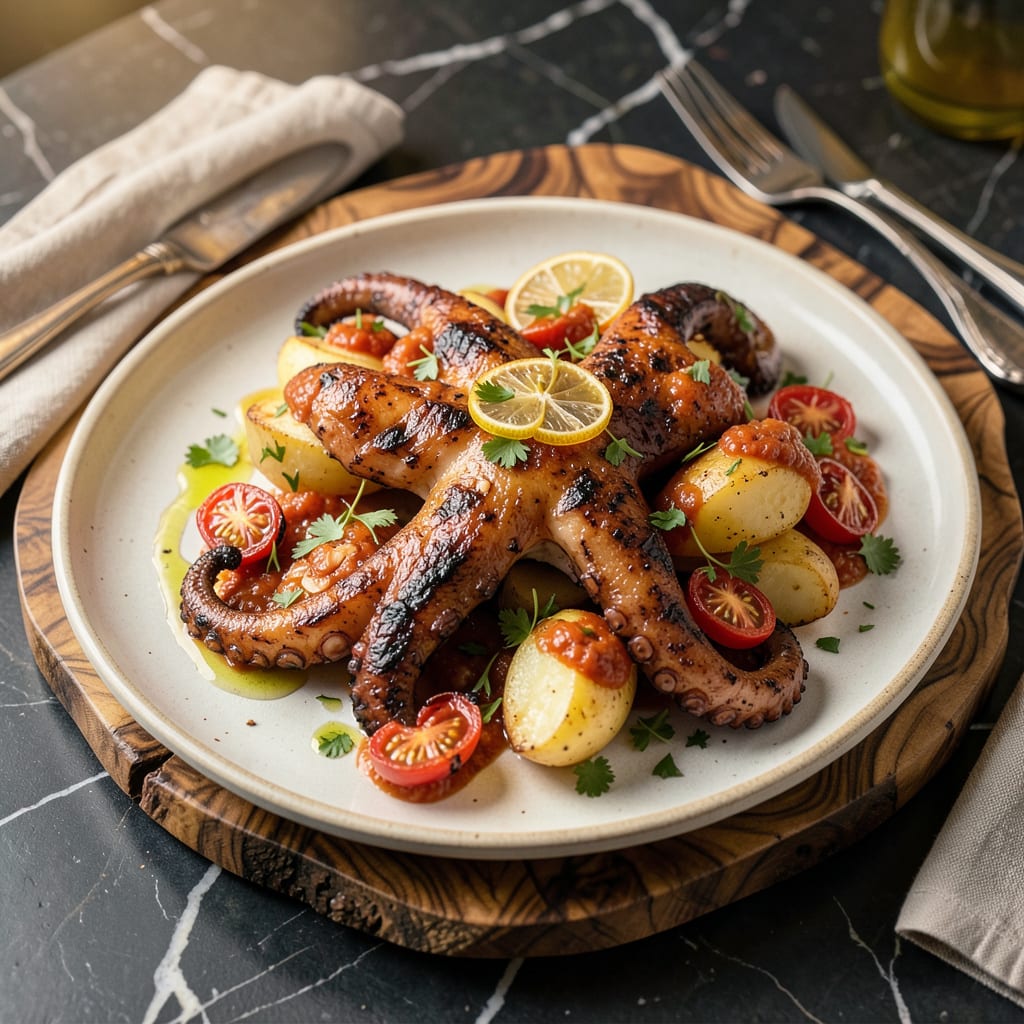
Octopus has a unique, mildly sweet ocean flavor with a tender yet slightly chewy texture when cooked properly. Many compare it to lobster or scallops, though its taste can vary based on preparation and freshness.
I’ve found that what truly sets octopus apart is its incredible versatility in absorbing flavors. When prepared with care—whether charred on the grill or slowly braised—it develops a rich, almost buttery quality that surprises many first-time tasters. 🔥 The secret lies in the cooking technique: a quick sear after proper tenderizing creates that perfect balance between crisp exterior and melt-in-your-mouth interior. Mediterranean preparations with lemon and olive oil highlight its natural sweetness, while Asian-style marinades with soy and ginger bring out deeper umami notes.
💡 In This Article
- Understanding Octopus Flavor and Texture Profiles
- Best Ways to Cook Octopus for Maximum Flavor
Understanding Octopus Flavor and Texture Profiles
The unique taste of octopus comes from its high protein content and natural umami compounds. Unlike fish, octopus contains about 15-20% protein by weight, giving it a meatier quality. The flavor develops from its diet of shellfish and crustaceans, which contributes to that subtle sweetness often compared to scallops or lobster.
What really sets it apart is the taurine content—a sulfur-containing amino acid that enhances umami perception, similar to what you’d find in aged cheeses or mushrooms.
Texture is where octopus truly shines when prepared correctly. The muscle fibers are arranged in a cross-hatched pattern, which gives it that signature chewiness when undercooked. But here’s the science: collagen in octopus breaks down at 160-170°F over time, transforming tough fibers into gelatin.
This is why traditional methods like slow-simmering for 45-60 minutes or freezing before cooking work so well—they give enzymes time to tenderize the meat naturally. 🔥
Regional preparations showcase how versatile octopus can be. In Greece, it’s often grilled with just olive oil and lemon to highlight its natural sweetness. Japanese takoyaki uses a wheat-flour batter that complements the octopus’s mild flavor with savory-sweet sauces. Meanwhile, Spanish pulpo a la gallega incorporates smoked paprika and potatoes, creating a heartier profile.
Each method proves how octopus acts like a culinary chameleon, adapting to bold or subtle seasonings equally well.
The freshness factor can’t be overstated. A truly fresh octopus (ideally cooked within 24-48 hours of catch) has a clean, briny sweetness. As it ages, ammonia compounds develop, creating that “fishy” taste many associate with seafood.
This is why Mediterranean cultures often cook octopus the same day it’s caught—preserving that delicate balance between ocean freshness and meaty richness. ✨
What surprises most first-time tasters is how well octopus pairs with both acidic and fatty elements. The proteins in octopus bind beautifully with citrus (try a lemon-olive oil dressing) or rich ingredients like garlic butter. This chemical compatibility explains why it works in everything from light ceviche to hearty stews.
The texture also plays a role—when properly cooked, those gelatinized fibers create little pockets that hold onto sauces and marinades exceptionally well.
For those concerned about the “rubbery” reputation, the solution lies in either very short or very long cooking times. A quick 2-3 minute sear after tenderizing gives you that crisp exterior with a custard-like interior. Alternatively, braising for 2-3 hours breaks down all connective tissue completely.
The middle ground—where most home cooks struggle—is what creates that unpleasant chewiness. 💫
One final pro tip: look for octopus with smooth, unblemished skin and a faintly sweet aroma. The tentacles should curl slightly when fresh. When in doubt, ask your fishmonger when it was caught—this single factor makes more difference to the final taste than any cooking technique could compensate for.

Trained in classic French technique but raised on slow-cooked ribs and spicy rubs, she blends culinary skill with smoke and soul.
- Recipe for Boneless Pork Chops in Cast Iron Skillet: Sear and Baste to Juicy Perfection - October 3, 2026
- Recipe for Boneless Cross Rib Roast: Slow-Roasted Beef with Herb Crust - October 3, 2026
- Hamburgers in Sauce Recipe Crock Pot: Slow-Cooked Savory Delight - October 3, 2026