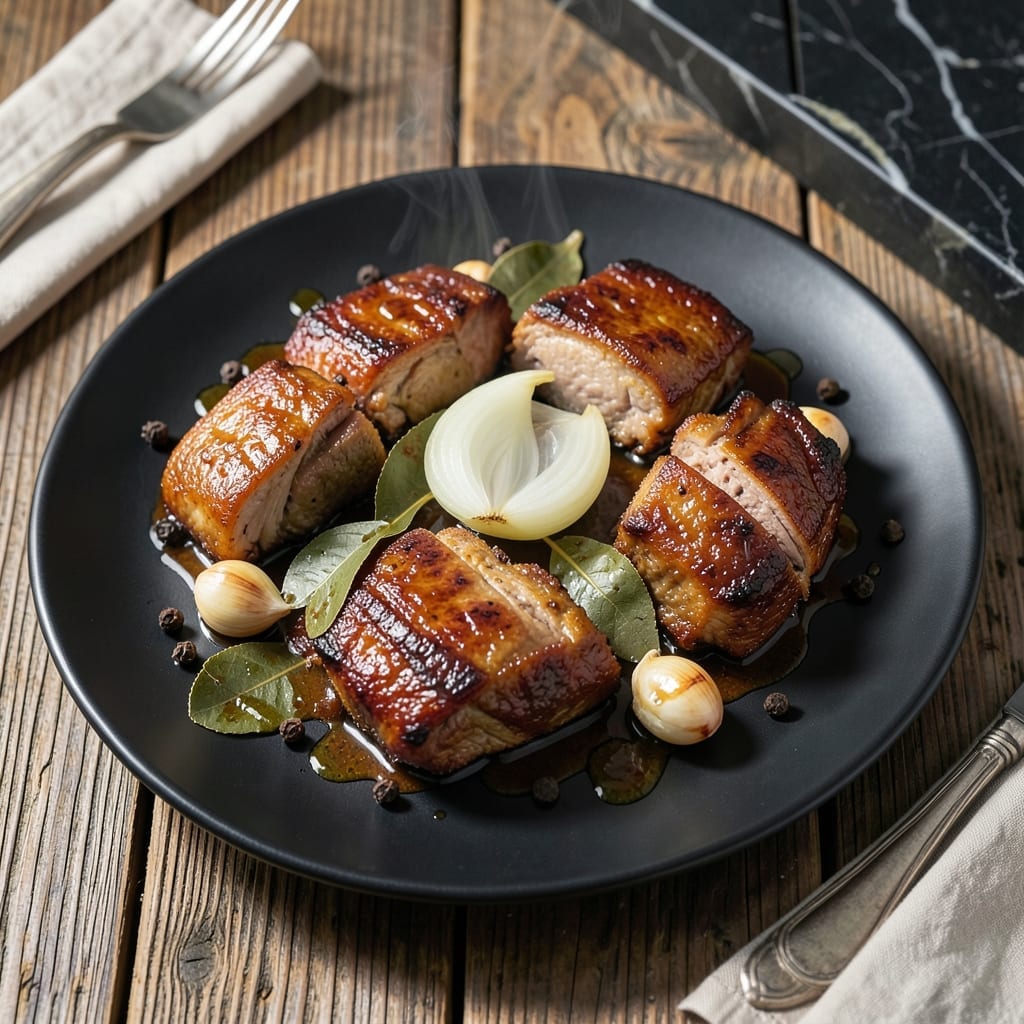
This recipe captures the essence of Filipino comfort food—tender pork braised in vinegar and soy until every bite is rich with flavor. I remember watching my grandmother balance these ingredients by feel, and now I’ve decoded her intuitive method.
The key is patience. Low heat transforms tough cuts into melt-in-your-mouth pork while the vinegar and soy create that signature adobo depth. No heroic effort required—just simple ingredients and time.
What emerges is pork so tender it nearly falls apart, with a glossy sauce that clings to every piece. The garlic adds aroma, while the vinegar provides just the right tang to balance the soy’s saltiness.
Serve over rice to soak up every drop of that flavorful sauce. This is the kind of dish that turns a regular dinner into something special.
Ingredients for Dry Pork Adobo Recipe Panlasang Pinoy
Simple ingredients transform into rich, vinegar-braised pork with deep Filipino flavor.
| Ingredient | Amount | Notes |
|---|---|---|
| Pork Belly 🥩 | 2 lb | Cut into 2-inch pieces |
| White Vinegar 💧 | 1 cup | Cane or distilled works |
| Soy Sauce 🫒 | ¾ cup | Regular or light variety |
| Garlic Cloves 🧄 | 8 cloves | Minced or crushed |
| Bay Leaves 🌿 | 3 pieces | Dried, whole leaves |
| Black Peppercorns 🌶️ | 1 tsp | Lightly crushed or whole |
| Brown Sugar 🍚 | 1 tbsp | Optional, for balancing acidity |
| Cooking Oil 🫒 | 2 tbsp | Neutral oil like vegetable or canola |
| Onion 🧅 | 1 whole | Medium, sliced into rings |
| Salt 🧂 | ½ tsp | Adjust to taste |
[recipe_ingredient_scaler]
The pork belly is non-negotiable for authentic texture. Asian markets often have it pre-cut, but any grocery store with a good butcher section can slice it for you. Look for pieces with even fat distribution—this ensures the meat stays tender during the long braise. The soy sauce should be Filipino brands like Silver Swan or Datu Puti for that true adobo taste.
Out of white vinegar? Apple cider vinegar works in a pinch, but avoid balsamic—it’s too sweet. No bay leaves? Dried thyme at half the amount adds a similar earthy note. Brown sugar helps mellow the vinegar’s sharpness, but skip it if you prefer a tangier finish. For extra richness, some cooks add a splash of coconut aminos.
This tastes even better the next day as the flavors deepen. Store in an airtight container in the fridge for up to 5 days. Reheat gently with a splash of water to prevent drying out. Freezes well for up to 3 months.
Why You’ll Love This Recipe
- One Pot Wonder: I toss pork belly with vinegar, soy sauce, and garlic in a single pan—no fancy techniques, just straightforward cooking.
- Crave-Worthy Crisp: That sticky, caramelized crust from the vinegar and soy sauce reduction? I make extra just to snack on it straight from the pan.
- Feeds the Fam: Between us, this is my go-to for potlucks—everyone from kids to grandparents cleans their plates.
- Stretches Far: Leftovers taste even better the next day, and I’ll be real: it’s just as good cold straight from the fridge.
Step-by-Step Instructions for Dry Pork Adobo
Here’s the method. Straightforward, tested, works every time.
Step 1: Sear the Pork Belly in Cooking Oil
Heat the 2 tbsp cooking oil in a large pot over medium-high heat. When the oil shimmers, add all the 2 lb pork belly pieces in a single layer. Sear undisturbed for 5-7 minutes until the bottoms develop a deep golden brown crust.
Resist the urge to stir too soon—this initial sear builds flavor and prevents sticking. Once browned, flip the pork belly and sear the other side for another 5 minutes. This creates that rich, caramelized base for the adobo.
Step 2: Build the Braising Liquid with Aromatics
Reduce heat to medium and add the 1 whole onion, 8 cloves garlic cloves, 3 pieces bay leaves, and 1 tsp black peppercorns. Sauté for 2-3 minutes until the onions soften and the garlic releases its fragrance.
Pour in the 1 cup white vinegar, 0.75 cup soy sauce, 1 tbsp brown sugar, and 0.5 tsp salt. Stir to combine, ensuring the sugar dissolves completely. The liquid should come to a gentle simmer—this is when the magic starts.
Step 3: Braise Until Tender and Dry
Return the pork belly to the pot and add enough water to barely cover the meat. Bring to a boil, then reduce heat to low-medium. Cover and let it simmer for 45-60 minutes, stirring occasionally, until the pork is fork-tender.
Once the pork is tender, remove the lid and increase heat to medium-high. Cook for another 15-20 minutes, stirring frequently, until the liquid has evaporated and the pork belly starts to fry in its own fat. You’ll see the edges caramelize and the bottom of the pot develop a dark, sticky residue—this is the adobo sauce forming.
Step 4: Crisp the Pork and Finish
When the pork belly is glazed and slightly crispy and the sauce has thickened into a rich, dark coating, it’s done. Taste and adjust seasoning if needed—the balance of tangy vinegar, salty soy, and sweet caramelization should be just right.
Transfer to a serving dish, ensuring each piece is coated with the reduced adobo sauce. The pork should be tender enough to cut with a spoon but with a slight crispness at the edges. Serve immediately while hot for the best texture.
Pro Tips For Making Dry Pork Adobo Recipe Panlasang Pinoy
- Boil First, Fry Later: Parboil the pork belly for 5-7 minutes to render some fat before braising—this keeps the adobo from turning greasy and gives the meat a tighter texture for that dry finish.
- Double the Garlic: Sounds like overkill, but use twice the garlic cloves you think you need; the bold flavor mellows into the sauce and pairs perfectly with the pork’s richness.
- Reduce the Vinegar: I learned this the hard way—evaporate the vinegar by half before adding soy sauce to avoid that harsh, uncooked tang that can overpower the dish.
- Crisp the Leftovers: The next day, toss the leftover adobo in a hot pan for 2-3 minutes to revive the dry texture and add a satisfying crunch to the edges.
Storing and Reheating This Dish
Refrigerator Storage
Let this dish cool completely before transferring to an airtight container. It keeps beautifully in the fridge for up to 5 days. I find the flavors actually deepen overnight, just like my grandmother always said they would. ❄️
Freezer Storage
For longer storage, portion into freezer-safe bags or containers. It freezes well for up to 3 months without losing texture. Leave 1 inch headspace for expansion, and squeeze out excess air to prevent freezer burn.
Stovetop Reheating
My preferred method: Warm in a skillet over medium-low heat with a splash of water. Cover and heat for 8-10 minutes, stirring occasionally. This revives the sauce and prevents drying out beautifully. 🔥
Microwave Reheating
For quick meals, microwave individual portions covered with a damp paper towel. Use 50% power in 1-minute bursts until heated through. Stir between intervals to ensure even warming.
Crispy Revival Tip
If you want that fresh-made texture, spread reheated pieces on a baking sheet and broil for 2-3 minutes. Watch closely—the sugar in the sauce can burn quickly. This brings back the caramelized edges.
Nutrition Facts
Frequently Asked Questions
What can I use instead of pork belly?
Pork shoulder works well as a substitute with similar tenderness. Chicken thighs can also be used, though they cook faster—reduce braising time to 30-40 minutes.
Why does my adobo taste too sour?
Balance the acidity with a pinch of brown sugar or 1 tsp honey. Next time, reduce vinegar by 2-3 tablespoons if you prefer a milder tang.
How do I prevent the sauce from burning?
Stir frequently during the final drying phase and lower heat if needed. Add 1-2 tablespoons water if the sauce thickens too quickly.
Can I make this in a slow cooker?
Yes! Sear pork first, then cook on low for 6-7 hours. Remove the lid for the last 30 minutes to reduce the sauce.

Trained in classic French technique but raised on slow-cooked ribs and spicy rubs, she blends culinary skill with smoke and soul.
- Recipe for Boneless Pork Chops in Cast Iron Skillet: Sear and Baste to Juicy Perfection - October 3, 2026
- Recipe for Boneless Cross Rib Roast: Slow-Roasted Beef with Herb Crust - October 3, 2026
- Hamburgers in Sauce Recipe Crock Pot: Slow-Cooked Savory Delight - October 3, 2026