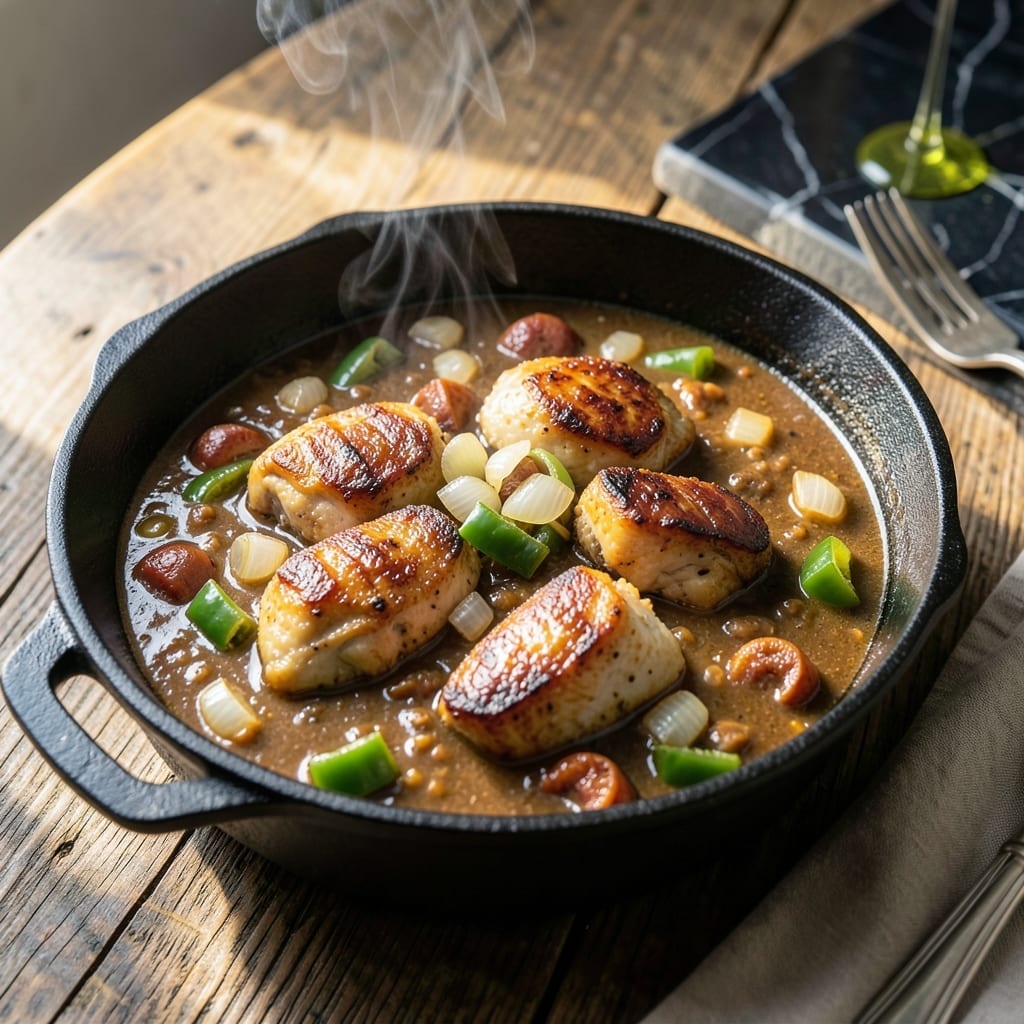
Creating a proper gumbo starts with mastering the dry roux, a technique that builds deep, nutty flavor without the risk of burning. This method transforms the dish’s foundation.
The dry roux approach cooks flour and fat separately, allowing precise control over color and taste. It’s the secret to achieving that rich, dark base gumbo is known for.
Once the roux reaches the perfect shade, it’s combined with the holy trinity of vegetables and stock. The result is a gumbo with layers of complex, savory depth.
This method delivers professional results with a foolproof process. The flavor difference is undeniable.
Ingredients for Dry Roux Gumbo
Mastering the dry roux technique requires quality ingredients for that signature dark, nutty foundation.
| Ingredient | Amount | Notes |
|---|---|---|
| All-Purpose Flour 🌾 | 1 cup | For perfect dry roux color |
| Vegetable Oil 🫒 | ½ cup | High smoke point essential |
| Andouille Sausage 🌭 | 12 oz | Sliced into rounds |
| Chicken Thighs 🍗 | 1 lb | Boneless, skinless, cubed |
| Onion 🧅 | 1 whole | Medium, finely diced |
| Green Bell Pepper 🌶️ | 1 whole | Finely diced for trinity |
| Celery 🥬 | 2 cups | Finely diced for trinity |
| Garlic Cloves 🧄 | 4 cloves | Minced for depth |
| Chicken Stock 🍲 | 6 cups | Low-sodium preferred |
| Okra 🌿 | 1 cup | Fresh or frozen, sliced |
| Tomato Paste 🍅 | 2 tbsp | For richness and color |
| Dried Thyme 🍃 | 1 tsp | Crushed for aroma |
| Bay Leaves 🌿 | 2 pieces | Whole, removed before serving |
| Salt 🧂 | 1 tsp | Adjust to taste |
| Black Pepper 🌶️ | ½ tsp | Freshly ground preferred |
| Cayenne Pepper 🔥 | ¼ tsp | Adjust for heat preference |
[recipe_ingredient_scaler]
The dry roux demands high-smoke-point oil—vegetable or peanut oil works best. All-purpose flour is non-negotiable; bread flour alters the texture. For authentic flavor, seek Cajun-made andouille from specialty grocers like Rouse’s or Dorignac’s. Chicken thighs provide richer flavor than breasts, and bone-in adds depth though boneless simplifies prep.
No andouille? Smoked sausage or kielbasa works in a pinch. Fresh okra can be slimy—frozen is actually preferable (thaw and drain first). For the stock, homemade is ideal, but Swanson or Better Than Bouillon are solid store-bought options. The holy trinity ratio should be equal parts onion, bell pepper, and celery by volume.
Roux can be made 1 day ahead and refrigerated. Completed gumbo keeps 4-5 days refrigerated or freezes for 3 months. The flavor deepens overnight, so it’s often better the next day. Always remove bay leaves before storing.
Why You’ll Love This Recipe
- No-Fuss Roux: I skip the stirring and babysitting—just toast the flour and oil in the oven while I prep the andouille and chicken.
- Deep, Rich Taste: That dry roux gives it a nutty depth, and the sausage and thighs make the broth so rich it coats the spoon.
- Feeds the Crew: One pot, endless possibilities—serve it over rice for dinner, then pack leftovers for lunch the next day.
- Budget Stretcher: Chicken thighs and a little sausage go a long way, and the flour thickens it up without extra cost.
Step-by-Step Instructions for Dry Roux Gumbo
Master the technique of building deep, nutty flavor through careful roux development and layering.
Step 1: Create the Dry Roux Base
In a heavy-bottomed Dutch oven, combine the 1 cup All-Purpose Flour and 0.5 cup Vegetable Oil. The high smoke point of vegetable oil is essential here. Cook over medium heat, stirring constantly with a wooden spoon.
This process requires patience. You’re aiming for a color between milk chocolate and dark chocolate—about 25-30 minutes. The roux will progress from blond to peanut butter to the desired deep brown. If it smells burnt or turns black, you’ve gone too far and must start over. The color deepens the flavor, so don’t rush it.
Step 2: Build the Flavor Foundation
Once the roux reaches the perfect dark brown color, immediately add the 1 whole Onion, 1 whole Green Bell Pepper, and 2 cups Celery—the holy trinity. Stir to coat the vegetables in the roux. They’ll sizzle and soften as they cook.
Cook for 8-10 minutes until the vegetables are tender and the mixture is fragrant. Add the 4 cloves Garlic Cloves and cook for 1 additional minute until fragrant. This step develops the aromatic base that defines gumbo’s complex flavor profile. Watch carefully to prevent burning.
Step 3: Incorporate Proteins and Liquids
Stir in the 12 oz Andouille Sausage (sliced into rounds) and 1 lb Chicken Thighs (cubed). Cook for 5 minutes, allowing the meats to brown slightly and absorb the roux flavors. The sausage will release some fat, adding to the richness.
Gradually pour in the 6 cups Chicken Stock while stirring constantly to prevent lumps. Add the 1 cup Okra, 2 tbsp Tomato Paste, 1 tsp Dried Thyme, 2 pieces Bay Leaves, 1 tsp Salt, 0.5 tsp Black Pepper, and 0.25 tsp Cayenne Pepper. The liquid will bubble vigorously as it hits the hot roux.
Step 4: Simmer to Perfection
Bring the mixture to a boil, then reduce heat to low. Partially cover and simmer for 1 hour, stirring occasionally. The gumbo should thicken slightly as it cooks, with the okra releasing its natural mucilage to create the signature texture.
The flavors will meld beautifully during this time. Skim off any excess fat that rises to the surface. Taste and adjust seasoning if needed, though the flavors will continue to develop. The bay leaves should be removed before serving, while the thyme will have infused its aroma throughout the dish.
Pro Tips For Making Dry Roux Gumbo
- Stir Constantly: I learned this the hard way—walk away from that dry roux for even a minute and it goes from golden to burnt. Keep a wooden spoon in hand and don’t stop moving it until it hits that deep chocolate color.
- Toast the Flour First: Skip the oil at first and toast the flour alone in the pan over medium heat for 5-8 minutes. It develops a nuttier base flavor and prevents the oil from burning before the roux is done.
- Slice Sausage Thin: Andouille can be tough if cut too thick, so slice it into 1/4-inch rounds. This way, it renders its fat faster and integrates better into the gumbo.
- Deglaze with Stock: After browning the chicken thighs, pour in a cup of hot stock to scrape up all those stuck bits. Sounds weird, but it works—it builds the flavor base before you even add the roux.
Dietary Considerations for This Recipe
Gluten-Free Option
For a gluten-free version, swap the 1 cup All-Purpose Flour for 1 cup rice flour. It behaves similarly in the dry roux process, though it may develop color slightly faster. I’ve tested this with Bob’s Red Mill rice flour and achieved excellent results. Stir continuously to prevent burning, as rice flour can scorch more easily.
Lower Fat Adaptation
To reduce fat without sacrificing flavor, use ¼ cup oil instead of ½ cup for the roux. The key is stirring more frequently to prevent hot spots. You’ll get a slightly lighter roux, but the nutty depth remains. Skim excess fat from the surface during simmering for an even leaner dish.
Dairy-Free Assurance
This recipe is naturally dairy-free, as the roux relies on oil rather than butter. Double-check your Andouille Sausage and Chicken Stock labels, as some brands add dairy derivatives. I trust Applegate sausage and Imagine Foods stock for consistent dairy-free results. 💪
Low-Carb Adjustments
To trim carbs, reduce the 1 cup Okra to ½ cup and substitute 1 cup diced cauliflower. The cauliflower absorbs the rich flavors beautifully while keeping the gumbo’s hearty texture. You’ll save about 10g net carbs per serving without losing satisfaction.
Spice Sensitivity
For those avoiding heat, omit the ¼ tsp Cayenne Pepper and reduce Black Pepper to ¼ tsp. The dish still delivers deep, complex flavors from the roux and holy trinity. Add a pinch of smoked paprika for warmth without the spicy kick.
Vegetarian Version
Replace the meats with 12 oz smoked tofu and 1 lb mushrooms. Use vegetable stock instead of chicken. The dry roux technique works the same, and the mushrooms add a meaty texture. I recommend cremini or portobello for best results. ✨
Nutrition Facts
Frequently Asked Questions
How do I know when the roux is dark enough?
It should reach the color of milk chocolate after 25-30 minutes. Stop when it smells nutty and looks like melted chocolate. If it turns black or smells burnt, start over.
Can I use butter instead of oil for the roux?
No, butter burns too easily at the medium heat required. Stick to high-smoke-point oils like vegetable or peanut oil for best results.
Why does gumbo taste better the next day?
The flavors meld and deepen during overnight refrigeration. The roux absorbs more liquid, and spices fully infuse. This makes leftovers even more delicious.
What if my roux burns?
Discard it and start fresh. A burnt roux will give your gumbo a bitter taste. Clean the pot completely to remove any burnt residue before trying again.

Trained in classic French technique but raised on slow-cooked ribs and spicy rubs, she blends culinary skill with smoke and soul.
- Recipe for Boneless Pork Chops in Cast Iron Skillet: Sear and Baste to Juicy Perfection - October 3, 2026
- Recipe for Boneless Cross Rib Roast: Slow-Roasted Beef with Herb Crust - October 3, 2026
- Hamburgers in Sauce Recipe Crock Pot: Slow-Cooked Savory Delight - October 3, 2026