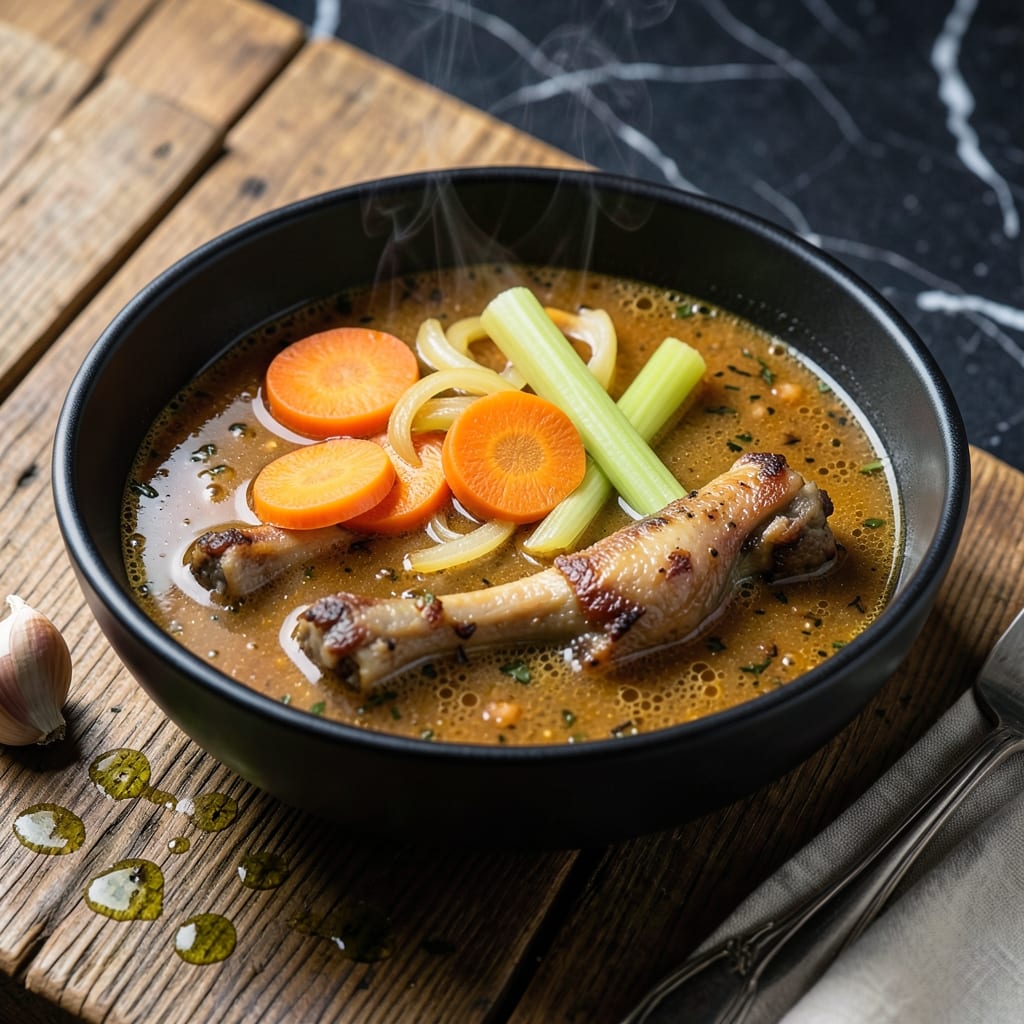
This duck bone broth transforms kitchen scraps into liquid gold through a slow, deliberate process. I developed this method after realizing how much depth duck bones add compared to chicken, with their richer, more complex flavor profile.
The key is a long simmer—12 to 24 hours—to extract every bit of gelatin and savory depth from the bones. A splash of apple cider vinegar helps break down the collagen, while aromatic vegetables and herbs build layers of flavor without overpowering.
What emerges is a deep amber broth with a velvety mouthfeel and a richness that elevates any soup, sauce, or risotto. The aroma alone signals something special is brewing, and the results are worth every minute of patience.
Use it as a base for ramen, French onion soup, or simply sip it straight from a mug. Here’s how to make it right.
Ingredients for Duck Bone Broth
Rich, savory depth starts with duck bones and a handful of aromatic vegetables. Nothing wasted here.
| Ingredient | Amount | Notes |
|---|---|---|
| Duck Bones 🦆 | 2 lb | Raw or roasted, with some meat attached |
| Apple Cider Vinegar 🍏 | 2 tbsp | Helps extract collagen from bones |
| Yellow Onion 🧅 | 1 whole | Quartered, skin on for color |
| Carrots 🥕 | 2 whole | Chopped into large pieces |
| Celery Stalks 🌿 | 2 whole | Chopped into large pieces |
| Garlic Cloves 🧄 | 4 cloves | Smashed, skin on |
| Fresh Parsley 🍃 | ½ cup | Stems and leaves included |
| Fresh Thyme Sprigs 🌿 | 4 pieces | Whole sprigs for easy removal |
| Bay Leaves 🍃 | 2 pieces | Dried, whole |
| Black Peppercorns 🌶️ | 1 tsp | Whole, lightly crushed |
| Kosher Salt 🧂 | 1 tsp | Adjust to taste later |
| Cold Water 💧 | 4 cups | Enough to cover all ingredients |
[recipe_ingredient_scaler]
The duck bones are non-negotiable here. Ask your butcher for carcasses or save them from roasted duck dinners (I always freeze extras). Look for good marbling—it means more gelatin. For the vegetables, organic isn’t necessary, but freshness matters. I grab mine from Whole Foods when I’m making a big batch. The vinegar? Any brand works, but Bragg’s is my go-to.
No duck bones? Chicken or turkey bones work in a pinch, but the flavor won’t be as deep. Skip the vinegar if you’re out, but add a squeeze of lemon at the end for brightness. For herbs, dried thyme or parsley at half the amount is fine. The bay leaves are key though—don’t skip them. If you can’t find fresh, dried work, just use one instead of two.
Broth keeps in the fridge for 5 days or freezes beautifully for 6 months. I like to portion it into quart-sized containers—perfect for soups or sauces. Strain and cool before storing, and skim off any fat that solidifies on top (save it for cooking potatoes, trust me).
Why You’ll Love This Recipe
- Hands-Off Cooking: Most of the work is just waiting while the bones and apple cider vinegar do their magic in the pot.
- Deep, Rich Taste: The duck bones give it a richness that chicken broth just can’t match, with carrots and celery adding natural sweetness.
- Meal Prep MVP: I make a big batch on Sunday and use it all week—soups, risotto, even just sipping it straight from a mug.
- Pantry Hero: Duck bones are often cheap or free from butchers, and the veggies are kitchen staples I always have on hand.
Step-by-Step Instructions for Duck Bone Broth
This slow-simmered process extracts maximum flavor and nutrients from every ingredient.
Step 1: Prepare and Acidulate the Bones
Place the 2 lb Duck Bones in a large stockpot. I always use bones with some meat attached for richer flavor. Add the 2 tbsp Apple Cider Vinegar—this helps break down the collagen in the bones, resulting in a more gelatinous, nutrient-dense broth.
Let this mixture sit for 30-60 minutes before adding any water. This gives the vinegar time to start extracting minerals from the bones. You’ll notice the liquid becomes slightly cloudy as the acid begins its work.
Step 2: Add Aromatics and Water
Add the 1 whole Yellow Onion (quarter it with the skin on for color), 2 whole Carrots (chopped into large pieces), 2 whole Celery Stalks (also chopped large), and the 4 cloves Garlic Cloves (smashed, skin left on for easy removal later).
Toss in the 0.5 cup Fresh Parsley (stems and all), 4 pieces Fresh Thyme Sprigs, 2 pieces Bay Leaves, 1 tsp Black Peppercorns (lightly crushed), and 1 tsp Kosher Salt. Pour in the 4 cups Cold Water—just enough to cover all the ingredients.
Step 3: Simmer Gently for Depth
Bring the mixture to a boil over medium-high heat, then immediately reduce to a gentle simmer. You want small bubbles breaking the surface occasionally, not a rolling boil. A vigorous boil will cloud the broth and break apart the ingredients, leading to a murky result.
Skim off any foam or impurities that rise to the top during the first 20-30 minutes. This ensures a clean, clear broth. Partially cover the pot and let it simmer for 4-6 hours—the longer, the more concentrated the flavor.
Step 4: Strain and Finish
After simmering, remove the pot from the heat and let it cool slightly. Carefully strain the broth through a fine-mesh sieve into a clean container, pressing gently on the solids to extract all the liquid. Discard the solids—they’ve given up all their goodness.
Taste and adjust the seasoning with additional kosher salt if needed. The broth should be rich, savory, and deeply aromatic. Let it cool completely before refrigerating or freezing. The fat will solidify on top for easy removal if desired.
Pro Tips For Making Duck Bone Broth
- Roast the Bones: Toss duck bones with a little oil and roast at 400°F for 20-25 minutes until deeply browned—I learned this the hard way, but raw bones make a flat, weak broth.
- Vinegar First, Water Later: Cover the bones with apple cider vinegar and let sit for 30 minutes before adding water; it pulls out minerals and collagen you’d otherwise miss.
- Skim the Foam: As the broth simmers, skim off the gray foam that rises to the top every 20 minutes or so—skip this and your broth will taste bitter and cloudy.
- Long and Low: Keep it at a gentle simmer, not a boil, for at least 12 hours—any less and you’re leaving flavor and gelatin in those bones.
Serving Suggestions for duck bone broth
Sipping Broth Styles
For a simple, nourishing mug, heat 1 cup broth and add a squeeze of lemon juice and a pinch of red pepper flakes. This is how I start many New England mornings, especially during winter. The acid brightens the rich duck flavor beautifully. 💫
Asian-Inspired Noodles
Use this as the base for ramen or pho. Add rice noodles, thinly sliced green onions, and a soft-boiled egg. I love tossing in bok choy during the last 2 minutes of cooking for extra freshness.
French Onion Upgrade
Swap beef broth for this duck version in French onion soup. The deeper flavor stands up to the caramelized onions and melted Gruyère cheese. Top each bowl with a toasted baguette slice before broiling.
Risotto Foundation
Use warm broth instead of water for creamy risotto. Add it ½ cup at a time while stirring the Arborio rice. The gelatin in the broth gives the final dish an incredibly silky texture.
Sauce Reduction
Simmer 2 cups broth until reduced by half for a glossy, concentrated sauce. Drizzle over roasted duck breast or mashed potatoes. I often add a splash of red wine during reduction for depth.
Grain Cooking Liquid
Cook quinoa or farro in broth instead of water. The grains absorb the savory notes, making a simple side dish extraordinary. Use 1:2 grain-to-liquid ratio and check for doneness at 15 minutes.
Nutrition Facts
Frequently Asked Questions
How long should I simmer the bones?
Simmer for 12-24 hours on low heat for maximum gelatin extraction and depth of flavor. Shorter simmers (4-6 hours) work but yield a lighter broth. Patience pays off here!
Can I use a slow cooker instead of a stockpot?
Yes! A slow cooker on low heat works perfectly for 12-24 hours. It maintains a steady temperature and prevents evaporation. Just ensure bones are fully submerged in liquid.
Why did my broth turn out cloudy?
Cloudiness usually comes from boiling too vigorously. Always keep at a gentle simmer and skim foam during the first 30 minutes. Also, strain through a cheesecloth for clarity.
How do I store leftover broth?
Cool completely, then refrigerate for up to 5 days or freeze for 6 months. Portion into 1-cup containers for easy use in recipes later.

Trained in classic French technique but raised on slow-cooked ribs and spicy rubs, she blends culinary skill with smoke and soul.
- Recipe for Boneless Pork Chops in Cast Iron Skillet: Sear and Baste to Juicy Perfection - October 3, 2026
- Recipe for Boneless Cross Rib Roast: Slow-Roasted Beef with Herb Crust - October 3, 2026
- Hamburgers in Sauce Recipe Crock Pot: Slow-Cooked Savory Delight - October 3, 2026