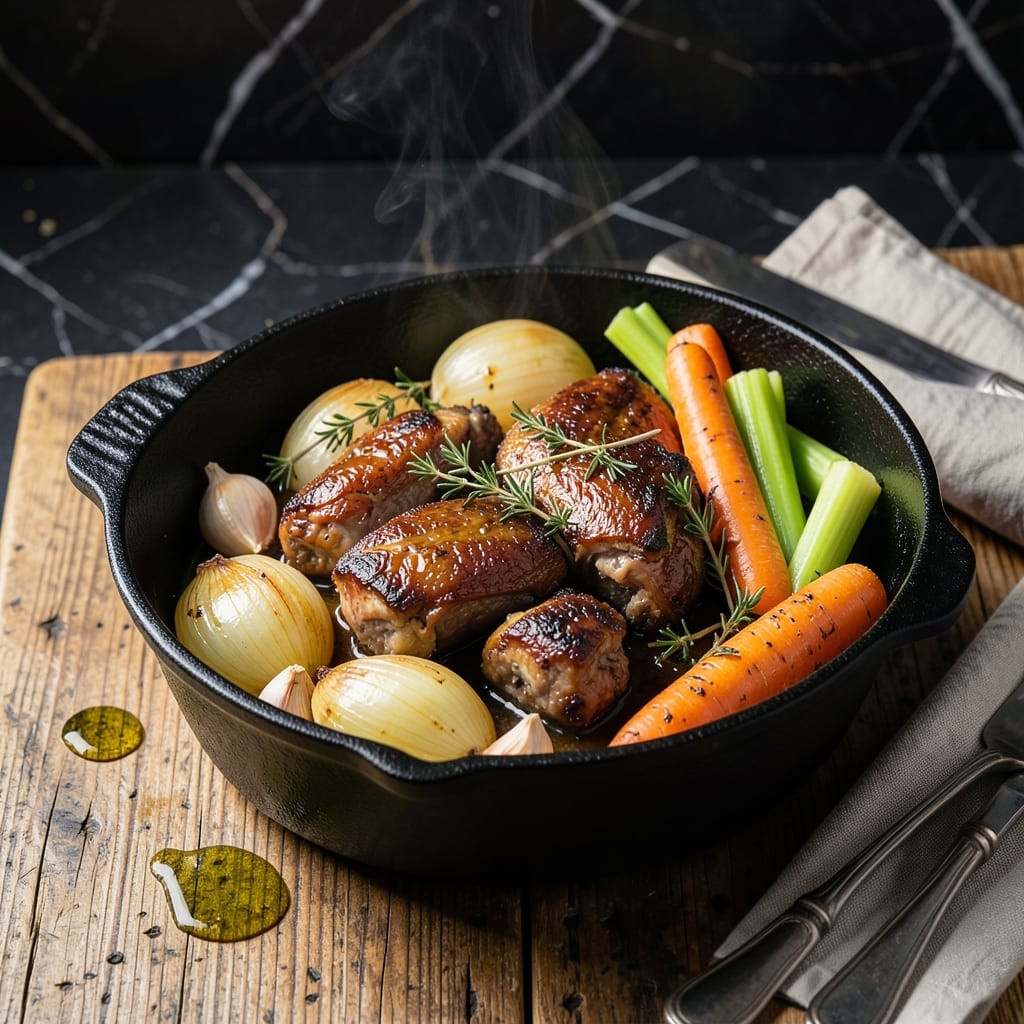
Duck giblets transform into a rich, deeply flavored stew that showcases the herb-infused potential of often-overlooked offal. This dish demands attention to preparation, as proper cleaning and blanching remove any bitterness before slow cooking.
The method begins with a thorough rinse and 30-minute blanch to tighten proteins and mellow strong flavors. Aromatic vegetables and fresh herbs then build layers of complexity during the long, gentle simmer that tenderizes every piece.
What emerges is a restaurant-quality stew with melt-in-your-mouth texture and a broth so flavorful it demands crusty bread for soaking. The giblets absorb every note of the herb blend, creating a dish that’s both rustic and refined.
Perfect for adventurous cooks seeking to honor every part of the bird. The process rewards patience with exceptional depth of flavor.
Ingredients for Duck Giblets
Rich, rustic ingredients transform humble offal into restaurant-quality stew with herb-infused depth and complexity.
| Ingredient | Amount | Notes |
|---|---|---|
| Duck Giblets 🦆 | 2 lb | Heart, liver, gizzard, neck, cleaned and trimmed |
| Yellow Onions 🧅 | 2 whole | Medium, diced into even pieces |
| Carrots 🥕 | 3 whole | Peeled and sliced into rounds |
| Celery Stalks 🥬 | 3 whole | Diced, including some leaves |
| Garlic Cloves 🧄 | 6 cloves | Minced for aromatic depth |
| Fresh Thyme Sprigs 🌿 | 4 whole | Plus extra for garnish |
| Fresh Rosemary Sprigs 🌿 | 2 whole | Woody stems removed |
| Bay Leaves 🍃 | 2 whole | Dried, for slow simmering |
| Tomato Paste 🍅 | 2 tbsp | For richness and color |
| Red Wine 🍷 | 1 cup | Dry, bold variety like Cabernet |
| Duck Stock 🥣 | 4 cups | Homemade or high-quality store-bought |
| Olive Oil 🫒 | 3 tbsp | Extra-virgin for sautéing |
| Kosher Salt 🧂 | 2 tsp | Adjust to taste during cooking |
| Black Peppercorns 🌶️ | 1 tsp | Freshly cracked for best flavor |
| All-Purpose Flour 🌾 | 2 tbsp | For light thickening if needed |
[recipe_ingredient_scaler]
The giblets require meticulous preparation. Source from a trusted butcher or specialty grocery like Whole Foods—look for fresh, vibrant color with no off odors. Rinse thoroughly under cold water, then blanch for 30 minutes to remove any bitterness. The neck and gizzard may need longer blanching than the heart and liver. D’Artagnan offers high-quality duck giblets if available in your area.
No duck stock? Chicken stock with a splash of soy sauce provides depth. Fresh thyme and rosemary are ideal, but dried at one-third the amount works. The red wine can be substituted with additional stock plus 1 tbsp balsamic vinegar. If tomato paste is unavailable, a pinch of smoked paprika adds color. For a richer finish, a pat of duck fat stirred in at the end elevates the stew.
This stew improves overnight. Refrigerate in an airtight container for up to 4 days or freeze for 3 months. The giblets are best reheated gently to maintain tenderness. Skim any solidified fat before reheating and adjust seasoning as flavors meld and deepen.
Why You’ll Love This Recipe
- One Pot Meal: I toss everything in a single pot and let the giblets, onions, and garlic work their magic together.
- Deep Umami: The duck giblets soak up the sweet carrots and celery, creating this rich, meaty flavor that’s honestly hard to beat.
- Freezer Friendly: I double the batch and freeze half—perfect for those nights I just can’t with cooking.
- Budget Stretch: Duck giblets are inexpensive, and this dish turns them into something crave-worthy without breaking the bank.
Step-by-Step Instructions for Duck Giblets Stew
Here’s the method. Straightforward, tested, works every time.
Step 1: Sear and Brown the Duck Giblets
Heat 2 tbsp of the olive oil in a large Dutch oven over medium-high heat. Pat the 2 lb duck giblets dry with paper towels to ensure a proper sear. Working in batches, add the giblets and sear for 3-4 minutes per side until deeply browned on all surfaces.
This browning develops the Maillard reaction, creating a rich, meaty flavor base for your stew. Don’t overcrowd the pot—overcrowding steams the meat instead of searing it. Transfer the seared giblets to a plate and set aside.
Step 2: Build the Flavor Foundation with Mirepoix
In the same pot, add the remaining 1 tbsp olive oil and reduce heat to medium. Add the 2 whole yellow onions, 3 whole carrots, and 3 whole celery stalks. Cook for 8-10 minutes, stirring occasionally, until the vegetables soften and begin to caramelize around the edges.
Add the 6 cloves garlic cloves and cook for 1 minute until fragrant. Stir in the 2 tbsp tomato paste and cook for 2 minutes to deepen its flavor. This step creates a complex, savory base that will infuse the entire dish.
Step 3: Deglaze and Simmer with Aromatics
Pour in the 1 cup red wine and scrape the browned bits from the bottom of the pot. Add the 4 cups duck stock, 4 whole fresh thyme sprigs, 2 whole fresh rosemary sprigs, 2 whole bay leaves, and 1 tsp black peppercorns. Return the seared giblets to the pot.
Bring the mixture to a boil, then reduce heat to low. Partially cover and let it simmer gently for 1.5 to 2 hours, or until the giblets are tender and the flavors meld beautifully. Skim off any excess fat that rises to the surface during cooking.
Step 4: Thicken and Season the Stew
Once the giblets are tender, remove them from the pot and set aside. In a small bowl, whisk together the 2 tbsp all-purpose flour with 2 tbsp of the hot cooking liquid to create a slurry. Stir the slurry back into the pot and simmer for 5 minutes until the stew thickens slightly.
Return the giblets to the pot. Season with the 2 tsp kosher salt and adjust to taste. Remove and discard the thyme sprigs, rosemary sprigs, and bay leaves before serving. The stew should coat the back of a spoon with a rich, velvety consistency.
Pro Tips For Making Duck Giblets
- Parboil the Giblets: I learned this the hard way—start by simmering the giblets in salted water for 10 minutes to remove impurities and tighten the texture before braising.
- Soak in Milk: Sounds weird, but it works: soak the cleaned giblets in milk for an hour to mellow any gamy flavors before cooking.
- Avoid Overcrowding: Steer clear of dumping all the giblets in at once—sear in batches so they brown properly instead of steaming in their own juices.
- Use the Stock: After braising, reduce the cooking liquid by half—it’s packed with flavor and makes a rich sauce for serving over the giblets.
Make-Ahead Tips for Leftovers
Pre-Blanch Prep
Clean and trim your 2 lb duck giblets the day before cooking. Store them in a sealed container with cold water and 1 tsp kosher salt in the fridge overnight. This pre-soak helps draw out impurities for a cleaner final dish.
Herb Infusion
Bundle your 4 thyme sprigs, 2 rosemary sprigs, and 2 bay leaves with kitchen twine up to 8 hours ahead. This herb sachet will be ready to drop into the pot when you start cooking. 🌿
Stock Preparation
If using homemade duck stock, prepare it 1-2 days in advance. Skim and strain the stock, then chill it. The fat will solidify on top, making it easy to remove before using in your stew.
Vegetable Prep
Dice your 2 yellow onions, 3 carrots, and 3 celery stalks the night before. Store them together in an airtight container in the fridge. This mirepoix mix will be ready to go straight into the pot.
Wine Selection
Choose and open your 1 cup dry red wine a few hours before cooking. Letting it breathe enhances its flavor. I prefer a bold Cabernet Sauvignon for this dish. 🍷
Final Assembly
Measure out all your remaining ingredients: 2 tbsp tomato paste, 3 tbsp olive oil, and 2 tbsp flour. Having everything pre-measured makes the cooking process smoother and more enjoyable.
Nutrition Facts
Frequently Asked Questions
How do I clean duck giblets before cooking?
Rinse thoroughly under cold water, then soak in salted water for 30 minutes. Remove any membranes or fat, and trim away connective tissue. Blanching afterward helps eliminate any remaining bitterness.
Can I substitute chicken giblets for duck?
Yes, but expect a milder flavor. Chicken giblets cook faster, so reduce simmering time to 1 to 1.5 hours. Duck’s richer taste and higher fat content create a deeper, more complex stew.
Why did my stew turn out bitter?
Insufficient blanching is the most common cause. Always blanch giblets for the full 30 minutes before cooking. Also, avoid using old or oxidized wine, as it can introduce bitterness.

Trained in classic French technique but raised on slow-cooked ribs and spicy rubs, she blends culinary skill with smoke and soul.
- Recipe for Boneless Pork Chops in Cast Iron Skillet: Sear and Baste to Juicy Perfection - October 3, 2026
- Recipe for Boneless Cross Rib Roast: Slow-Roasted Beef with Herb Crust - October 3, 2026
- Hamburgers in Sauce Recipe Crock Pot: Slow-Cooked Savory Delight - October 3, 2026