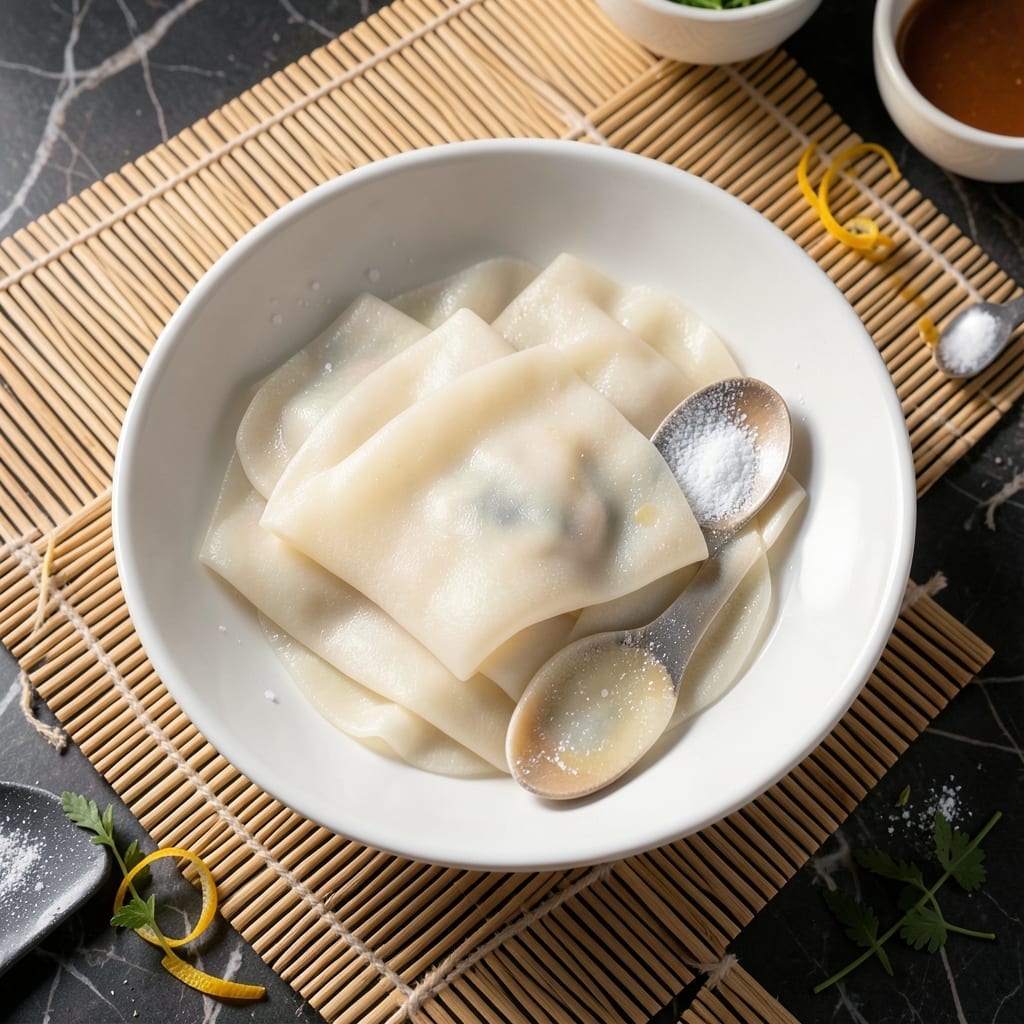
Homemade dumpling wrappers using rice flour create a delicate, translucent texture that store-bought versions can’t match. This proven technique ensures consistent results every time.
The secret lies in proper hydration and resting. With just a few basic ingredients and precise rolling, you’ll achieve elastic wrappers perfect for any dumpling filling.
Ingredients for Dumpling Wrapper Recipe Rice Flour
Six simple ingredients create delicate, translucent wrappers with professional elastic texture every time.
| Ingredient | Amount | Notes |
|---|---|---|
| Rice Flour 🌾 | 2 cups | Glutinous or sweet variety preferred |
| Tapioca Starch 🌿 | ½ cup | For elasticity and chew |
| Hot Water 💧 | ¾ cup | Just boiled for activation |
| Salt 🧂 | ¼ tsp | Fine sea salt preferred |
| Neutral Oil 🫒 | 1 tbsp | For dough softening (avocado or vegetable) |
| Cornstarch 🌽 | 2 tbsp | For dusting work surface |
[recipe_ingredient_scaler]
The rice flour is non-negotiable here—glutinous (sweet) rice flour from an Asian market yields the best texture. Avoid regular rice flour, which produces brittle wrappers. Bob’s Red Mill makes a reliable gluten-free version if Asian markets aren’t accessible. Tapioca starch adds the crucial elasticity; Arrowroot can substitute but requires 25% more by volume.
No tapioca starch? Potato starch at equal volume works, though the chew differs slightly. For oil, any neutral variety (avocado, vegetable, or refined coconut) prevents flavor interference. The water temperature is critical—just-boiled activates the starches properly. Skip the salt if using filled dumplings with already-seasoned fillings (like kimchi).
Rest the dough 30 minutes minimum before rolling. Wrappers keep 24 hours refrigerated in an airtight container, separated by parchment. Freeze for 1 month with parchment between layers to prevent sticking.
Why You’ll Love This Recipe
- Five-Minute Mix: I just dump the rice flour and tapioca starch in a bowl, pour in hot water, and the dough comes together faster than my coffee reheats.
- Chewy Perfection: The combo of rice flour and tapioca starch gives that ideal stretchy, slightly bouncy texture that makes dumplings so satisfying.
- Freezer Friendly: I make a double batch, roll them out, and freeze the wrappers between parchment—grab-and-go for dumpling nights anytime.
- Pantry Staples: Between us, I already had all five ingredients in my cupboard, so this costs pennies and saves a last-minute grocery run.
Step-by-Step Instructions for Dumpling Wrapper Recipe Rice Flour
This method ensures elastic, translucent wrappers that hold up to folding and cooking.
Step 1: Combine Dry Ingredients Precisely
In a large mixing bowl, whisk together 2 cups Rice Flour and 0.5 cup Tapioca Starch until fully incorporated. The tapioca starch is essential for elasticity, so ensure it’s evenly distributed throughout the rice flour.
Add 0.25 tsp Salt to the dry mixture and whisk again. The fine sea salt enhances flavor without affecting the dough’s texture. This dry blend should look uniform and feel silky to the touch before adding any liquid.
Step 2: Form the Dough with Hot Water
Create a well in the center of the dry ingredients and pour in 0.75 cup Hot Water (just boiled) and 1 tbsp Neutral Oil simultaneously. The hot water activates the starches, while the oil ensures the wrappers stay tender and pliable.
Using chopsticks or a fork, stir in a circular motion from the center outward until a shaggy dough forms. The mixture will appear slightly sticky at first—this is normal. Switch to your hands once it’s cool enough to handle, kneading gently in the bowl until no dry spots remain.
Step 3: Knead to Smooth Elastic Dough
Turn the dough onto a surface dusted lightly with 2 tbsp Cornstarch, reserving a small amount for later use. Knead vigorously for 8-10 minutes, pushing forward with the heel of your hand and folding the dough over itself repeatedly.
The dough should transform from rough and crumbly to smooth and elastic. It’s ready when it springs back slightly when pressed and develops a subtle sheen. If it sticks, dust with more cornstarch sparingly—too much will make the wrappers dry and brittle.
Shape into a log, wrap tightly in plastic, and rest for 30 minutes at room temperature. This hydration period allows the starches to fully absorb the liquid, making the dough easier to roll.
Step 4: Roll and Cut the Wrappers
Divide the rested dough into 4 equal portions (for 4 servings). Keep unused portions covered with plastic to prevent drying. On a cornstarch-dusted surface, roll one portion into a 1/16-inch thick rectangle.
Use a 3-inch round cutter to stamp out wrappers, pressing straight down without twisting to ensure clean edges. Re-roll scraps once to maximize yield. The ideal wrapper should be translucent at the edges when held to light, indicating it’s thin enough for proper cooking.
Dust the cut wrappers lightly with cornstarch to prevent sticking, and stack them with parchment between layers. Use immediately or store in an airtight container in the refrigerator for up to 24 hours.
Pro Tips For Making Dumpling Wrapper Recipe Rice Flour
- Use Boiling Water: Pour just-boiled water over the rice flour and tapioca starch mix—it’s the only way to get that stretchy, pliable dough. I learned this the hard way after my first batch turned out gummy and dense.
- Knead While Hot: Start kneading the dough immediately after adding the hot water, while it’s still warm. Waiting even 2 minutes makes it harder to work with, and you’ll fight the texture.
- Rest the Dough: After kneading, cover the dough and let it rest for 15-20 minutes. Sounds tedious, but it relaxes the starches so the wrappers roll out smooth instead of cracking.
- Oil the Surface: Brush a little neutral oil on the dough before resting to keep it from drying out. My grandmother swore by this, and she was right—it prevents that annoying crust from forming on the outside.
Dietary Considerations for This dumpling wrapper recipe rice flour
Naturally Gluten-Free
These wrappers are completely gluten-free, making them perfect for anyone with celiac disease or gluten sensitivity. The rice flour base provides the same delicate texture as wheat-based versions without any compromise in flavor or structure.
Vegan and Plant-Based
With no animal products involved, this recipe aligns perfectly with vegan and plant-based diets. The combination of rice flour and tapioca starch creates a naturally egg-free and dairy-free wrapper that’s both ethical and delicious. 🌱
Allergen Considerations
These wrappers avoid common allergens like wheat, eggs, and dairy. However, if you have a corn allergy, substitute the cornstarch for dusting with potato starch or additional tapioca starch to keep it allergen-free.
Low-Fat Option
The recipe uses just 1 tbsp of Neutral Oil, making it a low-fat choice. For an even lighter version, you can omit the oil entirely, though the wrappers may be slightly less pliable. Still, they’ll hold up well for steaming or boiling.
Nut-Free and Soy-Free
This recipe is inherently nut-free and soy-free, making it safe for those with these allergies. Just ensure your work surface and tools haven’t come into contact with nuts or soy products during preparation. 💪
Dietary Flexibility
These wrappers adapt easily to various dietary needs. For a keto-friendly version, you might experiment with almond flour, though the texture will differ. The base recipe itself fits well into many specialized diets without modification.
Nutrition Facts
Frequently Asked Questions
Can I use regular rice flour instead of glutinous?
No, regular rice flour makes brittle wrappers. Glutinous rice flour is essential for the right chewy texture. Look for it in Asian markets or online.
Why does the dough need to rest?
The 30-minute rest lets starches fully hydrate, making the dough easier to roll thinly. Skipping this step results in cracking wrappers.
How thin should I roll the wrappers?
Aim for 1/16-inch thickness. Hold a cut wrapper to light—it should be translucent at the edges. Too thick wrappers won’t cook properly.
Can I make these ahead of time?
Yes! Store wrapped tightly in plastic for 24 hours in the fridge. For longer storage, freeze with parchment between layers for up to 1 month.

Trained in classic French technique but raised on slow-cooked ribs and spicy rubs, she blends culinary skill with smoke and soul.
- Recipe for Boneless Pork Chops in Cast Iron Skillet: Sear and Baste to Juicy Perfection - October 3, 2026
- Recipe for Boneless Cross Rib Roast: Slow-Roasted Beef with Herb Crust - October 3, 2026
- Hamburgers in Sauce Recipe Crock Pot: Slow-Cooked Savory Delight - October 3, 2026