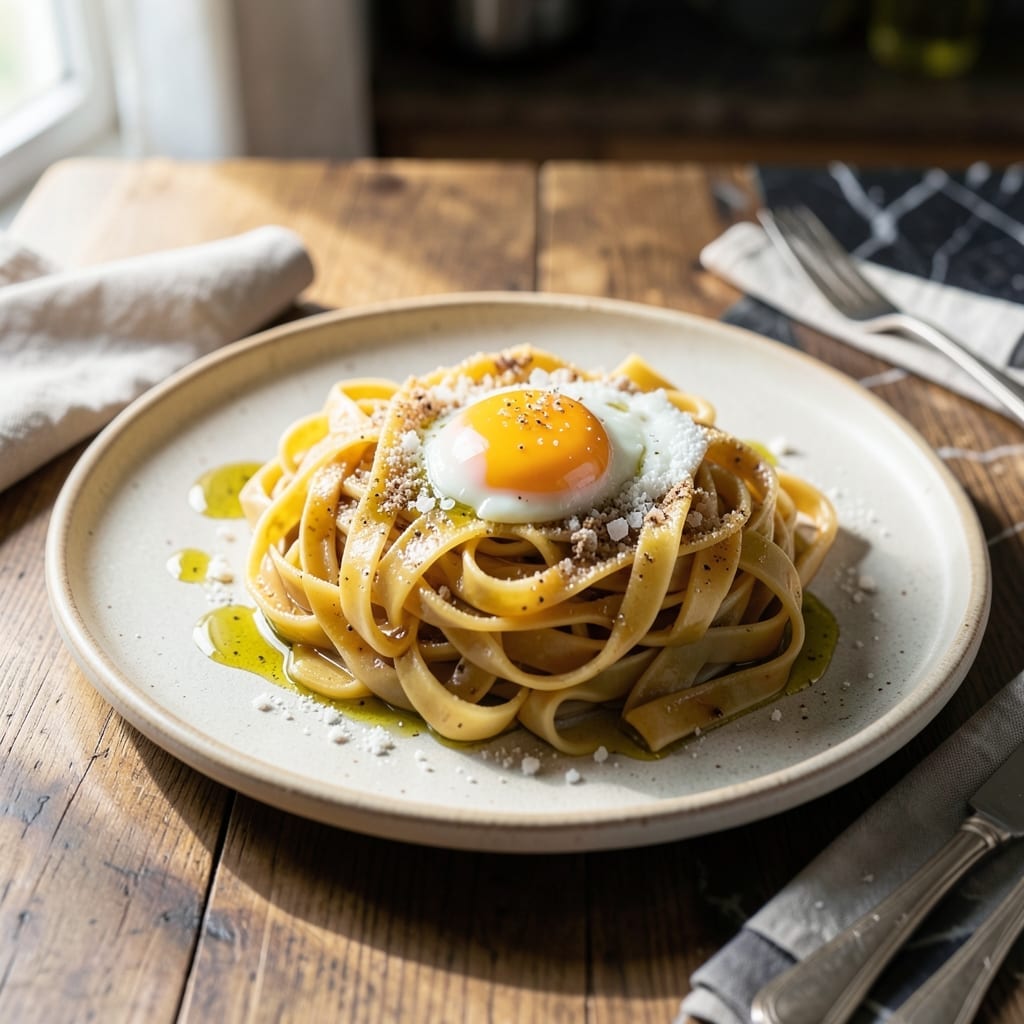
Fresh pasta makes all the difference, and this recipe delivers silky, tender ribbons that elevate any meal. The secret lies in the egg yolks, which create a rich, golden dough that rolls out beautifully.
With just a few simple ingredients and a pasta roller, you can achieve restaurant-quality results at home. The dough comes together quickly, then rests briefly to develop the perfect texture for cutting and cooking.
What emerges from the roller are delicate sheets that transform into perfectly al dente pasta when boiled. The egg yolks add depth of flavor and a luxurious mouthfeel that store-bought versions can’t match.
Serve with your favorite sauce or simply toss with butter and herbs. Here’s how to make it.
Ingredients for Homemade Pasta Recipe Egg Yolk
Just flour, eggs, and a pinch of salt. That’s all you need for this.
| Ingredient | Amount | Notes |
|---|---|---|
| All-Purpose Flour 🌾 | 2 cups | Plus extra for dusting |
| Large Egg Yolks 🥚 | 6 pieces | Room temperature preferred |
| Large Eggs 🥚 | 2 whole | Room temperature preferred |
| Olive Oil 🫒 | 1 tbsp | Extra-virgin for flavor |
| Salt 🧂 | ½ tsp | Fine sea salt preferred |
| Water 💧 | 1 tbsp | As needed for dough |
| Semolina Flour 🌾 | ½ cup | For texture and dusting |
[recipe_ingredient_scaler]
The flour choice matters here. All-purpose is standard, but 00 flour (find it at Eataly or Williams Sonoma) takes it to the next level—silkier texture, more authentic Italian feel. Egg yolks are the star, so use the freshest you can find. Room temp eggs mix into the dough more evenly, which means less kneading and a more tender result.
No pasta roller? A wine bottle or rolling pin works in a pinch (just takes more elbow grease). Short on yolks? Use whole eggs—one whole egg equals roughly two yolks. Olive oil adds richness, but you can skip it if you’re going for a more traditional recipe. Semolina isn’t mandatory, but it adds a nice bite and keeps the dough from sticking.
The dough rests for 30 minutes before rolling, so factor that in. Fresh pasta cooks in 2-3 minutes—watch it closely. Leftover dough? Wrap tightly and refrigerate for up to 24 hours, or freeze for 1 month.
Why You’ll Love This Recipe
- No Fancy Tools: I just need a bowl, a fork, and my hands—no pasta machine required.
- Rich, Silky Bite: The extra yolks give it that deep golden color and a luxuriously smooth texture.
- Feeds a Crowd: One batch makes enough for a family dinner, with leftovers for lunch the next day.
- Pantry Staples: Flour, eggs, oil, salt—things I always have on hand, so I can make this anytime.
Step-by-Step Instructions for Homemade Pasta
Here’s how to turn simple ingredients into silky, fresh pasta every time.
Step 1: Create the Dough Base on Your Work Surface
On a clean countertop, mound the 2 cups all-purpose flour and 0.5 cup semolina flour. Make a large well in the center—this is where the magic happens. The semolina adds that perfect bite to your finished pasta.
Crack the 2 whole large eggs and 6 large egg yolks into the well. Add the 1 tablespoon olive oil, 0.5 teaspoon salt, and 1 tablespoon water. The extra yolks give this dough its rich color and silky texture.
Step 2: Gradually Incorporate the Flours
Using a fork, start beating the wet ingredients in the well, gradually pulling in flour from the sides. Keep mixing until the dough becomes too stiff for the fork. The mixture will look shaggy at first—that’s normal.
Switch to using your hands and knead the dough directly on the counter. Press the heels of your hands into the dough, pushing forward and folding it back onto itself. This develops the gluten that gives pasta its chewy texture.
Step 3: Knead Until Smooth and Elastic
Continue kneading for 8-10 minutes until the dough is smooth, elastic, and only slightly tacky. If it feels too dry, add a few drops of water. If it’s too sticky, dust with a bit more all-purpose flour from your stash.
You’ll know it’s ready when you can press your finger into the dough and it springs back slowly. Wrap the dough in plastic and let it rest at room temperature for 30 minutes—this relaxes the gluten for easier rolling.
Step 4: Roll and Cut the Pasta
Divide the rested dough into 4 equal pieces and flatten each into a rough rectangle. Set your pasta machine to its widest setting. Feed one piece through, then fold it in half and repeat 2-3 times to create a smooth sheet.
Progressively narrow the setting and roll the sheet through once at each level until you reach your desired thickness—usually the second-to-last setting for most shapes. For ribbons, cut the sheet to your preferred width. Dust with extra all-purpose flour or semolina as you work to prevent sticking.
Step 5: Cook Immediately or Dry for Later
To cook fresh, bring a large pot of salted water to a rolling boil. Add the pasta and cook for 2-3 minutes until it floats to the surface. Fresh pasta cooks much faster than dried, so keep an eye on it.
For storage, dust the cut pasta with semolina flour, arrange in single layers on a baking sheet, and let dry for 1 hour before transferring to an airtight container. It’ll keep in the fridge for 2 days or can be frozen for up to 1 month.
Pro Tips For Making Homemade Pasta Recipe Egg Yolk
- Knead Longer: I learned this the hard way—work the dough for at least 8-10 minutes until it’s smooth and elastic. Under-kneaded pasta cracks when rolling.
- Use Room Temp Eggs: Sounds weird, but it works: let your eggs and yolks sit out for 30 minutes first. Cold eggs make the dough seize up and fight you.
- Skip the Flour Dusting: Resist the urge to keep adding flour while rolling. Too much makes the pasta tough—just dust lightly if it sticks.
- Rest the Dough: Give it a solid 30 minutes wrapped in plastic at room temp. I skip this when I’m lazy, but the pasta is noticeably better when I don’t.
Serving Suggestions for Leftovers
Classic Pairings
Fresh egg pasta shines with simple butter and sage—melt 4 tbsp butter with 8-10 fresh sage leaves until fragrant. The nutty, earthy notes complement the rich yolks perfectly. I love finishing with Parmigiano-Reggiano shaved on top. ✨
Light Sauce Ideas
For a lighter touch, toss with extra-virgin olive oil, minced garlic, and a squeeze of lemon zest. The acidity brightens the pasta’s richness. Add fresh basil or parsley for color and freshness.
Creamy Options
A carbonara-style sauce works beautifully—mix 3 beaten eggs with ½ cup grated Pecorino Romano and ¼ cup black pepper. Toss hot pasta into the sauce off-heat to create a silky coating.
Vegetable Accompaniments
Pair with roasted asparagus or blistered cherry tomatoes for a vibrant plate. Toss tomatoes with 1 tbsp olive oil and roast at 400°F for 15 minutes before serving.
Wine Pairing
A crisp Pinot Grigio from Friuli cuts through the richness, while a light Chianti adds earthy depth. For white wine lovers, Vermentino offers citrus notes that refresh the palate. 🍷
Nutrition Facts
Frequently Asked Questions
Why use only egg yolks in pasta dough?
Egg yolks add richness and a luxurious texture without making the dough too tough. They also give the pasta its signature golden color and tender bite
How thin should the pasta sheets be rolled?
Most pasta machines have settings from 1-8. For ribbons, stop at setting 5 or 6—thin enough to cook quickly but thick enough to hold shape.
Can I make this without a pasta machine?
Use a rolling pin or wine bottle to roll the dough as thin as possible. It’ll take more effort, but the result is just as delicious.
What if my dough is too dry or sticky?
For dry dough, add 1 tsp water at a time. If sticky, dust with 1-2 tbsp flour and knead until smooth. Balance is key!

Trained in classic French technique but raised on slow-cooked ribs and spicy rubs, she blends culinary skill with smoke and soul.
- Recipe for Boneless Pork Chops in Cast Iron Skillet: Sear and Baste to Juicy Perfection - October 3, 2026
- Recipe for Boneless Cross Rib Roast: Slow-Roasted Beef with Herb Crust - October 3, 2026
- Hamburgers in Sauce Recipe Crock Pot: Slow-Cooked Savory Delight - October 3, 2026