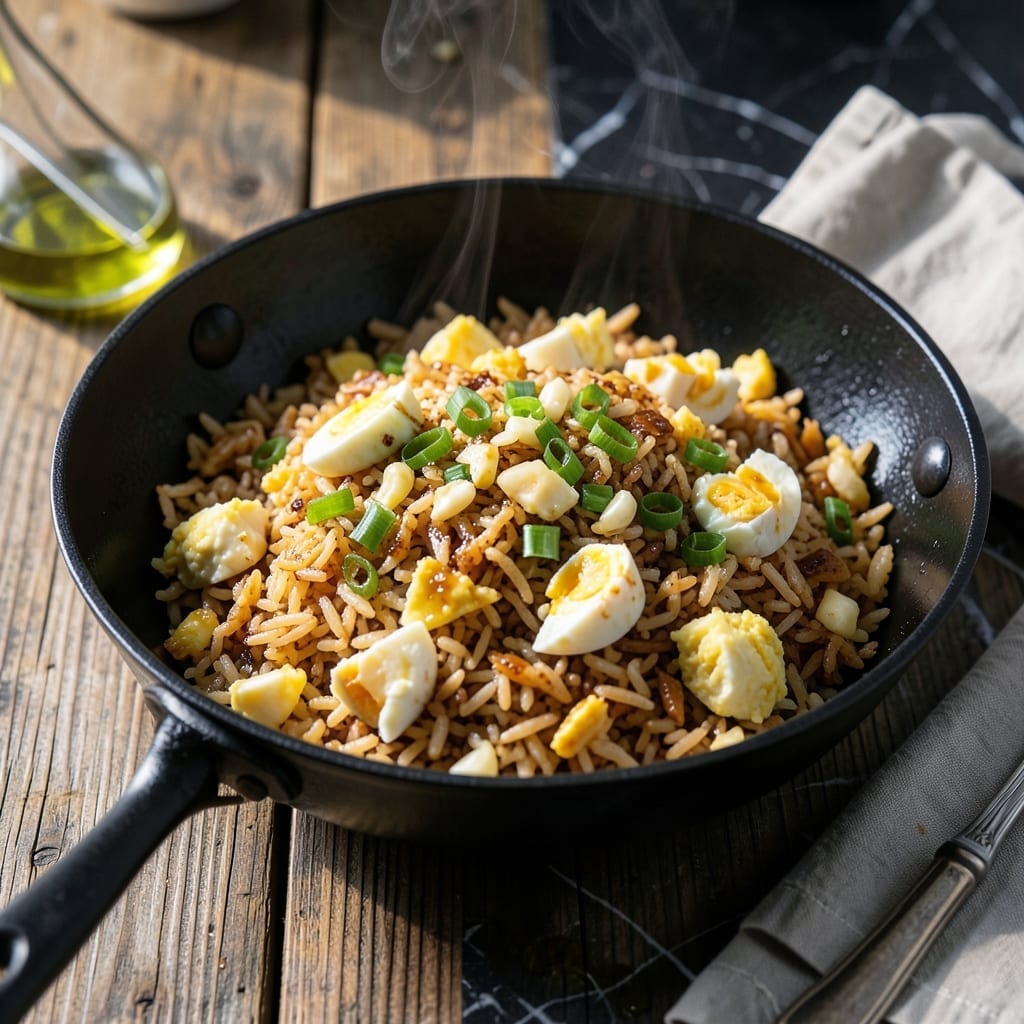
This streamlined fried rice method delivers restaurant-quality results with minimal effort. The key is high heat and constant motion to achieve perfectly cooked grains and even browning.
Using day-old rice and a handful of pantry staples, you’ll have a flavorful one-pan meal ready in under 20 minutes. The technique ensures each bite is packed with savory depth and satisfying texture.
Ingredients for Easy Fried Rice Recipe Video
Restaurant-quality wok-tossed flavor starts with these pantry staples and day-old rice.
| Ingredient | Amount | Notes |
|---|---|---|
| Day-Old Cooked White Rice 🍚 | 4 cups | Chilled, preferably overnight |
| Peanut Oil 🫒 | 3 tbsp | High smoke point essential |
| Large Eggs 🥚 | 3 whole | Lightly beaten, room temperature |
| Garlic Cloves 🧄 | 4 cloves | Minced finely for even distribution |
| Fresh Ginger Root 🌿 | 1 tbsp | Peeled and minced |
| Green Onions 🧅 | 4 whole | Thinly sliced, whites and greens separated |
| Frozen Peas and Carrots 🥕 | 1 cup | No need to thaw |
| Low-Sodium Soy Sauce 💧 | 3 tbsp | Divided for layering flavor |
| Sesame Oil 🫒 | 1 tsp | Toasted, for finishing |
| Kosher Salt 🧂 | ½ tsp | Adjust to taste at end |
| Ground White Pepper 🌶️ | ¼ tsp | Traditional for subtle heat |
| Shaoxing Wine 🍷 | 1 tbsp | Or dry sherry substitute |
[recipe_ingredient_scaler]
The rice is critical here. Day-old jasmine or long-grain holds its shape and fries up fluffy—fresh rice turns mushy. Peanut oil (not vegetable) hits the high smoke point needed for that searing wok hei. For the soy sauce, Kikkoman low-sodium strikes the right balance of salt and umami without overpowering. Shaoxing wine adds depth, but dry sherry works in a pinch. Grab these at any Asian market for best selection.
No Shaoxing wine? Dry sherry at a 1:1 ratio works fine. Missing white pepper? Black pepper at half the amount is acceptable. Frozen veggies can be swapped for fresh diced bell peppers or zucchini—just dice small so they cook quickly. For extra protein, diced char siu or rotisserie chicken blends in seamlessly. The ginger and garlic are non-negotiable though—fresh only, no powders.
Fried rice tastes even better the next day as flavors meld. Store in an airtight container in the fridge for up to 4 days. Reheat in a skillet over medium-high to revive the texture. For meal prep, cook the rice a day ahead and keep it unseasoned—add the soy sauce fresh when frying.
Why You’ll Love This Recipe
- One Pan Wonder: I toss everything in a single skillet—peanut oil, eggs, garlic, ginger—and it’s done in 15 minutes flat.
- Garlic-Ginger Magic: The combo of fresh ginger and garlic with that peanut oil gives it this deep, warm flavor that’s honestly addictive.
- Weeknight Hero: Between us, this is my go-to for busy evenings when I need something fast, filling, and foolproof.
- Leftovers Winner: I always make extra rice the night before just so I can fry it up the next day—saves time and tastes even better.
Step-by-Step Instructions for Easy Fried Rice
Master the wok technique with these straightforward steps for perfect texture and flavor every time.
Step 1: Prepare and Heat the Wok
Heat the 3 tbsp peanut oil in a wok or large skillet over high heat until it shimmers. I always use peanut oil for its high smoke point, which is essential for achieving that characteristic wok hei flavor without burning.
The oil should ripple when you tilt the pan—this visual cue tells you it’s ready. Avoid overcrowding the pan later; the surface must stay hot enough to sear the ingredients quickly.
Step 2: Scramble the Eggs and Aromatics
Pour the 3 whole large eggs into the hot oil and let them set for 10 seconds before scrambling with a spatula. Cook until just set but still slightly runny—this ensures they’ll finish cooking when combined with the other ingredients.
Push the eggs to one side, then add the 4 cloves minced garlic and 1 tbsp minced fresh ginger root. Stir-fry for 30 seconds until fragrant, being careful not to let the garlic burn. Burnt garlic adds bitterness, which can dominate the dish.
Step 3: Add Rice and Vegetables
Add the 4 cups day-old cooked white rice, breaking up any clumps with your spatula. The rice should be cold and dry—fresh rice is too moist and will turn mushy. Stir-fry for 2-3 minutes until the grains are separate and heated through.
Incorporate the 1 cup frozen peas and carrots and the white parts of the 4 whole green onions. Cook for another 2 minutes until the vegetables are tender. The peas and carrots don’t need to thaw first; they’ll heat through quickly in the hot wok.
Step 4: Season and Finish
Drizzle the 3 tbsp low-sodium soy sauce evenly over the rice mixture, then add the 1 tbsp Shaoxing wine. Stir-fry for 1-2 minutes until everything is well coated and the liquid has mostly evaporated.
Season with the 0.5 tsp kosher salt and 0.25 tsp ground white pepper. Turn off the heat, then stir in the 1 tsp sesame oil and the green onion tops. The sesame oil adds a nutty aroma, but adding it at the end prevents it from burning.
Taste and adjust the seasoning if needed. The rice should be tender with a slight chew, and each bite should be infused with the savory, umami-rich flavors of the sauce and aromatics.
Pro Tips For Making Easy Fried Rice Recipe Video
- Use Cold Rice: Day-old rice from the fridge works best—it’s drier and fries up fluffier. I learned this the hard way after using fresh rice and ending up with a mushy mess.
- Heat the Oil Hot: Get the peanut oil shimmering before adding anything. After burning two batches, I finally figured out that high heat is non-negotiable for that classic wok-fried texture.
- Scramble Eggs First: Push the scrambled eggs to one side of the pan before adding garlic and ginger—this keeps them from overcooking and turning rubbery. Sounds weird, but it works.
- Grate the Ginger: Skip the mincing and grate fresh ginger root instead. It distributes more evenly and saves time, plus you won’t bite into fibrous chunks. My grandmother swore by this, and she was right.
Dietary Considerations for This Dish
Gluten-Free Adaptation
Swap the low-sodium soy sauce for tamari (like San-J brand) to eliminate gluten while keeping that rich umami flavor. Tamari is naturally thicker and slightly sweeter, so reduce by ½ tbsp to avoid overpowering the dish. 💪
Vegetarian Version
Replace the eggs with 1 cup crumbled firm tofu for plant-based protein. Press and drain the tofu first, then crumble it into the hot oil. Add ½ tsp turmeric for color if you want that classic egg-like appearance. The texture will be slightly different but equally satisfying.
Lower Sodium Option
Cut the soy sauce to 2 tbsp and add 1 tbsp coconut aminos for depth without extra salt. I also skip the added kosher salt entirely and rely on the natural sodium in the sauces. Taste at the end and adjust with a pinch of salt only if needed.
Nut Allergy Safe
Use avocado oil instead of peanut oil for high-heat frying that’s safe for nut allergies. It has a similar smoke point and neutral flavor. Skip the sesame oil too, or confirm your brand is processed in a nut-free facility.
Protein Boost
Add 1 cup diced cooked chicken or shrimp along with the vegetables for extra protein. For a meatier version, char siu pork adds authentic flavor. Just ensure your protein is cooked through before adding to the wok. 🔥
Spice Control
Omit the white pepper if you’re sensitive to heat, or replace it with black pepper at half the amount. For kids, I skip all pepper entirely and let them add sweet chili sauce at the table for a milder, sweeter kick.
Nutrition Facts
Frequently Asked Questions
Can I use fresh rice instead of day-old?
Fresh rice contains too much moisture and will turn mushy when stir-fried. Always use cold, day-old rice for the best texture. Spread freshly cooked rice on a tray and refrigerate for 4 hours if you’re in a pinch.
What if I don’t have a wok?
A large, deep skillet works just as well. Use high heat and cook in batches if needed to avoid overcrowding. A 12-inch skillet is ideal for even cooking and easy tossing.
How do I prevent my fried rice from being soggy?
High heat is key! Use peanut or avocado oil and keep ingredients moving constantly. Avoid adding too much sauce at once—drizzle soy sauce gradually and let it absorb fully.

Trained in classic French technique but raised on slow-cooked ribs and spicy rubs, she blends culinary skill with smoke and soul.
- Recipe for Boneless Pork Chops in Cast Iron Skillet: Sear and Baste to Juicy Perfection - October 3, 2026
- Recipe for Boneless Cross Rib Roast: Slow-Roasted Beef with Herb Crust - October 3, 2026
- Hamburgers in Sauce Recipe Crock Pot: Slow-Cooked Savory Delight - October 3, 2026