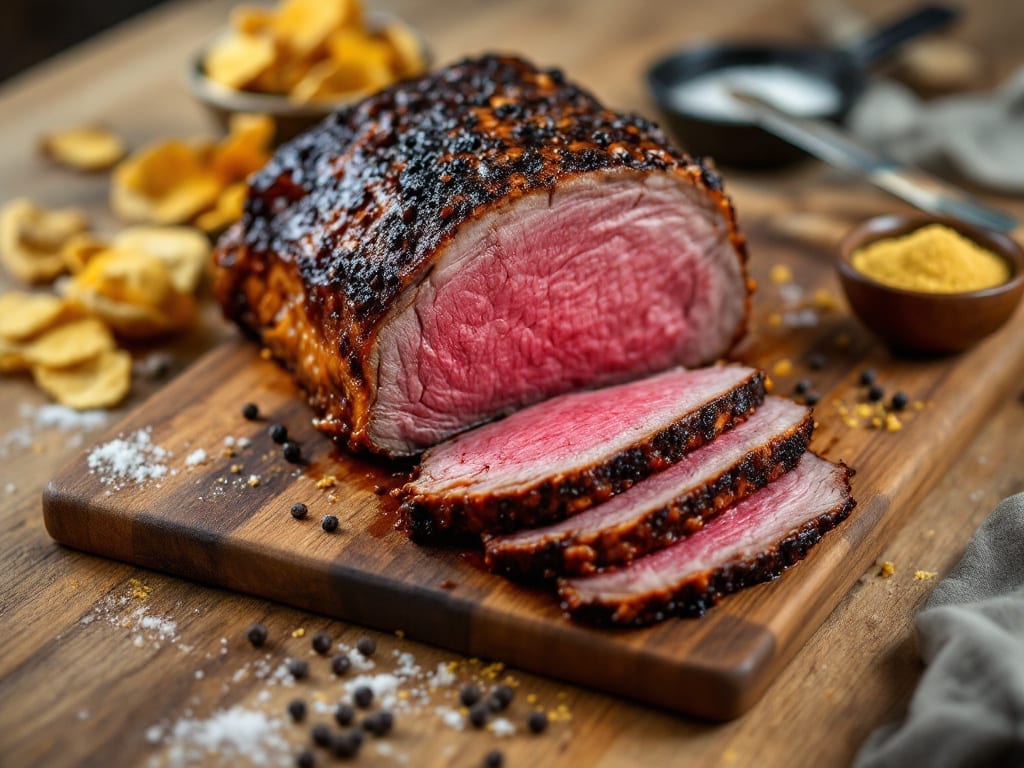
Cooking a whole beef brisket to fork-tender perfection requires patience, precision, and the right low-and-slow method. This recipe delivers melt-in-your-mouth results by transforming tough, flavorful beef into a showstopping centerpiece that commands every table. The secret lies in controlling temperature, timing, and technique—no shortcuts, just proven results.
We’ll use a smoking approach that builds deep, smoky flavors while breaking down the connective tissue for maximum tenderness. With a 12-hour cook time and careful monitoring, even beginner smokers can achieve restaurant-quality brisket that slices effortlessly.
The key is maintaining a steady temperature between 225°F and 250°F, ensuring the meat stays moist and flavorful.
What you’ll end up with is a perfectly smoked brisket—crusty bark on the outside, tender and juicy meat inside, ready to be sliced against the grain for maximum bite. The aroma alone will have everyone anticipating dinner, and the first bite will silence any doubters.
This isn’t just a recipe; it’s a culinary experience that turns a simple cut of beef into an unforgettable meal.
Serve with classic sides like creamy mac and cheese, tangy coleslaw, or buttery cornbread to complete the spread. Whether you’re hosting a gathering or treating yourself to a special meal, this brisket delivers professional results with a method you can trust. Let’s get started on creating your masterpiece.
Ingredients for whole beef brisket
The right ingredients transform a tough cut into a showstopping centerpiece.
| Ingredient | Amount | Notes |
|---|---|---|
| Whole Packer Beef Brisket 🥩 | 10 lb | Flat and point intact, good marbling |
| Yellow Hickory Wood Chips 🌳 | 1 package | For authentic smoke flavor |
| Kosher Salt 🧂 | ½ cup | Diamond Crystal preferred |
| Black Peppercorns 🌶️ | 2 tbsp | Freshly cracked, coarse grind |
| Garlic Powder 🧄 | 2 tbsp | Not garlic salt |
| Onion Powder 🧅 | 2 tbsp | Freshly ground preferred |
| Smoked Paprika 🌶️ | 1 tbsp | For deep, smoky flavor |
| Granulated Sugar 🍬 | 1 tbsp | For bark development |
| Yellow Mustard 🥬 | 2 tbsp | For initial rub adhesion |
| Beef Tallow or Vegetable Shortening 🧈 | ¼ cup | For moisture retention |
| Apple Cider Vinegar 🍎 | ½ cup | For spritzing during cook |
| Beef Broth 🍲 | 1 cup | For spritzing, low-sodium |
| Butter 🧈 | ½ cup | Unsalted, for basting |
| Fresh Rosemary 🌿 | ¼ cup | Chopped, for finishing |
| Fresh Thyme 🌿 | ¼ cup | Chopped, for finishing |
[recipe_ingredient_scaler]
The brisket is non-negotiable here—look for a whole packer cut with good marbling at your local butcher shop. Costco or Whole Foods often carry high-quality briskets, but if you’re buying from the grocery store, check for bright red color and visible fat. A 10-pound brisket is perfect for 6-8 people, but if you’re feeding a crowd, go bigger. The wood chips? Traeger or Cookshack brands are my go-to—they deliver consistent, authentic hickory flavor without overpowering the beef. If you can’t find hickory, oak works in a pinch but lacks that signature smoky depth.
No hickory wood chips? Pecan or cherry chips add a nice sweetness, though they won’t replicate hickory’s bold profile. Running low on beef tallow? Vegetable shortening or bacon fat work just as well for moisture. The mustard is a game-changer—it helps the rub stick to the meat, so don’t skip it. For the rub, Diamond Crystal kosher salt is ideal because it dissolves better than table salt, but any kosher salt will do. Pre-ground spices? Toast them in a dry pan for 30 seconds to wake up their flavors before mixing. And if you’re short on time, a pre-made Texas-style rub** from Penzeys cuts down on prep without sacrificing flavor.
This brisket reheats like a dream—just wrap it in butcher paper and warm in a 250°F oven for 15-20 minutes. It keeps for 3-4 days in the fridge, but honestly, it’s even better the next day as the flavors meld. For long-term storage, vacuum-seal and freeze for up to 6 months. Pro tip: Slice it against the grain for that perfect tender bite. Leftovers? Shred the point for sandwiches or tacos—it’s even more versatile than the flat. And save the fat! Render it down for homemade beef drippings or use it to baste future smokes.
Why You’ll Love This Recipe
- One-Pan Magic: I swear by this—just salt, pepper, garlic, and hickory smoke. No chopping, no fussing, no extra dishes. That brisket practically cooks itself while you handle the rest of dinner.
- Smoke-Infused Magic: Honestly, the hickory wood chips turn this into something special. That deep, smoky aroma? It’s like a hug from a campfire, but in my kitchen. The garlic powder ties it all together with a warm, savory punch.
- Leftovers Like Gold: Between us, this recipe makes way more than we eat in one sitting. I freeze portions for lazy nights—reheat with a splash of water, and boom, restaurant-quality brisket sandwiches. My kids beg for it.
- Budget Hero: A whole packer brisket stretches across meals, feeds a crowd, and costs less per pound than most cuts. I’ll be real: it’s my go-to for game days, potlucks, or when I’m tired of takeout. Solid every time.
Step-by-step instructions for smoking whole beef brisket
Here’s the method that guarantees fork-tender brisket with a perfect bark every time.
Prepare the Brisket and Create the Dry Rub
Begin by trimming the fat cap of the 10 lb whole packer beef brisket down to about ¼-inch thickness using a sharp boning knife. This thickness ensures proper smoke penetration while protecting the meat during the long cook. Pat the surface completely dry with paper towels—this is critical for bark development.
In a medium bowl, combine the 0.5 cup kosher salt, 2 tbsp black peppercorns (freshly cracked), 2 tbsp garlic powder, 2 tbsp onion powder, 1 tbsp smoked paprika, and 1 tbsp granulated sugar. This blend creates the perfect balance of saltiness, smokiness, and sweetness for bark formation. Mix thoroughly until the spices are evenly distributed and the salt crystals are broken up.
Apply the dry rub generously to all sides of the brisket, pressing firmly so it adheres well. Don’t skip this step—proper adhesion prevents the rub from falling off during the cook. Place the brisket on a wire rack set over a baking sheet and refrigerate uncovered for 12-24 hours. This dry-brining process enhances flavor penetration and creates that coveted bark.
Set Up the Smoker and Prepare for Cooking
Soak the 1 package yellow hickory wood chips in water for 30 minutes before using, then drain. Preheat your smoker to 225°F using these wood chips—they’ll provide that authentic, deep smoke flavor. Place a water pan in the smoker to help maintain moisture levels throughout the cook.
Once the smoker reaches temperature and you see steady, thin blue smoke (not thick white vapor), position the brisket fat-side up on the smoker grates. The fat cap should be facing up to render and baste the meat as it cooks. Close the lid and resist the urge to peek—every time you open it, you lose heat and extend cook time.
Here’s the thing—this is where patience pays off. The brisket needs time to develop that perfect texture. I’ve found that cooking at this low temperature for 6-8 hours before hitting the stall creates the ideal balance of tenderness and bark. Use an instant-read thermometer to monitor progress—you’re aiming for an internal temperature of 165-170°F before wrapping.
Spritz and Wrap for Maximum Tenderness
When the brisket reaches 165-170°F internally (about 6-8 hours), you’ll notice the temperature stall—a common phenomenon where the internal temperature stops rising. This is normal and expected. At this point, prepare a spritzing solution by combining 0.5 cup apple cider vinegar and 1 cup beef broth in a spray bottle.
Remove the brisket from the smoker and spritz it generously with the vinegar-broth mixture. Then, wrap it tightly in butcher paper (not aluminum foil—paper allows for better bark development). The vinegar helps break down collagen while the broth adds moisture. Return the wrapped brisket to the smoker and continue cooking until the internal temperature reaches 203°F, which typically takes another 4-6 hours.
This wrapping technique, known as the Texas crutch, helps you power through the stall while maintaining that beautiful bark. The key is to keep the brisket moist enough to stay tender without losing the crispy exterior. Spritz every 2 hours during this phase to maintain moisture levels.
Finish with Butter Baste and Rest Properly
Once the brisket reaches 203°F internally and a probe slides in like butter with no resistance, it’s ready for the final step. Remove it from the smoker and let it rest for 15 minutes before unwrapping. While it rests, melt the 0.5 cup butter in a small saucepan over low heat.
Unwrap the brisket and brush the melted butter generously over all surfaces. This basting step adds richness and helps create that glossy finish. The brisket should have a deep mahogany bark on the outside with a beautiful pink smoke ring just beneath. Let it rest wrapped in butcher paper for an additional 1-2 hours in a cooler—this resting period is crucial for juices to redistribute throughout the meat.
Real talk: Don’t skip the resting time. The brisket will continue to cook slightly during rest (carryover cooking), and the meat will become even more tender. If you cut into it too soon, all those precious juices will run out onto your cutting board instead of staying in the meat where they belong.
Slice Against the Grain for Perfect Texture
Locate the grain direction on the brisket—you’ll see lines running through the meat. Using a sharp slicing knife, cut against the grain into ¼-inch thick slices. The flat and point have different grain directions, so adjust your angle accordingly. This slicing technique ensures each bite has that perfect combination of tenderness and texture.
Serve immediately while still warm. Each slice should be fork-tender with a beautiful mahogany bark on the outside. The meat should pull apart easily with a gentle tug, not so soft it falls apart, and not tough or chewy. Garnish with chopped 0.25 cup fresh rosemary and 0.25 cup fresh thyme for a pop of freshness that complements the smoky flavors.
Pro Tips For Making Whole Beef Brisket
- Trim the Fat Cap: The thick fat layer on a whole packer brisket isn’t just for looks—it’s your smoke shield and flavor anchor. Trim it down to about ¼-inch thick on all sides before seasoning. I learned this the hard way when my first brisket turned into a greasy, uneven mess because the fat rendered unevenly. A sharp knife and steady hand make this easier than you’d think.
- Soak Wood Chips First: Toss your yellow hickory chips in warm water for 30 minutes before using them. This prevents them from burning up too fast and gives you that slow, steady smoke you’re after. I used to skip this and ended up with bitter, acrid smoke that overpowered the beef—now my brisket gets that clean, sweet hickory flavor every time.
- Spritz Like a Pro: Every 90 minutes during cooking, hit the brisket with a spray bottle of warm water mixed with a splash of apple cider vinegar. This keeps the surface moist enough for that dark, crackling crust without steaming the meat. I was skeptical until I tried it—now it’s non-negotiable for my brisket.
- Probe the Flat, Not the Point: The flat (leaner side) hits the right temp first, but the point (fatty side) can lag by 20°F or more. Use an instant-read thermometer to check the thickest part of the flat—aim for 195°F internal temp. I’ve wasted hours waiting for the point to catch up, only to find the flat was already falling apart. Trust the flat, not the point.
Storing and reheating this recipe
Refrigerator Storage
After your brisket reaches 203°F and rests, store any leftovers in an airtight container lined with parchment paper to prevent sticking. I use glass Pyrex containers with snap-on lids for best results.
Keep brisket refrigerated at 40°F or below for up to 4 days, though I recommend eating it within 2 days for peak tenderness. The flavors actually deepen overnight as the spices meld together beautifully. 🥩
Freezer Storage
For long-term storage, wrap the brisket tightly in butcher paper, then place it in a freezer-safe bag with all air removed. I use quart-size Ziploc freezer bags because they stack efficiently and thaw faster than rigid containers.
Label with the date and store for up to 6 months—this method preserves moisture and prevents freezer burn. When ready to eat, thaw overnight in the fridge for even cooking. ❄️
Stovetop Reheating
This is my preferred method because it maintains the perfect texture. Place slices in a heavy-bottomed skillet over medium-low heat with 2 tablespoons beef broth per pound. Cover and heat for 5-7 minutes, stirring occasionally, until reaching 165°F internally.
The broth prevents drying while keeping the bark intact. Taste and adjust seasoning—brisket often needs a pinch of salt after reheating. 🔥
Oven Reheating
For whole brisket reheating, preheat your oven to 250°F. Wrap the brisket in butcher paper (not foil) and place it on a wire rack over a baking sheet.
Heat for 15-20 minutes until warmed through. The paper allows moisture to escape slightly, preventing a soggy exterior. This method works best for 3-4 days of leftovers. 🌡️
Microwave Safety
If you’re short on time, microwave individual portions covered with a damp paper towel on 70% power for 1-2 minutes. Stir, then continue in 30-second intervals until reaching 165°F.
Add 1 tablespoon beef broth per serving if the meat looks dry. This method is quick but can soften the bark slightly—best for sandwiches or tacos where texture matters less. ⚡
Pro Tip: Save the Fat
After slicing, collect any rendered fat in a fat separator or small jar. This precious liquid gold can be used for future brisket cooks as a baste or rendered down into beef drippings for cooking.
I store it in the fridge for up to 3 months—it’s perfect for adding richness to mashed potatoes, gravies, or even cornbread. Every bit counts! 💫
Nutrition facts
Frequently asked questions
How long does it take to smoke a whole beef brisket?
Expect a total cook time of 12-16 hours depending on your smoker. The first 6-8 hours at 225°F build the bark and tenderize the meat, followed by 4-6 hours wrapped at the same temperature to reach 203°F. Patience is key—rushing leads to dry, tough results.
Can I cook a whole brisket in an oven instead of a smoker?
Use an oven-safe roasting pan and maintain 250°F with a water pan for moisture. Place wood chips on a foil tray underneath for indirect smoke. The cook time remains similar (12-16 hours), but monitor closely to avoid hot spots. A meat thermometer is your best friend here.
What’s the difference between the flat and point cuts of brisket?
The flat is leaner, more uniform, and cooks faster, while the point has more fat and connective tissue, making it more flavorful but requiring longer cooking. For best results, keep them together during smoking but separate them when slicing—the flat cuts against the grain, while the point can be shredded for tacos or sandwiches.
Why did my brisket turn out dry?
Most likely, you overcooked it past 203°F or didn’t rest it properly. Always aim for 203°F internal temp and let it rest 1-2 hours wrapped in butcher paper. Another common mistake is opening the smoker too often—keep that lid closed! Spritzing every 2 hours during the wrap phase also helps maintain moisture.
How do I know when the brisket is done?
Use a meat thermometer to check the thickest part—it should read 203°F. The probe should slide in like butter with no resistance. Look for a deep mahogany bark and a pink smoke ring beneath. If you’re unsure, let it cook 30 more minutes and check again. The stall (where temp plateaus) is normal and expected.

Trained in classic French technique but raised on slow-cooked ribs and spicy rubs, she blends culinary skill with smoke and soul.
- Masterbuilt Smoker Beef Brisket Recipe: Bark-To-Meat Ratio Hack for Unmatched Flavor - October 15, 2026
- Costco Beef Brisket Recipe: Low-and-Slow Masterpiece With Molasses-Kissed Crust - October 15, 2026
- Smoked Herring Recipe: Scandinavian-Style With Dill and Mustard Cream - October 15, 2026