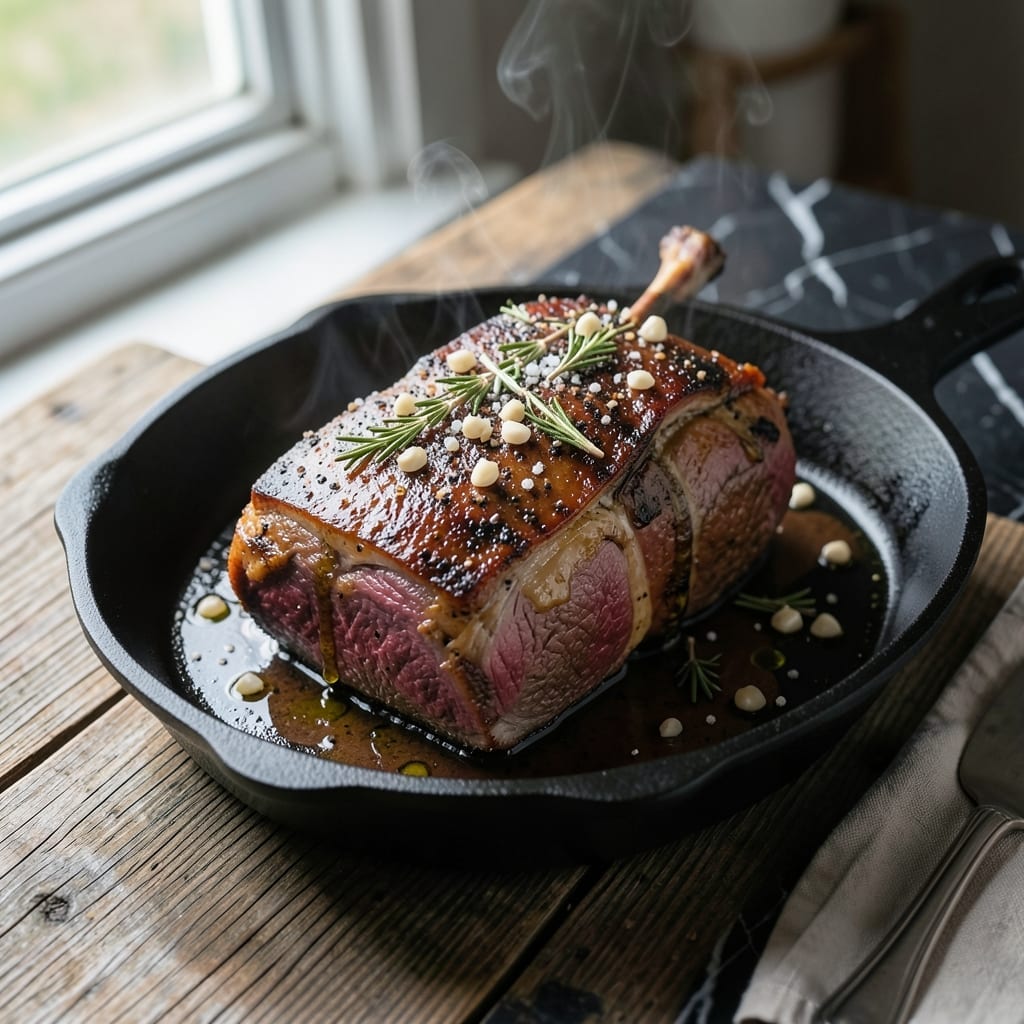
I’ve cooked prime rib more times than I can count, and this no-fuss method is the one I come back to every holiday. No stress, no fancy equipment—just a showstopping roast that turns out perfect every time.
Here’s the thing—great prime rib doesn’t need complicated techniques. A simple dry rub, slow roasting at 325°F, and a rest before carving guarantees juicy, tender slices with a flavorful crust.
You’ll end up with meat so tender it nearly falls apart, rich with beefy flavor and a golden-brown exterior. The best part? It feeds a crowd with minimal effort, leaving you free to enjoy the day.
Pair it with horseradish cream or roasted veggies for the full experience. Let’s get started.
Ingredients for Easiest Prime Rib Roast Recipe Ever
Eleven ingredients transform a stunning prime rib roast into your holiday centerpiece with ease.
| Ingredient | Amount | Notes |
|---|---|---|
| Prime Rib Roast 🥩 | 5 lb | Bone-in or boneless, well-marbled |
| Kosher Salt 🧂 | 1 ½ tbsp | Diamond Crystal preferred for texture |
| Freshly Ground Black Pepper 🌶️ | 1 ½ tbsp | Coarse grind for best crust |
| Garlic Cloves 🧄 | 6 cloves | Peeled and smashed into paste |
| Dried Rosemary 🌿 | 1 tbsp | Crushed between fingers to release oils |
| Dried Thyme 🍃 | 1 tbsp | Rubbed to activate flavor |
| Olive Oil 🫒 | 2 tbsp | Extra-virgin for richness |
| Red Wine 🍷 | ½ cup | Dry variety like Cabernet Sauvignon |
| Beef Stock 🥩 | 1 cup | Low-sodium preferred for control |
| Unsalted Butter 🧈 | 4 tbsp | Softened for finishing baste |
| Fresh Thyme Sprigs 🍃 | 4 sprigs | For garnish and aroma |
| Fresh Rosemary Sprigs 🌿 | 2 sprigs | For garnish and aroma |
[recipe_ingredient_scaler]
The prime rib itself is the star—look for USDA Prime or Choice grade at Costco or Whole Foods for the best marbling. Bone-in roasts have more flavor but boneless is easier to carve (your call). Ask the butcher for a roast with the fat cap left on—it self-bastes as it cooks. I always get mine a day ahead so it can dry-brine in the fridge overnight (trust me on this one).
No red wine? Beef broth with a splash of balsamic vinegar works in a pinch. Fresh thyme and rosemary can replace dried at a 3:1 ratio—just strip the leaves. Out of beef stock? Mushroom or onion stock adds depth. The butter baste is non-negotiable though—it’s what gives that glossy, golden crust. If you’re feeling fancy, add a minced shallot to the garlic paste.
The roast can rest at room temperature for 1-2 hours before cooking (or up to 4 hours in the fridge). Leftovers? Slice thin for sandwiches or dice for hash. Keeps beautifully for 4-5 days in the fridge, or freeze slices wrapped tightly for 3 months.
Why You’ll Love This Recipe
- Set It and Forget: I rub the roast with salt, pepper, garlic, and rosemary, pop it in the oven, and let it do the work—no basting, no flipping.
- That Crust: The garlic and rosemary form this insane crust that cracks when you slice it, and the inside stays so tender.
- Holiday Hero: I serve this for Christmas and birthdays, but honestly, it’s fancy enough for any Sunday dinner.
- Leftovers Luxury: Between us, the cold slices make the best sandwiches the next day—just add horseradish mayo.
Step-by-Step Instructions for Prime Rib Roast
This foolproof method delivers a showstopping centerpiece with minimal effort and maximum flavor.
Step 1: Season and Prepare the Roast
Pat the 5 lb Prime Rib Roast completely dry with paper towels—moisture prevents proper browning. I rub the entire surface with the 2 tbsp Olive Oil first, creating a base for the seasoning to adhere.
In a small bowl, combine the 1.5 tbsp Kosher Salt, 1.5 tbsp Freshly Ground Black Pepper, 1 tbsp Dried Rosemary, and 1 tbsp Dried Thyme. Press this mixture aggressively onto all surfaces of the roast, including the ends. The salt helps draw out moisture initially, then reabsorbs to create a flavorful crust.
Using a sharp knife, make small slits across the top and sides of the roast. Insert the 6 cloves Garlic Cloves (smashed into a paste) into these slits, distributing evenly. This infuses the meat with aromatic flavor as it cooks.
Step 2: Sear and Build the Flavor Base
Preheat your oven to 450°F. Place the roast bone-side down in a roasting pan—this creates a natural rack for even cooking. The high initial heat sears the exterior, locking in juices while creating a deeply browned crust.
Roast uncovered for 20 minutes at this high temperature. You’ll see the surface transform to a rich deep brown color, and the kitchen will fill with an incredible aroma. This is the Maillard reaction at work, creating complex flavors.
After the initial sear, reduce the oven temperature to 325°F. In the roasting pan, pour the 0.5 cup Red Wine and 1 cup Beef Stock around—not over—the roast. These liquids will create a flavorful au jus as they reduce.
Step 3: Slow Roast to Perfection
Continue roasting at 325°F for approximately 1.5 to 2 hours. The exact time depends on your desired doneness. For medium-rare, aim for an internal temperature of 120-125°F—use a meat thermometer inserted into the thickest part, avoiding bone.
Baste the roast every 30 minutes with the pan juices. About 30 minutes before it reaches temperature, add the 4 tbsp Unsalted Butter to the pan. As it melts, incorporate it into your basting liquid for an extra-rich finish.
You’ll know it’s nearing completion when the crust is deeply caramelized and the internal temperature rises steadily. The meat should feel slightly soft when pressed, like the base of your thumb when your hand is relaxed.
Step 4: Rest and Serve
Once the roast reaches 120°F for medium-rare, transfer it to a cutting board. Tent loosely with foil and let it rest for 20-30 minutes. This crucial step allows the juices to redistribute, ensuring every slice is moist and tender.
During the rest, the internal temperature will rise another 5-10°F (carryover cooking). Skim excess fat from the pan juices, then strain the remaining liquid into a gravy boat. Garnish the roast with the 4 sprigs Fresh Thyme Sprigs and 2 sprigs Fresh Rosemary Sprigs for a beautiful presentation.
Carve between the bones for bone-in roasts, or slice against the grain for boneless. Serve immediately with the au jus for dipping. The result should be a perfectly pink center with a crust so flavorful it steals the show.
Pro Tips For Making Easiest Prime Rib Roast Recipe Ever
- Let It Rest: I learned this the hard way—pull the roast when it hits 5 degrees below your target temp, then tent it with foil for a full 15 minutes before slicing. It keeps all those juices from running out onto the cutting board.
- Salt Overnight: After burning three roasts by skipping this, I now salt the prime rib 12-24 hours ahead. The seasoning penetrates deep, and the crust forms better than any last-minute rub.
- Skip the Water: Resist the urge to add liquid to the pan. The dry heat is what gives that perfect brown crust, and the garlic and rosemary will still infuse flavor without steaming the meat.
- Use a Probe: Sounds weird, but it works: a meat thermometer in the thickest part (not touching bone) is the only way to guarantee medium-rare. I was skeptical until I tried it—no more guessing games.
Wine and Beer Pairings for This easiest prime rib roast recipe ever
Bold Red Wines
A rich, full-bodied Cabernet Sauvignon from Napa Valley is my top pick—its dark fruit and tannins stand up to the beef’s intensity. Look for 2018 or 2019 vintages from Robert Mondavi or Caymus. 🍷
Elegant Alternatives
For something smoother, try a Merlot with velvety texture. I love Chateau Ste. Michelle from Washington State. Syrah also works beautifully, especially with its peppery notes complementing the crust.
White Wine Surprise
Yes, white can work! A full-bodied Chardonnay with oak aging, like Kendall-Jackson Vintner’s Reserve, has enough body to pair. The buttery notes echo the roast’s finish.
Beer Pairings
A malty Portter or Stout provides roasted coffee notes that enhance the beef. Guinness or Founders KBS are excellent choices. For hop lovers, a Double IPA like Dogfish Head 90 Minute cuts through the richness. 🍺
Non-Alcoholic Option
Try a sparkling black cherry soda with a splash of balsamic vinegar. The effervescence cleanses your palate, while the cherry notes complement the meat’s depth.
Serving Temperature
Serve red wines slightly below room temperature at 60-65°F. For whites, chill to 50-55°F. Beer should be 45-50°F—not ice cold—to let the flavors shine.
Nutrition Facts
Frequently Asked Questions
What internal temperature should I aim for?
For perfect medium-rare, remove the roast at 120-125°F. The temperature will rise to 130-135°F during resting, giving you that ideal pink center.
Can I prepare this ahead of time?
Season the roast up to 24 hours ahead and refrigerate uncovered. This dry-brining enhances flavor and texture. Bring to room temperature before cooking.
How do I know when it’s done without a thermometer?
Use the touch test: press the meat with tongs. Rare feels soft, medium-rare slightly firm, and well-done very firm. For best results, a thermometer is strongly recommended.
What if my roast is larger or smaller?
Adjust cooking time by 15 minutes per pound. A 4 lb roast needs about 1.5 hours at 325°F, while a 6 lb roast may take 2.5 hours. Always use temperature as your guide.

Trained in classic French technique but raised on slow-cooked ribs and spicy rubs, she blends culinary skill with smoke and soul.
- Recipe for Boneless Pork Chops in Cast Iron Skillet: Sear and Baste to Juicy Perfection - October 3, 2026
- Recipe for Boneless Cross Rib Roast: Slow-Roasted Beef with Herb Crust - October 3, 2026
- Hamburgers in Sauce Recipe Crock Pot: Slow-Cooked Savory Delight - October 3, 2026