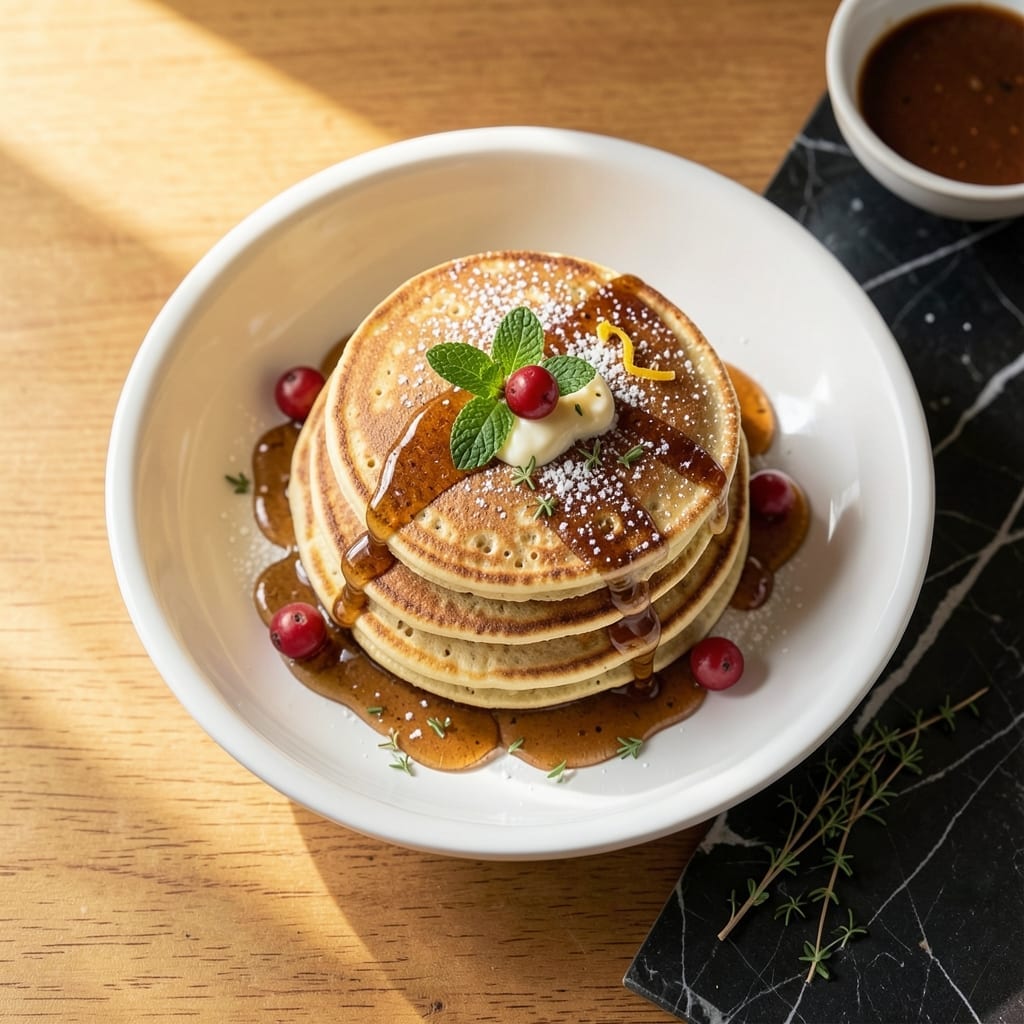
This small batch pancake recipe delivers fluffy, golden stacks with minimal effort and maximum reward. No sifting, no resting—just simple ingredients and a foolproof method.
What makes this version special is its precision for small quantities, perfect when you want fresh pancakes without leftovers. The batter comes together in minutes, and the results are consistently light and tender.
You will achieve pancakes with crisp edges and airy centers, ready to be topped with syrup or fresh fruit. The recipe scales perfectly if you need more, but it is designed for quick, no-fuss mornings.
Ideal for breakfast for two or a solo treat. This method guarantees easy success every time.
Ingredients for Easy Pancake Recipe Small Batch
A handful of pantry staples yields perfect fluffy pancakes every time.
| Ingredient | Amount | Notes |
|---|---|---|
| All-Purpose Flour 🌾 | 1 cup | Unbleached preferred for texture |
| Baking Powder 🧂 | 2 tsp | Ensures maximum lift and fluffiness |
| Granulated Sugar 🍚 | 1 tbsp | Adjust to taste preference |
| Salt 🧂 | ¼ tsp | Fine sea salt recommended |
| Large Egg 🥚 | 1 whole | Room temperature for best results |
| Whole Milk 🥛 | ¾ cup | Full-fat for richest texture |
| Unsalted Butter 🧈 | 2 tbsp | Melted and slightly cooled |
| Vanilla Extract 💧 | 1 tsp | Pure extract for best flavor |
| Vegetable Oil 🫒 | 1 tbsp | For greasing the pan |
[recipe_ingredient_scaler]
The flour is the foundation—King Arthur unbleached all-purpose is ideal for consistent texture. Baking powder must be fresh (test by dropping a spoonful in hot water—it should fizz vigorously). Organic whole milk adds richness, but any milk works in a pinch. For the egg, room temperature incorporates more evenly into the batter, preventing streaks.
No buttermilk? Whole milk plus 1 tsp lemon juice works as a substitute. Swap granulated sugar for maple syrup at a 1:1 ratio if you prefer liquid sweeteners. Out of vanilla extract? A pinch of cinnamon adds warmth without overpowering. For a lighter texture, replace 2 tbsp milk with sparkling water—the bubbles add airiness.
Store dry ingredients in airtight containers for 6-12 months. The batter itself is best used immediately, but leftovers keep covered in the fridge for 2 days. Reheat gently in a toaster oven to restore crispness without drying out.
Why You’ll Love This Recipe
- One Bowl Wonder: I just dump the flour, baking powder, sugar, salt, and egg in a bowl, mix, and cook—no fancy steps.
- Buttery Sweetness: The sugar caramelizes just enough to give that golden, slightly crisp edge with a tender center.
- Breakfast for One: Honestly, it’s my go-to when I only need two or three pancakes and don’t want leftovers.
- Pantry Staples: All-purpose flour, baking powder, and an egg are things I always have, so no last-minute store runs.
Step-by-Step Instructions for Fluffy Pancakes
Here’s the method. Straightforward, tested, works every time.
Step 1: Combine Dry Ingredients for Maximum Lift
In a medium mixing bowl, whisk together the 1 cup All-Purpose Flour, 2 tsp Baking Powder, 1 tbsp Granulated Sugar, and 0.25 tsp Salt until fully incorporated. I use a fine-mesh sieve for the flour to prevent lumps in the final batter.
The baking powder should be fresh—check that it foams when you add a drop of hot water. This ensures your pancakes will rise properly and achieve that signature fluffy texture. Don’t skip this whisking step; it distributes the leavening agent evenly.
Step 2: Whisk Wet Ingredients Until Smooth
In a separate bowl, combine the 1 whole Large Egg, 0.75 cup Whole Milk, 2 tbsp Unsalted Butter (melted and slightly cooled), and 1 tsp Vanilla Extract. Whisk vigorously for 30 seconds until the mixture is smooth and homogenous.
The butter should be warm but not hot—adding it too hot will cook the egg. I like to melt it in the microwave in 10-second bursts to avoid overheating. The vanilla extract adds depth, but if you’re out, you can omit it without compromising texture.
Step 3: Create the Batter with Minimal Mixing
Pour the wet ingredients into the dry ingredients and gently fold them together using a silicone spatula. Mix just until the flour is incorporated—there should still be a few visible streaks. Overmixing develops gluten, which makes pancakes tough instead of tender.
The batter will be thick but pourable. If it seems too dense, add a splash of milk, but resist the urge to thin it too much. Those lumps will disappear during cooking. Let the batter rest for 5 minutes while you preheat the pan—this allows the flour to hydrate fully.
Step 4: Cook on Medium Heat Until Bubbly
Heat a nonstick skillet or griddle over medium heat and add 1 tbsp Vegetable Oil. Once hot (a drop of water should sizzle and evaporate immediately), pour ¼ cup of batter per pancake onto the surface. Cook for 2-3 minutes until bubbles form across the surface and the edges look set.
This is when you know it’s time to flip—those bubbles indicate the pancake is cooking through. The first one is always a test; adjust your heat if it browns too quickly or too slowly. Use a thin, flexible spatula to flip each pancake gently in one motion.
Cook for another 1-2 minutes until golden brown on the underside. The pancakes should spring back lightly when pressed with a finger. Transfer to a warm plate and repeat with the remaining batter, adding more oil as needed.
Pro Tips For Making Easy Pancake Recipe Small Batch
- Rest the Batter: After mixing, let the batter sit for 5-10 minutes—this lets the flour absorb the liquid and the baking powder activate. I learned this the hard way after making too many dense pancakes.
- Skip Overmixing: Stir just until the flour disappears; small lumps are fine. Overmixing develops gluten, and suddenly your pancakes are tough instead of tender.
- Heat the Pan First: Drop a tiny bit of batter in the pan—if it sizzles immediately, it’s ready. I used to rush this and ended up with pale, gummy pancakes.
- Use Room Temp Egg: Crack the egg into the batter while it’s still cold from the fridge, and the fat can clump. A quick 5-minute sit in warm water solves this every time.
Troubleshooting Great easy pancake recipe small batch
Batter Too Thick
If your batter seems too dense after mixing, add 1-2 tbsp milk and stir gently. The batter should be pourable but still thick—like heavy cream. I often add a splash when using older flour that absorbs more liquid. 💡
Batter Too Thin
If your batter is runny, add 1-2 tbsp flour and fold in lightly. Over-thinning often happens if you overmeasure milk. Remember, lumps are okay—they’ll dissolve during cooking, and the batter will thicken slightly as it rests.
Pancakes Not Rising
If your pancakes are flat, your baking powder might be expired. Test it by stirring 1 tsp into ½ cup hot water—it should bubble vigorously. Also, avoid overmixing, which can deflate the batter. I always keep fresh baking powder on hand for consistent results.
Burning or Uneven Cooking
If pancakes brown too quickly or cook unevenly, your heat is likely too high. Adjust to medium-low heat and ensure your pan is fully preheated before adding batter. A well-seasoned cast iron skillet retains heat evenly for perfect pancakes every time. 🔥
Sticking to the Pan
If pancakes stick, your pan may not be hot enough or properly greased. Heat the pan until a drop of water sizzles, then add 1 tbsp oil and swirl to coat. Nonstick pans work best, but even they need proper preheating and oil to prevent sticking.
Dry or Dense Texture
If your pancakes turn out dry or dense, you may have overmixed the batter or used too much flour. Fold just until combined—small lumps are fine. Also, avoid pressing pancakes with the spatula while cooking, as this squeezes out the air that makes them fluffy.
Nutrition Facts
Frequently Asked Questions
Can I make this with just one egg?
Yes! This recipe is designed for a single egg. It creates the perfect texture for 2 servings. No adjustments needed for the egg quantity.
What if I don’t have whole milk?
Any milk works—2%, skim, or even plant-based. For richer flavor, add 1 extra tsp butter to compensate for lower fat content.
How do I know when to flip?
Flip when bubbles form across the surface and edges look set, after about 2-3 minutes. The underside should be golden brown.
Can I make the batter ahead?
Yes, but mix wet and dry separately. Combine just before cooking for best rise. Stored batter loses some fluffiness after 30 minutes.

Trained in classic French technique but raised on slow-cooked ribs and spicy rubs, she blends culinary skill with smoke and soul.
- Recipe for Boneless Pork Chops in Cast Iron Skillet: Sear and Baste to Juicy Perfection - October 3, 2026
- Recipe for Boneless Cross Rib Roast: Slow-Roasted Beef with Herb Crust - October 3, 2026
- Hamburgers in Sauce Recipe Crock Pot: Slow-Cooked Savory Delight - October 3, 2026