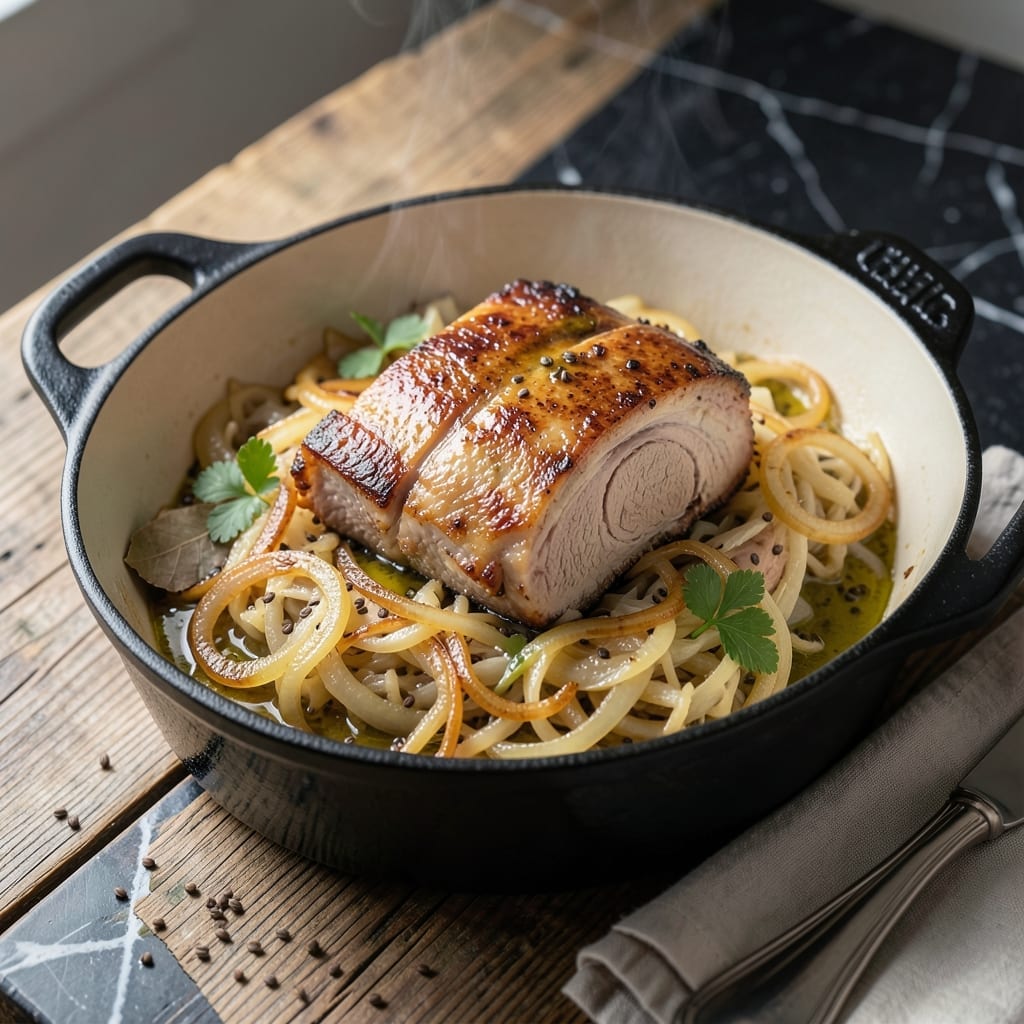
This stovetop pork and sauerkraut delivers tangy, comforting flavor with minimal effort. I developed this method after finding my grandmother’s vague recipe card for braised pork with sauerkraut.
The one-pot technique makes it easy to achieve tender pork and perfectly balanced sauerkraut. Low heat and patience transform simple ingredients into a dish that feels special.
What emerges is melt-in-your-mouth pork with sauerkraut that’s lost its sharp edge but kept its character. The aroma alone will have everyone gathering in the kitchen.
Serve straight from the pot for a meal that tastes like tradition without the fuss.
Ingredients for Easy Pork and Sauerkraut Recipe Stovetop
Tender pork meets tangy sauerkraut in this one-pot braise with minimal ingredients.
| Ingredient | Amount | Notes |
|---|---|---|
| Pork Shoulder 🍖 | 2 lb | Boneless, cut into chunks |
| Sauerkraut 🥬 | 2 lb | Rinsed and drained |
| Large Yellow Onion 🧅 | 1 whole | Thinly sliced |
| Granulated Sugar 🍚 | 1 tbsp | Balances acidity |
| Caraway Seeds 🌿 | 1 tsp | Essential for authentic flavor |
| Bay Leaf 🍃 | 1 whole | Dried, for depth |
| Chicken Broth 💧 | 1 cup | Low-sodium preferred |
| Apple Cider Vinegar 🍏 | ¼ cup | Adds brightness |
| Garlic Cloves 🧄 | 4 cloves | Minced for aroma |
| Olive Oil 🫒 | 2 tbsp | For browning pork |
| Black Pepper 🌶️ | 1 tsp | Freshly ground preferred |
| Kosher Salt 🧂 | 1 tsp | Adjust to taste |
| Juniper Berries 🫐 | 4 whole | Lightly crushed, optional |
| Dijon Mustard 🟡 | 1 tbsp | Stirs in at the end |
[recipe_ingredient_scaler]
The pork shoulder is non-negotiable for melt-in-your-mouth texture. Costco or butcher shops often have pre-cut chunks, but a whole shoulder lets you control the fat ratio (look for good marbling). German-style sauerkraut in bags from the refrigerated section beats canned—it’s crisp and less sour. Rinse it lightly to remove excess brine without washing away all the flavor.
No pork shoulder? Pork butt works identically (they’re often the same cut). Out of caraway seeds? Fennel seeds at half the amount add a similar warmth. The apple cider vinegar can be swapped for white wine vinegar, but avoid balsamic—it’s too sweet. For extra richness, stir in a spoonful of applesauce at the end.
This braise improves overnight. Refrigerate for up to 4 days or freeze for 3 months. The sauerkraut softens further, and the pork soaks up even more flavor. Reheat gently on the stove with a splash of broth to restore moisture.
Why You’ll Love This Recipe
- One Pot Wonder: I just brown the pork shoulder, dump everything else in, and let the stovetop do the work—no oven, no fuss.
- Sweet-Tangy Magic: The sugar caramelizes with the sauerkraut and onion, while caraway seeds add that warm, earthy depth I crave.
- Feeds a Crowd: Between us, this stretches easily for leftovers or a family dinner, and it tastes even better the next day.
- Budget-Friendly Win: Pork shoulder is cheap, sauerkraut lasts forever in the fridge, and I’m feeding four for less than a takeout meal.
Step-by-Step Instructions for Easy Pork and Sauerkraut
This one-pot method delivers tender pork and tangy sauerkraut with minimal effort.
Step 1: Brown the Pork Shoulder
Heat the 2 tbsp olive oil in a large Dutch oven over medium-high heat. Season the 2 lb pork shoulder chunks with the 1 tsp kosher salt and 1 tsp black pepper, then add them to the pot in a single layer.
Sear the pork for 4-5 minutes per side until deeply golden brown on all sides. This creates a flavorful fond that will enrich the braising liquid. Don’t overcrowd the pot—work in batches if necessary to ensure proper browning.
Step 2: Build the Flavor Base
Remove the pork and set aside. In the same pot, add the thinly sliced large yellow onion and cook for 3-4 minutes until softened and just beginning to caramelize. Add the 4 cloves minced garlic cloves, 1 tbsp granulated sugar, 1 tsp caraway seeds, and 4 whole lightly crushed juniper berries.
Stir in the 0.25 cup apple cider vinegar, scraping up any browned bits from the bottom of the pot. This deglazing step incorporates all the flavorful fond into the sauce. Cook for 1 minute until the vinegar has mostly evaporated.
Step 3: Braise the Pork and Sauerkraut
Return the pork to the pot. Add the 2 lb rinsed and drained sauerkraut, 1 cup chicken broth, and 1 whole bay leaf. Stir to combine, ensuring the sauerkraut is evenly distributed around the pork.
Bring the mixture to a simmer, then reduce heat to low. Cover and let braise for 1.5 to 2 hours, stirring occasionally, until the pork is fork-tender and the sauerkraut has softened. The liquid should be slightly reduced and the flavors well melded.
Step 4: Finish and Adjust Seasoning
Once the pork is tender, stir in the 1 tbsp Dijon mustard. This adds a subtle tang and depth to the dish. Remove the bay leaf and discard it.
Taste and adjust seasoning if needed. The sauerkraut should be tender but still retain some texture, and the pork should easily pull apart with a fork. If the mixture seems dry, add a splash of water or additional chicken broth.
Pro Tips For Making Easy Pork And Sauerkraut Recipe Stovetop
- Brown the Pork: Sear the pork shoulder in batches to avoid steaming—crowding the pan drops the temperature and leaves you with gray, soggy meat instead of that rich crust.
- Rinse the Kraut: I learned this the hard way—drain and rinse the sauerkraut under cold water to cut the sourness, especially if it’s from a can.
- Simmer, Don’t Boil: Keep the heat low once the pork and sauerkraut are in the pot, or the kraut will turn mushy and the pork won’t stay tender.
- Add Sugar Late: Stir in the granulated sugar only after the onions have softened—adding it too early can cause burning and a bitter edge.
Wine and Beer Pairings for These Flavors
Crisp Whites
A dry Riesling from Germany or Alsace cuts through the richness beautifully. The bright acidity and hint of apple complement the tangy sauerkraut perfectly. I always keep a bottle of Dr. Loosen Blue Slate on hand for this exact pairing. 🍷
Rich Reds
For red wine lovers, a light-bodied Pinot Noir from Oregon works surprisingly well. The earthy notes and soft tannins don’t overpower the dish. Domaine Drouhin makes an excellent choice that won’t break the bank.
German Lagers
A crisp German Pilsner like Warsteiner or Bitburger offers a refreshing contrast to the hearty flavors. The clean, slightly bitter finish cleanses your palate between bites. This is my go-to when I want something simple and satisfying. 🍺
Malty Ales
An Amber Ale with its caramel notes pairs wonderfully with the pork’s richness. Fat Tire from New Belgium Brewing is an accessible option that balances the dish’s tanginess. The malt sweetness complements the caraway seeds beautifully.
Non-Alcoholic Option
For a non-alcoholic pairing, try sparkling apple cider from a local orchard. The effervescence and sweet-tart flavor mirror the dish’s acidity. I love serving Martinelli’s Gold for a festive touch that everyone can enjoy.
Nutrition Facts
Frequently Asked Questions
Can I use pork loin instead of shoulder?
Pork shoulder is ideal for tender, fall-apart texture. Pork loin works but becomes dry if overcooked. Reduce braising time to 1 hour and check frequently.
Should I rinse the sauerkraut?
Yes, always rinse and drain to remove excess brine. This prevents the dish from becoming too salty and maintains the perfect balance of tang.
What if my pork isn’t tender after 2 hours?
Check liquid level first—add 0.5 cup broth if dry. Continue cooking on low heat for 30-minute intervals until fork-tender. Patience pays off!
Can I make this in a slow cooker?
Brown pork first, then transfer everything to the slow cooker. Cook on low for 6-8 hours or high for 4 hours.

Trained in classic French technique but raised on slow-cooked ribs and spicy rubs, she blends culinary skill with smoke and soul.
- Recipe for Boneless Pork Chops in Cast Iron Skillet: Sear and Baste to Juicy Perfection - October 3, 2026
- Recipe for Boneless Cross Rib Roast: Slow-Roasted Beef with Herb Crust - October 3, 2026
- Hamburgers in Sauce Recipe Crock Pot: Slow-Cooked Savory Delight - October 3, 2026