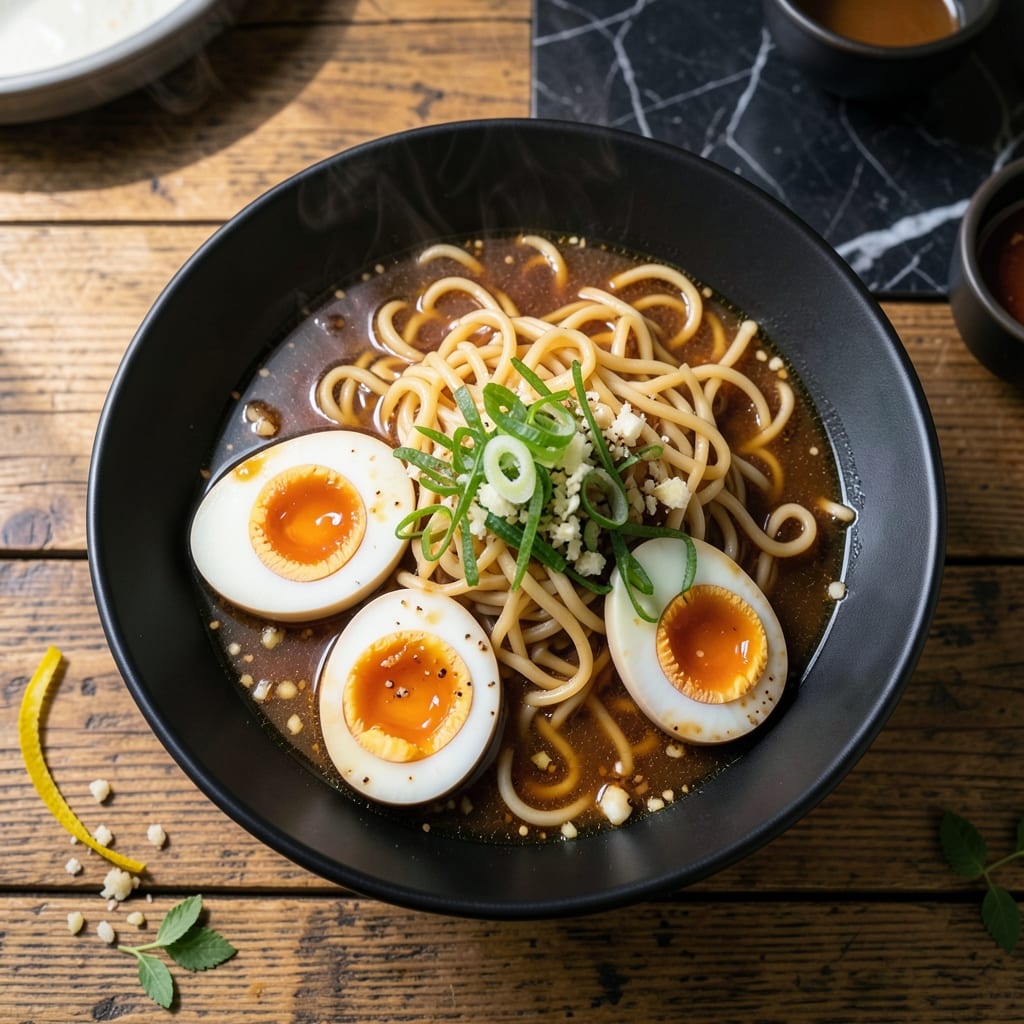
This dish elevates instant ramen from college staple to umami-rich comfort food with minimal effort. I developed this method after discovering how perfectly soft-boiled eggs nest into steaming noodles.
The secret is timing—6-minute eggs create that ideal runny yolk that coats every strand of ramen. Meanwhile, the noodles soak up the egg’s richness while maintaining their springy texture.
You’ll end up with a bowl where creamy yolk, savory broth, and chewy noodles come together in every bite. The contrast between the velvety egg and the noodle’s slight resistance makes it irresistibly satisfying.
Use any ramen flavor packet or create your own seasoning blend. The technique works every time.
Ingredients for Egg Boil Recipe with Ramen Noodles
Pantry staples plus eggs make this comforting bowl come together fast.
| Ingredient | Amount | Notes |
|---|---|---|
| Instant Ramen Noodles 🍜 | 2 packages | Discard seasoning or save for broth |
| Large Eggs 🥚 | 2 whole | Cold from refrigerator for easier peeling |
| Water 💧 | 4 cups | For boiling noodles and eggs |
| Soy Sauce 🫙 | 2 tbsp | Low-sodium preferred for control |
| Rice Vinegar 🍚 | 1 tbsp | Adds bright umami depth |
| Sesame Oil 🫒 | 1 tsp | Toasted for nutty aroma |
| Green Onions 🧅 | 2 whole | Thinly sliced for garnish |
| Garlic Cloves 🧄 | 2 cloves | Minced for seasoning |
| Ginger Root 🌿 | 1 piece | 1-inch, grated for freshness |
| Red Pepper Flakes 🌶️ | ½ tsp | Adjust to spice preference |
| Sesame Seeds 🌰 | 1 tsp | Toasted for garnish |
| Chili Oil 🔥 | 1 tsp | Optional for extra heat |
[recipe_ingredient_scaler]
The eggs are everything here. Cold large eggs from the fridge peel cleaner after boiling—don’t use room temp. I grab Maruchan or Nongshim ramen from any grocery store, but Trader Joe’s has great organic options. The noodles should be cooked just until tender, not mushy, so they soak up that yolk without falling apart. Fresh ginger and garlic make a huge difference (skip the powdered stuff).
No rice vinegar? Apple cider vinegar at half the amount works in a pinch. Missing sesame oil? Neutral oil plus a drop of toasted sesame saves the day. The soy sauce can be tamari for gluten-free, or coconut aminos for a milder taste. Green onions are flexible—chives or scallions do the same job. For extra richness, a spoonful of miso paste in the broth is next-level (find it at Whole Foods).
Leftovers? Not really a thing here—the noodles absorb the broth fast. But if you must, store components separately for 1-2 days. The eggs peel best right after boiling, so time it right. And yes, double the batch—you’ll want seconds.
Why You’ll Love This Recipe
- One Pot Wonder: I just dump everything in, boil, and it’s done—no extra pans or fancy steps.
- Umami Bomb: The soy sauce and rice vinegar turn the broth into this rich, tangy base that soaks into every noodle and egg.
- Dorm Room Hero: Honestly, it’s my go-to when I need something warm, filling, and fast with zero effort.
Step-by-Step Instructions for Egg Boil with Ramen Noodles
This method transforms simple ingredients into a restaurant-worthy dish with minimal effort.
Step 1: Prepare the Aromatic Broth Base
In a medium saucepan, combine the 4 cups Water with 2 tbsp Soy Sauce, 1 tbsp Rice Vinegar, 1 tsp Sesame Oil, minced 2 cloves Garlic Cloves, and grated 1 piece Ginger Root. Bring to a gentle boil over medium-high heat.
This isn’t just boiling water—it’s creating a flavor-packed broth that will infuse both the instant ramen noodles and the eggs. The soy sauce adds depth, while the rice vinegar brightens the overall profile. You’ll start to smell the garlic and ginger as the liquid heats, which is your cue that the aromatics are activating.
Step 2: Soft-Boil the Eggs to Silky Perfection
Using a slotted spoon, carefully lower the 2 whole Large Eggs (cold from the refrigerator) into the simmering broth. Maintain a gentle boil and cook for exactly 6 minutes for runny yolks or 7 minutes for slightly firmer centers.
The cold eggs prevent cracking when they hit the hot liquid. Watch for the whites to set completely while the yolks remain fluid—this is the ideal texture for this dish. If you prefer a jammy yolk, let them go for 8 minutes, but don’t exceed that or you’ll lose the creamy center we’re after.
Step 3: Cook the Ramen Noodles in the Same Broth
After removing the eggs with a slotted spoon, add the 2 packages Instant Ramen Noodles (discarding any included seasoning packets) to the same broth. Cook for 2-3 minutes until the noodles are tender but still have a slight bite.
The noodles will absorb all that garlicky, gingery, umami-rich liquid, turning them into something far more exciting than standard ramen. Stir occasionally to prevent sticking, but avoid overworking them—they should glide through the broth with a silky resistance.
Step 4: Assemble and Garnish for Maximum Flavor
Peel the eggs under running water to remove any shell fragments, then place one in each serving bowl. Divide the cooked noodles and broth between the bowls, creating a nest for the eggs to rest in.
Garnish with thinly sliced 2 whole Green Onions, 1 tsp Sesame Seeds, 0.5 tsp Red Pepper Flakes, and a drizzle of 1 tsp Chili Oil if you want extra heat. The green onions add freshness, while the sesame seeds provide a nutty crunch that contrasts beautifully with the soft eggs and chewy noodles.
Pro Tips For Making Egg Boil Recipe With Ramen Noodles
- Boil Eggs Separately: I learned this the hard way—cook the eggs in a separate pot first for 6-7 minutes, then add them to the ramen broth. Otherwise, the noodles overcook while waiting for the eggs to set.
- Use Less Water: Sounds weird, but it works: use about 1.5 cups of water instead of the full 2 cups for the ramen. The soy sauce and rice vinegar concentrate better, giving the broth a richer flavor.
- Shock the Eggs: Plunge the boiled eggs into ice water immediately after cooking. This stops the carryover cooking and makes them easier to peel—no more green yolks or rubbery whites.
- Add Vinegar Early: Stir the rice vinegar into the broth right when you start cooking the noodles. It mellows out the sharpness and balances the soy sauce, rather than tasting like an afterthought.
Dietary Considerations for egg boil recipe with ramen noodles
Gluten-Free Option
Swap regular ramen for gluten-free rice noodles or chickpea-based ramen—both hold up well in the broth. I like Lotus Foods rice ramen for its chewy texture. Use tamari instead of soy sauce to keep it completely gluten-free. 💪
Vegetarian Adaptation
This dish works great with vegetable broth and vegetarian ramen brands like Nongshim Soon Veggie. The eggs provide protein, but you could add tofu cubes for extra substance. Skip the seasoning packets as they often contain meat derivatives.
Lower Sodium Version
Use low-sodium soy sauce or reduce it to 1 tbsp and supplement with a dash of fish sauce for umami. I often add mushroom powder for depth without extra salt. The rice vinegar and sesame oil already contribute significant flavor.
Egg Allergy Workaround
Replace eggs with silken tofu cubes—they soak up the broth beautifully. Marinate them in the seasoned liquid for 10 minutes before adding to the noodles. The texture won’t be identical, but the flavor payoff is still satisfying.
For a different approach, use avocado slices for creaminess instead.
Dairy-Free Note
This recipe is naturally dairy-free, but watch your ramen brand—some instant varieties contain milk powder. Stick to Maruchan or Nongshim for reliable dairy-free options. The sesame oil and chili oil add richness without any dairy products. ✨
Nutrition Facts
Frequently Asked Questions
Can I use pre-boiled eggs?
Not recommended. Freshly boiled eggs in the same broth absorb more flavor and maintain the perfect 6-minute runny yolk texture. Pre-boiled eggs may overcook when reheated.
What if my eggs crack while boiling?
Pierce the rounded end with a pin before boiling to release air. Use room temperature eggs and lower them gently with a spoon. If they crack, the broth will still infuse them with flavor.
Can I add other proteins?
Try sliced pork or shrimp cooked in the broth before adding noodles. For vegetarians, tofu cubes soak up the flavors beautifully.
How do I store leftovers?
Store components separately in airtight containers for up to 2 days. Reheat noodles in broth, then place peeled eggs on top. Avoid microwaving eggs—they turn rubbery.

Trained in classic French technique but raised on slow-cooked ribs and spicy rubs, she blends culinary skill with smoke and soul.
- Recipe for Boneless Pork Chops in Cast Iron Skillet: Sear and Baste to Juicy Perfection - October 3, 2026
- Recipe for Boneless Cross Rib Roast: Slow-Roasted Beef with Herb Crust - October 3, 2026
- Hamburgers in Sauce Recipe Crock Pot: Slow-Cooked Savory Delight - October 3, 2026