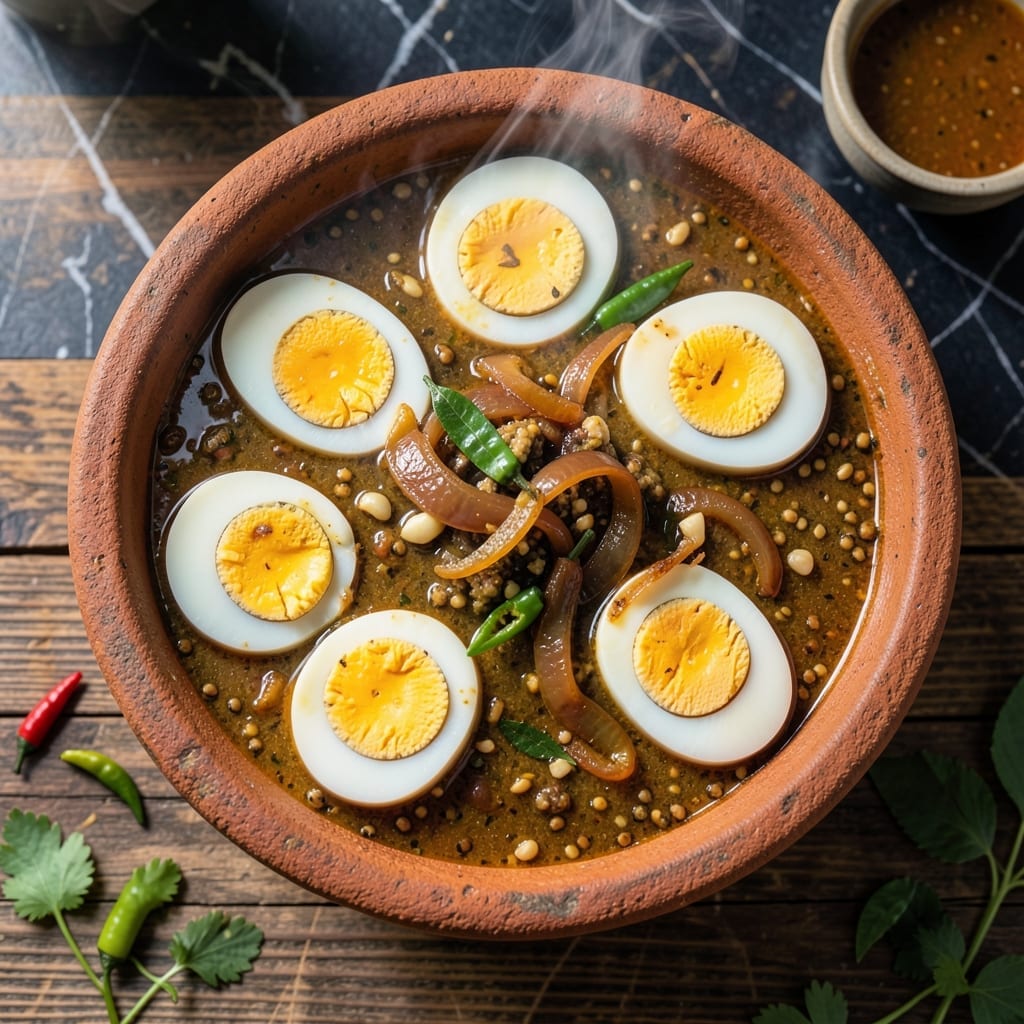
This Kerala-style egg curry captures the essence of South Indian flavor with its tender boiled eggs and aromatic spice blend.
I developed this recipe to bring authentic taste to home kitchens, using simple techniques and readily available ingredients. The eggs absorb the rich coconut milk and spice-infused sauce, creating a harmonious balance.
The dish comes together in one pot, with traditional spices like turmeric, cumin, and curry leaves building layers of complexity. It’s a foolproof method for achieving restaurant-quality results.
Serve with steamed rice or flatbread to soak up every last bit of the fragrant sauce. This is comfort food at its most vibrant.
Ingredients for Egg Curry Recipe Kerala
Aromatic spices meet tender eggs in this classic South Indian dish with readily available ingredients.
| Ingredient | Amount | Notes |
|---|---|---|
| Large Eggs 🥚 | 8 whole | Hard-boiled and peeled |
| Coconut Oil 🥥 | 2 tbsp | Or vegetable oil for frying |
| Yellow Onion 🧅 | 1 whole | Finely chopped for base |
| Fresh Ginger 🌿 | 1 tbsp | Peeled and minced |
| Garlic Cloves 🧄 | 4 cloves | Minced for aromatic base |
| Fresh Green Chili Peppers 🌶️ | 2 whole | Slit lengthwise for heat |
| Fresh Curry Leaves 🍃 | 10 whole | Roughly torn for flavor |
| Ground Turmeric 🌶️ | 1 tsp | For color and earthiness |
| Ground Cumin 🌿 | 1 tsp | Toasted for depth |
| Ground Coriander 🌿 | 1 tbsp | Essential South Indian spice |
| Garam Masala 🌶️ | 1 tsp | Warm spice blend finish |
| Diced Tomatoes 🍅 | 1 can | 14.5 oz can, undrained |
| Coconut Milk 🥥 | 1 can | 13.5 oz can, full-fat |
| Water 💧 | ½ cup | To adjust sauce consistency |
| Fresh Cilantro 🌿 | ¼ cup | Chopped for garnish |
| Kosher Salt 🧂 | 1 tsp | Adjust to taste |
[recipe_ingredient_scaler]
The curry leaves are non-negotiable for authenticity. Indian grocery stores carry them fresh or frozen—Patel Brothers is a reliable chain. Coconut milk must be full-fat (Thai Kitchen or Chaokoh brands) for the creamy texture that defines this dish. Garam masala quality varies wildly; MDH or Everest offer consistent flavor. Fresh ginger and garlic are essential—pre-minced versions lack the bright, sharp notes needed for the sauce base.
No fresh curry leaves? Dried curry leaves at one-third the amount work in a pinch, though the flavor is less vibrant. Fresh cilantro can be swapped with parsley (less authentic but serviceable). Light coconut milk will thin the sauce unpleasantly—stick with full-fat. For heat adjustment, reduce green chilies to one or add half a teaspoon of cayenne instead. Tomato paste plus water can replace canned tomatoes if necessary.
The curry develops flavor overnight. Store in an airtight container for up to 3 days in the fridge, or freeze for 1 month. Reheat gently to avoid separating the coconut milk. Always add cilantro fresh when serving—it loses its brightness when cooked.
Why You’ll Love This Recipe
- One-Pot Wonder: I love that everything cooks in a single pan—just sauté the onions, ginger, and garlic in coconut oil, add eggs, and let the flavors meld.
- Coconut Oil Magic: The coconut oil and fresh ginger give this curry a rich, aromatic depth that’s purely Kerala.
- Weeknight Savior: Honestly, this is my go-to for busy evenings—ready in 20 minutes and pairs with anything from rice to bread.
Step-by-Step Instructions for Egg Curry Kerala
Master this authentic technique for perfectly tender eggs in a rich, aromatic coconut-based sauce.
Step 1: Hard-Boil and Peel the Eggs
Place the 8 whole Large Eggs in a saucepan and cover with cold water by about 1 inch. Bring to a boil over high heat, then immediately reduce to a gentle simmer. Cook for exactly 9 minutes—this timing ensures the yolks remain slightly creamy while the whites are fully set.
Drain the hot water and transfer the eggs to an ice bath to stop the cooking process. Once cool, peel them carefully under running water to help remove any stubborn shell fragments. Pat dry with paper towels and set aside. The eggs should be completely smooth with no visible cracks.
Step 2: Build the Aromatic Base
Heat the 2 tbsp Coconut Oil in a heavy-bottomed pot over medium heat until shimmering. Add the 1 whole Yellow Onion (finely chopped) and sauté for 5-6 minutes until translucent and lightly golden. The onions should soften completely but not brown.
Add the 1 tbsp Fresh Ginger (minced), 4 cloves Garlic Cloves (minced), 2 whole Fresh Green Chili Peppers (slit lengthwise), and 10 whole Fresh Curry Leaves (roughly torn). Sauté for 2-3 minutes until the raw aroma dissipates and the mixture becomes fragrant. Stir constantly to prevent burning.
Step 3: Toast Spices and Develop Flavor
Add the 1 tsp Ground Turmeric, 1 tsp Ground Cumin, and 1 tbsp Ground Coriander to the pot. Stir constantly for 30-45 seconds until the spices become deeply aromatic and slightly darker in color. This toasting step is crucial—it transforms the raw spice powders into a complex, nutty foundation.
Immediately add the 1 can Diced Tomatoes (undrained) and 1 tsp Kosher Salt. Cook for 4-5 minutes until the tomatoes break down and the mixture thickens slightly. You’ll notice the oil starting to separate at the edges when it’s ready.
Step 4: Simmer the Eggs in Coconut Sauce
Pour in the 1 can Coconut Milk and 0.5 cup Water, stirring to combine. Bring to a gentle simmer over medium-low heat. Carefully add the peeled eggs and simmer for 8-10 minutes, occasionally spooning the sauce over them to absorb the flavors.
The sauce should reduce slightly and coat the back of a spoon. The eggs will plump slightly as they soak up the aromatic liquid. Taste and adjust salt if needed, remembering that the sauce will concentrate as it simmers.
Step 5: Finish with Garam Masala and Garnish
Sprinkle the 1 tsp Garam Masala over the curry and stir gently to incorporate. This final spice addition adds warmth and complexity. Remove from heat and let rest for 5 minutes to allow the flavors to meld completely.
Garnish with the 0.25 cup Fresh Cilantro (chopped) just before serving. The cilantro adds a bright, fresh contrast to the rich, spiced sauce. Serve with steamed rice or warm naan to soak up every bit of the fragrant sauce.
Pro Tips For Making Egg Curry Recipe Kerala
- Boil Eggs Firm: Hard-boil the eggs for exactly 9-10 minutes—any less and the yolks turn crumbly in the curry, any longer and they get that unappetizing green ring. I learned this the hard way after serving a few too-soft eggs that fell apart.
- Bloom Spices Slow: Cook the onion, ginger, and garlic in coconut oil on medium-low until golden, about 8-10 minutes. Rushing this step leaves the curry with a raw, harsh flavor that no amount of simmering can fix.
- Skip Cold Eggs: Plunge boiled eggs into ice water immediately to stop the cooking, then peel under running water. Sounds tedious, but it keeps the whites smooth and makes peeling a breeze.
- Use Fresh Coconut Oil: Old coconut oil loses its aroma—fresh, fragrant oil makes a real difference in the depth of flavor. My grandmother swore by this, and she was right: stale oil tastes flat in the final dish.
Flavor Customization for egg curry recipe kerala
Spice Level Adjustments
For a milder version, reduce the green chilies to 1 or remove seeds before adding. I often replace them entirely with ½ tsp cayenne pepper for consistent heat without the texture. This keeps the dish approachable for sensitive palates. 🌶️
Coconut Milk Variations
Full-fat coconut milk is ideal, but for a lighter version, use ½ can coconut milk + ½ can water. The flavor will be less rich but still delicious. I’ve also tried coconut cream for an ultra-decadent sauce that coats the eggs beautifully.
Extra Protein Boost
Add 1 cup cooked chickpeas or ½ cup paneer cubes alongside the eggs for extra heartiness. This transforms the dish into a more substantial meal without overpowering the original flavors. It’s a great way to stretch leftovers too.
Herb and Spice Swaps
No fresh curry leaves? Use 1 tsp dried curry leaves (soaked in warm water) as a substitute. For a different aromatic profile, add 2 bay leaves while simmering. I love how bay leaves add a subtle depth that complements the spices.
Garnish Ideas
Beyond cilantro, try garnishing with thinly sliced green onions or toasted coconut flakes. A squeeze of fresh lime juice just before serving brightens the flavors. These small touches elevate the dish without extra effort. ✨
Regional Twist
For a Tamil Nadu variation, add 1 tsp fennel seeds when toasting the spices. This adds a sweet, licorice-like note that pairs wonderfully with the coconut. It’s a small change that makes the dish feel entirely new.
Nutrition Facts
Frequently Asked Questions
Can I use soft-boiled eggs instead?
Hard-boiled eggs work best to hold their shape during simmering. Soft-boiled yolk will overcook and crumble in the sauce. Stick with 9-minute hard-boiled eggs for perfect texture.
What if I don’t have curry leaves?
Use 1 tsp dried curry leaves soaked in warm water, or add 2 bay leaves while cooking. The flavor won’t be identical but still delicious.
How long can I store leftovers?
Keep in an airtight container in the fridge for up to 3 days. Freeze for 1 month—reheat gently to prevent coconut milk separation.

Trained in classic French technique but raised on slow-cooked ribs and spicy rubs, she blends culinary skill with smoke and soul.
- Recipe for Boneless Pork Chops in Cast Iron Skillet: Sear and Baste to Juicy Perfection - October 3, 2026
- Recipe for Boneless Cross Rib Roast: Slow-Roasted Beef with Herb Crust - October 3, 2026
- Hamburgers in Sauce Recipe Crock Pot: Slow-Cooked Savory Delight - October 3, 2026