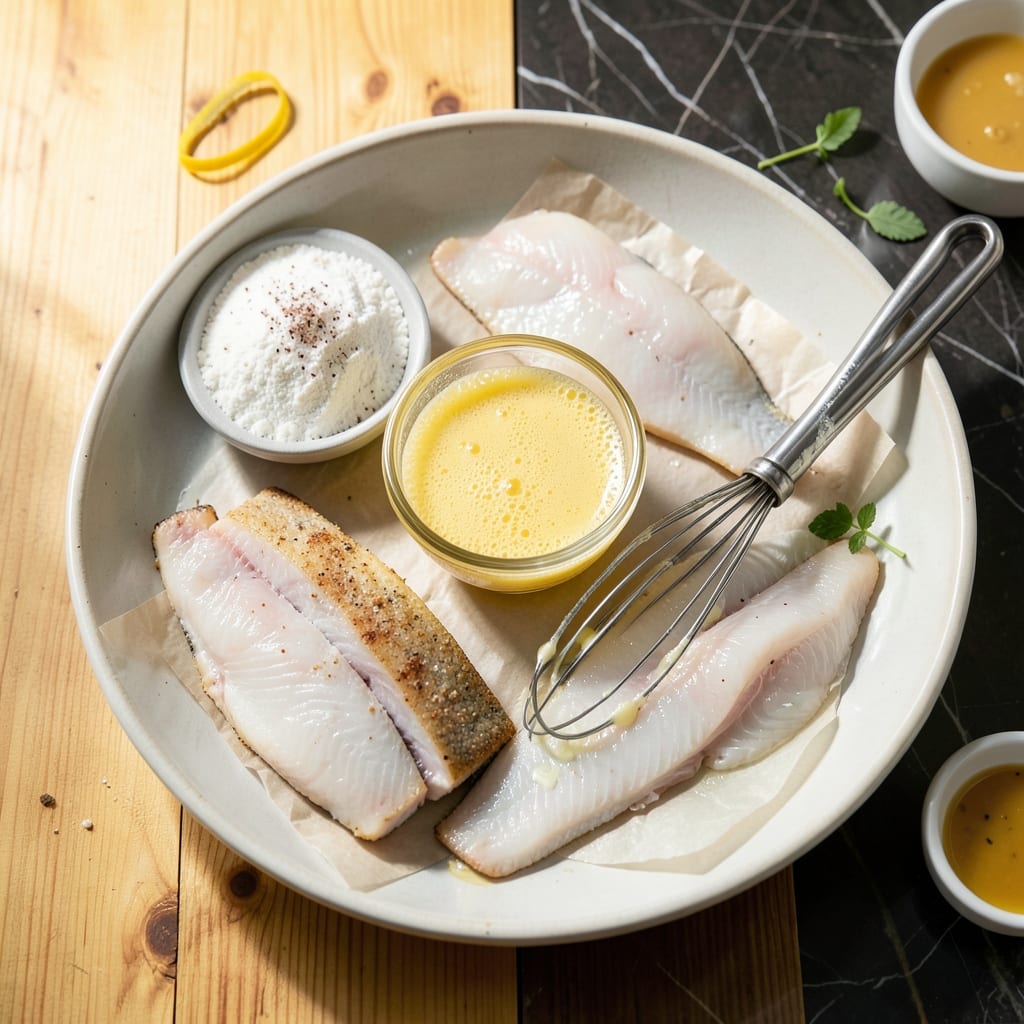
This simple egg wash technique is the key to achieving restaurant-quality fried fish at home. I learned this method in Nana Mae’s diner, where crispy coatings were non-negotiable.
The secret lies in the egg wash consistency and timing. A properly prepared wash creates a bond between fish and coating that won’t separate during frying. The result is golden, shatteringly crisp fish every time.
With precise temperature control and the right egg-to-liquid ratio, you’ll achieve professional results. The coating clings perfectly, ensuring even browning and maximum crunch without excess oil absorption.
This method works for any fish variety and delivers consistent quality. David always requests this preparation when I’m testing new recipes.
Ingredients for Egg Wash Recipe for Frying Fish
Restaurant-quality crispy fish starts with this simple but precise egg wash and coating setup.
| Ingredient | Amount | Notes |
|---|---|---|
| Large Eggs 🥚 | 2 whole | Room temperature for best adhesion |
| All-Purpose Flour 🌾 | 1 cup | For initial dredging layer |
| Cold Water 💧 | 2 tbsp | Thins egg wash to ideal consistency |
| Kosher Salt 🧂 | 1 tsp | Added to egg wash for seasoning |
| White Fish Fillets 🐟 | 1 ½ lb | Cod, haddock, or tilapia recommended |
| Cornstarch 🌾 | ½ cup | For extra crispy coating |
| Baking Powder 🧂 | 1 tsp | Lightens the coating texture |
| Black Pepper 🌶️ | ½ tsp | Freshly ground preferred |
| Paprika 🌶️ | 1 tsp | For color and mild flavor |
| Vegetable Oil 🫒 | 4 cups | For deep frying (peanut oil works too) |
| Lemon Wedges 🍋 | 4 pieces | For serving and brightness |
| Fresh Parsley 🌿 | ¼ cup | Chopped, for garnish |
[recipe_ingredient_scaler]
The egg wash consistency is non-negotiable for professional results. Room temperature eggs emulsify better with the water—Diamond Crystal kosher salt dissolves cleanly without clumping. For the fish, fresh cod or haddock from a trusted fishmonger (or Whole Foods seafood counter) yields the best texture. The cornstarch is what gives that shattering crispness—don’t substitute with flour here.
No cornstarch? Arrowroot powder at the same ratio works in a pinch. For a gluten-free version, swap the all-purpose flour for rice flour. The baking powder lightens the coating—skip it only if absolutely necessary. Any neutral oil works for frying, but peanut oil has the highest smoke point for optimal results at 375°F.
The egg wash can be prepped 30 minutes ahead (keep chilled). Fish should be patted bone-dry before dredging. Leftover fried fish stays crispy for 1-2 days if stored uncovered in the fridge—reheat in a 400°F oven to revive the crunch.
Why You’ll Love This Recipe
- One-Bowl Wonder: I just crack, whisk, and dip—no extra bowls or fancy steps. Honestly, the flour and egg mix clings perfectly to the fillets with zero mess.
- Crispy Gold Standard: That first bite with the shatter-crust and tender fish inside? It’s the reason I keep making this.
- Weeknight Rescue: Between us, this works for a quick dinner or when guests pop over unexpectedly. The egg wash keeps the fish moist while frying.
Step-by-Step Instructions for Egg Wash for Frying Fish
Here’s the method. Straightforward, tested, works every time.
Step 1: Prepare the Egg Wash Base
In a medium bowl, whisk together the 2 whole Large Eggs with the 2 tbsp Cold Water until thoroughly combined and slightly frothy. This thinning creates a lighter coating that adheres better to the fish without being too thick.
Add the 1 tsp Kosher Salt to the egg mixture and whisk again. The salt enhances flavor in the coating and helps the egg wash cling to the fish. Use room temperature eggs for best adhesion—cold eggs can cause the coating to slide off during frying.
Step 2: Create the Seasoned Flour Dredge
In a separate shallow dish, combine the 1 cup All-Purpose Flour, 1 tsp Baking Powder, 0.5 tsp Black Pepper, and 1 tsp Paprika. Whisk until evenly distributed. The baking powder lightens the texture of the coating for extra crispiness.
The paprika adds a subtle depth of flavor and gives the final product a beautiful golden hue. Make sure the flour mixture is well-aerated to prevent clumping when dredging the fish.
Step 3: Dredge and Coat the Fish Fillets
Pat the 1.5 lb White Fish Fillets completely dry with paper towels—this is critical for the coating to adhere properly. Season the fillets lightly with a pinch of salt if desired, though the egg wash and flour mixture already contain seasoning.
Dredge each fillet in the seasoned flour mixture, pressing gently to ensure full coverage. Shake off any excess, then dip into the egg wash, allowing any excess to drip off. For extra crispiness, return the fillet to the flour mixture for a second coating, pressing the 0.5 cup Cornstarch into the surface to create a textured exterior.
Step 4: Fry to Golden Perfection
Heat the 4 cups Vegetable Oil in a deep, heavy-bottomed pot to 350-375°F. Use a thermometer for accuracy—oil that’s too cool will make the fish greasy, while oil that’s too hot can burn the coating before the fish cooks through.
Carefully lower the coated fillets into the hot oil using tongs. Fry for 3-4 minutes per side until the coating is golden brown and crisp. Avoid overcrowding the pot, which can lower the oil temperature and lead to uneven cooking. Transfer the fried fish to a paper towel-lined plate to drain excess oil.
Step 5: Serve Immediately with Garnishes
Serve the fish hot, while the coating is still at its crispiest. Garnish with the 0.25 cup Fresh Parsley for a pop of color and freshness. The 4 pieces Lemon Wedges add a bright, acidic contrast that cuts through the richness of the fried fish.
For best results, serve immediately after frying. The contrast between the crispy exterior and tender, flaky fish inside is what makes this dish exceptional.
Pro Tips For Making Egg Wash Recipe For Frying Fish
- Chill the Water: Use ice-cold water in your egg wash—about 2 tablespoons—to keep the coating crisp and prevent the flour from clumping. I learned this the hard way after my first few batches turned gummy.
- Salt the Fish First: Pat the fillets dry, then season with kosher salt 10 minutes before dipping. It draws out excess moisture so the egg wash sticks better.
- Skip the Overmixing: Whisk the egg and water just until combined—about 10 seconds. Overmixing creates a dense wash that slides right off the fish.
- Use Day-Old Eggs: Sounds weird, but it works: slightly older eggs thin out just enough to coat the fillets evenly without being too thick. Fresh eggs can make the wash too viscous.
Pro Cooking Tips for Great egg wash recipe for frying fish
Egg Wash Consistency
I always use room temperature eggs for the wash—they emulsify better with 2 tbsp cold water. Whisk until slightly frothy but not too thick. This texture helps the coating cling perfectly to the fish without sliding off during frying. 💡
Double-Coating Secret
For extra crunch, I dredge the fish in flour, dip in egg wash, then return to flour mixed with cornstarch. Press the cornstarch into the surface to create those crispy, textured ridges that shatter when you bite into them.
Oil Temperature Control
Maintain 350-375°F oil temperature using a thermometer—I trust my ThermoWorks model. Too cool and the fish absorbs oil; too hot and the coating burns before the fish cooks through. David swears by peanut oil for its high smoke point.
Frying Technique
Use a deep, heavy-bottomed pot and avoid overcrowding. Fry 3-4 minutes per side until golden brown. I use tongs to gently lower fillets into the oil to prevent splashing. The cornstarch in the coating creates that signature crunch.
Draining and Serving
Transfer fried fish to a paper towel-lined plate to drain excess oil. Serve immediately while crispy—this is non-negotiable for that perfect texture. The contrast between the crunchy exterior and tender fish is what Nana Mae taught me to aim for.
Equipment Tip
Invest in a good slotted metal spatula for flipping. It allows oil to drain while keeping the coating intact. I also keep a splatter screen handy to avoid kitchen messes during frying. 🔥
Nutrition Facts
Frequently Asked Questions
Why add water to the egg wash?
Thinning with 2 tbsp cold water creates a lighter, more fluid mixture that coats evenly without being too thick. This helps the flour adhere better and prevents clumping during frying.
Can I use milk instead of water?
Yes, whole milk works as a substitute and adds richness. However, water is preferred for a lighter, crispier coating. Avoid thick liquids like cream, which can make the wash too heavy.
What if my coating keeps falling off?
Pat the fish completely dry before dredging and ensure the oil is at 350-375°F. Cold fish or wet surfaces prevent proper adhesion. Let the coated fish rest 5 minutes before frying.
Can I make this gluten-free?
Swap the all-purpose flour for rice flour or a gluten-free blend. The cornstarch and egg wash will still create a crispy coating. Just ensure all ingredients are certified gluten-free.

Trained in classic French technique but raised on slow-cooked ribs and spicy rubs, she blends culinary skill with smoke and soul.
- Recipe for Boneless Pork Chops in Cast Iron Skillet: Sear and Baste to Juicy Perfection - October 3, 2026
- Recipe for Boneless Cross Rib Roast: Slow-Roasted Beef with Herb Crust - October 3, 2026
- Hamburgers in Sauce Recipe Crock Pot: Slow-Cooked Savory Delight - October 3, 2026