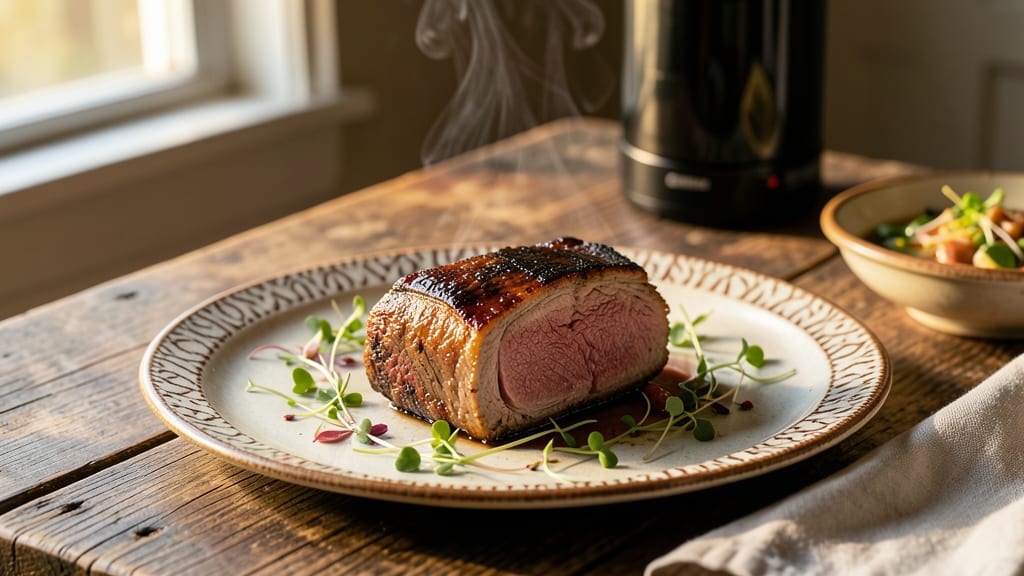
Mastering electric smoker pork tenderloin delivers juicy, tender perfection that rivals traditional pit cooking—without the fuss of a charcoal fire. 💫 I perfected this method after years of smoking whole hogs in Charleston, adapting the technique for tenderloin’s leaner profile.
The key? Precise temperature control and a wood blend that enhances rather than overpowers the natural sweetness of the meat.
This recipe transforms a simple cut into a showstopper with minimal effort—just 2 hours of hands-off smoking time. I use a mix of hickory and applewood for depth without bitterness, while a light apple cider glaze during the last 30 minutes adds a caramelized finish.
The electric smoker’s consistent heat ensures even cooking, eliminating the guesswork of charcoal fluctuations.
What you’ll end up with is perfectly pink, melt-in-your-mouth pork slices that stay moist even when sliced thin. The exterior develops a subtle bark from the wood smoke, while the interior remains succulent.
This is the kind of dish that makes weeknight dinners feel like a Southern feast—no fancy equipment required.
Pair it with classic sides like creamy coleslaw or buttery roasted potatoes for a complete meal. The tenderloin’s mild flavor also makes it ideal for serving to families or guests who prefer leaner cuts. Let’s get started on creating your smoker masterpiece.
Ingredients for electric smoker pork tenderloin
Simple ingredients for a showstopper: tender pork, smoky wood, and a touch of sweetness.
| Ingredient | Amount | Notes |
|---|---|---|
| Pork Tenderloin 🥩 | 1 ½ lb | Center-cut, trimmed of silver skin |
| Apple Cider Vinegar 🍎 | ½ cup | For brining solution |
| Kosher Salt 🧂 | 2 tbsp | Diamond Crystal preferred |
| Brown Sugar 🍚 | 1 tbsp | Light or dark |
| Black Peppercorns 🌶️ | 1 tsp | Freshly cracked |
| Garlic Cloves 🧄 | 4 cloves | Smashed for brining |
| Apple Cider 🍎 | ¼ cup | For glaze base |
| Honey 🍯 | ¼ cup | Wildflower preferred |
| Hickory Wood Chips 🌳 | 1 package | Unsoaked, 100% pure |
| Applewood Chips 🍏 | ½ package | Unsoaked, 100% pure |
| Butter 🧈 | 2 tbsp | Unsalted, softened |
| Fresh Thyme Leaves 🌿 | ¼ cup | Chopped, stems removed |
| Yellow Onion 🧅 | 1 whole | Thinly sliced for garnish |
[recipe_ingredient_scaler]
The pork tenderloin is your star—center-cut is non-negotiable for tenderness. I grab mine from Whole Foods or my local butcher, asking for the most even piece possible. Hickory and applewood are the dynamic duo here: hickory for that classic smoky depth, applewood to keep it from overpowering the pork’s natural sweetness. If you’re using a pre-mixed wood blend, check for 100% pure chips—no fillers. The apple cider vinegar and garlic in the brine? Trust me, they’re doing heavy lifting for flavor infusion.
No apple cider vinegar? White vinegar or lemon juice works in a pinch (same amount). Running short on honey? Maple syrup is a perfect swap—just use the same quantity. For the wood chips, Trader Joe’s has great pre-packaged blends if you don’t want to mix your own. The butter and thyme in the glaze might seem small, but they add that restaurant-quality richness. I always double-check my wood chips are completely unsoaked—wet wood chips create steam instead of smoke, and that’s a recipe disaster (literally).
This keeps beautifully for 3-4 days in the fridge, but honestly tastes even better the next day as the flavors meld. I slice it against the grain into 1/4-inch thick slices for perfect bite-sized pieces. For make-ahead prep, smoke the tenderloin, let it cool completely, then wrap tightly in plastic wrap. The glaze can be made a day ahead and reheated gently before applying. Leftovers reheat perfectly in a 350°F oven for 10-15 minutes—just cover with foil to keep them moist.
Why You’ll Love This Recipe
- No-Fuss Prep: The brining happens while you’re asleep—just toss the pork in that vinegar and salt mix the night before, and wake up to a flavor bomb ready to smoke. Honestly, the hardest part is resisting the urge to check on it before morning.
- Caramelized Magic: That honey-thyme glaze? It’s not just sweet—it’s smoky-sweet with a crispy edge that melts into the tenderest center. The garlic and thyme in the brine make every bite sing, like a restaurant-worthy shortcut.
- Leftovers That Shine: Reheats like a dream (just pop it in the oven for 10 minutes), and honestly tastes even better the next day. Pack it for lunches, slice it for sandwiches, or serve it cold in wraps—it’s that versatile. My kids even ask for seconds.
- Budget-Friendly Luxury: A 1.5 lb tenderloin isn’t cheap, but the brining and smoking make it feel like a splurge without the price tag. That hickory-applewood combo? Instant restaurant vibes for under $20 if you’re smart about leftovers.
Step-by-step instructions for electric smoker pork tenderloin
Here’s how to transform simple ingredients into restaurant-quality smoked pork tenderloin.
🔥 Step 1: Create the Brine and Prep the Pork
In a large resealable bag, combine the ½ cup apple cider vinegar, 2 tbsp kosher salt, 1 tbsp brown sugar, 1 tsp black peppercorns, and 4 smashed garlic cloves. Seal the bag and massage until the salt dissolves completely. Add the 1½ lb pork tenderloin and coat it thoroughly in the brine mixture.
Place the bag in the refrigerator and let the pork tenderloin brine for at least 4 hours (overnight works best). This step ensures the meat stays juicy and develops deep flavor throughout. Real talk: Don’t skip this—proper brining is what makes the difference between dry and perfectly tender pork.
🍳 Step 2: Prepare the Smoker and Dry the Pork
Set up your electric smoker by adding 1 package hickory wood chips and ½ package applewood chips to the wood chip tray. Preheat the smoker to 225°F—this low-and-slow temperature is crucial for even cooking and maximum tenderness. Let it smoke for 15 minutes to establish a steady temperature before adding the pork.
Remove the pork from the brine and pat it dry with paper towels. I press down firmly on all sides—this ensures a better bark and prevents steam from interfering with the smoking process. Let the pork sit at room temperature for 30 minutes while the smoker comes up to temperature.
🥘 Step 3: Smoke the Pork to Perfect Tenderness
Place the pork tenderloin directly on the smoker grates, away from any water pans. Smoke it for 1 hour to 1 hour 15 minutes, or until the internal temperature reaches 145°F on a meat thermometer. You’ll know it’s ready when the pork releases easily from the grates and the edges begin to develop a light bark.
Here’s where it gets fun: every 30 minutes, brush the pork with a mixture of ¼ cup apple cider, ¼ cup honey, and ¼ cup fresh thyme leaves. This glaze keeps the meat moist and adds a beautiful caramelized crust. I use a basting brush for even coverage—don’t be shy, you want that glaze to stick.
🔪 Step 4: Rest and Finish with Butter and Onion
Once the pork reaches 145°F, remove it from the smoker and transfer it to a cutting board. Tent loosely with foil and let it rest for 15 minutes. This resting period is critical—it allows the juices to redistribute, ensuring each slice stays juicy and tender.
While the pork rests, melt the 2 tbsp butter in a small saucepan over low heat. Add the thinly sliced yellow onion and cook for 2-3 minutes until softened but not browned. Pour this butter-onion mixture over the rested pork, letting it soak in during the final 5 minutes of resting time. The butter adds richness, while the onion brings a touch of sweetness that complements the smoky flavors.
🍽️ Step 5: Slice and Serve with Confidence
After resting, slice the pork tenderloin into ½-inch thick medallions against the grain. The meat should be fork-tender with a beautiful mahogany bark and juices running clear. Serve immediately with any accumulated pan juices spooned over the top for extra flavor.
This method guarantees perfectly tender, juicy pork with a smoky-sweet glaze that’ll impress anyone at your table. The key is patience—low and slow smoking with proper brining and resting ensures every bite is perfect. You’ve got this!
Pro Tips For Making Electric Smoker Pork Tenderloin
- Smash That Garlic: Don’t just chop those 4 cloves—mash them flat with the side of your knife or a heavy pan. The exposed surface area lets the garlic’s punch seep deeper into the pork during brining, giving you that subtle, layered flavor instead of just a hint.
- Test the Smoker First: Before you even touch the pork, let the smoker run with just the wood chips for 15 minutes at 225°F. This burns off any weird factory smells and stabilizes the temperature—trust me, your pork will thank you when it doesn’t end up tasting like a campfire mishap.
- Glaze Like You Mean It: When brushing the pork with the apple cider, honey, and thyme mix, don’t be shy—go for full coverage. The glaze isn’t just for show; it’s what caramelizes into that sticky, sweet bark. I used to skimp, and the results were noticeably less impressive.
- Rest Under Foil, Not Plastic: Tent the rested pork with foil, not plastic wrap. Foil lets it breathe a little, keeping the meat moist without turning it into a sauna. Plastic wrap traps steam, and that’s how you end up with soggy slices instead of juicy perfection.
Make-ahead tips for leftovers
Prep Ahead for Stress-Free Smoking
I always prep the glaze components the night before—mixing ¼ cup apple cider, ¼ cup honey, and ¼ cup chopped thyme in a small jar. Store it in the fridge, and you’ll save 10 minutes of prep time during smoking.
The flavors meld beautifully overnight, and you can simply brush it on without any last-minute rushing. 💡
Brine Overnight for Maximum Flavor
While the glaze rests, let the pork tenderloin brine overnight instead of just the minimum 4 hours. This deepens the flavor penetration and ensures every bite is packed with garlic, salt, and sweetness.
I’ve found that 12-16 hours in the fridge transforms the pork from good to extraordinary. Just remember to pat it dry thoroughly before smoking—excess moisture will steam instead of smoke.
Wood Chip Prep Saves Time
Unsoaked wood chips are a game-changer, but they do require a little foresight. Soak your hickory and applewood chips in water for 20-30 minutes the night before if you prefer the traditional method. However, I’ve switched to unsoaked chips because they create more consistent smoke without the risk of over-soaking.
Store them in a sealed container in the fridge until ready to use—just drain before adding to the smoker. 🌳
Make-Ahead Slices for Meal Prep
After smoking and resting, slice the pork into ½-inch medallions and store them in airtight containers. The glaze will keep the slices moist for up to 3 days in the fridge. When ready to serve, reheat in a 350°F oven for 5-7 minutes to revive the bark.
I like to add a splash of apple cider to the pan before reheating—it helps keep the meat juicy and adds a subtle tang.
Freezing the Glaze Base
If you’re planning to smoke pork tenderloin multiple times, freeze the glaze base in ice cube trays. Each cube contains 1 tbsp apple cider, 1 tbsp honey, and 1 tbsp thyme—just thaw and mix with a little water to brush on during smoking.
This way, you always have a fresh batch ready without the last-minute rush. I keep a stash in my freezer for quick weeknight meals. ✨
Nutrition facts
Frequently asked questions
Why does the pork tenderloin need to brine before smoking?
The 4-hour brine (or overnight for best results) infuses the meat with flavor while keeping it juicy. Apple cider vinegar, garlic, and brown sugar create a perfect balance of tang, sweetness, and savory notes that penetrate deep into the lean pork. Skipping this step often leads to dry, flavorless results—trust the process!
Can I use different wood chips than hickory and applewood?
Hickory and applewood work beautifully together, but you can experiment with cherry or pecan for a sweeter profile. Avoid strong woods like mesquite unless you want an overpowering taste. The key is consistency—stick to 100% pure, unsoaked chips for the best smoke flavor.
What if my pork tenderloin isn’t perfectly even in thickness?
No worries! Just place the thicker sections closer to the heat source and rotate the pork quarter-turns every 30 minutes to ensure even cooking. Use a meat thermometer to check the thickest part—it should reach 145°F throughout. This method guarantees fork-tender results regardless of shape.
How do I know when the pork is done without cutting into it?
Watch for these visual cues: the pork should release easily from the grates, and the edges will develop a light bark. Press gently with your finger—it should feel springy but yield slightly. If it’s still firm, smoke for another 15-20 minutes. The internal temp is your ultimate guide, but these signs help avoid overcooking.
Can I make the glaze ahead of time and store it?
Yes! Mix the ¼ cup apple cider, ¼ cup honey, and ¼ cup thyme the night before and refrigerate. Stir it gently before using—it should thicken slightly but remain usable. For extra convenience, freeze in small portions for future smoker sessions. This saves precious time on busy weeknights!

Trained in classic French technique but raised on slow-cooked ribs and spicy rubs, she blends culinary skill with smoke and soul.
- Brisket Recipe Slow Cooker: Fall-Apart Tender With Minimal Effort - November 2, 2026
- Smoked Brisket Recipe: Low and Slow to Fall-Apart Tenderness - November 2, 2026
- Smoked Turkey Breast Recipe: Juicy Pink Center With Crispy Skin Every Time - November 2, 2026