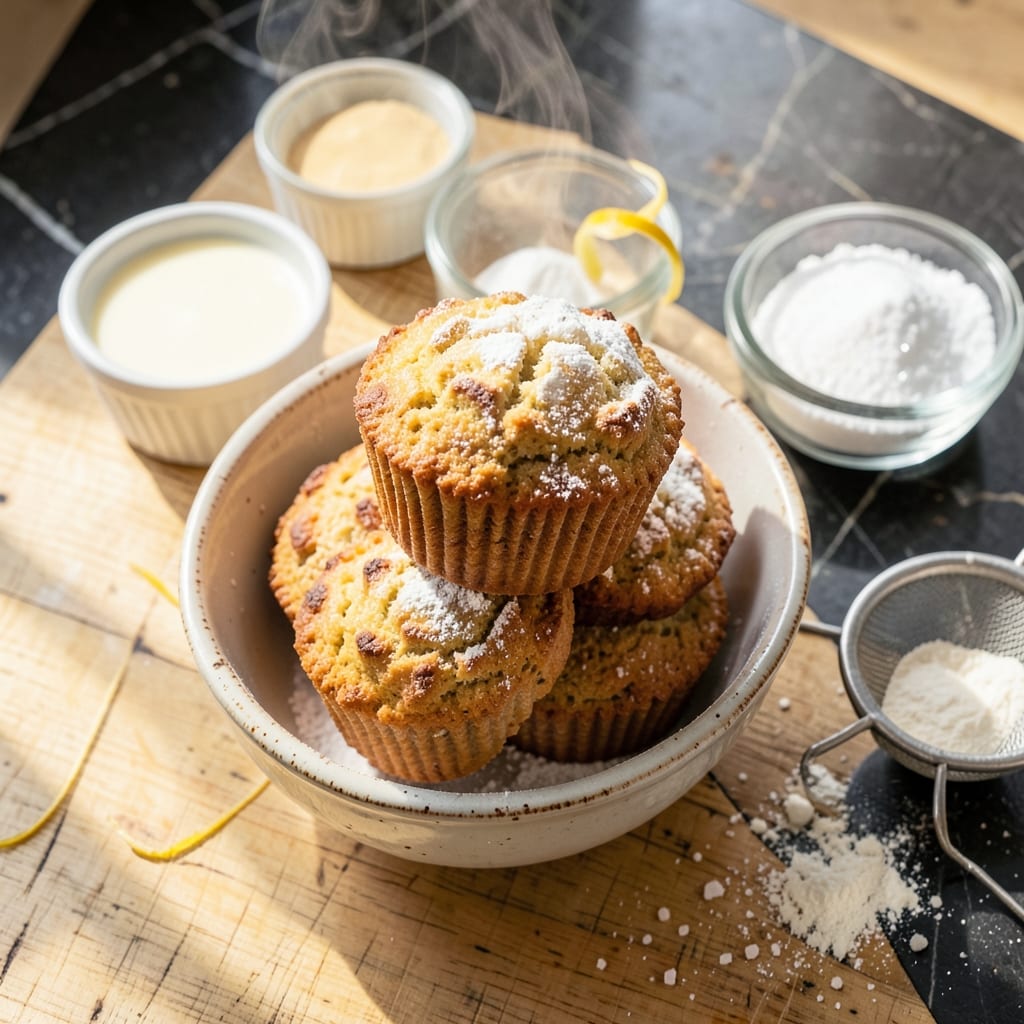
This no-yeast English muffin recipe delivers all the classic fluffiness and nooks without the long rise time. The secret lies in a simple chemical leavening combination that creates the same airy texture you love.
Using basic pantry staples like baking powder and baking soda, you can achieve light, fluffy muffins with those signature craggy surfaces. The batter comes together in minutes and cooks on a griddle, just like traditional versions.
What you get is a quick, foolproof method that produces golden muffins perfect for toasting. Each bite offers the same tender crumb and crisp edges as yeasted versions, but in a fraction of the time.
No special equipment needed—just a mixing bowl, spoon, and griddle. This approach proves you don’t need yeast to create bakery-quality English muffins at home.
Ingredients for English Muffin Recipe No Yeast
Basic pantry staples come together for bakery-style muffins at home.
| Ingredient | Amount | Notes |
|---|---|---|
| All-Purpose Flour 🌾 | 2 cups | Plus extra for dusting |
| Baking Powder 🧂 | 2 tbsp | Ensures rise without yeast |
| Baking Soda 🧂 | ½ tsp | Balances acidity in batter |
| Salt 🧂 | ½ tsp | Fine grain preferred |
| Granulated Sugar 🍚 | 1 tbsp | Enhances browning and flavor |
| Buttermilk 🥛 | 1 cup | Room temperature for best results |
| Large Egg 🥚 | 1 whole | Lightly beaten for structure |
| Unsalted Butter 🧈 | 2 tbsp | Melted and cooled slightly |
| Cornmeal 🌽 | ¼ cup | For dusting the griddle |
| Vegetable Oil 🫒 | 1 tbsp | For greasing the griddle |
[recipe_ingredient_scaler]
The buttermilk is key here—full-fat from the dairy section gives the best texture. I grab mine from Whole Foods or any major grocery; just avoid the powdered stuff. The baking powder and soda combo is the magic that replaces yeast, so check expiration dates (those old cans lose their oomph). For the flour, all-purpose is perfect, but sift it first if it’s been sitting awhile.
No buttermilk? Whole milk plus 1 tbsp vinegar or lemon juice works in a pinch (let it sit 5 minutes). Out of cornmeal? Semolina or extra flour keeps the muffins from sticking. Want a richer flavor? Swap the buttermilk for plain yogurt thinned with a splash of milk. The egg can’t be skipped though—it’s holding everything together.
Batter keeps in the fridge for 12 hours if you want to make it ahead. Cooked muffins stay fresh for 3 days in an airtight container or freeze for 1 month. Reheat in a toaster—they crisp up just like fresh.
Why You’ll Love This Recipe
- No Yeast Needed: I skip the waiting for dough to rise—baking powder and soda do the work instantly.
- Toasty Perfection: The sugar caramelizes just enough to give that classic nooks-and-crannies flavor.
- Breakfast or Brunch: I make a batch Sunday morning and they’re just as good for egg sandwiches all week.
- Pantry Staples Only: All-purpose flour and a few basics mean I can whip these up without a special grocery trip.
Step-by-Step Instructions for English Muffins No Yeast
This no-yeast method delivers those iconic nooks and crannies with minimal effort and maximum flavor.
Step 1: Combine Dry Ingredients for the Base
In a large mixing bowl, whisk together the 2 cups All-Purpose Flour, 2 tbsp Baking Powder, 0.5 tsp Baking Soda, 0.5 tsp Salt, and 1 tbsp Granulated Sugar. I like to sift these together to ensure even distribution and prevent any clumps.
This combination of leavening agents creates that signature rise without yeast. The baking powder provides immediate lift, while the baking soda reacts with the buttermilk’s acidity for extra fluffiness. You’ll notice the mixture looks slightly yellow from the sugar—that’s normal.
Step 2: Mix Wet Ingredients and Form the Batter
In a separate bowl, whisk the 1 cup Buttermilk (make sure it’s room temperature) with the 1 whole Large Egg until fully combined. Then, slowly pour in the 2 tbsp Unsalted Butter that you’ve melted and cooled slightly.
The buttermilk’s tanginess balances the richness of the butter and egg, while its acidity activates the baking soda for a better rise. The batter should look slightly lumpy at this stage—that’s perfect.
Gradually fold the wet ingredients into the dry mixture until just combined. Don’t overmix; a few flour streaks are fine. The batter will be thick but pourable, similar to pancake batter.
Step 3: Prep the Griddle and Cook the Muffins
Heat a griddle or nonstick skillet over medium-low heat and add 1 tbsp Vegetable Oil. While it warms, sprinkle 0.25 cup Cornmeal onto a plate. Lightly dust both sides of your muffin rings with the cornmeal to prevent sticking and add texture.
Place the rings on the griddle and fill each about ¾ full with batter. The cornmeal will toast slightly as the muffins cook, giving them that classic English muffin exterior. Cook for 5-7 minutes until the edges look set and bubbles form on the surface.
Step 4: Flip and Finish Cooking
Carefully flip the rings using tongs and cook for another 5-7 minutes until the muffins are golden brown and a toothpick inserted into the center comes out clean. The muffins should feel springy to the touch when done.
Remove the rings and let the muffins cook for an additional 1-2 minutes to crisp the edges. This step ensures they release easily from the rings and develop that characteristic slightly crisp exterior.
Transfer to a wire rack to cool slightly before splitting open with a fork—never a knife—to reveal those perfect nooks and crannies.
Pro Tips For Making English Muffin Recipe No Yeast
- Preheat the Griddle: Get your griddle or pan screaming hot before adding the batter—I learned this the hard way after my first few muffins came out pale and dense. Aim for medium-low heat, around 325°F, to guarantee that golden-brown crust.
- Double-check Leavening: Measure your baking powder and baking soda precisely; even an extra ¼ teaspoon can leave a bitter aftertaste. I use fresh baking powder every time, as old cans lose their lift.
- Skip Overmixing: Stir the batter just until the flour disappears—lumps are fine and actually change the outcome for the better. Overmixing develops gluten, turning your muffins tough instead of tender.
- Rest the Batter: Let the batter sit for 5-10 minutes before cooking; this gives the baking powder time to activate fully. My grandmother swore by this, and her muffins were always lighter than mine until I started doing it.
Perfect Pairings for english muffin recipe no yeast
Classic Breakfast Pairings
These muffins shine with traditional breakfast staples. I love them split and toasted with salted butter and a drizzle of local honey from my farmers market. Try them with scrambled eggs and crispy bacon for a hearty start to your day.
Sweet Toppings
For a sweeter take, spread with peanut butter and strawberry jam, or go fancy with Nutella and banana slices. My kids beg for these with cinnamon sugar sprinkled on top. A quick dusting of powdered sugar makes them feel like a special treat. 💛
Savory Creations
Use your muffins as the base for Eggs Benedict with hollandaise sauce. They also make incredible breakfast sandwiches—add fried eggs, cheddar cheese, and a slice of ham. The sturdy texture holds up perfectly to all the fillings.
Beverage Matches
A hot cup of black coffee or English breakfast tea completes the experience. For something lighter, orange juice or a green smoothie balances the richness. I always pair mine with cold milk for dipping. 🥛
Nutrition Facts
Frequently Asked Questions
Can I use regular milk instead of buttermilk?
Yes! Mix 1 cup milk with 1 tbsp lemon juice or vinegar. Let it sit for 5 minutes to curdle slightly. This creates the same tangy acidity needed to activate the baking soda.
Why do my muffins come out dense?
Overmixing the batter is the most common cause. Stir just until combined—small lumps are fine. Also, ensure your baking powder and soda are fresh; expired leaveners lose their potency.
Do I need special rings for cooking?
Muffin rings help achieve uniform shape, but you can use a greased cookie cutter or even free-form the batter. Without rings, keep portions small (¼ cup) for even cooking.
How do I get more nooks and crannies?
Don’t overfill the rings—¾ full is ideal. The batter needs room to rise and create those signature crevices. Cooking on medium-low heat also helps develop the texture.

Trained in classic French technique but raised on slow-cooked ribs and spicy rubs, she blends culinary skill with smoke and soul.
- Recipe for Boneless Pork Chops in Cast Iron Skillet: Sear and Baste to Juicy Perfection - October 3, 2026
- Recipe for Boneless Cross Rib Roast: Slow-Roasted Beef with Herb Crust - October 3, 2026
- Hamburgers in Sauce Recipe Crock Pot: Slow-Cooked Savory Delight - October 3, 2026