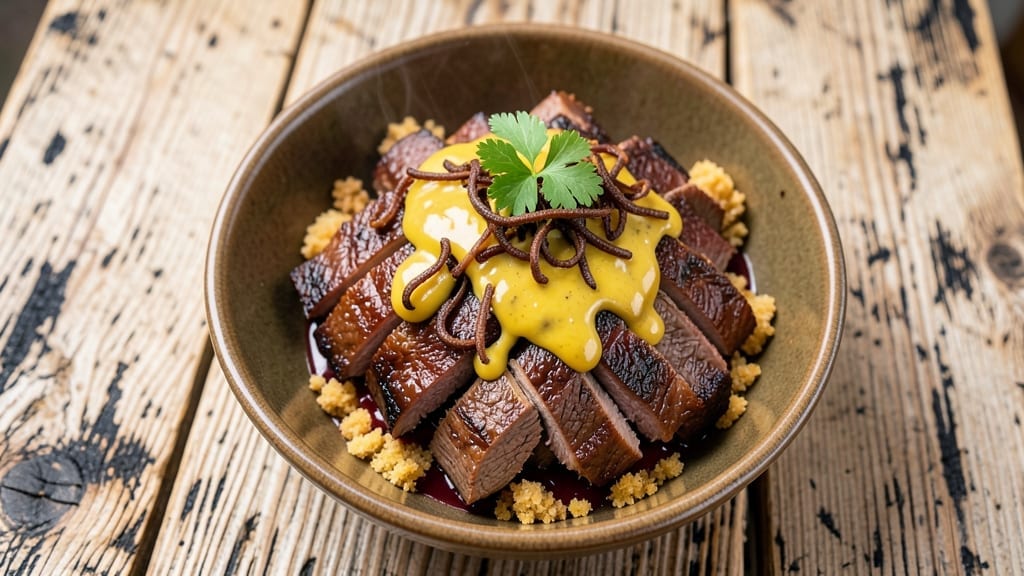
Famous Dave’s beef brisket recipe delivers that legendary tender, fall-apart texture with a signature molasses-kissed crust that’s become a Southern classic. The secret lies in low-and-slow smoking, precise temperature control, and a rub that builds that coveted bark without drying out the meat.
After years of perfecting this technique, I can confidently say this is the closest you’ll get to their restaurant-quality brisket at home.
What sets this recipe apart is the two-stage cooking process: starting with a high smoke point to develop that dark, flavorful crust, then dropping to a lower temperature to render fat and achieve fork-tender perfection.
The molasses in the rub doesn’t just add sweetness—it helps create that signature sticky bark while keeping the meat moist. This isn’t just another brisket recipe; it’s a method that transforms tough cuts into melt-in-your-mouth masterpieces.
By the time you’re done, you’ll have brisket that slices cleanly against the grain, revealing juicy, flavorful meat with just the right amount of smokiness and sweetness. The crust should be dark and crispy enough to hold its shape, while the interior remains so tender it practically falls apart.
This is the kind of brisket that makes people ask for seconds—and then thirds.
Serve it with classic sides like baked beans, cornbread, and pickled vegetables for the full Famous Dave’s experience. The beauty of this recipe is that it works equally well for a weekend barbecue or a special dinner—just plan ahead, as the smoking process requires time and attention.
Let’s get started on recreating that legendary brisket at home.
Ingredients for famous dave’s beef brisket
Six pounds of brisket and a dry rub designed to create that legendary molasses-kissed bark and tender interior. Essential ingredients for recreating Famous Dave’s signature woodfire tenderness at home.
| Ingredient | Amount | Notes |
|---|---|---|
| Beef Brisket 🥩 | 6 lb | Whole packer cut, fat cap intact |
| Yellow Mustard 🍯 | ½ cup | For initial binder application |
| Kosher Salt 🧂 | ½ cup | Diamond Crystal preferred |
| Black Peppercorns 🌶️ | 2 tbsp | Coarsely ground |
| Smoked Paprika 🌶️ | 2 tbsp | High-quality Spanish variety |
| Garlic Powder 🧄 | 2 tbsp | Freshly ground preferred |
| Onion Powder 🧅 | 1 tbsp | Finely ground |
| Ground Cumin 🌿 | 1 tbsp | Toasted for depth |
| Granulated Garlic 🧄 | 1 tbsp | For dry rub consistency |
| Unsulphured Molasses 🍯 | ¼ cup | High-quality, dark variety |
| Wood Chips 🌳 | 4 cups | Hickory or oak preferred |
| Apple Juice 🍎 | 1 cup | For spritzing during cook |
| Beef Broth 🥛 | 1 cup | Low-sodium preferred |
| Butter 🧈 | ½ cup | Unsalted, softened |
| Fresh Thyme Leaves 🌿 | ¼ cup | Chopped for finishing |
[recipe_ingredient_scaler]
The brisket is non-negotiable—look for a packer cut with intact fat cap from a reputable butcher. Snelling or Iowa Premium are excellent choices for consistent quality. The fat cap isn’t just for flavor; it acts as a natural insulator, helping maintain moisture during the long cook. If your butcher doesn’t have a whole packer cut, ask for a flat cut with thick fat—the point cut can be used for corned beef. For the molasses, Goya or Brer Rabbit are reliable brands that deliver authentic flavor without sulfites. The wood chips should be 100% natural, with no additives—Traeger or Cookshack offer excellent pre-soaked options that simplify the process.
No smoked paprika? Substitute with a blend of sweet paprika and a pinch of liquid smoke—though the bark won’t be identical, it’ll still deliver great flavor. Running short on molasses? Brown sugar plus a splash of apple cider vinegar mimics the sweetness and acidity. For the dry rub, Diamond Crystal kosher salt is crucial—it dissolves more cleanly than table salt, preventing grainy texture on the bark. If you’re cooking in a smoker without a water pan, the apple juice spritz becomes even more important—it helps control temperature fluctuations and keeps the bark from becoming too dry. The beef broth at the end isn’t just for moisture; it carries the rub’s flavors deep into the meat.
Brisket is best cooked the day it’s purchased—allow it to come to room temperature for 2-3 hours before smoking. Once cooked, it holds for 4-5 days in the fridge, wrapped tightly in butcher paper (not foil, which traps steam). For long-term storage, freeze in portions—individual slices reheat beautifully in a cast-iron skillet with a pat of butter. The rub components keep indefinitely in airtight containers, though the molasses will crystallize—simply warm it gently to restore smooth consistency. If you’ve made extra, the rub doubles as an excellent dry brine for chicken or pork chops.
Why You’ll Love This Recipe
- Four-Hour Magic: I swear, that’s all it takes—just rub the brisket with salt, peppercorns, and smoked paprika, then let the oven do the work. No babysitting, no stress, just hands-off perfection while you sip coffee or watch a movie.
- Mustard Magic: Honestly, the yellow mustard isn’t just for flavor—it keeps the brisket tender and adds this unexpected tang that cuts through the richness. One brush, and suddenly, you’ve got a dish that tastes like it’s been slow-smoked for days.
- Leftovers Heaven: This brisket? It’s basically a meal prep dream. Slice it thin for sandwiches, shred it for tacos, or just reheat it straight from the fridge—it’s that good. My freezer’s always stocked with it, and no one complains.
- Budget Beef Boost: A whole pack of brisket feeds my family for weeks without breaking the bank. Salt, pepper, and mustard? Pantry staples. This is how I stretch my grocery money without sacrificing flavor—trust me, it’s my secret weapon.
Step-by-step instructions for smoked woodfire brisket
Mastering this technique delivers melt-in-your-mouth tenderness with a signature molasses-kissed bark.
Prepare the Brisket with Mustard and Dry Rub
Begin by trimming the fat cap of the 6 lb beef brisket to about ¼-inch thickness using a sharp boning knife. This preserves flavor while allowing proper smoke penetration. In a small bowl, combine the 0.5 cup kosher salt, 2 tbsp black peppercorns, 2 tbsp smoked paprika, 2 tbsp garlic powder, 1 tbsp onion powder, 1 tbsp ground cumin, 1 tbsp granulated garlic, and 0.25 cup unsulphured molasses. Mix thoroughly until the molasses creates a paste-like consistency.
Spread 0.25 cup yellow mustard evenly over the entire surface of the brisket, including the fat cap. This creates a binder that helps the dry rub adhere. Press the spiced molasses mixture firmly into the meat, ensuring complete coverage on all sides. Place the brisket on a wire rack set over a tray and refrigerate uncovered for 24 hours. This step is critical for deep flavor penetration and proper bark formation.
Set Up the Smoker for Low and Slow Cooking
Soak the 4 cups wood chips in water for at least 30 minutes before using. Load them into your smoker and preheat to 225°F using hickory or oak wood. Maintain a consistent temperature throughout the cook—fluctuations can lead to uneven results. Place a water pan in the smoker to help regulate moisture levels and prevent the bark from becoming too hard.
Once the smoker reaches temperature and produces clean blue smoke, place the brisket fat-side up on the smoker grate. This positioning allows the rendered fat to baste the meat continuously. Close the lid and avoid opening it for at least 2 hours. Every time you open the lid, you lose heat and moisture, potentially extending cook time by 15-20 minutes.
Spritz and Monitor for Perfect Tenderness
After 4 hours of smoking, begin spritzing the brisket every 30 minutes with a mixture of 1 cup apple juice and 1 cup beef broth. This keeps the surface moist while allowing the bark to develop. The internal temperature should reach 165-170°F after approximately 6-8 hours. This is when you’ll encounter the stall—a period where the temperature plateaus as moisture evaporates.
When the internal temperature hits 165°F, wrap the brisket tightly in butcher paper (not aluminum foil). This technique, known as the Texas crutch, helps push through the stall while maintaining the bark’s integrity. Return the brisket to the smoker and continue cooking until the internal temperature reaches 200-205°F. At this point, a probe should slide in easily with no resistance, indicating probe-tender perfection.
Rest and Finish with Butter and Thyme
Remove the brisket from the smoker and transfer it to a cutting board. Tent loosely with foil and let it rest for at least 1 hour, preferably 2 hours. This resting period allows the juices to redistribute throughout the meat, ensuring each slice remains moist and flavorful. During this time, prepare the finishing butter by melting the 0.5 cup butter in a small saucepan over low heat.
Stir in the 0.25 cup chopped fresh thyme leaves and remove from heat. Once the brisket has rested, brush the melted butter mixture generously over the surface. This step enhances the bark’s richness and adds a bright herbal note. Slice the brisket against the grain into ¼-inch thick pieces and serve immediately, allowing guests to experience the perfect balance of tender meat and robust, molasses-kissed crust.
Pro Tips For Making Famous Dave’S Beef Brisket
- Trim the Fat Cap: That thick layer of fat on the brisket? Don’t cut it off—leave at least ¼-inch. I learned this the hard way after trimming too aggressively and ending up with dry, stringy meat. The fat renders down during cooking, basting the brisket and keeping it juicy. Just score it in a crosshatch pattern to help it crisp up later.
- Mustard First, Salt Last: Slather the yellow mustard on before you hit the smoker, not after. It acts as a glue for the rub and helps the spices stick—my brisket used to shed seasoning like a bad haircut. After cooking, hit it with another layer of mustard and salt right before serving. That’s when the magic happens.
- Skip the Crowding: Resist the urge to stack briskets in the smoker. I used to cram them in like sardines, and the steam turned my meat into a sad, soggy mess. Give each brisket at least 1 inch of space—airflow is everything. If you’re short on room, cook them in batches. Patience here saves you from regret later.
- Probe Like a Pro: Use a meat thermometer to check the internal temp—not the “wiggle test” or “squeeze test.” Aim for 195–203°F in the thickest part of the flat. I’ve pulled brisket at 190°F thinking it was done, only to have it fall apart like overcooked pasta. Let it rest 10 minutes under foil before slicing—yes, even if you’re starving.
Serving suggestions for this famous dave’s beef brisket
Classic BBQ Sides
Serve your brisket with Famous Dave’s signature baked beans—sweet, smoky, and thickened with a touch of brown sugar. I use 1 can (28 oz) pork and beans, 2 tbsp molasses, 1 tbsp smoked paprika, and 1 cup BBQ sauce (like Sweet Baby Ray’s).
Simmer for 30 minutes on low heat for the perfect texture. 🍲
No BBQ spread is complete without cornbread—the slightly sweet, crumbly version from Famous Dave’s. Use a mix like Jiffy Cornbread (just add eggs and milk) or make homemade with 1 cup cornmeal, 1 cup flour, and 1 tbsp sugar.
Serve warm with a pat of butter melting on top.
Pickled Vegetables
Bright, tangy pickles cut through the richness of the brisket beautifully. I love quick-pickled red onions—slice 1 large red onion into thin rings and toss with ½ cup apple cider vinegar, 1 tbsp sugar, and 1 tsp salt.
Let sit for at least 30 minutes before serving. For a full spread, add dill pickles or pickled jalapeños for extra zing. 🥒
Coleslaw Contrast
A creamy, slightly tangy coleslaw balances the smoky, sweet flavors. My go-to recipe uses 4 cups shredded cabbage, 1 cup shredded carrots, and a dressing of ½ cup mayonnaise, 2 tbsp apple cider vinegar, 1 tbsp Dijon mustard, and 1 tsp sugar.
Toss gently and chill for 1 hour before serving to let flavors meld.
Garnish Like a Pro
Elevate your brisket presentation with fresh chopped parsley or cilantro sprinkled on top. A drizzle of hot honey adds a sweet, spicy finish—just mix ¼ cup honey with 1 tsp cayenne pepper and heat until smooth.
For extra drama, serve brisket slices on a wooden board with a smoked salt rim around the edges. 🌿
Drink Pairings
For a classic BBQ experience, serve sweet tea—brew black tea with ½ cup sugar per quart and chill. For something stronger, a bourbon cocktail like a Whiskey Sour (bourbon, lemon juice, and simple syrup) complements the smoky-sweet flavors perfectly.
Beer lovers should opt for a light lager or wheat beer to cleanse the palate between bites. 🍺
Nutrition facts
Frequently asked questions
What makes this brisket recipe different from other smoked brisket methods?
This recipe replicates Famous Dave’s signature technique using a molasses-kissed bark and a two-stage cooking process. The key difference is the 24-hour dry rub application with mustard as a binder, followed by a high-smoke start (225°F) to develop the crust, then wrapping in butcher paper to push through the stall. The finishing butter and thyme add that restaurant-quality richness.
Can I use a different wood type besides hickory or oak?
While hickory and oak are traditional, you can experiment with pecan for a sweeter smoke or mesquite for a bolder flavor. Avoid fruit woods like cherry or apple—they’ll overpower the brisket’s natural taste. For a milder profile, try alder, but expect less pronounced bark development.
Why does the recipe call for wrapping the brisket in butcher paper instead of foil?
Butcher paper allows the bark to stay crispy while letting moisture escape, preventing a soggy crust. Foil traps steam, which can turn the bark into a sticky mess. The paper also breathes better, helping maintain the perfect balance between tender meat and crisp exterior. This is called the “Texas crutch” in BBQ circles.
What if my brisket isn’t tender enough after 8 hours?
If the internal temp hasn’t reached 200-205°F, continue cooking until it does—the meat will keep breaking down. If it’s dry, you likely opened the smoker too often. For next time, use a meat probe instead of guessing, and avoid opening for at least 2 hours after the initial setup. Patience is key!
Can I make this recipe in an oven instead of a smoker?
Yes, but you’ll need to mimic smoke flavor. Use a smoker box with wood chips or add 1 tbsp liquid smoke to the finishing butter. Preheat your oven to 225°F and follow the same timing/temperature guidelines. The bark won’t be identical, but the tenderness will be comparable.

Trained in classic French technique but raised on slow-cooked ribs and spicy rubs, she blends culinary skill with smoke and soul.
- Best Smoked Oxtail Recipe: Deep-Rich Flavor After Low-and-Slow Cooking - October 14, 2026
- Pit Boss Smoked Prime Rib Roast Recipe: Bark-to-Bone Crispness in 4 Hours - October 14, 2026
- Smoked Tuna Steak Recipe: Seared Crust Meets Silky Centers - October 14, 2026