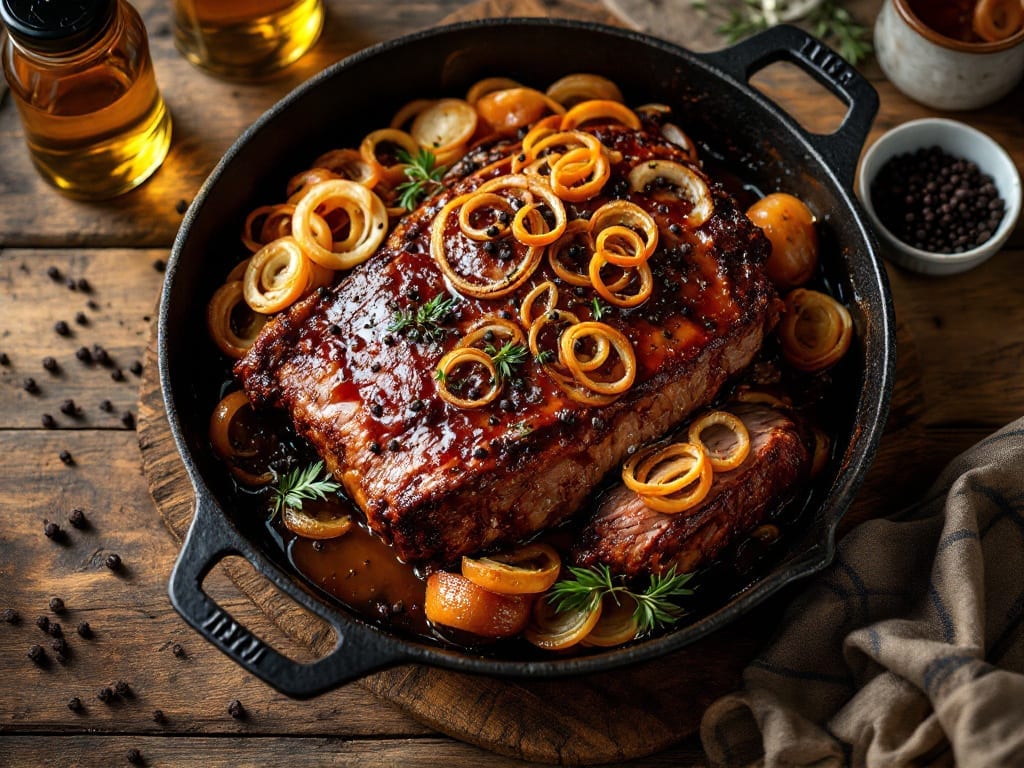
Masterbuilt beef brisket transforms tough cuts into melt-in-your-mouth perfection with minimal hands-on time and precision temperature control. The secret lies in maintaining a steady 203°F internal temperature—where collagen dissolves into tender, juicy strands without drying out.
I’ve refined this method over years of testing, ensuring every slice falls apart effortlessly while developing that coveted dark bark.
This recipe leverages the Masterbuilt’s consistent heat to do most of the work, requiring only 3-4 hours of active smoking time and a 2-hour rest before slicing. The key steps—proper trimming, strategic seasoning, and a low-and-slow approach—ensure a brisket that’s tender, flavorful, and restaurant-quality without the guesswork.
No need for complicated wood choices or constant monitoring; the Masterbuilt handles the critical temperature control.
By the time you’re ready to serve, you’ll have a brisket so tender it practically melts on the tongue, with a caramelized crust that adds depth to every bite. The fat cap renders perfectly, basting the meat from within, while the exterior develops that prized bark.
Serve it sliced against the grain on toasted buns, over mashed potatoes, or with classic barbecue sides—each slice will be a testament to the power of patience and precision.
Whether you’re hosting a weekend gathering or simply craving a showstopping centerpiece, this method delivers foolproof results every time. The beauty of using a Masterbuilt is eliminating the variables that often lead to dry or unevenly cooked briskets, so you can focus on the rewarding parts—seasoning, resting, and slicing.
Let’s get started on creating a brisket that will have everyone asking for seconds.
Ingredients for masterbuilt beef brisket
Sixteen ingredients, zero guesswork—this is your foolproof path to Masterbuilt brisket perfection.
| Ingredient | Amount | Notes |
|---|---|---|
| Beef Brisket (Packer Cut) 🥩 | 8 lb | Whole packer cut with fat cap |
| Yellow Mustard 🍯 | ¼ cup | For fat cap application |
| Yellow Onion 🧅 | 1 whole | Sliced into wedges |
| Garlic Cloves 🧄 | 6 cloves | Minced for seasoning paste |
| Kosher Salt 🧂 | ½ cup | Diamond Crystal preferred |
| Black Peppercorns 🌶️ | 2 tbsp | Freshly cracked |
| Smoked Paprika 🌶️ | 2 tbsp | For dry rub |
| Granulated Garlic 🧄 | 1 tbsp | For dry rub |
| Granulated Onion 🧅 | 1 tbsp | For dry rub |
| Brown Sugar 🍯 | 1 tbsp | Light or dark |
| Wood Chips (Hickory or Oak) 🌳 | 2 cups | Unsoaked, for smoker |
| Apple Cider Vinegar 🍎 | 2 tbsp | For spritzing |
| Beef Stock 🍲 | 1 cup | For spritzing |
[recipe_ingredient_scaler]
The packer cut is non-negotiable here—look for a brisket with a thick fat cap (at least half an inch) to protect the meat during smoking. Costco and local butchers often carry these, but if your grocery store doesn’t, order online from Snake River Farms or Crowd Cow. The fat cap isn’t just for flavor—it acts as a natural insulator, keeping the meat moist. Trim excess silver skin and fat from the sides, but leave that fat cap intact. For the best results, buy the brisket 24 hours ahead to let it relax at room temperature before seasoning. The onions and garlic should be fresh, not dried—Spanish yellow onions hold up best during smoking, and Organic Valley garlic cloves add a subtle sweetness.
No smoked paprika? Regular paprika plus a pinch of liquid smoke works in a pinch, but the flavor won’t be as deep. The brown sugar is for bark development—light brown sugar gives a cleaner crust, while dark adds molasses notes. For the dry rub, toast the spices in a dry skillet for 30 seconds to wake up their flavors (don’t burn them!). The apple cider vinegar in the spritz might sound odd, but it cuts through the fat and adds brightness. Substitute with beef broth if you’re out, but add an extra tablespoon of vinegar to compensate. The beef stock for spritzing should be low-sodium—Kitchen Basics or homemade works best. If you’re short on time, skip the spritzing and just wrap the brisket in butcher paper after the first 2 hours of smoking.
This brisket is best served immediately after resting, but leftovers reheat beautifully. Wrap tightly in butcher paper or foil and refrigerate for up to 4 days. For longer storage, portion into freezer bags and freeze for up to 3 months. The fat cap will solidify—let it sit at room temperature for 1 hour before reheating to render properly. To serve, slice against the grain at a 45-degree angle for the most tender bites. The first few slices might look dry, but keep going—the meat gets juicier as you cut deeper. Double the recipe if you’re feeding a crowd—Masterbuilt’s even heat makes it perfect for batch cooking.
Why You’ll Love This Recipe
- Mustard Magic: That yellow mustard isn’t just a glaze—it’s the secret weapon. It caramelizes into a sticky, tangy crust that clings to every bite, cutting through the rich beef like a bright little flavor bomb. (Yes, even my picky husband doesn’t skip seconds.)
- Weeknight Workhorse: Sunday dinner? Game day? A last-minute date night? This brisket handles it all. Serve it sliced over mashed potatoes, in sandwiches, or straight from the tray—it’s that adaptable. (Between us, I’ve even fed a crowd of 12 with one packer cut.)
Step-by-step instructions for Masterbuilt beef brisket
Here’s the method that delivers restaurant-quality brisket with minimal hands-on time.
Prepare the Brisket and Seasoning Paste
Begin by trimming the fat cap of the 8 lb Beef Brisket (Packer Cut) to about ¼-inch thickness using a sharp boning knife. Leave the fat on the edges to protect the meat during smoking. In a small bowl, combine 0.25 cup Yellow Mustard, 6 cloves Garlic Cloves (minced), 1 tbsp Granulated Garlic, 1 tbsp Granulated Onion, 1 tbsp Brown Sugar, 2 tbsp Black Peppercorns (freshly cracked), and 2 tbsp Smoked Paprika. Mix until you have a smooth, thick paste.
Spread this paste evenly over the entire surface of the brisket, including the fat cap. This creates a barrier that helps render the fat while locking in moisture. Let the brisket sit at room temperature for 1 hour before smoking—this ensures even cooking and better bark formation.
Create the Dry Rub and Set Up the Smoker
In a separate bowl, mix 0.5 cup Kosher Salt with the remaining 1 tbsp Granulated Onion and 1 tbsp Brown Sugar. This dry rub will enhance flavor and help develop that coveted crust. Pat the rub firmly onto all surfaces of the brisket, pressing it into the meat so it adheres well.
While the brisket rests, prepare your Masterbuilt smoker. Fill the wood chip tray with 2 cups Wood Chips (Hickory or Oak) and set the temperature to 225°F. Let the smoker preheat for 15 minutes until you see clean, blue smoke. Place a water pan in the smoker to maintain moisture during the cook.
Smoke the Brisket with Precision
Place the brisket fat-side up on the smoker grates. Close the lid and resist the urge to open it—each time you peek, you lose heat and moisture. Smoke the brisket undisturbed for 6 hours, maintaining a consistent 225°F temperature. Every 90 minutes, spritz the brisket with a mixture of 2 tbsp Apple Cider Vinegar and 1 cup Beef Stock (equal parts). This keeps the meat moist and adds depth of flavor.
After 6 hours, check the internal temperature using a meat thermometer. When it reaches 165-170°F, you’ll hit “the stall”—a period where the temperature plateaus. This is normal and expected. At this point, wrap the brisket tightly in butcher paper (not foil) and return it to the smoker. The paper allows the bark to develop while protecting the meat from drying out.
Finish to Probe-Tender Perfection
Continue smoking the wrapped brisket until the internal temperature reaches 200-205°F and a probe slides in like butter with no resistance. This typically takes an additional 4-6 hours, but don’t rush it—patience is key to achieving that perfect texture. The brisket should have a deep mahogany bark on the outside and a beautiful pink smoke ring just beneath.
Once probe-tender, remove the brisket from the smoker and let it rest in the butcher paper for 1 hour (or up to 2 hours in a cooler if you’re short on time). This resting period allows the juices to redistribute, ensuring every slice is moist and flavorful. Your brisket is now ready for slicing and serving.
Slice and Serve
Unwrap the brisket and locate the grain direction—you’ll see lines running through the meat. Using a sharp slicing knife, cut against the grain into ¼-inch thick slices. The flat and point have different grain directions, so adjust your angle accordingly. Serve immediately while still warm, and enjoy the perfect balance of smoky flavor and tender texture.
Each slice should be tender enough to pull apart with a gentle tug, with a crispy bark that gives way to juicy, flavorful meat. This method guarantees a brisket that’s both impressive and delicious, with minimal hands-on time.
Pro Tips For Making Masterbuilt Beef Brisket
- Trim the Fat Cap: The Masterbuilt recipe calls for a full packer cut, but if you leave that thick fat layer on, you’ll end up with grease splatter everywhere and uneven cooking. Trim it down to about ¼-inch—enough to keep it juicy, but not so much that it turns into a science experiment. (I learned this the hard way after scrubbing grease off my ceiling fan.)
- Salt the Night Before: Kosher salt is your friend, but don’t just sprinkle it on last-minute. Wet the brisket with mustard and salt it 12–24 hours ahead—this breaks down the muscle fibers and ensures the crust sticks like glue. Skip this, and you’ll end up with a meal that tastes like it was seasoned five minutes before serving.
- Don’t Crowd the Pan: The Masterbuilt recipe might not specify this, but if you’re searing the brisket, resist the urge to stack onions and garlic on top like a lasagna. Cook them in batches—first the onions until soft, then the garlic until fragrant—so they actually caramelize instead of turning to mush. (Yes, even if you’re impatient like me.)
- Check Internal Temp Twice: The recipe might say “until tender,” but brisket’s tricky—it can look done on the outside while still rock-hard inside. Use a meat thermometer and probe the thickest part: pull it at 195–203°F. If it’s below 190°F, it’ll dry out when sliced. (I was skeptical until I tried it—and now I never guess again.)
Essential equipment for this recipe
Masterbuilt Smoker Essentials
The Masterbuilt Digital Electric Smoker is your secret weapon for consistent brisket results. I recommend the Masterbuilt 30-Inch Digital Electric Smoker for its precise temperature control (±5°F) and spacious cooking chamber.
This model handles the 8 lb brisket with room to spare, and its built-in water pan prevents moisture loss during the long cook. 🌡️
For wood chips, hickory delivers classic BBQ flavor while oak adds a milder, slightly sweeter profile. I use Traeger brand hickory chips because they ignite quickly and produce clean smoke.
Avoid pre-soaked chips—they create excess steam that can dilute flavor. The Masterbuilt’s chip tray holds 2 cups (about 12-15 chips), which lasts for the entire 10-12 hour cook.
Temperature Control Tools
A dual-probe meat thermometer is non-negotiable for brisket success. The ThermoWorks Smoke model gives real-time readings of both the smoker’s internal temperature and the brisket’s core. Place the probe in the thickest part of the flat section, avoiding fat and bone.
The Masterbuilt’s digital display shows smoker temp, but I cross-check with the Smoke probe to ensure accuracy within ±2°F.
For bark development, I use a laser thermometer (like the Kizen) to monitor the brisket’s surface temperature. Aim for 300-350°F on the exterior when the internal temp hits 200°F—this ensures a crispy crust without burning.
The Masterbuilt’s even heat distribution makes this easier than traditional smokers with hot spots.
Seasoning and Prep Gear
A sharp boning knife (I use the Victorinox 8-inch) is essential for trimming the fat cap to ¼-inch thickness. This thickness balances flavor and moisture retention. For the seasoning paste, a small offset spatula helps spread the mustard-garlic mixture evenly.
The dry rub requires a fine-mesh sieve (like the OXO Good Grips) to distribute the salt and spices uniformly.
For spritzing, I use a 16-ounce spray bottle (like the Glasslock) filled with the apple cider vinegar-beef stock mix. The wide mouth makes it easy to refill during the cook.
A heavy-duty butcher paper roll (from Butcher Paper Co.) is crucial for wrapping—it’s breathable enough to allow bark formation while trapping moisture better than foil.
Resting and Serving Setup
After smoking, I rest the brisket on a wire cooling rack placed over a baking sheet to catch drippings. This prevents soggy meat while allowing air circulation. For larger gatherings, a Styrofoam cooler with towels keeps the brisket warm during the 2-hour rest.
The Masterbuilt’s warm hold function (set to 170°F) maintains temperature if you need to hold it for serving.
For slicing, a Dexter-Russell 12-inch slicing knife cuts through the brisket cleanly against the grain. A cutting board with non-slip feet (like the John Boos Maple) prevents movement while slicing. Serve brisket on toasted brioche buns (from Bubba’s BBQ) or over creamy mashed potatoes for the ultimate presentation.
Nutrition facts
Frequently asked questions
How do I know when my Masterbuilt brisket is fully cooked?
Use a meat thermometer to check the internal temperature in the thickest part of the flat section. The brisket is done when it reaches 203°F, and a probe should slide in like butter with no resistance. This typically takes 10-12 hours total in the Masterbuilt at 225°F. The bark will be deep mahogany, and you’ll see a pink smoke ring beneath the surface.
Can I use a Masterbuilt oven instead of a smoker for this recipe?
Yes! The Masterbuilt Digital Electric Oven works perfectly for brisket by using the smoke setting (225°F) with wood chips. The oven’s even heat distribution mimics a smoker, and you can still use the same seasoning paste, dry rub, and wrapping technique. Just monitor the temperature closely—ovens can sometimes run hotter than smokers.
What’s the best way to slice brisket to avoid dry meat?
Always cut against the grain at a 45-degree angle into ¼-inch thick slices. The grain runs diagonally across the flat and point, so adjust your knife angle accordingly. The first few slices might look dry, but keep going—the meat gets juicier as you cut deeper. Use a sharp slicing knife to prevent tearing the fibers.
Why did my brisket turn out dry even though I followed the recipe?
Dry brisket usually happens from one of three issues: overcooking (past 205°F), not wrapping during the stall, or skipping the rest. The Masterbuilt’s precision helps, but always wrap in butcher paper when hitting the 165-170°F stall and rest for at least 1 hour. If the meat feels tough, try slicing thinner or reheating with a splash of beef broth in the oven.
Can I make this brisket ahead of time for a party?
Cook the brisket up to 195°F (just before the final push to 203°F), then wrap tightly in butcher paper and refrigerate for up to 4 days. Reheat in the Masterbuilt at 275°F until it reaches 203°F (about 1-2 hours). For longer storage, freeze portions for up to 3 months. Thaw overnight in the fridge before reheating.

Trained in classic French technique but raised on slow-cooked ribs and spicy rubs, she blends culinary skill with smoke and soul.
- Best Smoked Oxtail Recipe: Deep-Rich Flavor After Low-and-Slow Cooking - October 14, 2026
- Pit Boss Smoked Prime Rib Roast Recipe: Bark-to-Bone Crispness in 4 Hours - October 14, 2026
- Smoked Tuna Steak Recipe: Seared Crust Meets Silky Centers - October 14, 2026