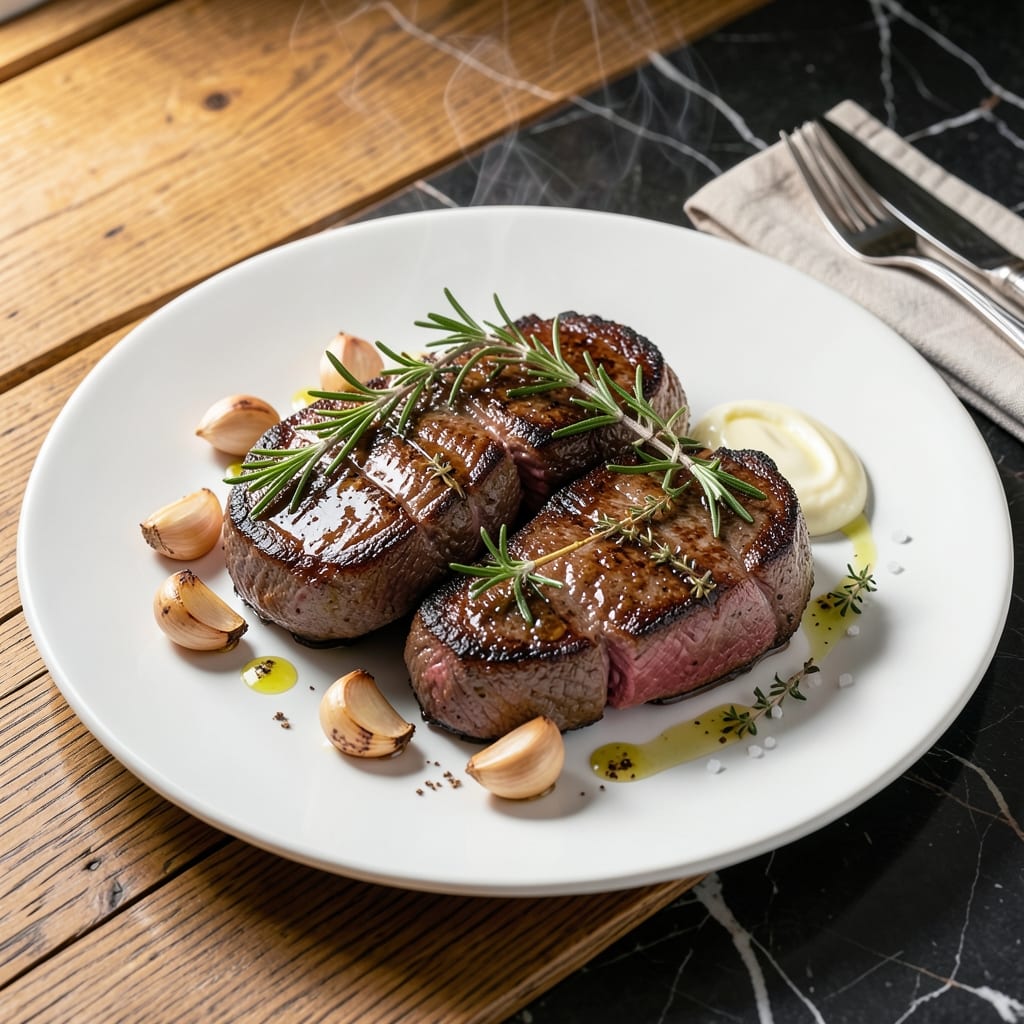
This oven-baked filet mignon delivers a buttery center with a rich roasted garlic crust that rivals any steakhouse. I developed this method after years of experimenting with different cooking techniques to achieve restaurant-quality results at home.
The secret lies in a two-step process: first searing the steaks in a hot pan to develop a deep crust, then finishing them in the oven for even cooking. The garlic butter baste infuses every bite with robust, aromatic flavor without overpowering the natural beef taste.
What emerges is a perfectly cooked filet with a golden, crusted exterior and a tender, juicy interior that melts in your mouth. The roasted garlic adds depth while the butter creates that signature velvety texture that makes filet mignon so special.
Serve with roasted vegetables or mashed potatoes for a complete meal that feels indulgent but is surprisingly simple to prepare.
Ingredients for Filet Mignon Recipe Oven
Steakhouse quality at home starts with these prime ingredients for the perfect oven-baked filet.
| Ingredient | Amount | Notes |
|---|---|---|
| Filet Mignon Steaks 🥩 | 4 whole | 1.5 inches thick, room temperature |
| Unsalted Butter 🧈 | 6 tbsp | Divided for searing and basting |
| Garlic Cloves 🧄 | 6 cloves | Peeled and smashed |
| Fresh Rosemary Sprigs 🌿 | 2 whole | For aromatic basting |
| Fresh Thyme Sprigs 🍃 | 4 whole | Optional for additional flavor |
| Kosher Salt 🧂 | 1 ½ tsp | Diamond Crystal preferred |
| Freshly Ground Black Pepper 🌶️ | 1 tsp | Coarse grind for texture |
| Olive Oil 🫒 | 2 tbsp | High smoke point for searing |
| Beef Bouillon Powder 🥩 | 1 tsp | Dissolved in 1 tbsp water |
| Red Wine 🍷 | ¼ cup | Dry variety like Cabernet |
| Shallot 🧅 | 1 whole | Minced for garlic butter |
| Dijon Mustard 🟡 | 1 tsp | For depth in baste |
[recipe_ingredient_scaler]
The steaks are the star—filet mignon should be at least 1.5 inches thick for even cooking. Costco has great pre-cut options, but a good butcher can trim them to your exact specs (leave the fat cap on). For the butter, Plugrá or Kerrygold give that restaurant-level richness. Don’t skip the fresh herbs; dried won’t cut it here (the aroma is half the experience).
No filet? Ribeye works too—more marbling, less tender but still delicious. Out of red wine? Beef broth with a splash of balsamic mimics the acidity. Fresh out of shallots? A small onion minced fine does the trick. The bouillon might seem fussy, but it boosts the umami in the basting butter (worth the extra minute).
Steaks can sit salted on the counter for 1 hour before cooking for better seasoning penetration. Leftovers (if any) keep 3-4 days in the fridge—reheat gently in a pan to avoid overcooking. The garlic butter? Freeze extras in ice cube trays for 3 months.
Why You’ll Love This Recipe
- One Pan Wonder: Honestly, I just sear the steaks, toss in butter, garlic, and herbs, then let the oven do the rest—minimal cleanup, maximum flavor.
- Buttery Heaven: The melted butter soaks into the filet while the rosemary and thyme infuse every bite with that rich, aromatic taste I crave.
- Date Night Ready: I’ve served this for anniversaries and random Tuesdays—it feels fancy but takes less effort than ordering takeout.
- Leftovers? No Problem: Between us, the slices reheat beautifully in a warm oven, so I get a second round of that tender, herby goodness the next day.
Step-by-Step Instructions for Filet Mignon Oven
Here’s how I get that perfect crust and buttery center every time.
Step 1: Prep and Season the Steaks
Pat the filet mignon steaks dry with paper towels—this is crucial for a good sear. Season all sides generously with the 1.5 tsp kosher salt and 1 tsp freshly ground black pepper. I like to press the seasoning in lightly so it adheres well to the meat.
Let the steaks sit at room temperature for 30-45 minutes while you prep the other ingredients. This ensures even cooking from edge to edge. Meanwhile, preheat your oven to 400°F and place a cast-iron skillet inside to heat up.
Step 2: Sear the Steaks to Perfection
Heat the 2 tbsp olive oil in the hot skillet over high heat until it shimmers. Add the steaks and sear undisturbed for 2-3 minutes per side until a deep brown crust forms. Don’t move them around—patience gives you that beautiful, even sear.
During the last minute of searing, add 2 tbsp unsalted butter, the 6 cloves garlic cloves, 2 whole fresh rosemary sprigs, and 4 whole fresh thyme sprigs to the pan. Tilt the skillet and baste the steaks with the melted butter and aromatics for 30 seconds.
Step 3: Finish in the Oven with Aromatic Baste
Transfer the skillet to the preheated oven. Roast for 6-8 minutes for medium-rare (internal temp of 130-135°F). For a richer flavor, I dissolve the 1 tsp beef bouillon powder in 1 tbsp water and mix it with the 0.25 cup red wine, 1 whole minced shallot, and 1 tsp Dijon mustard in a small bowl.
After flipping the steaks halfway through roasting, pour this mixture over the steaks and baste again with the pan juices. This adds depth and a glossy finish to your crust.
Step 4: Rest and Serve with Pan Sauce
Remove the steaks from the skillet and transfer to a cutting board. Tent loosely with foil and let rest for 10 minutes—this keeps all those juices inside where they belong. While they rest, place the skillet back on medium heat and add the remaining 4 tbsp unsalted butter.
Swirl the butter into the pan juices to create a quick sauce. Pour this over the steaks when serving. The result? A buttery center with a crust that crackles, and every bite packed with roasted garlic and herb flavor.
Pro Tips For Making Filet Mignon Recipe Oven
- Preheat the Pan: I learned this the hard way—start with a screaming-hot cast iron or oven-safe skillet for at least 5 minutes before adding the steaks, or you’ll get a sad, gray crust instead of that deep brown sear.
- Dry the Steaks: Pat the filets bone-dry with paper towels before seasoning; even a little moisture steams the surface and ruins the sear, and we’re not making boiled beef today.
- Skip the Cold Butter: Pull your unsalted butter out 30 minutes early so it’s soft but not melted when you baste—cold butter just slides off and makes a greasy mess.
- Use a Thermometer: After burning two filets to hockey pucks, I finally started pulling them at 125°F for medium-rare; they’ll coast up to 130°F while resting, and that’s the sweet spot.
Storing and Reheating This filet mignon recipe oven
Refrigerator Storage
After cooking, let your steaks cool for no more than 2 hours before storing. I use glass containers with locking lids from Pyrex to keep the filet fresh. Properly stored, it will keep in the fridge at 40°F or below for 3-4 days. ❄️
Freezer Storage
For longer storage, wrap each steak tightly in plastic wrap and place in a freezer-safe bag. Squeeze out excess air to prevent freezer burn. This method preserves quality for up to 3 months at 0°F. I always label with the date to track freshness.
Stovetop Reheating
My preferred method for restoring that just-cooked texture. Heat a skillet over medium-low heat, add the steak and 1 tbsp butter, cover, and warm for 2-3 minutes per side. This gently brings the internal temperature back up without overcooking. 🔥
Oven Reheating
Preheat your oven to 250°F and place the steak on a wire rack over a baking sheet. Heat for 10-15 minutes until reaching 130°F internal temperature. This method works well for larger portions and maintains even warmth throughout.
Microwave Reheating
For quick meals, place slices on a microwave-safe plate, cover with a damp paper towel, and heat on 50% power in 30-second intervals. Check temperature between intervals to avoid overcooking. This works in a pinch but may slightly dry the edges.
Nutrition Facts
Frequently Asked Questions
What temperature should I use?
Preheat your oven to 400°F for even cooking. This high heat helps create a perfect crust while keeping the center tender and juicy.
How do I know when it’s done?
Use a meat thermometer to check for 130-135°F internal temperature for medium-rare. The steak will continue cooking while resting, so remove it just before reaching your desired doneness.
Can I use a different pan?
A cast-iron skillet is ideal for searing and oven transfer, but any oven-safe pan will work. Avoid non-stick pans as they can’t withstand the high heat needed for a proper sear.
Why rest the steak before serving?
Letting it rest for 10 minutes allows the juices to redistribute throughout the meat. Skipping this step can result in a dry steak as the juices will leak out when cut.

Trained in classic French technique but raised on slow-cooked ribs and spicy rubs, she blends culinary skill with smoke and soul.
- Recipe for Boneless Pork Chops in Cast Iron Skillet: Sear and Baste to Juicy Perfection - October 3, 2026
- Recipe for Boneless Cross Rib Roast: Slow-Roasted Beef with Herb Crust - October 3, 2026
- Hamburgers in Sauce Recipe Crock Pot: Slow-Cooked Savory Delight - October 3, 2026