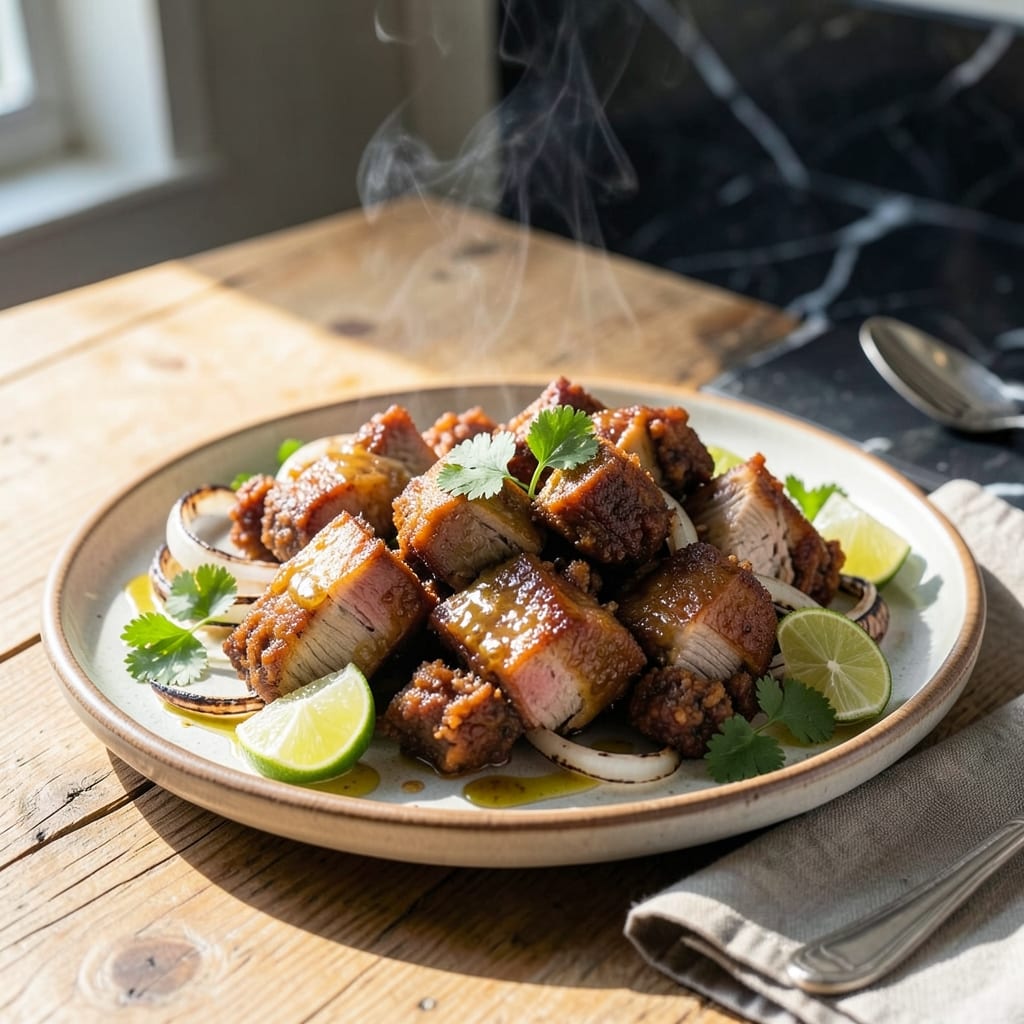
This carnitas recipe delivers the authentic Mexican experience Rick Bayless perfected through years of study. The slow braising process transforms tough pork into tender, flavorful meat ready for its final crispy transformation.
What sets this method apart is the traditional approach of simmering pork in lard and aromatics until fall-apart tender. The real magic happens when you spread the cooked pork on a baking sheet and broil it until crispy.
The result is succulent meat with golden, shatteringly crispy edges that stays juicy inside. Each bite carries the deep, complex flavors developed through slow cooking and the final high-heat finish.
Serve these carnitas in warm tortillas with fresh cilantro, diced onions, and a squeeze of lime for an authentic Mexican feast.
Ingredients for Mexican Pork Carnitas Recipe Rick Bayless
Authentic Mexican flavors start with pork shoulder, citrus, and a touch of lard for tradition.
| Ingredient | Amount | Notes |
|---|---|---|
| Pork Shoulder 🐖 | 3 lb | Boneless, cut into 2-inch chunks |
| Lard 🥓 | ½ cup | Melted, for braising |
| Orange Juice 🍊 | ¾ cup | Freshly squeezed preferred |
| Lime Juice 🍋 | ¼ cup | Freshly squeezed preferred |
| Garlic Cloves 🧄 | 6 cloves | Peeled and lightly crushed |
| White Onion 🧅 | 1 whole | Peeled and quartered |
| Dried Oregano 🌿 | 1 tbsp | Prefer Mexican oregano |
| Ground Cumin 🌿 | 1 tsp | Freshly toasted for best flavor |
| Bay Leaves 🍃 | 2 pieces | Dried, whole leaves |
| Cinnamon Stick 🌰 | 1 whole | About 3 inches long |
| Kosher Salt 🧂 | 2 tbsp | Diamond Crystal preferred |
| Fresh Cilantro 🌿 | ½ cup | Chopped, for garnish |
| Corn Tortillas 🌮 | 12 pieces | Warm for serving |
| White Onion 🧅 | 1 whole | Finely diced, for serving |
| Limes 🍋 | 2 whole | Cut into wedges, for serving |
[recipe_ingredient_scaler]
The pork shoulder is non-negotiable for authentic carnitas. Look for well-marbled pieces at a Latin market or butcher—they understand the cut. Costco carries excellent pork shoulder at a good price point. Lard is traditional here, and leaf lard (from around the kidneys) is the highest quality. Most supermarkets carry it near the baking aisle. If you can’t find leaf lard, regular lard works fine.
No lard? Vegetable shortening can substitute in a pinch, though the flavor won’t be quite as rich. Pork butt can stand in for shoulder—similar marbling, same cook time. Fresh orange juice is ideal, but bottled works (just not from concentrate). The cinnamon stick adds subtle warmth; if you only have ground cinnamon, use one-quarter teaspoon and add it with the other spices.
Braised carnitas keep in the fridge for 4-5 days and actually improve overnight. Freeze portions for up to 3 months in airtight containers. The crispy finish is best done fresh, so broil just before serving. Leftover fat can be strained and reused for cooking beans or other dishes.
Why You’ll Love This Recipe
- Hands-Off Cooking: I just toss the pork shoulder with lard, citrus, and garlic, then let the oven do the work.
- Crispy, Tangy Magic: That combination of orange and lime juice with the garlic makes the meat so tender and flavorful.
- Tacos, Bowls, or More: I’ve used these carnitas in tacos, burritos, and even breakfast hash—endless options.
- Budget Feast: Pork shoulder is affordable, and this recipe makes enough for leftovers that taste even better the next day.
Step-by-Step Instructions for Mexican Pork Carnitas
Master the technique that transforms tough pork shoulder into tender, crisp-edged perfection every time.
Step 1: Season and Prepare the Pork
Begin by patting the 3 lb Pork Shoulder chunks completely dry with paper towels. This ensures proper browning and crisping later. I always cut the pork into 2-inch chunks—uniform pieces cook more evenly and give you that ideal ratio of crispy exterior to tender interior.
Place the pork in a large bowl and toss with 2 tbsp Kosher Salt, 1 tbsp Dried Oregano, 1 tsp Ground Cumin, 1 whole White Onion (quarterd), 6 cloves Garlic Cloves (lightly crushed), 2 pieces Bay Leaves, and 1 whole Cinnamon Stick. The salt will begin to draw out moisture, while the spices create a flavor foundation that penetrates deeply during the braise.
Step 2: Braise in Lard and Citrus
In a heavy Dutch oven, melt the 0.5 cup Lard over medium-high heat. When it shimmers, carefully add the pork and its seasonings. Sear the meat for 5-7 minutes, turning occasionally, until it develops a light golden crust on all sides. This initial sear builds layers of flavor.
Pour in the 0.75 cup Orange Juice and 0.25 cup Lime Juice, then reduce heat to medium-low. The liquid should barely bubble. Cover and let it braise undisturbed for 2 to 2.5 hours, until the pork is fork-tender and the liquid has mostly evaporated. You’ll know it’s ready when a fork slides into the meat with no resistance.
Step 3: Crisp the Carnitas
Once the pork is tender, increase the heat to medium-high and let the pork cook uncovered, stirring occasionally. The remaining fat will render out, and the pork will begin to crisp at the edges. This step is crucial for achieving that signature carnitas texture—tender inside with crispy, caramelized bits throughout.
Cook for an additional 15-20 minutes, until the pork is deeply browned and the edges are crisp and slightly sticky. Watch closely during this phase to prevent burning; the sugars in the citrus will caramelize quickly. Use a wooden spoon to break up any large pieces and expose more surface area to the heat.
Step 4: Rest and Serve
Remove the carnitas from the heat and let them rest for 10 minutes. This allows the juices to redistribute, ensuring every bite is moist and flavorful. Discard the bay leaves and cinnamon stick before serving.
Serve the carnitas on warm 12 pieces Corn Tortillas, topped with finely diced 1 whole White Onion, 0.5 cup Fresh Cilantro, and a squeeze of 2 whole Limes cut into wedges. The acidity from the lime cuts through the richness, balancing each bite perfectly.
Pro Tips For Making Mexican Pork Carnitas Recipe Rick Bayless
- Use Bone-In Shoulder: I learned this the hard way—bone-in pork shoulder gives carnitas way more flavor and helps the meat stay juicy during the long braise. Skip the boneless cuts, even if they seem easier.
- Render the Lard First: Start by melting the lard in your pot before adding the pork—this builds a rich base and prevents sticking. About 2 tablespoons is perfect for a 3-4 lb shoulder.
- Don’t Rush the Simmer: After burning a batch, I finally figured out that a gentle simmer (not a boil) keeps the meat tender. Let it go low and slow for at least 2 hours, maybe 3.
- Crisp in Lard, Not Oil: Sounds weird, but it works: when you’re ready to crisp the pork, use some of the cooking lard instead of neutral oil. It adds an authentic depth that vegetable oil just can’t match.
Common Mistakes When Making This Dish
Skipping the Dry
Don’t skip patting the 3 lb Pork Shoulder dry before seasoning. Excess moisture prevents proper browning and crisping, leaving your carnitas steamed rather than golden. I always use paper towels for this step. 💡
Overcrowding the Pot
Overcrowding the Dutch oven during searing leads to uneven cooking and soggy meat. Work in batches if needed to give each 2-inch chunk space to brown properly. This builds the flavor foundation for your braise.
Rushing the Braise
Low and slow is key for fork-tender pork. Simmering at medium-low heat for 2-2.5 hours allows the collagen to break down. If you rush with high heat, the meat will toughen and dry out.
Skipping the Crisp
The final crisping step transforms tender pork into carnitas. Spread the cooked meat on a baking sheet and broil for 5-7 minutes or crisp in the pot until edges are golden and slightly sticky. Don’t skip this!
Ignoring the Liquid
Too much liquid during braising results in boiled pork instead of crispy carnitas. Ensure the orange juice and lime juice mostly evaporate before crisping. The sugars will caramelize perfectly when concentrated.
Skipping the Rest
Always let the carnitas rest for 10 minutes before serving. This allows juices to redistribute, keeping every bite moist and flavorful. I learned this the hard way with dry, disappointing results. ✨
Nutrition Facts
Frequently Asked Questions
Can I use a different cut of pork?
Pork butt works well as a substitute for shoulder, with similar marbling and fat content. Avoid lean cuts like tenderloin, as they lack the fat needed for authentic texture. The 2-2.5 hours cook time remains the same.
What if I don’t have lard?
Vegetable shortening is the best substitute, though the flavor won’t be as rich. For a healthier option, use 1/4 cup olive oil plus 1/4 cup water. The texture may differ slightly but will still be delicious.
Can I make this in a slow cooker?
Yes! Cook on low for 6-8 hours or high for 4-5 hours. Transfer to a baking sheet and broil for 5-7 minutes to crisp. This method saves active cooking time.
How do I store leftovers?
Store in an airtight container in the fridge for up to 5 days. Reheat in a skillet to restore crispiness, or freeze for up to 3 months. Always crisp fresh before serving.

Trained in classic French technique but raised on slow-cooked ribs and spicy rubs, she blends culinary skill with smoke and soul.
- Recipe for Boneless Pork Chops in Cast Iron Skillet: Sear and Baste to Juicy Perfection - October 3, 2026
- Recipe for Boneless Cross Rib Roast: Slow-Roasted Beef with Herb Crust - October 3, 2026
- Hamburgers in Sauce Recipe Crock Pot: Slow-Cooked Savory Delight - October 3, 2026