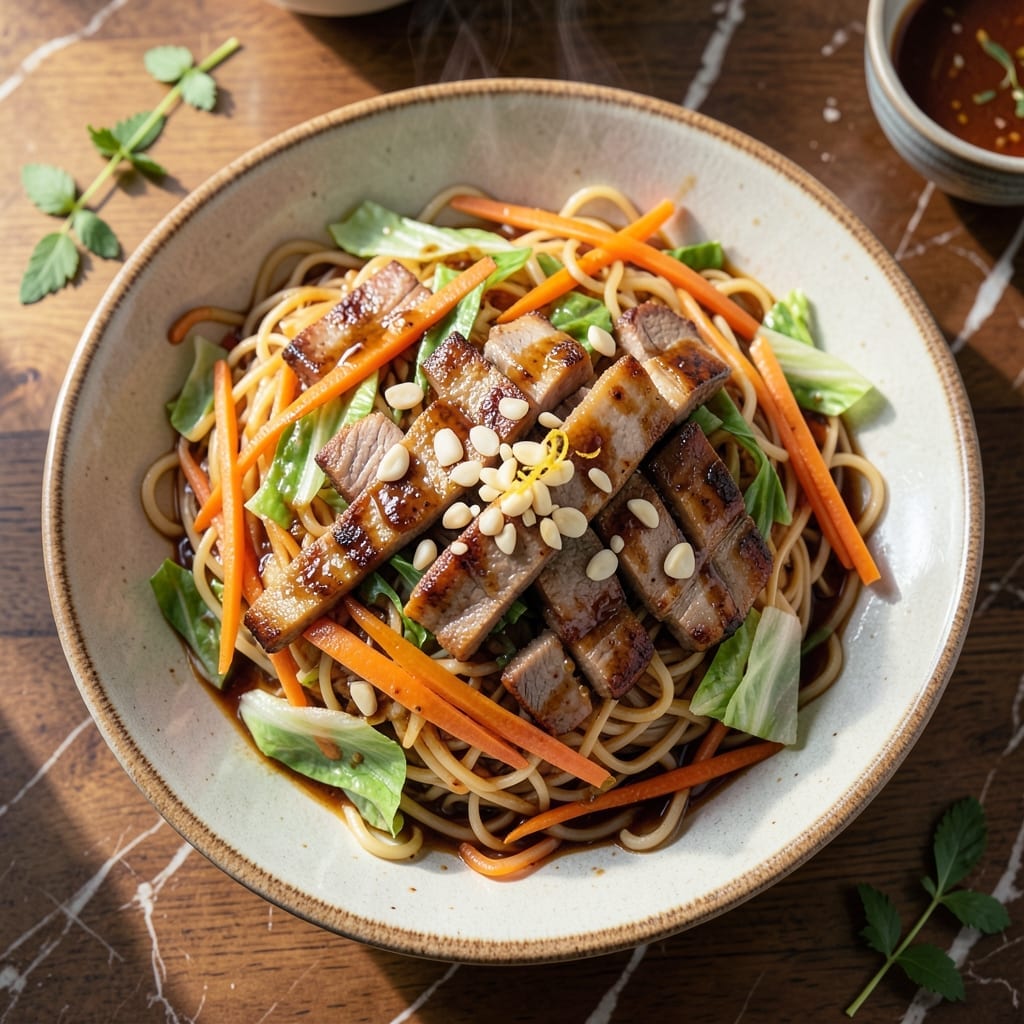
This authentic noodle dish brings the vibrant flavors of Filipino cuisine to your table with a savory depth that’s hard to resist. I’ve refined this recipe to capture the traditional techniques that make it truly special.
The secret lies in the perfect balance of thin rice noodles, tender pork, and a medley of vegetables stir-fried with garlic, soy sauce, and a touch of calamansi for brightness. Every bite delivers layers of umami and texture.
You’ll achieve restaurant-quality results with simple ingredients and a method that honors the dish’s roots. The noodles absorb the rich, aromatic sauce, creating a satisfying, well-rounded meal.
Serve it at gatherings or as a comforting weeknight dinner. Here’s how to make it right.
Ingredients for Filipino Pancit Recipe Pork
Authentic Filipino flavors start with these carefully selected traditional ingredients for perfect balance.
| Ingredient | Amount | Notes |
|---|---|---|
| Thin Rice Noodles 🍜 | 8 oz | Dried, thin-cut variety |
| Pork Shoulder 🐖 | 1 lb | Thinly sliced, boneless |
| Carrots 🥕 | 2 whole | Julienned into thin strips |
| Green Cabbage 🥬 | 3 cups | Thinly shredded |
| Garlic Cloves 🧄 | 6 cloves | Minced for maximum flavor |
| Soy Sauce 🫙 | ½ cup | Low-sodium preferred |
| Calamansi Juice 🍋 | 2 tbsp | Or substitute lime juice |
| Chicken Stock 🥣 | 2 cups | Low-sodium for balance |
| Green Onions 🧅 | 4 whole | Thinly sliced on bias |
| Vegetable Oil 🫒 | 3 tbsp | Neutral flavor, high smoke point |
| Ground Black Pepper 🌶️ | 1 tsp | Freshly ground preferred |
| Fish Sauce 🐟 | 1 tbsp | Optional for umami depth |
| Salt 🧂 | ½ tsp | Adjust to taste |
[recipe_ingredient_scaler]
The pork shoulder is non-negotiable for texture—ask your butcher for thin-cut slices or freeze for 30 minutes to slice easily at home. Asian markets carry the proper thin rice noodles (look for ‘bihun’ or ‘rice sticks’). For calamansi, Filipino or Southeast Asian grocers often stock fresh or bottled juice. Chicken stock depth is key, so use homemade or high-quality store-bought like Better Than Bouillon.
No calamansi? Lime or lemon juice at equal amounts works fine. Pork shoulder can be swapped for chicken thighs (similar cook time) or shrimp (add last). For gluten-free, use tamari instead of soy sauce. Napa cabbage can replace green cabbage. Fish sauce adds umami—Red Boat brand is a quality choice, but omit entirely for vegetarian versions.
Noodles dry out quickly—store unopened packages in a cool, dark place for up to 1 year. Once opened, transfer to airtight container. Pork keeps 3-4 days in fridge or freeze for 3 months. Cooked pancit reheats well but best served fresh when noodles are perfectly tender.
Why You’ll Love This Recipe
- One-Pot Wonder: I just toss the noodles, pork, and veggies in a single pan—no fancy techniques, no extra dishes.
- Garlic Lover’s Dream: The pork shoulder soaks up all that minced garlic flavor, and the cabbage adds the perfect crunch.
- Feeds a Crowd: Honestly, I make a big batch for parties and it’s always the first thing gone.
- Budget Stretcher: Pork shoulder and rice noodles go a long way, and the carrots and cabbage keep it hearty without breaking the bank.
Step-by-Step Instructions for Filipino Pancit with Pork
Master the authentic technique for this classic noodle stir-fry with perfect texture and balance.
Step 1: Soak and Prep the Rice Noodles
Place the 8 oz thin rice noodles in a large bowl and cover completely with warm water. Let them soak for 8-10 minutes until pliable but still slightly firm. This prevents them from turning mushy during stir-frying.
Drain and rinse under cold water to stop the cooking process. Set aside. Meanwhile, ensure all vegetables are prepped: 2 whole carrots julienned, 3 cups green cabbage thinly shredded, 4 whole green onions sliced on bias, and 6 cloves garlic cloves minced.
Step 2: Velvet the Pork Shoulder
Slice the 1 lb pork shoulder into thin, even strips against the grain. In a bowl, combine the pork with 1 tbsp fish sauce, 1 tsp ground black pepper, and 0.5 tsp salt. Mix well and let marinate for 10 minutes.
Heat 1 tbsp vegetable oil in a wok or large skillet over high heat. Add the pork in a single layer and sear undisturbed for 2 minutes until edges begin to brown. Remove and set aside—the pork will finish cooking later.
Step 3: Stir-Fry Aromatics and Vegetables
In the same wok, add the remaining 2 tbsp vegetable oil. When shimmering, add the minced garlic cloves and stir-fry for 30 seconds until fragrant but not browned. Immediately add the julienned carrots and stir-fry for 2 minutes until slightly softened.
Incorporate the shredded green cabbage and cook for another 2 minutes. The vegetables should remain crisp-tender. Push everything to one side of the wok to create space for the noodles.
Step 4: Combine with Sauce and Finish
Add the drained thin rice noodles, 1 lb pork shoulder, 0.5 cup soy sauce, 2 tbsp calamansi juice, and 2 cups chicken stock. Toss everything together using tongs, ensuring even distribution of the sauce.
Cook over medium-high heat for 5-7 minutes, stirring frequently, until the noodles absorb most of the liquid and the pork shoulder is cooked through. The noodles should be tender but still chewy, with a glossy sheen from the sauce.
Step 5: Garnish and Serve
Remove from heat and stir in the sliced green onions. Taste and adjust seasoning if needed—traditional pancit leans toward savory with a bright citrus note. Transfer to a serving platter immediately.
Serve hot, ensuring each portion contains a mix of noodles, pork, and vegetables. The dish should have a balanced flavor profile: salty from the soy, tangy from the calamansi, and umami from the fish sauce.
Pro Tips For Making Filipino Pancit Recipe Pork
- Soak the Noodles: Cover thin rice noodles in warm water for exactly 10 minutes before cooking—I learned this the hard way after ending up with a pot of gummy pancit. Any longer and they over-soften, any shorter and they stay stubbornly firm.
- Sear the Pork First: Brown the pork shoulder in batches over medium-high heat until deeply caramelized, about 4-5 minutes per side. Sounds like extra effort, but it builds a flavor base that plain boiling just can’t match.
- Skip Raw Cabbage: Add the green cabbage only in the last 3-4 minutes of cooking—my grandmother swore by this, and she was right. Toss it in too early and it turns to mush, losing that satisfying crunch.
- Use Pork Fat: After searing the pork, don’t drain all the fat—leave about 2 tablespoons in the pan to sauté the garlic and veggies. I was skeptical until I tried it, but the dish tastes richer without needing extra oil.
Serving Suggestions for This Dish
Family-Style Plating
I love serving this on a large platter lined with banana leaves for an authentic presentation. Arrange the pancit in a mound, then crown it with extra green onions and calamansi wedges on the side. David always grabs the first portion—it’s his favorite. 💛
Individual Bowls
For a more refined look, use shallow rice bowls and twirl the noodles with tongs before plating. Top each serving with a sprinkle of crushed chicharron for added crunch. This method works beautifully for dinner parties.
Garnish Essentials
Always finish with fresh cilantro or Thai basil for bright color. A drizzle of extra calamansi juice right before serving enhances the citrus notes. I pick up fresh herbs at Austin farmers markets for the best flavor.
Side Pairings
Serve with steamed rice to soak up the extra sauce—it’s how Nana Mae would do it. A side of atchara (pickled papaya) cuts through the richness perfectly. Both are easy to find at Southern specialty stores.
Drink Pairings
Iced calamansi tea is my go-to—it complements the dish’s tangy elements. For beer lovers, a light San Miguel or Red Horse pairs wonderfully. These are staples in our Austin home. ✨
Make It Interactive
Set out small bowls of fish sauce, chili oil, and extra calamansi so guests can customize their plates. This keeps the meal engaging and lets everyone adjust flavors to their taste.
Nutrition Facts
Frequently Asked Questions
What type of noodles work best?
Use thin dried rice noodles labeled as bihun or rice sticks. These absorb the sauce perfectly and maintain the right texture. Avoid fresh egg noodles as they become too soft.
Can I substitute chicken for pork?
Yes! Use boneless chicken thighs cut into thin strips. Cook time remains similar to pork. This swap maintains the dish’s traditional flavor while offering a lighter protein option.
How do I prevent soggy noodles?
Soak noodles for only 8-10 minutes until pliable but firm. Stir-fry over high heat and avoid overcrowding the pan. The noodles should finish cooking in the sauce, not in the soaking water.
What if I can’t find calamansi?
Use equal amounts of lime or lemon juice as a substitute. The citrus brightness is key to balancing the dish’s savory flavors. Adjust to taste at the end of cooking.

Trained in classic French technique but raised on slow-cooked ribs and spicy rubs, she blends culinary skill with smoke and soul.
- Recipe for Boneless Pork Chops in Cast Iron Skillet: Sear and Baste to Juicy Perfection - October 3, 2026
- Recipe for Boneless Cross Rib Roast: Slow-Roasted Beef with Herb Crust - October 3, 2026
- Hamburgers in Sauce Recipe Crock Pot: Slow-Cooked Savory Delight - October 3, 2026