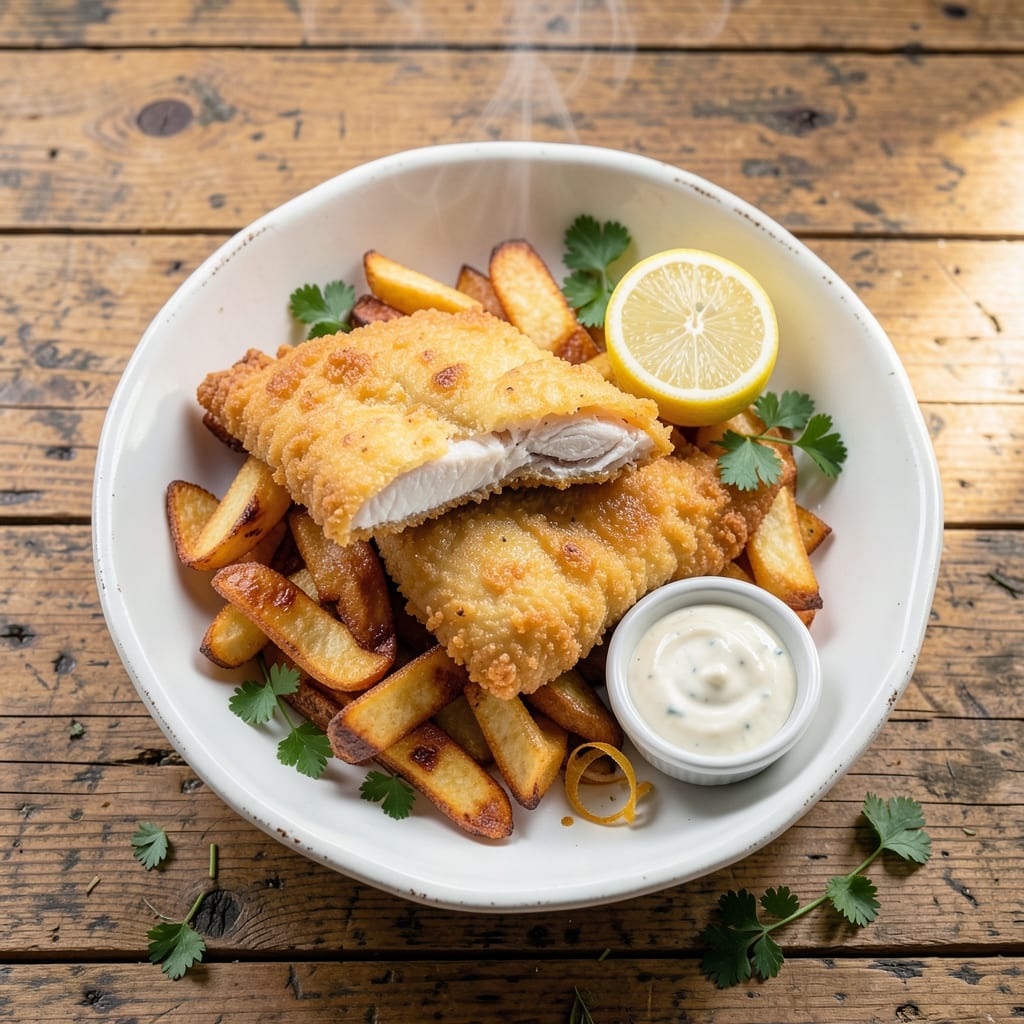
Classic fish and chips deserves a crispy batter that doesn’t rely on beer. This vinegar-based version delivers that signature golden, shatteringly light coating without a single drop of alcohol.
I developed this method after years of testing alternatives to traditional beer batter. The vinegar reacts with baking soda to create the same airy texture, while keeping the fish tender inside and perfectly crispy outside.
You’ll achieve that beloved pub-style result with flaky fish encased in a golden crust, paired with thick-cut fries that stay hot and crispy until the last bite. The vinegar adds just enough tang to complement the fish without overpowering it.
Serve immediately with malt vinegar or tartar sauce. This technique works with any white fish and guarantees crispy results every time.
Ingredients for Fish and Chips Recipe Without Beer
Classic pub-style ingredients for a vinegar-battered fish and thick-cut fries combo at home.
| Ingredient | Amount | Notes |
|---|---|---|
| White Fish Fillets 🐟 | 1 ½ lb | Cod or haddock, skinless, cut into strips |
| All-Purpose Flour 🌾 | 1 ½ cups | Plus extra for dredging |
| Cornstarch 🌽 | ½ cup | For extra crispiness |
| Baking Soda 🧂 | 1 tsp | Reacts with vinegar for lift |
| White Vinegar 💧 | 1 cup | Distilled or apple cider works |
| Ice-Cold Water 🧊 | 1 cup | Keeps batter crisp |
| Salt 🧂 | 1 tsp | Plus more to taste |
| Russet Potatoes 🥔 | 2 lb | Peeled and cut into thick sticks |
| Vegetable Oil 🫒 | 8 cups | For deep frying, high smoke point |
| Malt Vinegar 💧 | ½ cup | For serving |
| Lemon Wedges 🍋 | 4 pieces | For bright acidity |
| Tartar Sauce 🥣 | ½ cup | Store-bought or homemade |
[recipe_ingredient_scaler]
The fish selection is critical for texture. Cod or haddock are ideal—their firm, mild flesh holds up to frying without falling apart. Source from a reputable fishmonger like Whole Foods or Trader Joe’s for guaranteed freshness. For the batter, cornstarch is non-negotiable—it’s what gives that shatteringly crisp coating. Use a high-smoke-point oil like peanut or vegetable oil for frying.
No white vinegar? Apple cider vinegar works in a pinch, though the flavor will be slightly fruitier. Swap cod for pollock or tilapia if needed—just avoid oily fish like salmon. For the fries, Yukon Gold potatoes can replace Russets, but they’ll be slightly creamier. If avoiding deep frying, an air fryer works (though texture won’t be identical).
Serve immediately—crispiness fades fast. Leftovers keep in the fridge for 1-2 days but are best reheated in the oven or air fryer to revive texture. The vinegar batter works for other seafood too—try shrimp or onion rings.
Why You’ll Love This Recipe
- No Fuss Batter: I just whisk flour, cornstarch, baking soda, and vinegar—no beer, no waiting, and it clings to the fish like a dream.
- Crispy Perfection: That combo of cornstarch and baking soda gives the coating an insane crunch, while the fish stays flaky and tender.
- Weeknight Hero: I’ve served this for quick dinners, game day snacks, and even a fancy-ish Friday night—works every time.
- Budget Friendly: White fish fillets and pantry staples keep it affordable, and honestly, leftovers reheat surprisingly well in the oven.
Step-by-Step Instructions for Fish and Chips Without Beer
Master the technique for achieving golden, crisp results with this vinegar-based batter method.
Step 1: Prepare and Fry the Potatoes
Peel the 2 lb Russet Potatoes and cut them into ½-inch thick sticks. Rinse under cold water to remove excess starch, then pat completely dry with a kitchen towel. This prevents sticking and ensures maximum crispiness.
Heat the 8 cups Vegetable Oil in a deep fryer or heavy pot to 325°F. Fry the potato sticks in batches for 4-5 minutes until soft but not browned. Transfer to a wire rack and let them rest while you prepare the batter. This two-stage frying process guarantees a fluffy interior and shatteringly crisp exterior.
Step 2: Create the Vinegar Batter
In a large bowl, whisk together the 1.5 cups All-Purpose Flour, 0.5 cup Cornstarch, 1 tsp Baking Soda, and 1 tsp Salt. The cornstarch is crucial—it creates an ultra-crisp texture that beer-based batters can’t match.
Make a well in the center and pour in the 1 cup White Vinegar and 1 cup Ice-Cold Water. Whisk vigorously until just smooth—small lumps are fine. The cold liquid and acid in the vinegar react with the baking soda to create lift, while the vinegar’s tang complements the fish beautifully. Let the batter rest for 5 minutes before using.
Step 3: Fry the Fish to Golden Perfection
Increase the oil temperature to 375°F. Pat the 1.5 lb White Fish Fillets completely dry with paper towels—any moisture will cause the oil to splatter. Lightly dredge each piece in a bit of extra all-purpose flour to help the batter adhere, then dip into the vinegar batter, letting excess drip off.
Carefully lower the battered fish into the hot oil. Fry in batches to avoid crowding, which lowers the oil temperature. Cook for 4-5 minutes until the batter is deep golden brown and the fish flakes easily when tested with a fork. Transfer to a wire rack to drain, then immediately sprinkle with additional salt to taste.
Step 4: Finish the Potatoes and Serve
Increase the oil temperature back to 375°F and fry the par-cooked potatoes for 2-3 minutes until they’re golden brown and crisp. This second fry creates that signature fish and chips texture contrast. Drain on fresh paper towels or a clean wire rack.
Serve the fish and potatoes immediately with the 0.5 cup Tartar Sauce, 0.5 cup Malt Vinegar, and 4 pieces Lemon Wedges on the side. The malt vinegar’s sharpness cuts through the richness, while the lemon adds a bright finish to each bite.
Pro Tips For Making Fish And Chips Recipe Without Beer
- Dry the Fish: Pat the white fish fillets completely dry with paper towels before dredging—I learned this the hard way after my first batch turned out soggy instead of crispy.
- Ice-Cold Vinegar: Use chilled white vinegar straight from the fridge when mixing the batter; it reacts better with the baking soda for that light, airy texture.
- Skip Overcrowding: Fry the fish in small batches so the oil temperature doesn’t plummet, or you’ll end up with greasy, undercooked fillets instead of golden, crisp ones.
- Double-Fry the Chips: After cutting, parboil the potatoes for 5 minutes, drain, and let them dry completely before frying—this gives you that perfect fluffy interior and crisp exterior without beer in the batter.
Essential Equipment for This Dish
Deep Frying Setup
Invest in a quality deep fryer for precise temperature control—I use my Cuisinart CDF-200 which maintains 375°F perfectly. A heavy Dutch oven works too, but requires a candy thermometer to monitor oil temp accurately. 🌡️
Temperature Control
An infrared thermometer is my secret weapon for checking oil temperature instantly. I aim for 325°F initially for potatoes, then 375°F for fish. Never let oil smoke—that means it’s too hot and will burn your batter.
Batter Preparation
Use a large mixing bowl with a spout for easy pouring of your vinegar batter. I prefer stainless steel as it’s durable and easy to clean. A whisk is essential for achieving a smooth, lump-free batter consistency.
Draining Solutions
A wire rack placed over a sheet pan is ideal for draining fried foods. This setup allows air circulation, preventing sogginess. I keep a stack of paper towels underneath for easy cleanup between batches. 💡
Safety Essentials
Always use tongs or a spider strainer for transferring foods in and out of hot oil. Keep a fire extinguisher rated for grease fires nearby—safety first! Never leave hot oil unattended, even for a moment.
Serving Tools
Serve your fish and chips on pre-warmed plates to maintain crispiness. I love using vintage-style metal trays for that authentic pub feel. Keep small bowls of malt vinegar and tartar sauce ready for dipping.
Nutrition Facts
Frequently Asked Questions
Can I use sparkling water instead of vinegar?
Yes, sparkling water works as a beer substitute. It creates a light, crispy batter similar to vinegar. Use 1.5 cups and skip the baking soda, as the carbonation provides the lift.
What’s the best oil for frying?
Use a neutral, high-smoke-point oil like peanut or vegetable oil. Avoid olive oil, as it burns at lower temperatures. Maintain 375°F for perfect crispiness.
How do I keep the fish crispy?
Drain on a wire rack, not paper towels, to prevent steam buildup. Serve immediately, as crispiness fades quickly. Leftovers can be revived in an oven at 400°F for 5-10 minutes.
Can I bake instead of fry?
Baking works but won’t be as crispy. Use 425°F and a wire rack for airflow. Brush fish with oil for extra browning. Expect a slightly different texture.

Trained in classic French technique but raised on slow-cooked ribs and spicy rubs, she blends culinary skill with smoke and soul.
- Recipe for Boneless Pork Chops in Cast Iron Skillet: Sear and Baste to Juicy Perfection - October 3, 2026
- Recipe for Boneless Cross Rib Roast: Slow-Roasted Beef with Herb Crust - October 3, 2026
- Hamburgers in Sauce Recipe Crock Pot: Slow-Cooked Savory Delight - October 3, 2026