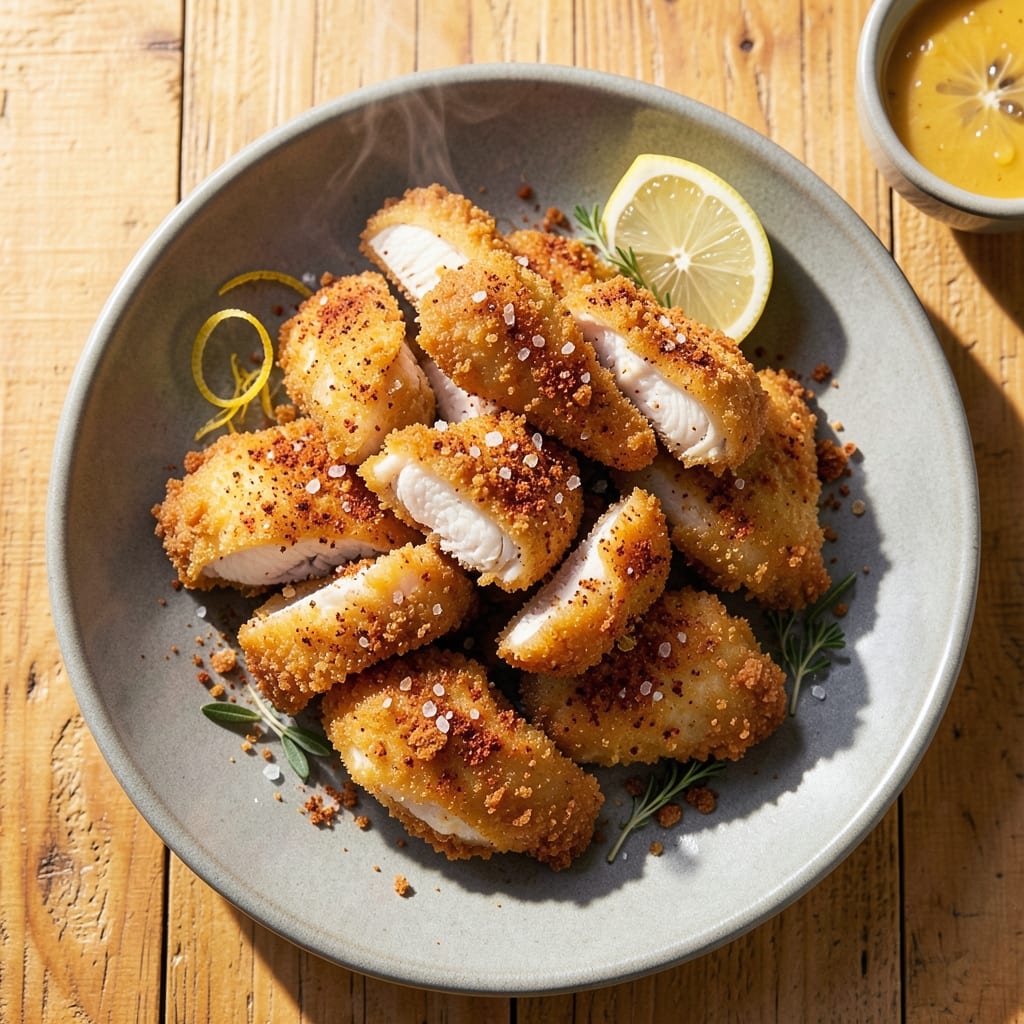
Achieving the ideal fish fry means balancing a crispy exterior with a flaky interior, and this method delivers both perfectly. The secret lies in the coating technique and precise frying temperature.
I developed this approach after testing multiple batter combinations, finding that a simple flour and spice mix creates the most consistent results. The fish cooks quickly, maintaining moisture inside while forming a golden, shatteringly crispy crust outside.
The result is tender fish fillets encased in a light, airy coating that stays crispy even after plating. Each bite offers the satisfying contrast of textures that defines exceptional fish fry.
Serve immediately with lemon wedges and your favorite dipping sauce for the complete experience. This technique works with any firm white fish.
Ingredients for Fish Fry Recipe Vismai Food
These ingredients create that perfect crispy exterior with flaky fish inside every time.
| Ingredient | Amount | Notes |
|---|---|---|
| Firm White Fish Fillets 🐟 | 1 ½ lb | Cod, haddock, or tilapia, skinless |
| All-Purpose Flour 🌾 | 1 ½ cups | For dredging fish |
| Cornstarch 🌽 | ½ cup | For extra crispiness |
| Baking Powder 🧂 | 1 tsp | For light airy coating |
| Salt 🧂 | 1 ½ tsp | Divided for seasoning |
| Ground Black Pepper 🌶️ | 1 tsp | Freshly ground preferred |
| Paprika 🌶️ | 1 tsp | Sweet or smoked variety |
| Garlic Powder 🧄 | 1 tsp | For savory depth |
| Onion Powder 🧅 | 1 tsp | Complements fish flavor |
| Cayenne Pepper 🔥 | ¼ tsp | Optional for heat |
| Cold Beer or Sparkling Water 🍺 | 1 cup | For light batter |
| Vegetable Oil 🫒 | 4 cups | For deep frying |
| Lemon Wedges 🍋 | 4 pieces | For serving |
[recipe_ingredient_scaler]
For the fish, fresh cod or haddock from a trusted seafood counter is ideal—look for fillets that are firm, translucent, and smell clean like the ocean (not fishy). Whole Foods or a local fishmonger with high turnover is best. The cornstarch is non-negotiable for that shatteringly crisp texture. If you can find stone-ground flour, it adds a subtle nuttiness to the coating.
No beer? Sparkling water works just as well for the batter. Skip the cayenne if you prefer mild flavor. For gluten-free versions, rice flour plus cornstarch creates a similar crisp. The baking powder is key—don’t substitute baking soda. The oil should have a high smoke point; peanut or canola oil are great alternatives to vegetable oil.
Fry immediately after coating for best results. Leftovers (if any) keep in the fridge for 1-2 days but lose their crispness—reheat in a 400°F oven for 10 minutes to revive. The batter mix can be prepped an hour ahead, but don’t coat the fish until ready to fry.
Why You’ll Love This Recipe
- One Pan Wonder: I mix flour, cornstarch, and a pinch of baking powder—then just dip, coat, and fry. So unfussy.
- Crispy Perfection: That crunch from the cornstarch and flour combo? It’s the reason I make this every Friday.
- Feeds a Crowd: I’ve served this at family dinners and casual get-togethers—always a hit, and the fillets stretch far.
- Budget Friendly: Firm white fish isn’t pricey, and the pantry staples mean I can make this without a special grocery trip. Honestly, it’s my go-to for saving money without sacrificing flavor.
Step-by-Step Instructions for Fish Fry
This method ensures a light, airy coating that stays crisp while keeping the fish flaky and moist.
Step 1: Prepare the Seasoned Dredge and Batter
In a large bowl, whisk together the 1.5 cups all-purpose flour, 0.5 cup cornstarch, 1 tsp baking powder, 1.5 tsp salt, 1 tsp ground black pepper, 1 tsp paprika, 1 tsp garlic powder, 1 tsp onion powder, and 0.25 tsp cayenne pepper until evenly combined. This blend creates a flavorful, crispy base layer for the fish.
In a separate bowl, pour the 1 cup cold beer or sparkling water—the carbonation helps create a light, airy batter that fries up extra crispy.
Step 2: Coat the Fish Fillets
Pat the 1.5 lb firm white fish fillets completely dry with paper towels—moisture prevents the coating from adhering properly. Season both sides lightly with a pinch of the reserved salt if desired, though the dredge already contains ample seasoning.
Dredge each fillet in the flour mixture, pressing gently to ensure full coverage. Shake off any excess, then dip it into the beer or sparkling water batter. Immediately return it to the flour mixture for a second coating. This double-dredge technique guarantees maximum crispiness. Set the coated fillets on a wire rack while the oil heats.
Step 3: Heat the Oil and Fry to Golden Perfection
In a deep, heavy-bottomed pot or Dutch oven, heat the 4 cups vegetable oil over medium-high heat to 350-375°F. Use a deep-fry thermometer for accuracy—oil that’s too cool will make the fish greasy, while oil that’s too hot will burn the coating before the fish cooks through.
Once the oil reaches temperature, carefully lower the fillets into the pot, working in batches to avoid crowding. Fry for 3-4 minutes per side until the coating is deep golden brown and the fish flakes easily when tested with a fork. The internal temperature of the fish should reach 145°F.
Step 4: Drain and Serve Immediately
Using a slotted spoon or tongs, transfer the fried fillets to a paper towel-lined plate or wire rack to drain excess oil. Avoid stacking the fillets, as this can trap steam and make the coating soggy.
Serve the fish hot, accompanied by the 4 pieces lemon wedges for squeezing over the top. The acidity cuts through the richness and enhances the crispy, flaky result. For best texture, enjoy immediately while the coating is at its peak crispness.
Pro Tips For Making Fish Fry Recipe Vismai Food
- Heat the Oil Right: I learned this the hard way—get the oil to 350°F before adding the fish, or you’ll end up with greasy, soggy fillets instead of that crisp golden crust.
- Pat Fish Dry: Sounds obvious, but even a little moisture on the fillets makes the coating slide off—press them between paper towels for 10 seconds to guarantee it sticks.
- Skip Overcrowding: After ruining two batches, I finally accepted that frying in small batches is non-negotiable—crowding drops the oil temp and turns your fish into a sad, steamed mess.
- Add Baking Powder: My grandmother swore by this, and she was right: a teaspoon of baking powder in the flour mix makes the coating lighter and crispier without changing the taste.
Regional Styles of This Dish
British Pub Style
In the UK, fish and chips shops use a thicker beer batter with self-rising flour and cold lager. The result is a puffier, golden coating that’s crisp outside and tender inside. I add 1 tbsp malt vinegar to the batter for that authentic tang. 💛
Southern US Style
Down South, they prefer a cornmeal-based coating for extra crunch. Mix 1 cup cornmeal with ½ cup flour and 1 tbsp Cajun seasoning for a spicy kick. The fish gets a deeper color and a satisfying gritty texture that pairs perfectly with hushpuppies.
Indian Pakora Style
For an Indian twist, use chickpea flour (besan) with 1 tsp turmeric, 1 tsp cumin, and ½ tsp ajwain seeds. The batter is thicker and creates irregular, crispy clusters. Fry at 325°F a bit longer for even cooking through.
Japanese Tempura Style
Tempura uses an ice-cold batter of 1 cup cake flour, 1 egg yolk, and 1 cup ice water. The key is mixing just 8-10 times to keep lumps. This creates delicate, lacy patterns that are incredibly light. Serve with tentsuyu dipping sauce. ✨
Caribbean Style
In the Caribbean, they add 1 tbsp green seasoning (blended herbs) to the batter. The fish gets marinated in lime juice and Scotch bonnet pepper first. Use coconut oil for frying to complement the tropical flavors.
Midwest Beer Batter
Midwestern versions often use dark beer like Guinness for the batter, giving a richer color and malty flavor. Add 1 tbsp brown sugar to the dredge for caramelization. The result is a slightly sweeter, deeper-colored crust that’s popular at summer fish fries.
Nutrition Facts
Frequently Asked Questions
What oil works best for frying?
Use oils with a high smoke point like vegetable, peanut, or canola. Heat to 350-375°F for perfect crispiness without burning. Avoid olive oil as it has a lower smoke point.
Can I use frozen fish fillets?
Yes, but thaw completely and pat very dry first. Frozen fillets release moisture that prevents coating from sticking properly.
Why did my coating fall off?
This usually happens if the fish wasn’t dry before coating or if the oil temperature was too low. Ensure oil reaches 350°F before frying.
How do I keep it crispy longer?
Place fried fish on a wire rack, not paper towels. This allows air circulation to prevent steam from making the coating soggy.

Trained in classic French technique but raised on slow-cooked ribs and spicy rubs, she blends culinary skill with smoke and soul.
- Recipe for Boneless Pork Chops in Cast Iron Skillet: Sear and Baste to Juicy Perfection - October 3, 2026
- Recipe for Boneless Cross Rib Roast: Slow-Roasted Beef with Herb Crust - October 3, 2026
- Hamburgers in Sauce Recipe Crock Pot: Slow-Cooked Savory Delight - October 3, 2026