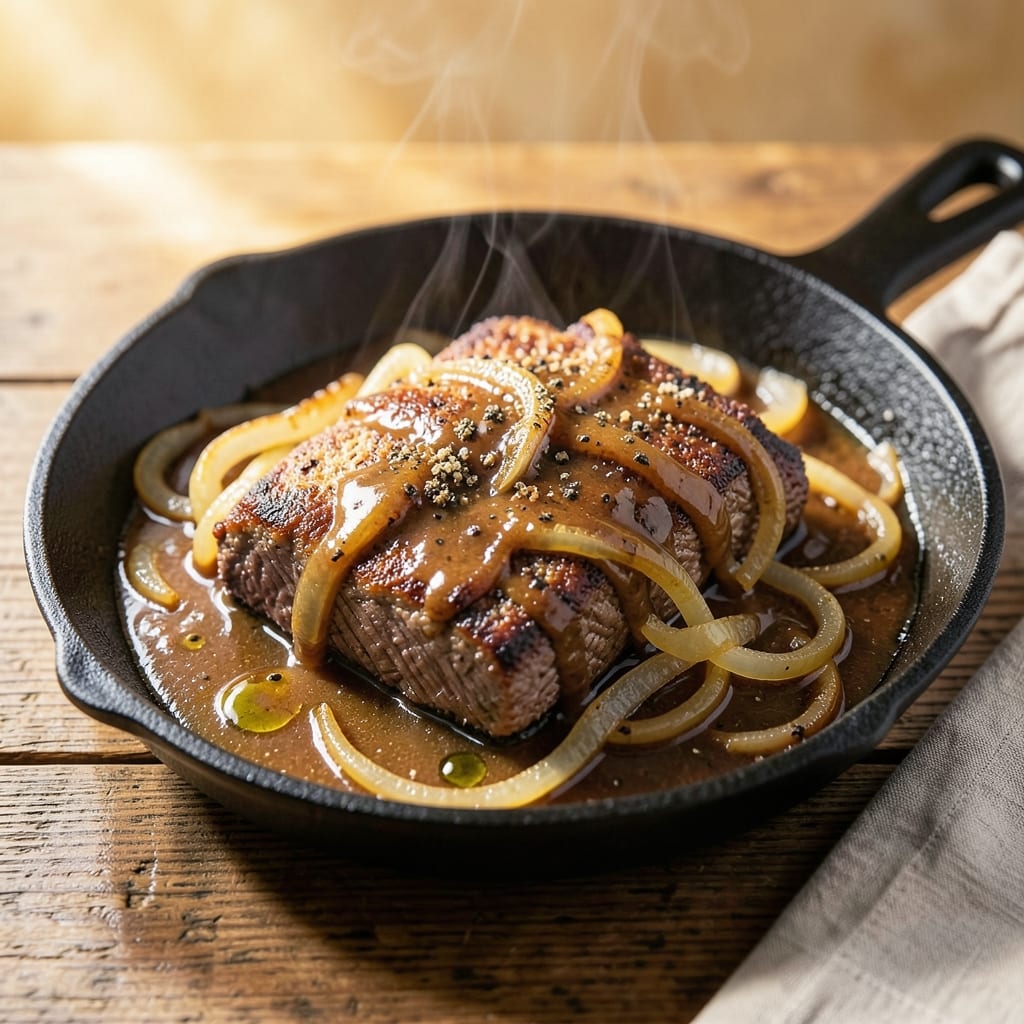
This slow-cooked method transforms tough cube steak into tender, flavorful perfection that falls apart at the touch of a fork. I developed this recipe after years of testing different approaches to achieve that classic homestyle texture.
The key is browning the steaks first to develop deep, rich flavor, then simmering them gently in a fragrant tomato-based sauce. Low and slow is the only way to break down the connective tissue while keeping the meat juicy.
What emerges after a few hours is melt-in-your-mouth beef swimming in a savory gravy that begs to be soaked up with mashed potatoes or crusty bread. The tomatoes add just the right amount of acidity to balance the richness.
This is the kind of dish that fills your kitchen with an aroma so inviting, the whole family gathers before dinner is even ready. Here’s how to make it at home.
Ingredients for Recipe for Swiss Steak Using Cube Steak
Pantry staples and simple prep turn cube steak into something extraordinary.
| Ingredient | Amount | Notes |
|---|---|---|
| Cube Steak 🥩 | 1 ½ lb | Tough, pre-tenderized beef rounds |
| All-Purpose Flour 🌾 | ½ cup | For dredging and thickening |
| Salt 🧂 | 1 tsp | Kosher or sea salt preferred |
| Black Pepper 🌶️ | ½ tsp | Freshly ground for best flavor |
| Olive Oil 🫒 | 2 tbsp | Divided for browning and sauce |
| Yellow Onion 🧅 | 1 whole | Medium, finely chopped |
| Garlic Cloves 🧄 | 3 cloves | Minced for aromatic base |
| Canned Diced Tomatoes 🍅 | 1 can | 14.5 oz size, with juices |
| Tomato Paste 🍅 | 2 tbsp | For concentrated tomato flavor |
| Beef Broth 🥫 | 1 cup | Low-sodium preferred for control |
| Worcestershire Sauce 💧 | 1 tbsp | Adds umami depth to gravy |
| Dried Thyme 🌿 | ½ tsp | Earthy herb for sauce |
| Dried Oregano 🍃 | ½ tsp | Mediterranean herb complement |
| Bay Leaf 🍃 | 1 whole | Removed before serving |
| Water 💧 | ½ cup | Adjusts sauce consistency |
[recipe_ingredient_scaler]
The cube steak is everything here. Ask your butcher for pre-tenderized round steak—most grocery stores carry it prepackaged near the stew meat. Look for pieces with good marbling (those white fat streaks) for best flavor. I usually grab mine from Walmart or Kroger since they have reliable quality. If buying a whole round steak to cube yourself, choose top round for the most tender result.
No cube steak? Round steak or sirloin tip work if you pound them thin and tenderize with a mallet. Out of Worcestershire? Soy sauce plus a pinch of sugar gets close. Fresh herbs are great but dried at half the amount works fine. The flour can be swapped for cornstarch (use 2 tbsp per 1/4 cup flour) if you need gluten-free. And yes, you can use fresh tomatoes—but canned saves time and effort.
This tastes even better the next day. Keeps 4-5 days in the fridge, freezes beautifully for 3 months. I portion leftovers into containers so weeknight dinners are sorted. The gravy thickens as it cools—just stir in a splash of water when reheating.
Why You’ll Love This Recipe
- One Pan Wonder: I love that this comes together in a single skillet—just dredge the cube steak in flour, season, and sear.
- Rich and Tender: The cube steak soaks up all the savory juices from the pan, making every bite melt-in-your-mouth good.
- Weeknight Hero: It’s my go-to for busy evenings when I need something hearty on the table fast.
- Budget Friendly: Cube steak is affordable, and a little goes a long way, especially with just flour, salt, and pepper to dress it up.
Step-by-Step Instructions for Swiss Steak Using Cube Steak
This slow-cooked method transforms tough cube steak into fork-tender perfection every time.
Step 1: Dredge and Brown the Cube Steak
Combine the 0.5 cup all-purpose flour, 1 tsp salt, and 0.5 tsp black pepper on a plate. Pat the 1.5 lb cube steak dry with paper towels, then dredge each piece in the flour mixture, shaking off any excess. The flour creates a light crust that helps thicken the gravy later.
Heat 1 tbsp olive oil in a large, heavy skillet or Dutch oven over medium-high heat. When the oil shimmers, add the floured cube steak in a single layer. Cook for 3-4 minutes per side until deep golden brown—don’t rush this step; that brown crust is pure flavor. Transfer the browned steak to a plate and set aside.
Step 2: Sauté the Aromatics
In the same skillet, add the remaining 1 tbsp olive oil if needed. Add the finely chopped 1 whole yellow onion and cook over medium heat for 5 minutes until softened and just starting to brown. The onion should look translucent and smell sweet.
Stir in the minced 3 cloves garlic cloves and cook for 30 seconds until fragrant. Be careful not to let the garlic burn—it should sizzle but not turn dark brown. This aromatic base builds the foundation for your rich, savory gravy.
Step 3: Build the Sauce and Simmer
Add the 2 tbsp tomato paste to the skillet and stir for 1 minute to cook off the raw flavor. Pour in the 1 can canned diced tomatoes (with juices), 1 cup beef broth, 1 tbsp Worcestershire sauce, 0.5 tsp dried thyme, 0.5 tsp dried oregano, and 1 whole bay leaf. Stir to combine, scraping up any browned bits from the bottom of the pan.
Return the browned cube steak to the skillet, along with any accumulated juices. Add the 0.5 cup water and bring the mixture to a gentle simmer. The liquid should just cover the steak—if it doesn’t, add a splash more water.
Step 4: Slow-Cook to Tenderness
Reduce the heat to low, cover the skillet, and let the steak simmer gently for 1.5 to 2 hours. Check occasionally and add a little more water if the liquid reduces too much. The steak is done when it’s fork-tender and the gravy has thickened to coat the back of a spoon.
I like to flip the steaks halfway through cooking to ensure even tenderness. The meat should pull apart easily with a fork and the gravy should be rich and flavorful, with the herbs infusing every bite.
Step 5: Finish and Serve
Remove the bay leaf and discard it. Taste the gravy and adjust the seasoning with a pinch more salt or pepper if needed. The gravy should be thick enough to cling to the steak but still pourable.
Serve the Swiss steak hot, spooning plenty of that delicious gravy over each piece. This dish tastes even better the next day, as the flavors continue to meld. Pair it with mashed potatoes or buttered noodles to soak up every last bit of the sauce.
Pro Tips For Making Recipe For Swiss Steak Using Cube Steak
- Pound the Steak: Cube steak is already tenderized, but I learned this the hard way—give it an extra 2-3 gentle taps with a meat mallet to guarantee even cooking and prevent chewy bits.
- Dredge Twice: After the first flour coating, let the steak rest 5 minutes, then dredge again. Sounds weird, but it works: the crust holds better and browns deeper.
- Hot Pan, Quick Flip: Crank the heat to medium-high and don’t mess with the steak for at least 2 minutes per side. Resist the urge to peek—this locks in that crispy, golden crust.
- Rest Before Serving: I used to rush this part and wondered why my steak lost all its juices. Now I give it a solid 5 minutes under foil—your plate stays clean and the meat stays moist.
Essential Equipment for Perfect Results
Heavy Skillet
I always use my 12-inch Lodge cast iron skillet for this dish—the even heat distribution is perfect for browning the steaks and developing that rich gravy. Cast iron retains heat beautifully for the long simmer. A heavy enamel Dutch oven works just as well if that’s what you have.
Tongs
Good locking tongs are essential for flipping the cube steaks without piercing them and losing those precious juices. I prefer 12-inch tongs for better reach and control. Look for ones with a comfortable grip—you’ll be using them a lot during the browning process.
Sharp Knife
A 8-inch chef’s knife makes quick work of chopping the onion and mincing the garlic. I’ve had my Wüsthof for years and it still cuts through onions like butter. Keep it sharp for safety and precision—dull knives are more dangerous than sharp ones. 💡
Wooden Spoon
When building your sauce, a wooden spoon is ideal for scraping up those flavorful browned bits from the bottom of the pan. It won’t scratch your cast iron or Dutch oven. I keep one dedicated to savory cooking to avoid any lingering sweet flavors from desserts.
Measuring Tools
Accurate measurements matter here. I use stainless steel measuring cups for the dry ingredients and a Pyrex measuring cup for liquids. For the spices, a set of measuring spoons ensures you get the right balance of flavors in your gravy.
Thermometer
While not strictly necessary, an instant-read thermometer helps ensure your steaks reach that perfect 160°F internal temperature. I use my ThermoWorks for peace of mind, especially when I’m cooking for company. The long simmer will take care of the rest. 🔥
Nutrition Facts
Frequently Asked Questions
Can I use a different cut of meat?
Yes! Round steak or sirloin tip work if pounded thin. Cube steak is ideal because it’s pre-tenderized. Always choose well-marbled cuts for best flavor.
How do I know when it’s done?
It’s ready when the meat pulls apart easily with a fork after 1.5-2 hours of simmering. The gravy should coat the back of a spoon.
Can I make this in a slow cooker?
Brown the steaks first, then transfer to your slow cooker with all ingredients. Cook on low for 6-8 hours or high for 4-5 hours.
Why is my gravy too thin?
Simmer uncovered for 10-15 minutes to reduce. If still thin, mix 1 tbsp cornstarch with 1 tbsp water and stir in.

Trained in classic French technique but raised on slow-cooked ribs and spicy rubs, she blends culinary skill with smoke and soul.
- Recipe for Boneless Pork Chops in Cast Iron Skillet: Sear and Baste to Juicy Perfection - October 3, 2026
- Recipe for Boneless Cross Rib Roast: Slow-Roasted Beef with Herb Crust - October 3, 2026
- Hamburgers in Sauce Recipe Crock Pot: Slow-Cooked Savory Delight - October 3, 2026