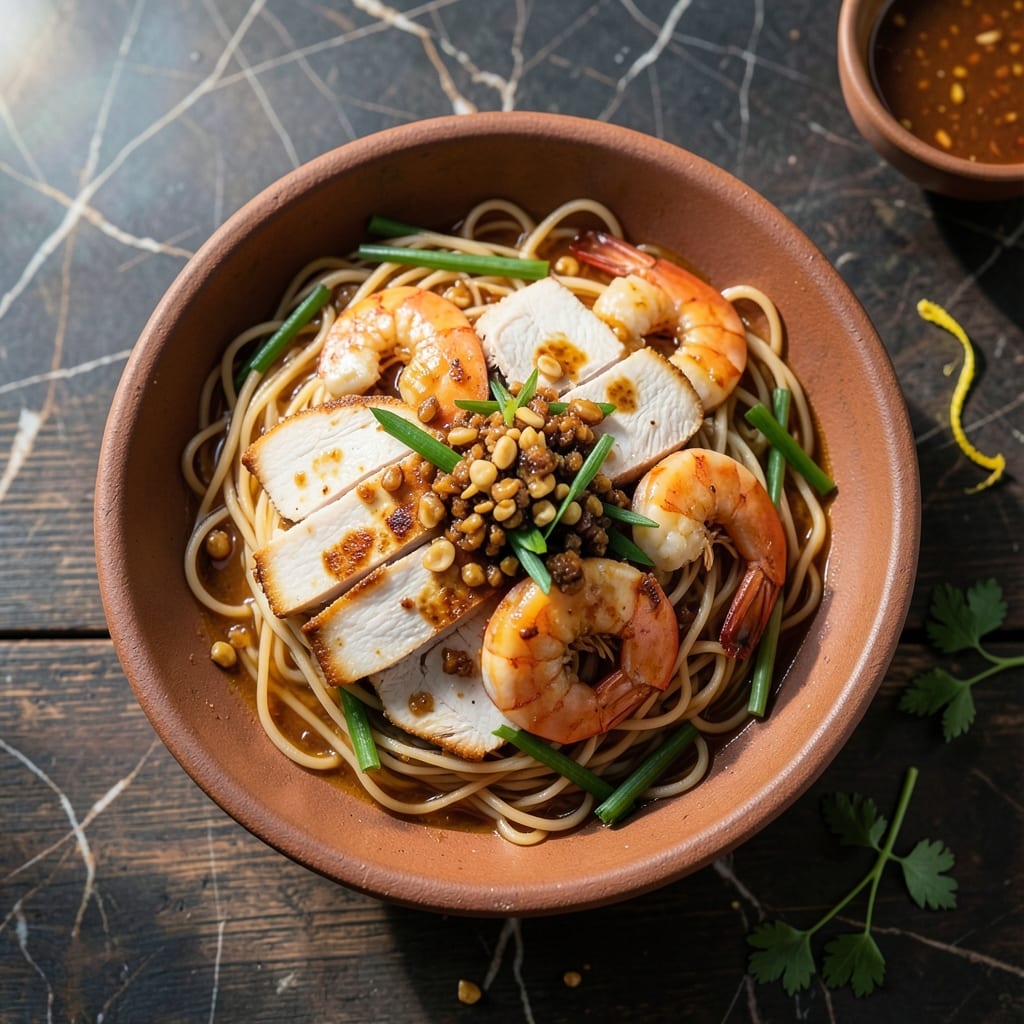
This Malaysian-style fried beehoon brings authentic street food flavors to your kitchen. I discovered this dish while exploring Pacific Northwest Asian markets, and it quickly became a weeknight favorite.
The secret lies in the wok-tossed technique, which creates that signature smoky aroma. Thin rice noodles soak up the savory sauce while maintaining their springy texture. Simple ingredients deliver complex flavors.
What you get is a dish with perfectly tender noodles, crisp vegetables, and a balance of sweet, salty, and umami notes. It’s restaurant-quality without leaving home.
Ready in under 30 minutes, this recipe proves that authentic Asian cuisine can be accessible. Here’s how to make it.
Ingredients for Fried Beehoon Recipe Malaysia
Thin rice noodles, fresh veggies, and bold sauces bring this street food classic to life.
| Ingredient | Amount | Notes |
|---|---|---|
| Dried Rice Stick Noodles 🍜 | 8 oz | Thin variety, beehoon or vermicelli |
| Vegetable Oil 🫒 | 3 tbsp | High smoke point for wok frying |
| Garlic Cloves 🧄 | 4 cloves | Minced finely for even distribution |
| Shallots 🧅 | 2 whole | Thinly sliced for sweetness |
| Chicken Breast 🍗 | ¾ lb | Thinly sliced into bite-sized pieces |
| Medium Shrimp 🦐 | ½ lb | Peeled and deveined |
| Chinese Cabbage 🥬 | 2 cups | Thinly shredded for texture |
| Bean Sprouts 🌱 | 1 cup | Rinsed and drained |
| Carrots 🥕 | 1 whole | Julienned for quick cooking |
| Light Soy Sauce 💧 | 2 tbsp | For salty umami base |
| Dark Soy Sauce 💧 | 1 tbsp | Adds depth and color |
| Oyster Sauce 🫙 | 1 tbsp | Vegetarian oyster sauce if preferred |
| Sesame Oil 🫒 | 1 tsp | Toasted, for finishing aroma |
| White Pepper 🧂 | ½ tsp | Ground, for authentic flavor |
| Green Onions 🧅 | 3 whole | Thinly sliced for garnish |
[recipe_ingredient_scaler]
The noodles are everything here. Look for thin rice stick noodles (beehoon) in the Asian aisle at Uwajimaya or any well-stocked market—avoid the thick ones, they won’t cook right. Dried shrimp adds depth if you can find it (check the freezer section at H Mart), but the dish works great without. For the proteins, fresh shrimp and chicken are ideal, but leftovers work too (just slice thin so they reheat fast).
Swapping proteins? Tofu or thinly sliced pork are easy alternatives. No oyster sauce? Hoisin or vegetarian oyster sauce at one-to-one ratio works. If you’re missing dark soy sauce, a splash of molasses or brown sugar in the light soy adds color. The veggies are flexible—bell peppers, snap peas, or mushrooms all play well here. Just keep everything thinly sliced so it cooks quickly.
Dried noodles keep practically forever in the pantry. Once cooked, leftovers stay good for 3-4 days in the fridge. Reheat gently with a splash of water to loosen the noodles. For best texture, eat it fresh—this is one dish that doesn’t love the microwave (the noodles get mushy).
Why You’ll Love This Recipe
- One Pan Wonder: Honestly, I just toss the soaked noodles, garlic, shallots, and chicken into one wok and it’s done in minutes.
- Aromatic Punch: The sizzle of garlic and shallots in hot oil fills the kitchen with that irresistible Malaysian street-food smell.
- Lunchbox Hero: I pack the leftovers for work the next day and they still taste fresh and flavorful.
- Budget Stretcher: A bag of rice sticks and a single chicken breast feeds my whole family without breaking the bank.
Step-by-Step Instructions for Wok-Tossed Savory Rice Noodles
Here’s the method I swear by for perfect texture and authentic Malaysian flavor every time.
Step 1: Prepare and Soak the Rice Stick Noodles
Start by placing the 8 oz Dried Rice Stick Noodles in a large bowl and cover them with hot tap water. I use just enough to submerge them completely. Let them soak for 8-10 minutes until they’re pliable but still slightly firm.
This pre-soaking step is crucial—it shortens the cooking time in the wok and prevents the noodles from turning mushy. Drain them well in a colander and give them a quick rinse with cold water to stop the cooking process. Shake off any excess water so they don’t dilute your sauce later.
Step 2: Stir-Fry the Aromatics and Proteins
Heat 2 tbsp Vegetable Oil in a wok or large skillet over high heat until it shimmers. Add the 4 cloves Garlic Cloves and 2 whole Shallots, stir-frying for 30-45 seconds until fragrant and the shallots start to soften.
Immediately add the 0.75 lb Chicken Breast and 0.5 lb Medium Shrimp, spreading them in an even layer. Let them sear undisturbed for 1 minute, then stir-fry for another 2-3 minutes until the chicken is no longer pink and the shrimp turn opaque. Transfer everything to a plate and set aside.
Step 3: Cook the Vegetables and Combine
Add the remaining 1 tbsp Vegetable Oil to the wok. Toss in the 1 whole Carrots, 2 cups Chinese Cabbage, and 1 cup Bean Sprouts. Stir-fry over high heat for 2-3 minutes until the vegetables are just tender but still vibrant.
The carrots should soften slightly but retain a slight crunch, while the cabbage wilts down. This quick cooking preserves their texture and nutrients. Now add the drained noodles and the cooked proteins back into the wok.
Step 4: Season and Finish with Signature Flavors
Drizzle the 2 tbsp Light Soy Sauce, 1 tbsp Dark Soy Sauce, and 1 tbsp Oyster Sauce over the noodles. Toss everything together with tongs for 2-3 minutes until the noodles are evenly coated and heated through.
The noodles should turn a light caramel color from the dark soy sauce. Finish by sprinkling 0.5 tsp White Pepper over the top, then drizzle with 1 tsp Sesame Oil. Remove from heat and garnish with the 3 whole Green Onions, thinly sliced. Serve immediately while hot.
Pro Tips For Making Fried Beehoon Recipe Malaysia
- Soak Noodles Right: Cover dried rice sticks with warm water and let them sit for exactly 8-10 minutes—they should be pliable but still slightly firm. I learned this the hard way after turning too-soft noodles into mush in the wok.
- High Heat First: Crank the heat to maximum before adding oil, then toss in garlic and shallots. After burning three batches, I finally figured out that medium heat just steams them instead of frying.
- Slice Chicken Thin: Cut the breast into ¼-inch slices against the grain—this guarantees quick cooking and tender bites. Sounds weird, but it works even with the chewiest chicken.
- Skip the Overcrowding: Fry the beehoon in batches if needed, because steaming from too much food in the pan turns it soggy. My grandmother swore by this, and she was right.
Essential Equipment for fried beehoon recipe malaysia
Wok Essentials
A good carbon steel wok is non-negotiable for authentic results—I use a 14-inch Joyce Chen that I seasoned myself. The high, sloped sides make tossing noodles effortless. Look for one with a flat bottom if using an electric stove. 🔥
High Heat Source
This dish demands high heat to achieve that signature wok hei (breath of the wok). A gas range with at least 15,000 BTUs works best. If using electric, preheat your wok for 5-7 minutes to get it screaming hot.
Tongs for Tossing
Invest in a pair of 12-inch stainless steel tongs—they’re my secret weapon for quick, even mixing in the wok. Avoid wooden or silicone ones; they don’t grip the noodles well. I keep mine by the stove at all times.
Prep Tools
A mandoline slicer makes quick work of julienning carrots and cabbage. For safety, I use the Benriner model with a hand guard. A sharp chef’s knife works too, but takes longer. Proper prep ensures everything cooks evenly.
Ventilation Matters
Stir-frying at high heat creates smoke, so turn on your range hood or open windows. I learned this the hard way when testing recipes in our Portland kitchen. Good airflow keeps your cooking space comfortable and smoke-free.
Serving Dishes
Have a large platter ready to transfer the noodles immediately after cooking. I love my hand-painted ceramic platter from a local Portland artist—it keeps the dish warm while I finish garnishing. Serve family-style for best results. ✨
Nutrition Facts
Frequently Asked Questions
Can I use fresh noodles instead of dried?
Fresh rice noodles skip the soaking step but may cook faster. Reduce stir-fry time to 1-2 minutes to prevent mushiness.
What if my noodles stick together?
Rinse soaked noodles with cold water and toss with 1 tsp oil before cooking. Use high heat and keep them moving in the wok.
How do I make it vegetarian?
Swap proteins for firm tofu or mushrooms. Use vegetarian oyster sauce and add extra veggies like bell peppers.
Why are my noodles bland?
Salt the noodles after soaking, and don’t skimp on sauces. Taste as you cook and adjust with extra soy sauce or white pepper.

Trained in classic French technique but raised on slow-cooked ribs and spicy rubs, she blends culinary skill with smoke and soul.
- Recipe for Boneless Pork Chops in Cast Iron Skillet: Sear and Baste to Juicy Perfection - October 3, 2026
- Recipe for Boneless Cross Rib Roast: Slow-Roasted Beef with Herb Crust - October 3, 2026
- Hamburgers in Sauce Recipe Crock Pot: Slow-Cooked Savory Delight - October 3, 2026