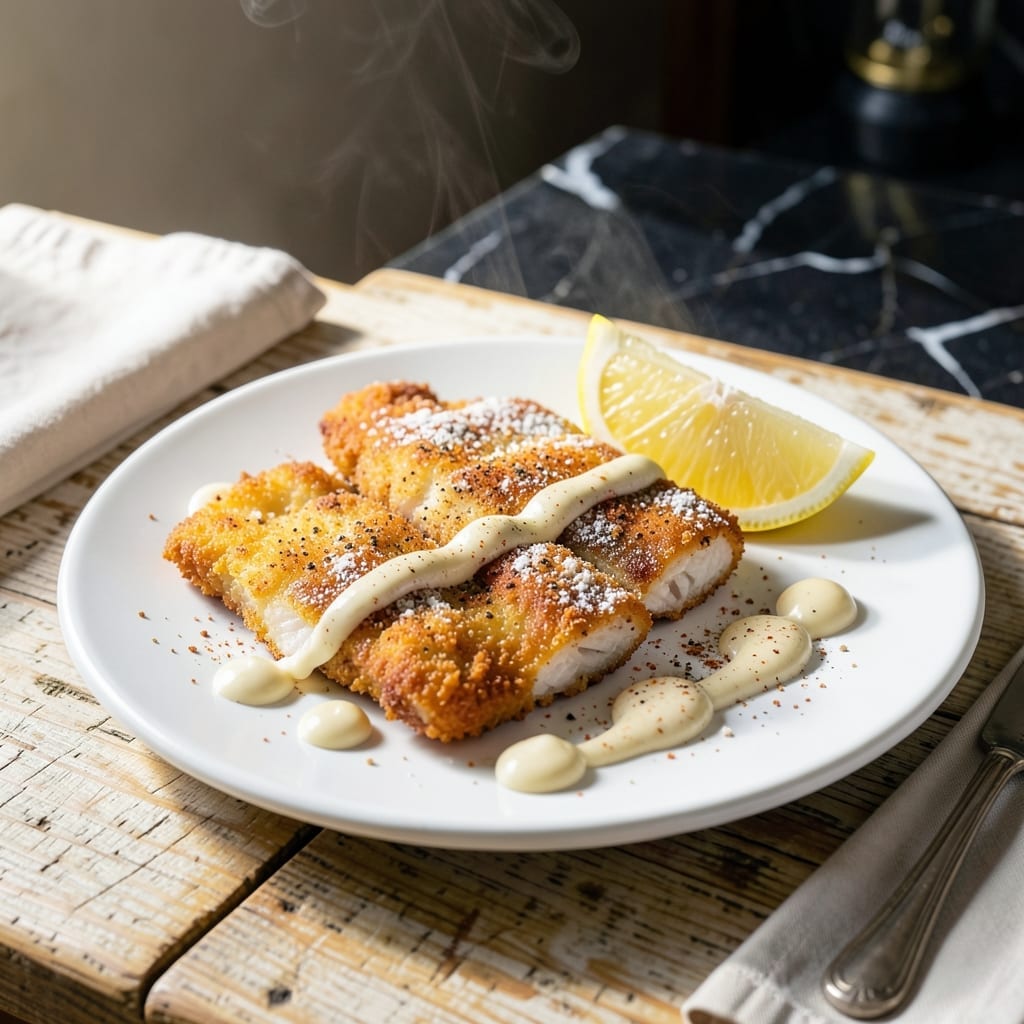
This flour-based method delivers tender fish with a perfectly crisp coating every time. I developed this technique after years of experimenting with different breading approaches, and the flour-only method consistently produces the best texture.
The key is using seasoned flour to create a light, golden crust that doesn’t overpower the fish’s natural flavor. I’ve found that the right oil temperature and frying time make all the difference between soggy and shatteringly crispy results.
You’ll end up with fillets that are moist inside with a coating that stays crunchy long after frying. The simplicity of this method means you can focus on perfecting the technique rather than juggling multiple breading stations.
Serve immediately with lemon wedges and your favorite dipping sauce. This approach works with any firm white fish fillets.
Ingredients for Fried Fish Recipe with Flour
Simple ingredients create that shatteringly crisp, golden coating on tender fish every time.
| Ingredient | Amount | Notes |
|---|---|---|
| Firm White Fish Fillets 🐟 | 1 ½ lb | Cod, haddock, or tilapia work well |
| All-Purpose Flour 🌾 | 2 cups | Seasoned for crisp coating |
| Kosher Salt 🧂 | 1 ½ tsp | Divided for seasoning flour and fish |
| Ground Black Pepper 🌶️ | 1 tsp | Freshly ground preferred |
| Paprika 🌶️ | 1 tsp | Sweet or smoked variety |
| Garlic Powder 🧄 | 1 tsp | For depth in flour mix |
| Vegetable Oil 🫒 | 4 cups | For deep frying, high smoke point |
| Lemon 🍋 | 1 whole | Cut into wedges for serving |
| Cornstarch 🌾 | ¼ cup | Optional for extra crispiness |
| Cayenne Pepper 🔥 | ¼ tsp | Optional for heat, adjust to taste |
| Fresh Parsley 🌿 | ¼ cup | Chopped, for garnish |
| Tartar Sauce 🥄 | ½ cup | Store-bought or homemade |
[recipe_ingredient_scaler]
The fish is the star here. Firm white fillets like cod or haddock hold up best to frying—avoid flaky varieties that fall apart. I grab mine fresh from Whole Foods (their seafood counter is on point), but frozen works too if thawed properly. The oil needs a high smoke point—vegetable, canola, or peanut oil all do the job. Skip the olive oil here; it’ll burn before your fish cooks through.
No all-purpose flour? Self-rising flour at half the amount (it’s pre-salted) gets you close. Swap paprika for Cajun seasoning if you want a kick. Fresh out of garlic powder? Granulated garlic at the same amount. The cornstarch is optional but adds that extra crunch. If you’re avoiding gluten, rice flour or cornmeal works as a 1:1 swap for the all-purpose.
Fry in batches so the oil stays hot. Leftovers? They’re best fresh, but you can reheat in the oven at 400°F for 10 minutes to crisp them back up. The seasoned flour mix keeps in a jar for 1 month—perfect for next time (and there will be a next time).
Why You’ll Love This Recipe
- One Bowl Wonder: I just toss the fish in seasoned flour and fry—no fancy batter, no extra bowls.
- Crispy and Spiced: That paprika-kissed crust with the tender fish inside? Ridiculously good.
- Weeknight Hero: Here’s what sold me—it’s ready before the rice finishes cooking.
- Budget Keeper: Firm white fish fillets stretch far, and flour costs pennies. Feeds my family without breaking the bank.
Step-by-Step Instructions for Fried Fish With Flour
Here’s how I get that perfect crispy coating while keeping the fish tender inside every time.
Step 1: Season and Prepare the Fish Fillets
Pat the 1.5 lb firm white fish fillets completely dry with paper towels—this is non-negotiable for crispiness. I like to cut them into uniform 1-inch thick portions so they cook evenly. Season both sides lightly with ½ tsp kosher salt, ½ tsp ground black pepper, and a pinch of 0.25 tsp cayenne pepper if you want a kick.
Let the seasoned fillets sit at room temperature for 10-15 minutes while you prep the coating. This takes the chill off the fish, ensuring it cooks through without drying out. You’ll notice the salt starts to draw out a bit of moisture—pat them dry again right before dredging.
Step 2: Create the Crispy Flour Coating
In a shallow dish, combine the 2 cups all-purpose flour with the remaining 1 tsp kosher salt, 1 tsp paprika, 1 tsp garlic powder, and 0.25 cup cornstarch. The cornstarch is my secret for extra crunch—it creates micro-crispiness that plain flour can’t achieve on its own.
Whisk everything together until evenly distributed. The mixture should look like fine sand with specks of spice. I always taste a pinch of the flour mix (yes, raw flour) to check the seasoning level—it should taste bold because some will fall off during frying.
Step 3: Fry to Golden Perfection
Heat the 4 cups vegetable oil in a deep, heavy pot to 350-375°F over medium-high heat. Use a thermometer—guessing leads to greasy or burnt fish. While the oil heats, dredge each fillet in the flour mixture, pressing gently to adhere. Shake off the excess—thick clumps will burn before the fish cooks through.
Fry the fillets in batches (don’t crowd the pot) for 3-4 minutes per side until golden brown and crispy. You’ll know it’s ready when the coating turns a deep amber and the fish floats easily. Transfer to a wire rack or paper towels to drain—never a plate, as it’ll steam the coating soggy.
Step 4: Serve Immediately with Fresh Garnishes
Spritz the hot fish with a squeeze of lemon to cut through the richness. Garnish with 0.25 cup fresh parsley for color and freshness. The contrast between the crispy exterior and flaky interior is most pronounced right out of the oil.
Serve with 0.5 cup tartar sauce on the side and extra lemon wedges. Real talk: if your fish isn’t disappearing faster than you can plate it, you’re not doing it right. The coating should shatter at the slightest pressure, revealing tender, moist fish underneath.
Pro Tips For Making Fried Fish Recipe With Flour
- Heat the Oil First: I learned this the hard way—start with oil at 350-375°F before adding the fish. Cold oil makes greasy, sad fish that sticks to the pan.
- Dry the Fillets: Pat those fillets bone-dry with paper towels before dredging. Sounds tedious, but it’s the only way to get that flour to actually stick and crisp up.
- Season the Flour: Mix the salt, pepper, and paprika directly into the flour before coating. It’s faster than seasoning the fish separately and guarantees even flavor in every bite.
- Skip the Overcrowding: Fry in batches, even if it takes longer. Crowding the pan drops the oil temp fast, and you’ll end up with soggy fish instead of that golden crust.
Pro Cooking Tips for fried fish recipe with flour
Oil Temperature Control
Maintaining 350-375°F oil temperature is crucial—I use a Taylor digital thermometer clipped to the pot. If the oil smokes, it’s too hot; if fish absorbs oil, it’s too cool. Adjust your burner between batches to keep it steady. 🌡️
Double-Dredge Secret
For extra crispiness, dredge fillets in flour, dip in beaten egg, then dredge again. The egg acts as glue for a thicker, crunchier coating. I learned this trick from a seafood shack in Maine—game-changer for home cooks.
Batch Frying Strategy
Fry in small batches to avoid oil temperature drops. I never crowd my 5-quart Dutch oven with more than 2-3 fillets at once. This prevents steaming and ensures even cooking. Rest the oil 2 minutes between batches.
Draining Properly
Always drain on a wire rack or paper towels—never directly on a plate. This prevents the crispy coating from turning soggy. I place a cooling rack over a baking sheet for easy cleanup and maximum airflow. 💡
Seasoning the Flour
Don’t skimp on seasoning your flour mix. I use 1 tsp salt, 1 tsp paprika, and 1 tsp garlic powder per 2 cups flour. The seasoning should taste slightly overpowering in the raw mix—it mellows during frying.
Fish Thickness Matters
Cut fillets to uniform 1-inch thickness for even cooking. Thicker pieces may need an extra 1-2 minutes per side. I always check doneness with a fork—the fish should flake easily and reach 145°F internally.
Nutrition Facts
Frequently Asked Questions
What oil works best for frying?
Use oils with a high smoke point like vegetable, canola, or peanut oil. Avoid olive oil as it can burn at frying temperatures. Maintain 350-375°F for perfect results.
Why does my coating fall off?
Pat the fish completely dry before dredging, and press the flour gently to adhere. Overcrowding the pot or using cold fish can also cause the coating to detach.
Can I use a different type of flour?
Yes! Self-rising flour (use half the amount) works, or try rice flour for a gluten-free option. For extra crunch, mix in cornstarch.
How do I keep it crispy after frying?
Drain on a wire rack or paper towels, never a plate. To revive leftovers, reheat in the oven at 400°F for 10 minutes.

Trained in classic French technique but raised on slow-cooked ribs and spicy rubs, she blends culinary skill with smoke and soul.
- Hamburger Patty Recipe No Egg: Juicy Bind With Breadcrumbs and Milk - October 3, 2026
- Recipe for Oven Baked Halibut: Buttery White Fish with Zesty Lemon Topping - October 3, 2026
- Meatball Curry Recipe Kerala Style: Coconut-Spiced Gravy With Tender Bites - October 3, 2026