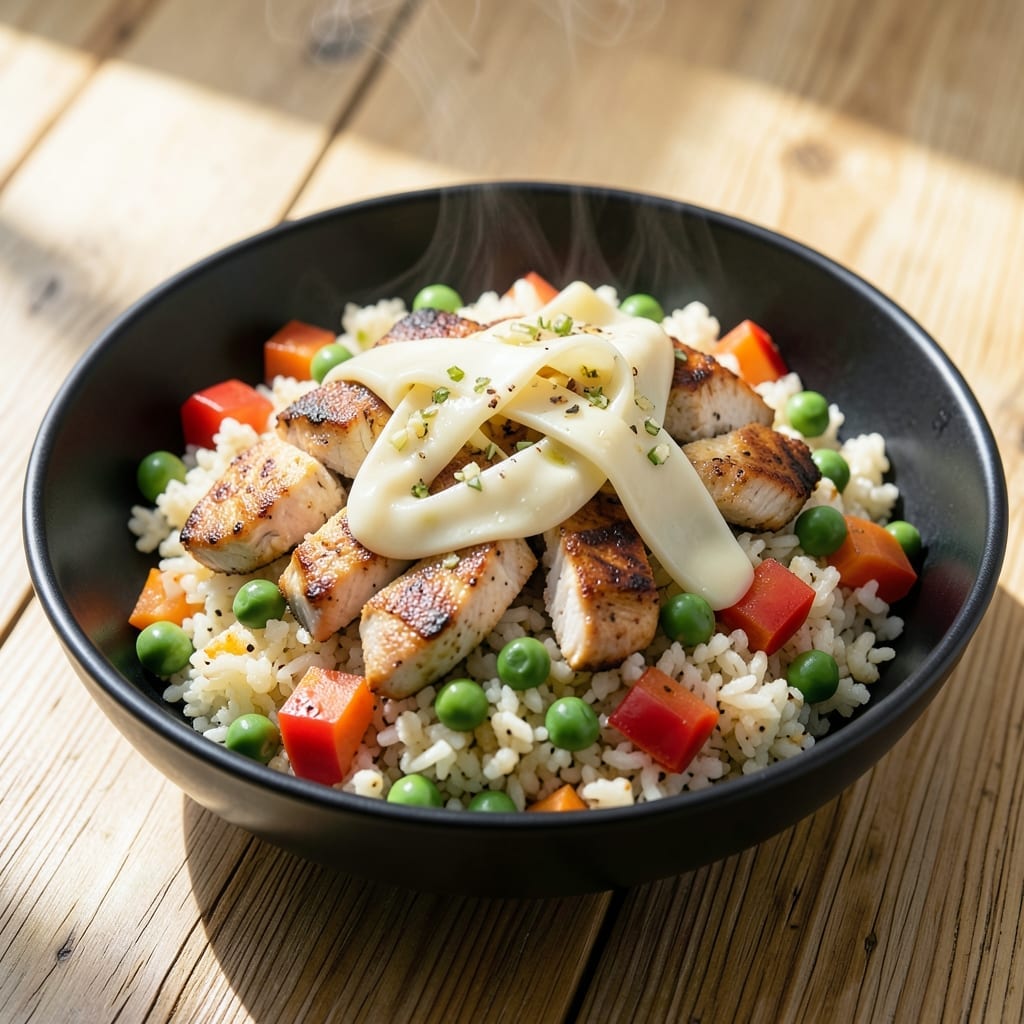
This power bowl transforms traditional fried rice into a healthy, nutrient-dense meal without sacrificing flavor. I developed this version after years of experimenting with ways to make takeout favorites work for weight management.
The secret lies in cauliflower rice and an abundance of colorful vegetables that add volume and satisfaction with minimal calories. Lean protein keeps you full, while a light sauce delivers big taste with less oil and sodium than typical recipes.
You’ll end up with a vibrant, low-carb dish that’s as satisfying as it is nourishing. The texture stays light yet hearty, with each bite packed with fresh vegetables and savory depth.
Perfect for meal prep or a quick weeknight dinner. Let’s build this bowl.
Ingredients for Healthy Fried Rice Recipe for Weight Loss
Cauliflower rice, lean protein, and colorful veggies make this dish light yet satisfying.
| Ingredient | Amount | Notes |
|---|---|---|
| Cauliflower Rice 🥦 | 4 cups | Fresh or frozen, riced |
| Boneless Skinless Chicken Breast 🍗 | 1 lb | Diced into small pieces |
| Large Eggs 🥚 | 2 whole | Lightly beaten |
| Carrots 🥕 | 1 cup | Finely diced for even cooking |
| Bell Peppers 🌶️ | 1 cup | Mixed colors, finely diced |
| Frozen Peas 🌱 | ¾ cup | Thawed before cooking |
| Green Onions 🧅 | ½ cup | Thinly sliced, whites and greens separated |
| Garlic Cloves 🧄 | 3 cloves | Minced for maximum flavor |
| Fresh Ginger 🌿 | 1 tbsp | Peeled and grated |
| Low-Sodium Soy Sauce 🫒 | 2 tbsp | Or tamari for gluten-free |
| Sesame Oil 🫒 | 1 tsp | Toasted for depth |
| Rice Vinegar 💧 | 1 tbsp | Balances the flavors |
| Olive Oil 🫒 | 1 tbsp | For sautéing vegetables |
| Sesame Seeds 🌾 | 1 tsp | Toasted for garnish |
| Salt 🧂 | ¼ tsp | Adjust to taste |
[recipe_ingredient_scaler]
The cauliflower rice is non-negotiable for that low-carb promise. Trader Joe’s and Costco have great frozen options (no prep, just thaw). For the chicken, organic, air-chilled breasts stay juicier—look for even thickness so pieces cook uniformly. Fresh ginger makes a difference here; the jarred stuff lacks punch. Asian markets usually have the best selection at lower prices.
No chicken? Shrimp or firm tofu (pressed and cubed) work perfectly. Swap bell peppers for zucchini or mushrooms if that’s what you’ve got. Low-sodium soy sauce can be coconut aminos for a lighter touch. Missing rice vinegar? Lime juice at half the amount adds the needed acidity. Frozen peas can stay frozen—toss them in straight from the bag.
Meal prep dream: keeps 4-5 days in the fridge, reheats beautifully. Freeze portions for up to 3 months (thaw overnight before reheating). Store sesame seeds in the freezer to keep them fresh (they go rancid fast at room temp).
Why You’ll Love This Recipe
- One Pan Wonder: I toss everything—cauliflower rice, chicken, and veggies—into one skillet and it’s done in 15 minutes.
- Umami Bomb: The soy-ginger-garlic combo makes the chicken and eggs taste ridiculously good without heavy sauces.
- Meal Prep Hero: I make a big batch on Sunday and it stays fresh for 4 days—lunch sorted.
- Budget Friendly: Cauliflower rice and chicken stretch far, so I feed my family for under $10.
Step-by-Step Instructions for Low-Carb Veggie-Packed Fried Rice
This method delivers maximum flavor while keeping the dish light and nutritious.
Step 1: Sauté Aromatics and Chicken
Heat the 1 tbsp Olive Oil in a large skillet or wok over medium-high heat. Add the minced 3 cloves Garlic Cloves and 1 tbsp Fresh Ginger, stirring for 30 seconds until fragrant. Here’s the thing—don’t let them brown or they’ll turn bitter.
Immediately add the diced 1 lb Boneless Skinless Chicken Breast and season with 0.25 tsp Salt. Cook for 5-6 minutes, stirring occasionally, until the chicken is no longer pink and starts to develop light golden edges. Transfer to a plate and set aside.
Step 2: Cook the Vegetables Until Tender-Crisp
In the same skillet, add the finely diced 1 cup Carrots and 1 cup Bell Peppers. Sauté over medium-high heat for 4-5 minutes until they begin to soften but still retain some bite. You want that vibrant color and slight crunch.
Stir in the thawed 0.75 cup Frozen Peas and cook for an additional 1-2 minutes. The peas just need to warm through—they’ll finish cooking when we add everything back together. This layering of textures is what makes the dish so satisfying.
Step 3: Scramble Eggs and Combine with Cauliflower Rice
Push the vegetables to one side of the skillet and pour the lightly beaten 2 whole Large Eggs into the cleared space. Scramble quickly until just set—about 1-2 minutes—then mix into the vegetables. Real talk: slightly underdone eggs are perfect here as they’ll finish cooking with the rice.
Add the 4 cups Cauliflower Rice to the skillet, breaking up any clumps with your spatula. Stir-fry for 3-4 minutes until the cauliflower is tender but not mushy. You’ll notice the rice start to pick up those gorgeous caramelized bits from the bottom of the pan.
Step 4: Finish with Sauce and Garnish
Drizzle the 2 tbsp Low-Sodium Soy Sauce, 1 tsp Sesame Oil, and 1 tbsp Rice Vinegar over the mixture. Return the cooked chicken to the skillet and stir everything together for 1-2 minutes until evenly coated and heated through.
Remove from heat and stir in the sliced 0.5 cup Green Onions (reserve some greens for garnish). Taste and adjust seasoning if needed. Transfer to serving bowls, sprinkle with 1 tsp Sesame Seeds, and top with the reserved green onions. The final dish should be fragrant, colorful, and packed with texture in every bite.
Pro Tips For Making Healthy Fried Rice Recipe For Weight Loss
- Pre-Cook the Chicken: Sear the chicken breast first in a hot pan with a little oil until just cooked through, then set aside. I learned this the hard way—adding raw chicken directly to the veggies makes it steam instead of brown, and you lose that crucial texture.
- Squeeze the Cauliflower: After grating or pulsing your cauliflower rice, give it a quick squeeze in a clean towel to remove excess moisture. Sounds weird, but it works: this prevents your fried rice from turning into a soggy mess.
- Skip the Overcrowding: Cook your veggies in batches if needed—about 2 cups at a time—so they actually sizzle instead of steam. After burning three batches, I finally figured out that a crowded pan is the fastest way to kill the flavor.
- Use Day-Old Eggs: Scramble your eggs separately, then set them aside before mixing everything together. My grandmother swore by this, and she was right: it keeps them fluffy and distinct instead of rubbery and lost in the mix.
Troubleshooting This Recipe
Mushy Cauliflower Rice
This happens when cauliflower rice steams instead of stir-fries. I always cook it uncovered over medium-high heat and press it into the pan to remove moisture. If it’s still watery, pat it dry with paper towels before cooking. 💡
Soggy Vegetables
Overcrowding the pan is the usual culprit. Cook in batches if needed, and make sure your vegetables are dry before they hit the skillet. I find 1 cup of veggies per batch is ideal for even cooking.
Eggs Overcooked
Push veggies aside and scramble eggs in the cleared space. Remove them just before they’re fully set—they’ll finish cooking when mixed back in. I use a silicone spatula for gentle folding.
Bland Flavor
Low-sodium soy sauce needs a boost. Add 1 extra tsp of soy sauce or a pinch of red pepper flakes. Fresh ginger and garlic make all the difference here—don’t skip them.
Chicken Dryness
Dice chicken into ½-inch pieces for quick, even cooking. Cook over medium-high heat just until no longer pink, about 5-6 minutes. Overcooking is the enemy of juicy chicken.
Sticky Mess
Use a well-seasoned wok or nonstick skillet. Heat the pan properly before adding oil, and keep ingredients moving. A metal spatula helps release those flavorful browned bits. 🔥
Nutrition Facts
Frequently Asked Questions
Can I use regular rice instead of cauliflower?
Yes, but use brown rice for better nutrition. Reduce to 2 cups cooked and add 1-2 minutes extra cooking time. Cauliflower keeps it low-carb though.
How do I make this vegetarian?
Swap chicken for extra-firm tofu (pressed and cubed) or 1 can chickpeas. Add 1 tbsp more soy sauce for extra flavor. The veggies already provide plenty of texture.
Can I meal prep this for the week?
Stores well for 4-5 days in the fridge. Reheat in a skillet over medium heat with a splash of water to prevent drying. Freeze portions for up to 3 months.
What if my dish turns out bland?
Boost flavor with 1 extra tsp soy sauce or a pinch of red pepper flakes. Fresh ginger and garlic are key—don’t skip them. A squeeze of lime at the end adds brightness.

Trained in classic French technique but raised on slow-cooked ribs and spicy rubs, she blends culinary skill with smoke and soul.
- Recipe for Boneless Pork Chops in Cast Iron Skillet: Sear and Baste to Juicy Perfection - October 3, 2026
- Recipe for Boneless Cross Rib Roast: Slow-Roasted Beef with Herb Crust - October 3, 2026
- Hamburgers in Sauce Recipe Crock Pot: Slow-Cooked Savory Delight - October 3, 2026