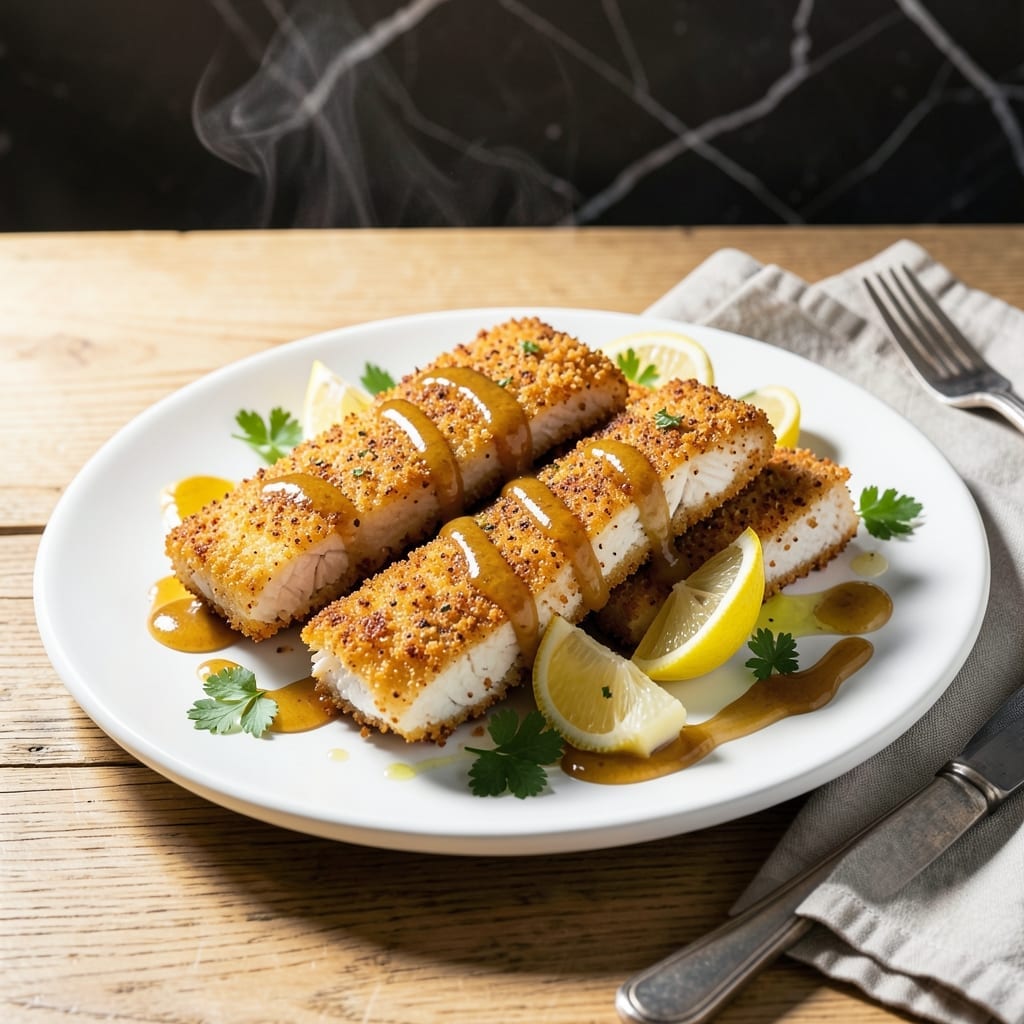
This panko-crusted haddock delivers a crispy, golden exterior with tender, flaky fish inside—every bite is pure satisfaction. The Japanese breadcrumb coating creates unmatched texture that standard breadcrumbs simply can’t match.
I perfected this method after testing various breading techniques, and panko consistently produces the most impressive results. The high heat ensures the crust browns beautifully while the fish stays moist and delicate.
The secret lies in the double-dredging process that guarantees maximum crunch in each mouthful. Serve with lemon wedges and tartar sauce for the complete experience.
This technique transforms simple haddock into restaurant-quality seafood that’s ready in under 30 minutes.
Ingredients for Fried Haddock Recipe with Panko
Fresh haddock meets Japanese panko for a restaurant-quality crispy, flaky masterpiece.
| Ingredient | Amount | Notes |
|---|---|---|
| Haddock Fillets 🐟 | 1 ½ lb | Skinless, boneless, fresh or thawed |
| Panko Breadcrumbs 🍞 | 1 ½ cups | Japanese-style for maximum crunch |
| All-Purpose Flour 🌾 | ¾ cup | For initial dredging layer |
| Large Eggs 🥚 | 2 whole | Beaten for binding breading |
| Dijon Mustard 🟡 | 2 tbsp | Adds tang to egg wash |
| Old Bay Seasoning 🌶️ | 1 tsp | Classic seafood seasoning blend |
| Garlic Powder 🧄 | 1 tsp | Enhances flavor in breading |
| Paprika 🌶️ | 1 tsp | Sweet or smoked variety |
| Salt 🧂 | 1 tsp | Kosher or sea salt preferred |
| Black Pepper 🌶️ | ½ tsp | Freshly ground for best flavor |
| Vegetable Oil 🫒 | 2 cups | For frying, high smoke point |
| Lemon Wedges 🍋 | 4 pieces | For serving and garnish |
| Fresh Parsley 🌿 | ¼ cup | Chopped, for garnish |
| Tartar Sauce 🥄 | ½ cup | Store-bought or homemade |
[recipe_ingredient_scaler]
The haddock is non-negotiable here. Seek out fresh, wild-caught fillets from a trusted fishmonger or the seafood counter at Whole Foods. Look for firm, translucent flesh with no fishy odor. Panko breadcrumbs are essential—Kikkoman or Progresso brands offer consistent texture. Avoid fine breadcrumbs, as they won’t deliver the same crunch. The fillets should be about 1-inch thick for even cooking.
No haddock? Cod or pollock work beautifully with the same method. For a gluten-free version, swap panko for crushed cornflakes or gluten-free breadcrumbs. The Dijon in the egg wash can be replaced with whole-grain mustard for a coarser texture. Old Bay is classic, but Cajun seasoning adds a spicy kick. If frying feels daunting, this breading works just as well in an air fryer at 400°F.
Store raw haddock in the coldest part of your fridge and use within 24-48 hours. Cooked fish keeps for 2-3 days refrigerated, though it’s best eaten immediately. Panko breadcrumbs stay fresh for 6-12 months in a sealed container. Reheat leftovers in a toaster oven to revive the crust.
Why You’ll Love This Recipe
- 20-Minute Meal: I can get this from fridge to table faster than delivery arrives—just dredge, coat, fry.
- Crispy Perfection: Panko gives that golden crunch while Dijon in the egg wash adds a little kick that keeps me sneaking bites.
- Family-Approved Dinner: Even my picky nephew cleans his plate, and it works just as well for a weeknight as a casual dinner party.
- Leftovers? No Problem: The fillets reheat beautifully in the oven, so I’ll often make extra for tomorrow’s lunch.
Step-by-Step Instructions for Fried Haddock With Panko
Master the technique that delivers a shatteringly crisp crust with tender, flaky fish inside.
Step 1: Prepare the Seasoned Breading Stations
In a shallow dish, combine the 1.5 cups Panko Breadcrumbs, 1 tsp Old Bay Seasoning, 1 tsp Garlic Powder, 1 tsp Paprika, 1 tsp Salt, and 0.5 tsp Black Pepper. I whisk these together thoroughly so every bite of breading delivers balanced seasoning.
In a second shallow dish, place the 0.75 cup All-Purpose Flour. In a third bowl, whisk the 2 whole Large Eggs with the 2 tbsp Dijon Mustard until fully combined and slightly frothy. This three-step breading process creates layers that crisp beautifully.
Pat the 1.5 lb Haddock Fillets completely dry with paper towels—this is critical for the breading to adhere properly. Any moisture will create a barrier between the fish and the crust, causing it to slide off during frying.
Step 2: Bread the Haddock Fillets with Precision
Dredge each haddock fillet in the 0.75 cup All-Purpose Flour, shaking off any excess. The flour creates a dry surface for the egg wash to cling to. Dip the floured fillet into the egg mixture, letting any excess drip off for 5 seconds—this prevents a gummy, thick coating.
Press the fillet firmly into the Panko mixture, turning to coat all sides completely. I like to press down gently with my fingertips to ensure the crumbs adhere well, especially to the rounded edges. The Panko’s coarse texture creates those beautiful, irregular crunchy bits that make this dish special.
Place the breaded fillets on a wire rack set over a baking sheet. This allows air to circulate underneath, preventing the breading from getting soggy while you finish breading the remaining pieces. Let them rest for 10 minutes to help the coating set.
Step 3: Fry to Golden Perfection
Heat the 2 cups Vegetable Oil in a large, deep skillet over medium-high heat until it reaches 350-375°F. Use a deep-fry thermometer for accuracy—if the oil isn’t hot enough, the fish will absorb oil and become greasy rather than crisp.
Carefully lower 2 fillets at a time into the hot oil, working in batches to avoid crowding the pan. Crowding lowers the oil temperature, which leads to uneven cooking and soggy breading. Fry for 3-4 minutes per side until the coating is deep golden brown and the fish flakes easily when tested with a fork.
Transfer the fried haddock to a paper towel-lined plate to drain excess oil. The breading should be crisp and audible when cut into—this is your reward for maintaining the proper oil temperature throughout the frying process.
Step 4: Serve Immediately with Classic Accompaniments
Garnish the fried haddock with the 0.25 cup Fresh Parsley, chopped, and serve immediately with the 4 pieces Lemon Wedges and 0.5 cup Tartar Sauce on the side. The acidity from the lemon cuts through the richness of the fried fish beautifully.
I always serve this dish right away while the breading is at its crispiest. The contrast between the crunchy exterior and the tender, flaky haddock inside is what makes this preparation so satisfying. The Panko breadcrumbs maintain their texture longer than traditional breadcrumbs, but they’re best enjoyed fresh from the fryer.
Pro Tips For Making Fried Haddock Recipe With Panko
- Dry the Haddock: Pat the fillets with paper towels until they’re bone-dry—I learned this the hard way after my first batch turned out soggy instead of crisp.
- Chill the Coating: Pop the panko-breaded fillets in the fridge for 10 minutes before frying to help the crust set and stick better.
- Skip the Overcrowding: Fry in batches with at least an inch between pieces, or the oil temperature drops and you’ll end up with greasy, steamed fish.
- Add Mustard to Eggs: Whisk a spoon of Dijon into the beaten eggs for the dredge—sounds simple, but it adds a tangy depth that plain egg wash just can’t.
Dietary Considerations for fried haddock recipe with panko
Gluten-Free Adaptation
Swap the panko and flour for gluten-free panko (I like Kikkoman’s gluten-free version) and a 1:1 gluten-free flour blend. The texture remains remarkably similar to the original, with the same satisfying crunch. 💪
Dairy-Free Option
This recipe is naturally dairy-free as written. Just ensure your tartar sauce doesn’t contain hidden dairy—check labels for whey or casein. Vegan mayo works perfectly for homemade versions.
Low-Carb Version
Replace panko with crushed pork rinds or almond flour mixed with 1 tsp xanthan gum for binding. The egg wash helps these alternatives adhere well. Fry in avocado oil for a higher smoke point.
Each fillet will have about 5g net carbs with this swap.
Egg-Free Alternative
Use aquafaba (chickpea brine) as your binder—whip 3 tbsp to frothy consistency. Alternatively, a thin layer of Dijon mustard alone can help the breading stick, though it may be slightly less crisp.
Seafood Allergy Note
Haddock is a mild white fish, but those with seafood allergies should avoid this entirely. For a similar texture, try breaded chicken tenders using the same panko method. Always check with guests about allergies first.
Nutrition Facts
Frequently Asked Questions
Can I use regular breadcrumbs instead of panko?
You can, but panko creates a lighter, crispier crust. Regular breadcrumbs will work in a pinch, but expect a denser texture. For best results, stick with panko for that signature crunch.
What oil works best for frying?
Use a high-smoke-point oil like vegetable, peanut, or canola. Avoid olive oil as it can burn at high temperatures. Maintain 350-375°F for perfect results.
How do I keep the breading from falling off?
Pat the fish completely dry before breading. Let the breaded fillets rest for 10 minutes to help the coating set. Use a three-step process: flour, egg wash, then panko.
Can I bake instead of fry?
Yes! Bake at 400°F for 12-15 minutes on a wire rack for even crisping. Spray with oil first for extra browning. The texture won’t be identical, but still delicious.

Trained in classic French technique but raised on slow-cooked ribs and spicy rubs, she blends culinary skill with smoke and soul.
- Recipe for Boneless Pork Chops in Cast Iron Skillet: Sear and Baste to Juicy Perfection - October 3, 2026
- Recipe for Boneless Cross Rib Roast: Slow-Roasted Beef with Herb Crust - October 3, 2026
- Hamburgers in Sauce Recipe Crock Pot: Slow-Cooked Savory Delight - October 3, 2026