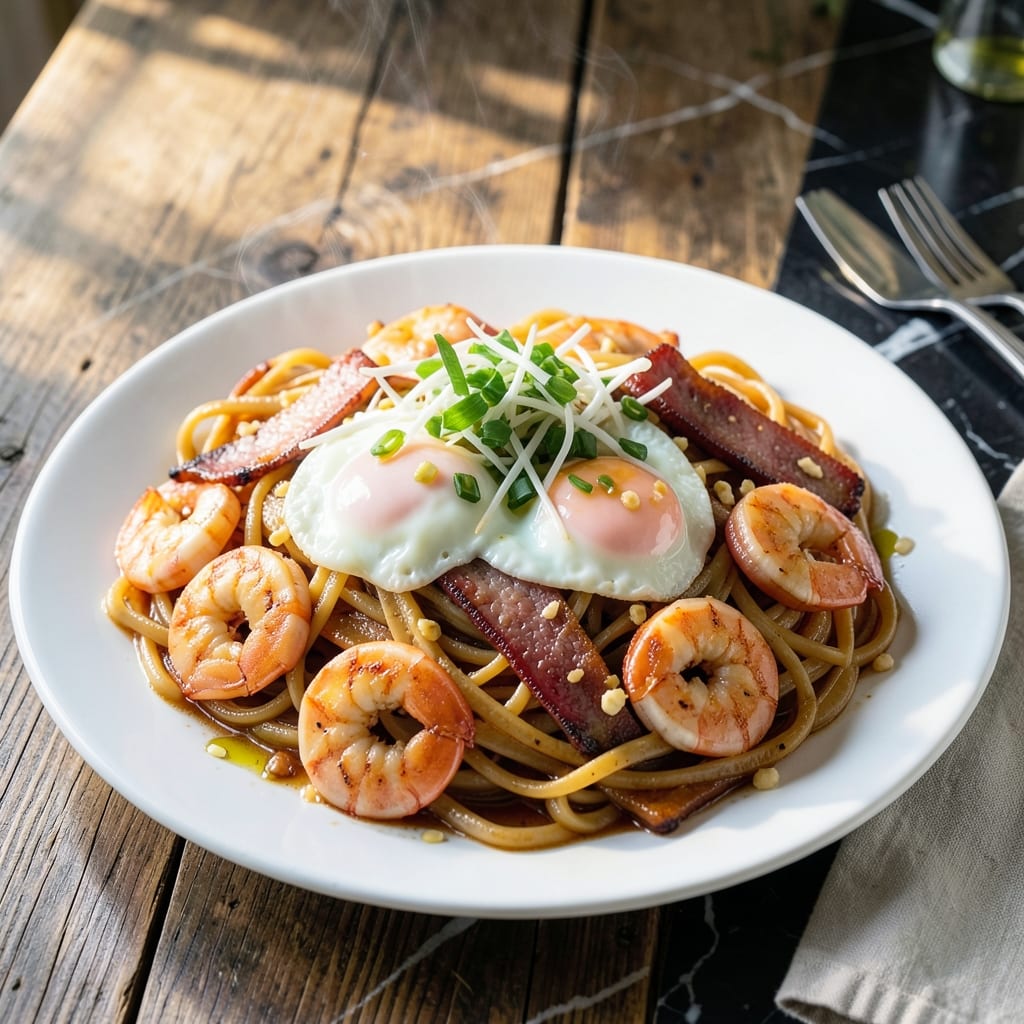
This Singapore street food classic captures the essence of char kway teow with its smoky wok hei aroma and perfect balance of flavors. The dish transforms simple rice noodles into something extraordinary with just a few key ingredients.
Mastering this recipe requires high heat and constant tossing to achieve that signature caramelized edge without burning. The combination of soy sauces, egg, and Chinese sausage creates layers of umami that define authentic Singapore-style fried kway teow.
You’ll end up with tender noodles coated in a savory sauce, studded with plump shrimp and slices of sausage. Each bite delivers that characteristic slightly crisp texture that makes this dish unforgettable.
The beauty lies in its simplicity—just 20 minutes of active cooking transforms basic ingredients into a restaurant-quality meal that tastes like it came from a bustling hawker stall.
Ingredients for Fried Kway Teow Recipe Singapore
Authentic Singapore street food requires just these carefully selected ingredients for perfect wok hei flavor.
| Ingredient | Amount | Notes |
|---|---|---|
| Flat Rice Noodles 🍜 | 1 lb | Fresh or pre-soaked dried |
| Chinese BBQ Pork 🥩 | ½ lb | Char siu, thinly sliced |
| Medium Shrimp 🦐 | ½ lb | Peeled and deveined |
| Chinese Sausage 🌭 | 2 pieces | Lap cheong, sliced diagonally |
| Large Eggs 🥚 | 2 whole | Lightly beaten |
| Garlic Cloves 🧄 | 4 cloves | Minced finely |
| Dark Soy Sauce 🫕 | 2 tbsp | For deep color |
| Light Soy Sauce 🫕 | 2 tbsp | For salty seasoning |
| Sweet Soy Sauce 🫕 | 1 tbsp | Kecap manis preferred |
| Fish Sauce 🐟 | 1 tbsp | Optional for umami depth |
| Bean Sprouts 🌱 | 1 cup | Fresh, tails trimmed |
| Chives 🌿 | ½ cup | Cut into 1-inch pieces |
| Lard 🧈 | 2 tbsp | Traditional for authentic flavor |
| White Pepper 🌶️ | ½ tsp | Freshly ground preferred |
[recipe_ingredient_scaler]
The noodles are non-negotiable—fresh flat rice noodles from an Asian market are ideal, but dried can work if soaked properly. Char siu and lap cheong are found in the refrigerated section of most Chinese grocers. For authenticity, seek out brands like Koon Chun for the BBQ pork. The lard is traditional, but vegetable oil can substitute without sacrificing too much character.
No char siu? Substitute with leftover roast pork or even thinly sliced bacon in a pinch. For a seafood twist, squid or scallops work beautifully. The soy sauces are key—dark for color, light for salt, sweet for balance. If you can’t find kecap manis, mix regular soy with a touch of brown sugar. The fish sauce adds depth but can be omitted for strict vegetarians.
This dish is best eaten immediately—that crispy texture doesn’t last. Leftovers keep for 2 days in the fridge but will soften. The sauces and aromatics can be prepped ahead, but the noodles must be cooked fresh. Always use the freshest shrimp and pork for the best results.
Why You’ll Love This Recipe
- One Pan Magic: It all comes together in a single wok—no extra pots, no fuss, just me and my spatula against a sizzling plate of goodness.
- Smoky Sweet Bites: The char siu and lap cheong bring this deep, caramelized sweetness that makes every bite feel like a street stall in Singapore.
- Feeds a Hungry Table: I’ve made this for lazy Sundays and last-minute dinner parties—always disappears before the last plate hits the table.
- Stretches Further: Honestly, the leftovers taste even better the next day, and it’s kind to my wallet with those affordable noodles and eggs.
Step-by-Step Instructions for Singapore Fried Kway Teow
Master the wok technique for authentic street food flavor and texture in your own kitchen.
Step 1: Prepare All Ingredients Within Reach
Arrange the 1 lb Flat Rice Noodles, 0.5 lb Chinese BBQ Pork (thinly sliced), 0.5 lb Medium Shrimp (peeled and deveined), 2 pieces Chinese Sausage (sliced diagonally), 2 whole Large Eggs (lightly beaten), 4 cloves Garlic Cloves (minced), 1 cup Bean Sprouts (tails trimmed), and 0.5 cup Chives (cut into 1-inch pieces) in separate bowls.
This mise en place approach prevents burning during the high-heat cooking process. Measure the 2 tbsp Dark Soy Sauce, 2 tbsp Light Soy Sauce, 1 tbsp Sweet Soy Sauce, 1 tbsp Fish Sauce, and 2 tbsp Lard into small prep bowls. Have the 0.5 tsp White Pepper ready to add at the final stage.
Step 2: Heat the Wok and Cook the Aromatics
Place a wok over high heat until it begins to smoke slightly. Add the 2 tbsp Lard and swirl to coat the surface evenly. The lard should shimmer but not burn. Immediately add the 4 cloves Garlic Cloves and stir-fry for 15-20 seconds until fragrant but not browned.
Push the garlic to one side and pour in the 2 whole Large Eggs. Let them set for 10 seconds before scrambling quickly with a spatula until just set but still slightly runny. This creates ribbons of egg that will coat the noodles beautifully.
Step 3: Stir-Fry the Proteins and Noodles
Add the 2 pieces Chinese Sausage and 0.5 lb Medium Shrimp to the wok. Stir-fry for 1-2 minutes until the shrimp turn opaque and the sausage begins to brown. Push these to the side and add the 0.5 lb Chinese BBQ Pork to warm through for 30 seconds.
Now add the 1 lb Flat Rice Noodles and all the sauces: 2 tbsp Dark Soy Sauce, 2 tbsp Light Soy Sauce, 1 tbsp Sweet Soy Sauce, and 1 tbsp Fish Sauce. Toss everything together vigorously using a tossing motion rather than stirring, to prevent the noodles from turning mushy.
Step 4: Incorporate Vegetables and Finish
Add the 1 cup Bean Sprouts and 0.5 cup Chives to the wok. Continue tossing for another 1-2 minutes until the noodles are uniformly coated and slightly charred in spots. The bean sprouts should remain crisp while the chives wilt slightly.
Sprinkle the 0.5 tsp White Pepper over the mixture and give it a final toss to distribute evenly. The noodles should be glossy with sauce, with visible char marks from the high heat, and all ingredients should be heated through without any raw spots.
Pro Tips For Making Fried Kway Teow Recipe Singapore
- Crank the Heat: High heat is non-negotiable for that smoky wok hei flavor. I learned this the hard way—medium heat just steams the noodles instead of frying them.
- Soak the Noodles: Flat rice noodles need a 10-minute soak in warm water to soften before frying. Skip this and they’ll stay stubbornly chewy, no matter how long you cook them.
- Prep Everything First: Once the wok is hot, there’s no time to chop or measure. I was skeptical until I tried it—having all ingredients prepped and within reach makes a real difference.
- Use Day-Old Rice: Sounds weird, but it works: if adding rice to your kway teow, use day-old, cold rice. Fresh rice turns mushy in the wok, while older grains stay separate and fry up nicely.
Creative Variations of This Dish
Spicy Chili Crab Style
Transform this dish by adding 2 tbsp Singapore chili crab sauce along with the other sauces. Include 4 mud crab claws or 1 cup lump crab meat with the shrimp. I love how the sweet-spicy sauce pairs with the smoky noodles. 🌶️
Vegetarian Tofu Version
Swap proteins for 1 cup firm tofu (cubed) and ½ cup shiitake mushrooms. Use vegetable oil instead of lard and add 1 tbsp vegetarian oyster sauce for depth. The tofu soaks up the sauce beautifully.
Hainanese Chicken Twist
Replace Chinese sausage with 1 cup poached chicken (from Hainanese chicken rice). Add 1 tsp sesame oil and ½ cup chicken stock to the sauce mix. This variation is lighter but still packed with flavor.
Seafood Medley
Use ½ lb squid rings and ½ lb scallops instead of sausage and pork. Add 1 tsp ginger with the garlic for brightness. The seafood cooks quickly, so have everything prepped.
Black Pepper Beef
Add ½ lb sliced beef (marinated with 1 tbsp soy sauce and 1 tsp cornstarch) and 1 tbsp coarsely ground black pepper at the end. This version has a bold, peppery kick.
The beef should be velvety and the pepper aroma intense. 💡
Nutrition Facts
Frequently Asked Questions
Can I use dried noodles instead of fresh?
Yes, but soak them in warm water for 10-15 minutes until pliable. Drain well before cooking to prevent a watery dish. Fresh noodles are ideal for authentic texture.
What can I substitute for lard?
Use 2 tbsp vegetable oil or peanut oil for a neutral flavor. For extra richness, try chicken fat or bacon grease. The dish will still taste great.
How do I get that smoky wok hei flavor at home?
Crank your stove to maximum heat and use a well-seasoned wok. Cook in small batches to maintain high temperature. A gas stove works best for this effect.
Can I make this ahead of time?
It’s best served immediately, but leftovers keep for 1-2 days in the fridge. Reheat quickly in a hot pan to restore some texture. Avoid microwaving.

Trained in classic French technique but raised on slow-cooked ribs and spicy rubs, she blends culinary skill with smoke and soul.
- Recipe for Boneless Pork Chops in Cast Iron Skillet: Sear and Baste to Juicy Perfection - October 3, 2026
- Recipe for Boneless Cross Rib Roast: Slow-Roasted Beef with Herb Crust - October 3, 2026
- Hamburgers in Sauce Recipe Crock Pot: Slow-Cooked Savory Delight - October 3, 2026